Mestrado e Doutorado

Comunicação e Semiótica
Breve Apresentação
O Programa de Pós-Graduação em Comunicação e Semiótica da PUC-SP é um espaço para o desenvolvimento de pesquisas em comunicação, cultura, educação e política. Em sintonia com os 17 Objetivos de Desenvolvimento Sustentável da ONU, o COS contribui para a transformação de problemas atuais.
Mapa dos Ex-alunos do Programa
Mapa dos professores ex-alunos do Programa de Pós-Graduação em Comunicação e Semiótica da PUCSP e suas atuais universidades pelo Brasil
Depoimentos de Ex-alunos
Alunos e ex-alunos do mestrado e doutorado em Comunicação e Semiótica da PUC-SP deram depoimentos sobre a qualidade e a importância do programa na sua formação.
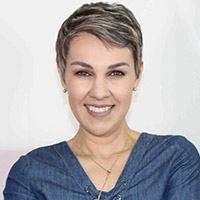
Jornalista, apresentadora TV Canção Nova
Iniciei o Mestrado em Comunicação e Semiótica em 2016. Foram dois anos e meio de muito estudo, pesquisa, viagens da minha cidade no interior de São Paulo até a PUC e muita dedicação à minha pesquisa. Neste tempo conheci pessoas incríveis e generosas, como minha orientadora Lucia Leão e os colegas de curso do Grupo de Pesquisa em Comunicação e Criação nas Mídias (CCM) que até hoje participo. Estudar na PUC foi uma experiência maravilhosa, para a vida toda, foi troca de conhecimentos na vida acadêmica e profissional.
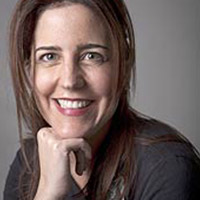
Coordenadora Programa Acessa São Paulo
Fiz mestrado e doutorado no COS. Foram anos riquíssimos de articulações teóricas, participações em projetos coletivos juntamente com as orientações em metodologias de pesquisas feitas em grupo e individualmente. Fruto de meu mestrado, o livro Web e Participação: Democracia no Séc XXI ganhou um prêmio Jabuti em 2011. Conheci pessoas com interesses e formações distintas, profissionais do mercado financeiro, publicitários, artistas, biólogos, diretores de cinema, filósofos, médicos, acadêmicos, entre outras tantas. E foi justamente nessa mistura que o desenrolar do curso de pós-graduação fez emergir as mais incríveis investigações e trabalhos científicos. Uma composição de consistência acadêmica e abertura criativa investigativa em rede. Recomendo a experiência tanto para quem quer seguir a carreira acadêmica como para aqueles que querem ampliar e refinar seus repertórios para pensar e viver o presente contemporâneo.
Linhas de Pesquisa
Área de Concentração: Signo e Significação nos Processos Comunicacionais
Pesquisas sobre regimes de sentido e processos comunicacionais, criativos e de dimensões políticas, em intersecção com teorias semióticas.
-
Linha de Pesquisa 1: Regimes de Sentido nos Processos Comunicacionais
Investiga a produção de sentido e seus regimes de interação a partir de teorias semióticas.
-
Linha de Pesquisa 2: Processos de Criação na Comunicação e na Cultura
Tem como foco os processos culturais em suas diversas formas.
-
Linha de Pesquisa 3: Dimensões Políticas na Comunicação
Reflete sobre a ordem comunicacional vigente em escala mundial.
Apresentação
O Programa de Pós-Graduação em Comunicação e Semiótica da PUC-SP (COS) desenvolve pesquisas no campo da comunicação e suas interfaces com a educação, a cultura e a política. Observando os 17 Objetivos de Desenvolvimento Sustentável (ODS) da ONU, o COS fomenta a discussão e o confronto de problemas atuais. Com redes nacionais e globais, o PPGCOS oferece grupos de pesquisa que promovem a troca entre estudantes e pesquisadores na produção bibliográfica e de eventos científicos e culturais. A Galáxia, periódico do COS, com editoria criteriosa, atua no processo de divulgação científica.
Programa de Ações Afirmativas
O PPGCOS, como prática vinculada às suas políticas sociais, oferece um Programa de Ações Afirmativas que reserva vagas de mestrado e doutorado para estudantes negros, indígenas, portadores de deficiência e aqueles que se declarem transgêneros.
Mais informações:
- https://www.pucsp.br/pos-graduacao/mestrado-e-doutorado/comunicacao-e-semiotica
- Youtube
Mapa dos Ex-alunos do Programa
Criado em 1970 e credenciado pelo Parecer CFE 383/73, o Programa de Estudos Pós-Graduados em Comunicação e Semiótica da Pontifícia Universidade Católica de São Paulo (PEPGCOS/PUC-SP) é um dos mais antigos na área de Comunicação no Brasil. Fundado por Lucrécia Ferrara, seus primeiros professores foram Haroldo de Campos, Décio Pignatari, Leyla Perrone-Moisés, Willi Bolle e, entre seus profs. convidados, Boris Schnaiderman e Hans-Joaquim Koellreutter. O programa passou por sua primeira reforma curricular em 1978, quando alargou suas dimensões da Teoria Literária para a Comunicação e Semiótica, dentro de um espírito interdisciplinar da literatura, artes, música e meios de comunicação, que tinha na semiótica seu eixo conceitual integrador. Nesse momento o programa já contava com a presença dos professores José Segolin e Lucia Santaella. A partir dos anos 1980, esse caráter interdisciplinar foi crescendo e o corpo docente foi se ampliando e diversificando para atender às necessidades de uma demanda plural.
Em sua longa trajetória de 45 anos como nucleador e incentivador de investigações sobre fenômenos e processos comunicacionais a partir de teorias semióticas, discursivas e da comunicação, o PEPGCOS/PUC-SP tem registrado repercussões na sociedade civil, em termos de impacto intelectual, cultural e artístico, como, por exemplo, na formulação de políticas culturais e de acesso à cultura e às artes e na disseminação de saberes técnicos, com projeção internacional e também no Estado de São Paulo e em empresas privadas.
Objetivo Geral:
Os objetivos fundamentais do PEPGCOS/PUC-SP convergem para o fomento permanente de condições acadêmicas de excelência voltadas para (1) o desenvolvimento de práticas de ensino, orientação e pesquisa, nos níveis de Mestrado e Doutorado; (2) a formação de quadros qualificados para o desempenho de funções intelectuais em Instituições de Ensino Superior e afins; e (3) a contribuição, no âmbito da pesquisa científica, para a estruturação progressiva e consolidação da área de Comunicação, em apoio institucional ao desenvolvimento educacional, científico e tecnológico do país.
Objetivos Específicos:
- Formar recursos humanos qualificados no campo da Comunicação e Semiótica, voltados para a pesquisa e carreira docente (impacto educacional), com repercussões no desenvolvimento cultural, curatorial e artístico, nas políticas culturais e de acesso à cultura e às artes em geral (impacto cultural) e na disseminação, aperfeiçoamento e/ou renovação de conhecimentos técnicos e tecnológicos (impacto de inovação);
- Desenvolver, em contexto de discussão e produção do conhecimento, reflexão teórico-epistemológica sugerida pelas linhas de pesquisa, a fim de incentivar projetos de pesquisa docentes e discentes, no horizonte do diálogo entre as linhas, dentro da área de concentração do Programa;
- Proporcionar o desenvolvimento de projetos coletivos, envolvendo, nas investigações temáticas, docentes, pesquisadores de Pós-Doutorado e discentes, em contexto de grupos de pesquisa e acordos interinstitucionais;
- Perfilar e articular, cada vez mais, a produção teórico-epistemológica docente e discente, a oferta de disciplinas, a atuação dos Centros ou Grupos de Pesquisa e as práticas de orientação em torno de diretrizes conceituais e recortes temáticos atuais e mais precisos, articulando, com isso, docentes, pós-graduandos, egressos e pós-doutorandos em caminhos programáticos bem definidos.
Depoimentos de Ex-alunos
Alunos e ex-alunos do mestrado e doutorado em Comunicação e Semiótica da PUC-SP deram depoimentos sobre a qualidade e a importância do programa na sua formação.
Jornalista, apresentadora TV Canção Nova
Iniciei o Mestrado em Comunicação e Semiótica em 2016. Foram dois anos e meio de muito estudo, pesquisa, viagens da minha cidade no interior de São Paulo até a PUC e muita dedicação à minha pesquisa. Neste tempo conheci pessoas incríveis e generosas, como minha orientadora Lucia Leão e os colegas de curso do Grupo de Pesquisa em Comunicação e Criação nas Mídias (CCM) que até hoje participo. Estudar na PUC foi uma experiência maravilhosa, para a vida toda, foi troca de conhecimentos na vida acadêmica e profissional.
Coordenadora Programa Acessa São Paulo
Fiz mestrado e doutorado no COS. Foram anos riquíssimos de articulações teóricas, participações em projetos coletivos juntamente com as orientações em metodologias de pesquisas feitas em grupo e individualmente. Fruto de meu mestrado, o livro Web e Participação: Democracia no Séc XXI ganhou um prêmio Jabuti em 2011. Conheci pessoas com interesses e formações distintas, profissionais do mercado financeiro, publicitários, artistas, biólogos, diretores de cinema, filósofos, médicos, acadêmicos, entre outras tantas. E foi justamente nessa mistura que o desenrolar do curso de pós-graduação fez emergir as mais incríveis investigações e trabalhos científicos. Uma composição de consistência acadêmica e abertura criativa investigativa em rede. Recomendo a experiência tanto para quem quer seguir a carreira acadêmica como para aqueles que querem ampliar e refinar seus repertórios para pensar e viver o presente contemporâneo.
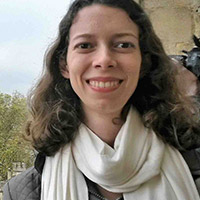
Administradora Cultural - FUNARTE
As pesquisas no mestrado e no doutorado na Comunicação e Semiótica acompanharam minha trajetória profissional: das redes de consumo à gestão cultural. Com a bolsa sanduíche, passei cinco meses na Universidade de Leeds, referência nos estudos em política cultural. A inspiração de professores e colegas e as faíscas provocadas pelo encontro entre o marxismo britânico e as ideias de Foucault e Spinoza me ensinaram que sempre é possível conhecer outros mundos, traçar novas rotas e transformar (mesmo que seja com algumas palavras) um pouco do nosso presente.
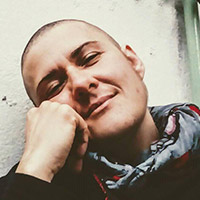
Artista, poeta.
Decidi entrar no programa de pós-graduação em Comunicação e Semiótica da PUC não apenas para dar continuidade à formação do meu conhecimento, mas à minha formação enquanto pessoa. Estou aprendendo que a ação de comunicar gera um bom encontro quando ela está impregnada de generosidade. As professoras e professores instauram um ambiente onde o conhecimento é construído em cada um, ao mesmo tempo na experiência comum de estarmos ali, juntos, e também, na experiência singular de cada pesquisa.

Diretor de Marketing da Rede Globo
Poucas experiências substituem a passagem por programa bem estruturado e aprofundado de pós-graduação. É um período de reflexão, de compartilhamento de conhecimentos, de inúmeras oportunidades de aprendizado, de ter contato com pessoas incríveis em todos os momentos do processo e, é claro, de desenvolvimento. Foi exatamente isso que o Programa de Estudos Pós-Graduados em Comunicação e Semiótica da PUC-SP me proporcionou. Consegui fazer ótimas conexões entre o universo profissional e o acadêmico, elaborando pontes, analogias e um olhar crítico. Fui guiado por conteúdos e tive acesso a autores que ampliaram meu pensamento. Um ambiente imersivo e favorável, com espaço e apoio para o aprofundamento em temas envolventes da Comunicação e da Semiótica. Produzir uma Dissertação e uma Tese foram o fim do processo, mas apenas no seu aspecto formal. A ligação permanece e se retroalimenta a cada novo aprendizado.
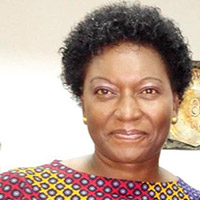
Diretora da Faculdade de Ciências da Linguagem, Comunicação e Artes, da Univ. Pedagógica de Moçambique, Maputo, Moçambique.
Estudar no COS foi uma experiência esplêndida! Cursei mestrado (2006-2007) e doutorado (2010-2013). Isso aconteceu depois de ter feito a graduação em Belo Horizonte (2002-2005). Foi um percurso de vida de mais ou menos 10 anos. Por isso, o Brasil é minha segunda Pátria. Atualmente sou docente, pesquisadora e Diretora da Faculdade de Ciências da Linguagem, Comunicação e Artes, da Universidade Pedagógica de Moçambique. Tenho aproveitado o máximo do conhecimento que adquiri no COS, na PUC-SP e no Brasil.Muito obrigada ao COS e ao Brasil!
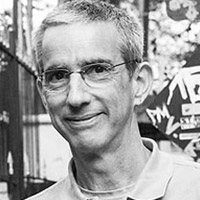
Jornalista, colunista na Folha de São Paulo
“Os muitos benefícios de um ambiente de efervescência intelectual”
Fui aluno do programa de Comunicação e Semiótica nos anos 1990, como mestrando, e mais recentemente, como doutorando, entre 2014/17. Nos dois períodos, vejo que o programa cresceu, se estruturou ainda mais, como de resto todo o ambiente da pós-graduação na PUC. Fui muito beneficiado pelo clima de permanente efervescência intelectual e a convivência com alguns dos mais importantes nomes desse campo de pesquisa no país. Também encontrei colegas com ótimos projetos de pesquisa, que se tornaram referência intelectual além de amigos. E o resultado interessante é que alguns daqueles jovens colegas de mestrado, dez anos depois, já eram eles também referência nos estudos acadêmicos de comunicação. Noto que o COS é ao mesmo tempo desafiador por já ter obtido muitas conquistas ao longo das últimas décadas e porque permanentemente permite aos alunos novas iniciativas nos grupos de pesquisa, nos seminários e nos constantes eventos. As oportunidades de estudos no Exterior também são frequentes e muito importantes. Fui selecionado para um Doutorado Sanduíche no Instituto Warburg, em Londres, com bolsa da PUC/Capes, que foi fundamental para aprimorar meus conhecimentos e minha tese de doutorado.

Pesquisadora da cultura japonesa e de robôs afetivos
O COS me chamou a atenção inicialmente pela abertura para diferentes temas de pesquisa de comunicação. As disciplinas apresentadas pelos professores abordam bibliografias diversificadas, que contemplam uma gama rica de autores. Como pesquisadora de cultura japonesa, estudando agora os robôs afetivos, foi muito importante encontrar uma boa acolhida na PUC, tanto por meio de minha orientadora, referência no assunto, quanto pelo Centro de Estudos Orientais, um dos grupos de pesquisa do programa.
Cientista social, editora da Estação das Letras e Cores
O PPG em Comunicação e Semiótica da PUC-SP foi onde fiz meu mestrado e doutorado. Desde 1994, quando ingressei no mestrado, é neste espaço que encontro pessoas interessadas em trocas, e amplitude de horizontes. Aprendi aqui, na convivência, os princípios democráticos e inclusivos de educação e principalmente de paixão pela pesquisa e conhecimento. Acredito que neste programa a possibilidade interdisciplinar de conviver com diferentes pesquisas e áreas, abordagens teóricas e pesquisadores de diferentes lugares do país fazem toda a diferença. Tenho muito orgulho em ainda hoje transitar, frequentar e conviver com alguns dos que foram meus professores e entender o COS/PUC como minha casa científica, minha instituição de origem e de pesquisa. Aqui me tornei uma profissional da educação, da inquietação e de amor e respeito a todos que buscam conhecer e explorar o mundo.

Criadora do projeto Human Connection
A minha convivência por mais de uma década no Programa de Estudos Pós-Graduados em Comunicação e Semiótica foi um tipo de ação “contingente”, dessas de buscas inexplicáveis. O Centro de Estudos Orientais, que é o único centro de pesquisa do Brasil que investiga o Japão contemporâneo, me trouxe o sentido e o gosto pela vida intelectual. Foram muitas as inquietações e os alentos: mestrado, doutorado, pós-doutorado, inúmeras pesquisas e incontáveis afetos...O grupo de pesquisa e seus coordenadores são incríveis! Valeu muito, muito mesmo! Minha gratidão permanente!

Pesquisador e tradutor
Creio que o Programa de Comunicação e Semiótica da PUC/SP é único na pós-graduação brasileira no sentido de abranger as mais distintas abordagens do evento comunicacional, da semiótica afetiva à teoria da mídia alemã, passando pelas teorias do discurso, entre outras, sempre contaminada por outras áreas como filosofia e antropologia. Com um corpo docente tão diverso e excepcional, me permitiu continuar desenvolvendo uma ideia de comunicação e mídia que não se resume às antiquadas visões do funcionamento dos afetos midiáticos em tempos de fake news e binarismos gritantes. Além disso, as teses e dissertações do COS possuem a liberdade de flertar com o que é conhecido como “research-creation”, onde sigo fazendo meu projeto de Pós-Doutorado, em Montreal, com o grupo Senselab, vinculado à Concordia University.
Artista, videomaker e pesquisadora.
O Programa de Comunicação e Semiótica na PUCSP é fundamental. Nele pude desenvolver minha tese aliando meu percurso de artista com o de pesquisadora acadêmica, o que muitas vezes foi um desafio. No entanto, se era para testar essa ponte teria que ser neste programa onde a comunicação está ligada ao fator humano, pessoal, dando sentido às construções políticas, religiosas e artísticas, pois é o lugar do entendimento, da tradução e por consequência da construção de sentido e do significado.
Arquiteta
Sou arquiteta e desenvolvi uma carreira como artista. Porém, quando pensei em fazer uma pós-graduação não tive dúvidas que seria no Curso de Comunicação e Semiótica da PUC-SP. Estava interessada em analisar ações comunicativas que pudessem explorar diferentes relações entre corpo e ambiente. A partir dos estudos da teoria corpomídia (Greiner e Katz), que aciona diretamente outros autores de áreas diversas como teorias da comunicação, ciências cognitivas e filosofia política, pude elaborar uma base conceitual-perceptiva que tem operado continuamente no meu processo de investigação e criação artística. Dessa forma, tenho produzido obras como cartografias sensíveis que objetivam reinventar relações no mundo e questionar o papel do sujeito como agente soberano dos processos de comunicação.
História
Em vigor desde 1970, o Programa de Pós-Graduação em Comunicação e Semiótica da PUC-SP é o mais antigo na área de Comunicação no Brasil. Lucrécia Ferrara, Haroldo de Campos, D. Pignatari e W. Bolle são alguns dos docentes que formaram o primeiro colegiado. Atento às transformações da ciência, o COS realizou uma reforma, já em 1978, e integrou ao seu curriculum as teorias semióticas. Nesta longa trajetória, o COS mantém viva a sua missão de oferecer um espaço fértil para pesquisas inovadoras e hoje conta com centenas de mestres e doutores atuantes em diversos campos da sociedade.
Corpo Docente
Ana Cláudia Mei de Oliveira
Nome: Profa. Dra. Ana Cláudia Mei de Oliveira
Linha de Pesquisa 1: Regimes de Sentido nos Processos Comunicacionais
Email: acmao@pucsp.br
Resumo: Possui graduação em Língua e Literatura Portuguesa pela Pontifícia Universidade Católica de São Paulo (1975), graduação em Publicidade e Marketing pela Escola Superior de Propaganda e Marketing (1976), mestrado em Comunicação e Semiótica pela Pontifícia Universidade Católica de São Paulo (1983) e doutorado em Comunicação e Semiótica pela Pontifícia Universidade Católica de São Paulo (1989). Atualmente é membro do comitê assessor do Conselho Estadual de Educação, membro do conselho de ex-presidentes da Associação Nacional de Pesquisadores em Artes Plásticas, conselheira de políticas da Federação Brasileira de Associações Científicas e Acadêmicas de Comunicação, consultora ´ad hoc´ da Fundação de Amparo à Pesquisa do Estado de São Paulo, consultora ´ad hoc´ da Coordenação de Aperfeiçoamento de Pessoal de Nível Superior, consultora ´ad hoc´ do Conselho Nacional de Desenvolvimento Científico e Tecnológico, membro da Associação Brasileira de Estudos Semióticos e professora titular da Pontifícia Universidade Católica de São Paulo. Tem experiência na área de Artes, com ênfase em Sociossemiótica, atuando principalmente nos seguintes temas: semiotica discursiva, semiótica, comunicação, sociossemiótica e semiotica visual.
Link CNPq: http://lattes.cnpq.br/2458418074368433
Cecília Almeida Salles
Nome: Profa. Dra. Cecília Almeida Salles
Linha de Pesquisa 2: Processos de Criação na Comunicação e na Cultura
Email: csalles@pucsp.br
Resumo:Tem graduação em Lingua e literatura inglesas pela Pontifícia Universidade Católica de São Paulo (1976), mestrado em Lingüística Aplicada e Estudos de Línguas pela Pontifícia Universidade Católica de São Paulo (1981) e doutorado em Lingüística Aplicada e Estudos de Línguas pela Pontifícia Universidade Católica de São Paulo (1990). Atualmente faz pós-doutorado no Departamento de Cinema, Rádio e Televisão da Escola de Comunicação e Artes de Universidade de São Paulo. É professora titular do Programa de Pós-Graduação em Comunicação e Semótica da Pontifícia Universidade Católica de São Paulo. É coordenadora do Grupo de Pesquisa em Processos de Criação . É autora dos livros Gesto inacabado ? Processo de criação artística 5ª ed. (São Paulo, Intermeios, 2011), Crítica Genética ? Uma (nova) introdução (São Paulo, Educ, 2000), Redes da Criação ? Construção da obra de arte (Valinhos, Editora Horizonte, 2006), Arquivo de criação - Arte e curadoria e do CDRom Gesto Inacabado ? Processo de criação artística (Lei de Incentivo a Cultura do Estado de São Paulo, 2000). Tem experiência na área de Comunicação, atuando principalmente nos seguintes temas: comunicação, processos de criação, semiótica, crítica genética e artes.
Link CNPq: http://lattes.cnpq.br/6112940247306533
Christine Greiner
Nome: Profa. Dra. Christine Greiner
Linha de pesquisa 3: Dimensões Políticas na Comunicação
Email: cgreiner@pucsp.br
Resumo: Possui graduação em Jornalismo pela Faculdade Cásper Líbero(1981), mestrado em Comunicação e Semiótica pela Pontifícia Universidade Católica de São Paulo(1991), doutorado em Comunicação e Semiótica pela Pontifícia Universidade Católica de São Paulo(1997), pós-doutorado pela International Research Center for Japanese Studies(2006), pós-doutorado pela New York University(2007) e pós-doutorado pela Universidade de Tóquio(2003). Atualmente é assistente-doutor da Pontifícia Universidade Católica de São Paulo, Membro de corpo editorial da Cairon, revista de estudios de danza, Membro de corpo editorial da Telondefondo, revista de teoria y critica teatral, Membro de corpo editorial da Sala Preta (USP), Membro de corpo editorial da Revista Ensaio Geral, Membro de corpo editorial da Revista Dança, colaborador do Centro Universitário Belas Artes de São Paulo, Membro de corpo editorial da Galáxia (PUCSP), Revisor de periódico da Galáxia (PUCSP), Revisor de projeto de fomento do Conselho Nacional de Desenvolvimento Científico e Tecnológico, Revisor de projeto de fomento da Pontifícia Universidade Católica, Revisor de projeto de fomento da FAPESP e Revisor de projeto de fomento do Coordenação de Aperfeiçoamento de Pessoal de Nível Superior. Tem experiência na área de Comunicação, com ênfase em Teoria da Comunicação. Atuando principalmente nos seguintes temas:corpomídia, cultura japonesa, artes, comunicação.
Link CNPq: http://lattes.cnpq.br/8331762292364125
Christine Pires Nelson de Mello
Nome: Profa. Dra. Christine Pires Nelson de Mello
Linha de Pesquisa 1: Regimes de Sentido nos Processos Comunicacionais
Email: cpmello@pucsp.br
Resumo: Christine Mello é pesquisadora em Comunicação, Arte e Tecnologia. Autora de Extremidades do vídeo (Senac, 2008) e coautora de Tékhne (MAB, 2010). Professora do Programa de Pós-Graduação em Comunicação e Semiótica (COS) e do Curso Artes do Corpo da PUC-SP, assim como do Curso de Artes Visuais e da Pós-Graduação Lato Sensu em Fotografia e Artes Visuais da FAAP, em São Paulo. Possui pós-doutorado pela ECA-USP, sendo doutora e mestre em Comunicação e Semiótica pela PUC-SP, e Bacharel pela PUC-SP em Comunicação Social, Jornalismo. Realiza junto à Universidade Católica do Porto (em Portugal) o seu segundo pós-doutorado, com a pesquisa Narrativas Emergentes (2017-2019), sob supervisão de Carlos Sena Caires. Seu primeiro pós-doutorado, com a pesquisa Cinemáticas (2008-2009), foi realizado na ECA-USP, sob supervisão de Gilbertto Prado. Seu campo de pesquisa abrange poéticas tecnológicas relacionadas às redes sociais, às narrativas digitais, ao audiovisual, à transmídia e à performance, nas suas relações com a arte contemporânea e a experiência cotidiana.
Link CNPq: http://lattes.cnpq.br/4370603819410677
Eugênio Rondini Trivinho
Nome: Prof. Dr. Eugênio Rondini Trivinho
Linha de pesquisa 3: Dimensões Políticas na Comunicação
Email: trivinho@pucsp.br
Resumo: Professor do Programa de Estudos Pós-Graduados em Comunicação e Semiótica da Pontifícia Universidade Católica de São Paulo (PEPGCOS/PUC-SP), Coordenador Geral do CENCIB - Centro Interdisciplinar de Pesquisas em Comunicação e Cibercultura nessa instituição e Pesquisador do CNPq - Conselho Nacional de Desenvolvimento Científico e Tecnológico, em cujo Diretório de Grupos de Pesquisa o CENCIB/PUC-SP está cadastrado. Doutor em Ciências da Comunicação pela Escola de Comunicações e Artes da Universidade de São Paulo (ECA/USP), é Assessor ad hoc do CNPq, da CAPES - Coordenação de Aperfeiçoamento de Pessoal de Nível Superior e da FAPESP - Fundação de Amparo à Pesquisa do Estado de São Paulo. Coordenador do PEPGCOS/PUC-SP nos biênios 2011-2013 e 2013-2015 e Vice-Coordenador nos biênios 2005-2007 e 2007-2009. Presidente da ABCiber (gestões 2007-2009 e 2009-2011), associação científica que voltou a presidir [em caráter interino] a partir de 2016. Autor de vários ensaios de crítica da comunicação, da civilização mediática, da cultura pós-moderna e da cibercultura, publicou, entre outras obras, 'Glocal: visibilidade mediática, imaginário bunker e existência em tempo real' (São Paulo: Annablume, 2012), 'A dromocracia cibercultural: lógica da vida humana na civilização mediática avançada' (São Paulo: Paulus, 2007), 'O mal-estar da teoria: a condição da crítica na sociedade tecnológica atual' (Rio de Janeiro: Quartet, 2001) e 'Redes: obliterações no fim de século' (São Paulo: Annablume; FAPESP, 1998). Sua obra mais recente [com lançamento previsto para breve] é 'A explosão do cibermundo: velocidade, comunicação e política na civilização tecnológica atual", resultante de dois anos de pesquisa coletiva supervisionada no CENCIB/PUC-SP, com apoio do CNPq.
Link CNPq: http://lattes.cnpq.br/0202215328828014
Fabio Cypriano
Nome: Prof. Dr. Fabio Cypriano
Linha de pesquisa 2: Processos de Criação na Comunicação e na Cultura
Email: cypriano@pucsp.br
Resumo: É professor com livre docência em Comunicação e Artes pela PUC-SP. Possui graduação em Comunicação Social - Jornalismo, mestrado e doutorado em Comunicação e Semiótica, ambos pela Pontifícia Universidade Católica de São Paulo (PUC-SP), e pós-doutorado pela USP com o tema A Bienal de São Paulo e a elite paulista, sob supervisão do professor doutor Jorge Schwartz. É líder do Grupo de Pesquisa DOC_ARTE - Práticas Documentais e Arte e diretor da Faculdade de Filosofia, Comunicação, Letras e Artes da PUC-SP, onde, como professor associado, ministra aulas na graduação e na pós-graduação. Viveu em Berlim (1997 - 2000) para a pesquisa do doutorado sobre Pina Bausch, com bolsa da Fundação Konrad Adenauer. Foi colaborador do jornal O Estado de S. Paulo, entre 1998 e 2000, repórter e crítico da Folha de S. Paulo, de 2000 a 2019. É ainda membro do Conselho Editorial de ARTE!Brasileiros (Brasil) e do Comitê editorial de South as a State of Mind (Atenas), além de colaborador das revistas Frieze (Inglaterra), Flash Art (Itália) e Atlántica (Espanha) É membro do Conselho Consultivo da Associação Cultural Videobrasil e Associado Efetivo do Goethe Institut São Paulo. É autor de Pina Bausch (Sesc, 2018), organizador de Histórias das Exposições. Debates urgentes (Estação, 2018) e co-organizador de Histórias das Exposições - Casos Exemplares (Educ, 2016) e Artes e Práticas Culturais (Educ, 2024), entre outros.
Link CNPq: http://lattes.cnpq.br/0863440167458855
Helena Tania Katz
Nome: Profa. Dra. Helena Tania Katz
Linha de pesquisa 3: Dimensões Políticas na Comunicação
Email: hkatz@pucsp.br
Resumo: Conjugando sua atuação no jornalismo cultural com atividades acadêmicas, é professora no Curso Comunicação das Artes do Corpo e no Programa em Comunicação e Semiótica, na PUC-SP, onde concluiu o doutorado (1994) com a tese Um, Dois, Três. A Dança é o Pensamento do Corpo, publicada em 2005. Graduou-se em Filosofia na Faculdade de Filosofia e Educação da Universidade do Estado do Rio de Janeiro (1971) e exerce a função de crítica de dança desde 1977. Coordena o Centro de Estudos em Dança-CED, que fundou em 1986, grupo de pesquisa certificado pelo CNPq. Pesquisadora, professora, crítica e palestrante nas áreas de Comunicação, Cultura e Artes, desenvolve, em parceria com a Profa. Dra. Christine Greiner, a Teoria Corpomídia (2001, 2003, 2004, 2005, 2007, 2009, 2010), na qual realiza uma nova etapa com o projeto de pesquisa "O corpo apps do sujeito indexado: público e privado na vida on/off line"
Link CNPq: http://lattes.cnpq.br/2978061229980647
Ivo Assad Ibri
Nome: Prof. Dr. Ivo Assad Ibri (Colaborador)
Linha de Pesquisa 2: Processos de Criação na Comunicação e na Cultura
Email: ibri@pucsp.br
Resumo: Possui graduação em Engenharia Civil pela Escola Politécnica da Universidade de São Paulo (1972), mestrado em Filosofia pela Pontifícia Universidade Católica de São Paulo (1986) e doutorado em Filosofia pela Universidade de São Paulo (1994). Realizou pesquisa de pós-doutorado na Universidade de Indiana, Estados Unidos, com bolsa fellowship concedida pelo Institute for Advanced Study daquela universidade. É professor titular da Pontifícia Universidade Católica de São Paulo, e doutor da Faculdade de São Bento. Possui experiência na área de Filosofia, com ênfase em Filosofia Moderna e Contemporânea, atuando principalmente nos seguintes temas: epistemologia, pragmatismo, semiótica, estética e metafísica. É fundador do Centro de Estudos do Pragmatismo do Programa de Estudos Pós-graduados em Filosofia da PUC-SP e editor responsável das revistas Cognitio - Revista de Filosofia e Cognitio-Estudos. Coordena desde 1998 os Encontros Internacionais sobre Pragmatismo, realizados anualmente até 2015 e bianualmente a partir de 2016. É um dos fundadores em 2016 do GT da ANPOF Semiótica e Pragmatismo. A partir de 2009, passou a integrar o corpo de consultores do Peirce Edition Project, da Universidade de Indiana, EUA, que edita a obra cronológica de Charles S. Peirce. Em janeiro de 2014 foi eleito vice-presidente da Charles S. Peirce Society (EUA) tendo assumido a presidência da entidade em 19 de fevereiro de 2015, cujo mandato se encerrou em 08 de janeiro de 2016.
Link CNPq: http://lattes.cnpq.br/9043383494087305
José Amálio de Branco Pinheiro
Nome: Prof. Dr. José Amálio de Branco Pinheiro
Linha de Pesquisa 2: Processos de Criação na Comunicação e na Cultura
Email: pinheiro@pucsp.br
Resumo: Possui graduação em Direito pela Universidade do Estado da Guanabara(1969), especialização em Literatura Hispano-americana pela Universidad de Chile(1970), mestrado em Literatura pela Universidade Metodista de Piracicaba(1980) e doutorado em Comunicação e Semiótica pela Pontifícia Universidade Católica de São Paulo(1985). Atualmente é professor titular da Pontifícia Universidade Católica de São Paulo, Membro de corpo editorial da Nexi e Membro de corpo editorial da Algazarra. Tem experiência na área de Comunicação, atuando principalmente nos seguintes temas: Corpo, Formalismo, Barroco, Mestiçagem, Radicalidade
Link CNPq: http://lattes.cnpq.br/2538254772905885
José Luiz Aidar Prado
Nome: Prof. Dr. José Luiz Aidar Prado
Linha de pesquisa 3: Comunicação pós-acontecimental
Email: jaidar@pucsp.br
Resumo: Resumo possui graduação em Filosofia pela Universidade de São Paulo (1988), graduação em Engenharia Civil pela Universidade de São Paulo (1978), mestrado em Engenharia Civil pela Universidade de São Paulo (1988) e doutorado em Comunicação e Semiótica pela Pontifícia Universidade Católica de São Paulo (1994). Atualmente é professor da Pontifícia Universidade Católica de São Paulo. Foi editor da revista Galaxia durante 19 anos. Coordenou o projeto de pesquisa "A invenção do Outro na mídia semanal - construção de um banco de dados hipermidiático" e "Regimes de visibilidade em revistas" (site do grupo de pesquisa em http://www4.pucsp.br/~umdiasetedias). Atua na área de Comunicação, com ênfase em Teoria da Comunicação, Estudos Discursivos de Mídia, Políticas do acontecimento e Comunicação e psicanálise. Em seu currículo Lattes os termos mais freqüentes na contextualização da produção científica, tecnológica e artístico-cultural são: Comunicação, Discurso, Globalização, teoria da comunicação, Crítica, mídia, jornalismo, mídia semanal, Política e Semiótica. Publicou, além dos DVDs, os livros "Habermas com Lacan"e "Convocações biopolíticas dos dispositivos midiáticos", além de livros em co-autoria: "Sintoma e fantasia no capitalismo comunicacional" e "Comunicação em rede na década do ódio". Foi membro de comitês de avaliação na Capes e no CNPq. Atualmente é pesquisador senior do CNPq.
Link CNPq: http://lattes.cnpq.br/8833752667337994
Leda Tenório da Motta
Nome: Profa. Dra. Leda Tenório da Motta
Linha de Pesquisa 1: Regimes de Sentido nos Processos Comunicacionais
Email: ltmotta@pucsp.br
Resumo: Pesquisador do CNPq Nível 1. Pesquisador associado ao Reseau International Roland Barthes. Membro do grupo de pesquisa em Humanidades e Mundo Contemporâneo à testa do projeto ?Aceleração do Tempo e Pós-Democracia- Violência e Comunicação? no Instituto de Estudos Avançados da USP. Possui graduação em Letras Modernas pela Universidade de São Paulo (1972), mestrado em Semiologia Literária pela École des Hautes Etudes en Sciences Sociales (1978) e doutorado em Semiologia Literária pela Université de Paris VII (1983). Fez pós-doutorados na Université de Paris VII (1986-1988) e no Programa de Estudos Pós-Graduados em Comunicação e Semiótica da Pontifícia Universidade Católica de São Paulo (1995-1997), sobre Celine e Francis Ponge. Estudou com Roland Barthes, Gérard Genette e Julia Kristeva. É hoje professor assistente doutor do quadro de carreira do PEPGCS/PUC/SP, onde vem se dedicando aos objetos da comunicação, entendidos como fatos de linguagem e à psicanálise dos discursos midiáticos. Sob o amparo do CNPq,especializou-se nas relações de Lacan com as vanguardas.Realiza pesquisa sobre as relações entre as literaturas de vanguarda e as infopoéticas e hipertextos contemporâneos e sobre a questão dos paradigmas da crítica, inclusive, da crítIca cultural. Nesse âmbito, publicou um balanço internacional da obra de Haroldo de Campos e o primeiro estudo de fôlego sobre a obra de Roland Barthes a sair no Brasil. Dedica-se ultimamente às relações entre a revolução crítica dos Cahiers du Cinéma e a nouvelle critique.
Link CNPq: http://lattes.cnpq.br/5298452627500759
Lucia Isaltina Clemente Leão
Linha de Pesquisa 2: Processos de Criação na Comunicação e na Cultura
Email: lucleao@pucsp.br
Resumo: Lucia Leão é Pós Doutora em Artes (UNICAMP, 2004); Doutora e Mestre em Comunicação e Semiótica pela PUC-SP (1997; 2001). Fez especialização em Ação Cultural (ECA-USP, 1988) e Bacharelado em Artes Plásticas (FASM, 1985). Coordenadora do Programa de Pós Graduação em Comunicação e Semiótica e Professora do Curso de Comunicação em Multimeios da Pontifícia Universidade Católica de São Paulo, Brasil, PUC/SP. Como artista expos seus projetos no MAC-USP; MAC-Campinas; VIII Artmedia, Paris; FILE SP; Prix Ars Electronica Cyberarts; II Festival do Minuto, MIS - Museu da Imagem e do Som; Bienal de São Paulo; Bienal Internacional de Artes Plásticas de Buenos Aires; Galeria de Arte do SESI, entre outros. Autora de vários livros entre eles: O labirinto da hipermídia (1999); InterLab: labirintos do pensamento contemporâneo, org. (2002); A estética do labirinto (2002); Cibercultura 2.0, org. (2003); Derivas: cartografias do ciberespaço org. (2004); O chip e o caleidoscópio: reflexões sobre as novas mídias org. (2005) e Processos do imaginário, org. (2016). Atua nas áreas de comunicação, processos de criação, cibercultura e educação, fotografia, audiovisual, transmídia, videogames, curadoria em arte e tecnologia.
É Líder do Grupo de Pesquisa em Comunicação e Criação nas Mídias, CCM CNPq. http://dgp.cnpq.br/dgp/espelhogrupo/0123760573081386
https://twitter.com/lucleao
https://pucsp.academia.edu/LLeao https://www.researchgate.net/profile/Lucia_Leao
https://scholar.google.com.br/citations?user=JCgZv2wAAAAJ&hl=pt-BR http://orcid.org/0000-0002-6680-5106
Link CNPq: http://lattes.cnpq.br/5713834069018261
Lucrécia D’Alessio Ferrara
Nome: Profa. Dra. Lucrécia D’Alessio Ferrara
Linha de pesquisa 3: Dimensões Políticas na Comunicação
Email: ldferrara@pucsp.br
Resumo: possui graduação em Letras Neo Latinas pela Pontifícia Universidade Católica de São Paulo (1959), doutorado em Literatura Brasileira pela Pontifícia Universidade Católica de São Paulo (1964), professor livre-docente pela Faculdade de Arquitetura e Urbanismo da Usp. É professora titular emérita da Pucsp e professora titular aposentada da USP ( Faculdade de Arquitetura e Urbanismo). Atualmente exerce a função de professora titular junto ao programa de pósgraduação em Comunicação e Semiótica da Universidade Católica de São Paulo. Lider do Grupo de Pesquisa Espaço-Visualidade/Comunicação-Cultura (ESPACC) certificado pela comissão de Pesquisa da PUCSP e pelo Diretório dos Grupos de Pesquisa Nacionais. Tem experiência na área de Comunicação, com ênfase em Teoria da Comunicação, atuando principalmente nos seguintes temas: epistemologia da comunicação, cultura, semiótica, arquitetura e design.
Link CNPq: http://lattes.cnpq.br/1606647058708790
Maria Lucia Santaella Braga
Nome: Profa. Dra. Maria Lucia Santaella Braga
Linha de Pesquisa 1: Regimes de Sentido nos Processos Comunicacionais
Email: lbraga@pucsp.br
Resumo: Lucia Santaella é pesquisadora 1 A do CNPq, graduada em Letras Português e Inglês. Professora titular emérita da PUCSP, atua no programa de Pós-Graduação em Comunicação e Semiótica da PUCSP, com doutoramento em Teoria Literária na PUCSP em 1973 e Livre-Docência em Ciências da Comunicação na ECA/USP em 1993. É Coordenadora da Pós-graduação em Tecnologias da Inteligência e Design Digital, Diretora do CIMID, Centro de Investigação em Mídias Digitais e Coordenadora do Centro de Estudos Peirceanos, na PUCSP. É presidente honorária da Federação Latino-Americana de Semiótica e Membro Executivo da Associación Mundial de Semiótica Massmediática y Comunicación Global, México, desde 2004. É correspondente brasileira da Academia Argentina de Belas Artes, eleita em 2002. Foi eleita presidente para 2007 da Charles S. Peirce Society, USA. É também um dos membros do Advisory Board do Peirce Edition Project em Indianapolis, USA e um dos membros do Bureau de Coordenadores Regionais do International Communicology Institute. Foi ainda membro associado do Interdisziplinäre Arbeitsgruppe für Kulturforschung (Centro de Pesquisa Interdisciplinar em Cultura), Universidade de Kassel, 1999-2009. Recebeu o prêmio Jabuti em 2002, 2009, 2011 e 2014, o Prêmio Sergio Motta, Liber, em Arte e Tecnologia, em 2005 e o prêmio Luiz Beltrão-maturidde acadêmica, em 2010. Foi professora convidada pelo DAAD na Universidade Livre de Berlin, em 1987, na Universidade de Valencia, em 2004, na Universidade de Kassel, em 2009, na Universidade de Évora em 2010, na Universidad Nacional de las Artes, Buenos Aires, 2014 e na Universidade Michoacana de San Hidalgo, México, 2015. Foi pesquisadora associada no Research Center for Language and Semiotic Studies em Bloomington, Universidade de Indiana, em repetidos estágios de pesquisa, especialmente em 1988, pela Fulbright, Nessa mesma universidade, fez pós-doutorado em 1993, pelo CNPq. Desde 1996, tem feito estágios de pós-doutorado em Kassel, Berlin e Dagstuhl, Alemanha, sob os auspícios do DAAD/Fapesp. 237 mestres e doutores defenderam suas dissertações e teses sob sua orientação, de 1978 até o presente e supervisionou 6 pós-doutorados. Tem 42 livros publicados, dentre os quais 6 são em co-autoria e dois de estudos críticos. Organizou também a edição de 15 livros. Além dos livros, Lucia Santaella tem perto de 400 artigos publicados em periódicos científicos no Brasil e no Exterior. Suas áreas mais recentes de pesquisa são: Comunicação, Semiótica Cognitiva e Computacional, Estéticas Tecnológicas e Filosofia e Metodologia da Ciência.
Link CNPq: http://lattes.cnpq.br/8886485096957731
Norval Baitello Júnior
Nome: Prof. Dr. Norval Baitello Júnior
Linha de Pesquisa 2: Processos de Criação na Comunicação e na Cultura
Email: norvalbaitello@pucsp.br
Resumo: Concluiu o Doutorado em Comunicação na Freie Universitat Berlin em 1987. Atualmente é professor titular na Pós Graduação em Comunicação e Semiótica da Pontifícia Universidade Católica de São Paulo. Foi Diretor da Faculdade de Comunicação e Filosofia da PUC-SP, tendo criado os cursos de Comunicação e Artes do Corpo e Comunicação em Multimeios. Foi professor convidado das Universidades de Viena, Sevilha, S. Petersburg, Autônoma de Barcelona e Évora. Livros mais recentes: A Serpente, a Maça e o Holograma (2010), La Era de la Iconofagia (Sevilha, 2008), Flussers Vollerei (A Gula de Flusser) (Koln, 2007), O Pensamento Sentado: sobre glúteos, cadeiras e Imagens (S.Leopoldo, 2012) e Emoção e Imaginação (org) (S. Paulo, 2014) e A Era da Iconofagia (S. Paulo,2014). De 2007 a 2016 foi Coordenador da área de Comunicação e Ciências da Informação (CHS II) da Fapesp. Recebeu o prêmio “Maturidade Acadêmica” da INTERCOM 2015.
Link CNPq: http://lattes.cnpq.br/7181181691875740
Rogério da Costa Santos
Nome: Prof. Dr. Rogério da Costa Santos (atualmente vice-coordenador)
Linha de pesquisa 3: Dimensões Políticas na Comunicação
Email: rogcosta@pucsp.br
Resumo: possui doutorado em História da Filosofia - Université de Paris IV (Paris-Sorbonne) (1998), mestrado em Filosofia pela Universidade de São Paulo (1991) e graduação em Engenharia de Sistemas e Computação pela Universidade do Estado do Rio de Janeiro (1983). Atualmente é assistente doutor da Pontifícia Universidade Católica de São Paulo, Coordenador do Programa de Pós Graduação em Comunicação e Semiótica. Parecerista Fapesp. Foi consultor OPAS para o Ministério da Saúde no período 2012-2016. No período de 2004/2005 dirigiu a área de tecnologia da PUCSP. No período de 2005/2006 dirigiu a área de metodologias e tecnologias da informação da BIREME/OPAS/OMS. Coordena atualmente o Laboratório de Inteligência Coletiva - LInC (www.linc.org.br). Tem experiência na área de Comunicação, com ênfase em Teoria da Comunicação, atuando principalmente nos seguintes temas: inteligência coletiva, redes sociais, cibercultura, comunidades virtuais, biopolítica e capitalismo cognitivo.
Link CNPq: http://lattes.cnpq.br/4983570722211746
Valdenise Lézier Martyniuk
Nome: Profa. Dra. Valdenise Lézier Martyniuk
Linha de Pesquisa 1: Regimes de Sentido nos Processos Comunicacionais
Email: valdenise@pucsp.br
Resumo: Pós-doutora em Comunicação pela USP, Doutora em Comunicação e Semiótica pela PUC-SP; Pós-Graduada em Marketing pela ESPM; Graduada em Comunicação Social e Publicidade e Propaganda pela PUCCAMP. Professora universitária há mais de 20 anos, atuando nos cursos de pós-graduação em Comunicação e Semiótica, MBA em Marketing, graduação em Administração de Empresas e Publicidade e Propaganda da PUC/SP e de pós-graduação em Marketing de Varejo do Senac/SP. Pesquisadora do Centro de Pesquisas Sociossemióticas da PUC/SP-USP e do GEMA_ Grupo de Estudos da Marca – PUC-SP. Parecerista das revistas Galáxia, Semeiosis, Signos do Consumo, Sodebrás e da Compós para o GT Práticas Interacionais e Linguagens na Comunicação. Profissional de marketing com 30 anos de experiência profissional, tendo atuado na gerência de marketing, produtos e comunicação de várias empresas, especialmente nos segmentos business to business, telecomunicações, informática e indústria química.
Link CNPq: http://lattes.cnpq.br/4689610753252022
Corpo Discente
O Programa busca formar profissionais com compreensão abrangente acerca do conceito de comunicação e suas derivações. Isso deve se refletir em suas habilidades para a pesquisa e o ensino no universo acadêmico em todos os níveis, bem como em suas atividades profissionais no mercado e no terceiro setor. Tradicionalmente, o PEPGCOS tem formado professores que atuam em graduações e pós-graduações da área de comunicação e áreas afins em todo o país. Nesse sentido, o comprometimento do Programa é com a qualificação de um profissional com capacidade para a pesquisa científica, ensino e extensão que possa exercer suas competências de forma crítica e sintonizada com a realidade complexa da sociedade em que vivemos. Igualmente, o egresso da Programa é estimulado a adquirir um olhar transdisciplinar na área de comunicação, dado que boa parte deles deve atuar na produção cultural, como profissionais em mídias digitais, jornalistas, curadores, artistas, fotógrafos, cineastas, jogos virtuais, profissionais do campo da moda e da cultura urbana, entre outros. O PEPGCOS entende que, para além dos recursos teórico-metodológicos que propicia aos dicentes, é também o ambiente criado pela convivência nos grupos de pesquisa e pela interação constante com os pesquisadores nacionais e internacionais que frequentam o Programa que se pode assegurar uma formação condizente com as exigências da área na atualidade.
Egressos
Nesses últimos anos o PEPGCOS formou um grande número de pesquisadores que se encontram hoje atuando em Universidades Federais de todo o território nacional. Em Universidades Federais do Norte e Nordeste, temos atualmente cerca de 42 egressos professores, com destaque para a Universidade Federal da Bahia (15), Universidade Federal do Ceará (7) e Universidade Federal do Pará (7). São 18 egressos em Universidades Federais do Centro-Oeste, com destaque para as Universidades Federais de Goiás (UFG), Mato Grosso (UFMT) e a Universidade de Brasília (UNB) com 5 egressos atuando como professores em cada uma. Na região Sul temos atualmente 14 egressos, com destaque para 7 na Universidade Federal de Santa Catarina (UFSC). Já na região Sudeste são 54 egressos em Universidades Públicas, com destaque para USP e a Universidade Federal do Espírito Santo (UFES), com 16 egressos em cada uma que atuam como professores.
Dentre as universidades públicas e privadas do Estado de São Paulo, temos em torno de 110 egressos, com destaque para SENAC (21), USP (16), Mackenzie (14), FAAP (14), Anhembi-Morumbi (14) e UNESP (9).
E como titulados que são professores na própria PUCSP, temos mais de 50 doutores, sendo que 12 deles ocupam cargos de coordenação em cursos de graduação e 5 deles ocupam cargos de coordenação em Programas de Pós-Graduação.
As 47 instituições listadas a seguir encontram-se entre as universidades onde contamos com a presença de egressos como professores ou gestores:
UFAM, UFPA, UFMA, UFC, UFPI, UFRN, UFPE, UFAL, UFBA, UFT, UFG, UNB, UFMS, UFGD, UFMT, Unisinos, UFPR, UFSC, UEL, UNOPAR, UFRGS, UFPEL, UFSCAR, UFES, UFMG, UFJF, PUC-MG, PUC-CAMPINAS, UFF, UERJ, PUC-PR, USP, UNICAMP, PUC-RJ, Mackenzie, FAAP, Cásper Líbero, UNESP, UNIFESP, UAM, UNIP, UNINOVE, ESPM, São Judas, UNISA, UNISANTOS, Univ. Sorocaba.
A seguir alguns egressos do PEPGCOS que ocupam posição de Coordenadores e/ou vice-coordenadores em PPGs da área, PPGs da PUCSP e que coordenam ou são professores em cursos de extensão da PUCSP:
1- Coordenadores de PPGs da área de Comunicação no Brasil egressos do COS atualmente:
a) Carlos Magno Camargos Mendonça - UFMG b)Rogerio Luiz Cavaleski - UFPE
c) Cintia Fernandes - UERJ
d) Mauricio Ribeiro da Silva - UNIP
e) Tania Márcia Cezar Hoff - ESPM
f) Maria Ogécia Drigo – Univ. Sorocaba
g) Gabriela Borges – Univ. Fed. Juiz de Fora
h) Raquel Ritter Longhi - UFSC
i) Alberto Carlos Augusto Klein – Univ. Estadual Londrina
2- Coordenadores e/ou vice-coordenadores de PPGs da PUCSP, egressos do PEPGCOS:
Belmiro do Nascimento João, Coordenação PPG de Administração.
a) Márcia Helena Mendes Ferraz, Coordenação PPG História da Ciência.
b) Maria Aparecida Junqueira, Coordenação PPG Literatura e Crítica Literária
c) Maria Rosa Duarte de Oliveira, Vice-coordenação PPG Literatura e Crítica Literária
d) Hermes Renato Hildebrand, Coordenação PPG Tecnologias da Inteligência e Design Digital
e) Lucia Santaella, Vice-coordenação PPG Tecnologias da Inteligência e Design Digital (Integra o Corpo de professores permanentes do COS)
3- Coordenadores e/ou professores de cursos de extensão da Cogeae-PUCSP, egressos do PEPGCOS:
A- CURSO DE EXTENSÃO Arte: Crítica e Curadoria
a) Sandra de Camargo Rosa Mraz, Coordenação do curso
b) Elaine da Graça de Paula Caramella, Vice-coordenação do curso
PROFESSORES
a ) Ana Maria Soares de Salles Mariano
b) Christine Greiner (Integra o Corpo de professores permanentes do COS)
c) Elaine da Graça de Paula Caramella
d) Fabio Cypriano
e) Mônica Pinto Rodrigues da Costa
f) Priscila Almeida Cunha Arantes
g) Sonia Regis Barreto
B- CURSO DE EXTENSÃO Comunicação Digital e Jornalismo de Dados
a) Sérgio Roclaw Basbaum, professor
C- CURSO DE EXTENSÃO Crítica de Videogames
a) Flavia Tavares Gasi, professora
D- CURSO DE EXTENSÃO Cultura e Meios de Comunicação: uma abordagem teórico-prática
a) Norval Baitello Junior (Integra o Corpo de professores permanentes do COS)
E- CURSO DE EXTENSÃO Estéticas das Mídias: Foto-Cine-Vídeo-Ciberarte
a) Lucia Santaella, Coordenação do curso (Integra o Corpo de professores permanentes do COS)
b) Sérgio Roclaw Basbaum, professor
F- CURSO DE EXTENSÃO Gamification Open Mind
a) Fabrício Mario Maia Fava, professor
G- CURSO DE EXTENSÃO Redes Sociais, Colaboração e Mobilidade
a) Fábio Fernandes, professor
b) Mirian Meliani, professor
H- CURSO DE EXTENSÃO Roteiro para Animação Digital
a) Leticia Capanema, professora
I- CURSO DE EXTENSÃO Semiótica Psicanalítica – Clínica da Cultura
a)Oscar Angel Cesarotto, Coordenação do curso (Integra o Corpo de professores permanentes do COS)
b) Lucia Santaella, Coordenação do curso (Integra o Corpo de professores permanentes do COS)
PROFESSORES
a) Antonio Roberto Chiachiri Filho
b)Claudio César Montoto
c)Clovis Pereira dos Santos
d)duardo Afonso Furtado Leite
e)Fani Hisgail
J- CURSO DE ESPECIALIZAÇÃO Técnica Klauss Vianna
a) Neide Neves, Coordenação do curso
PROFESSORES
a) Christine Greiner (Integra o Corpo de professores permanentes do COS)
b) Fernanda Raquel
c) Helena Tania Katz (Integra o Corpo de professores permanentes do COS)
d) Leila Ortiz Tavares Costa
e) Luisa Marques Barreto
f )Maria Thereza Feitosa
g) Neide Neves
h) Virgínia Souza
i) Rosana Nogueira Pinto
Finalmente, destacamos os mais de 2.000 (dois mil) graduados pelo Programa que contribuíram ou contribuem para nuclear e/ou aprimorar Programas de Pós-Graduação (stricto sensu, novos ou em desenvolvimento), cursos de Graduação e de Especialização e/ou Grupos de Pesquisa na área de Comunicação e afins, bem como atividades em órgãos de Estado e empresas privadas, em nível nacional, estadual ou local.
English Version
Communication and Semiotics
CAPES Evaluation: Grade 4
Masters and Doctoral Programs
Brief Presentation
The Graduate Program in Communication and Semiotics at PUC-SP is a space for research development in communication, culture, education, and politics. In alignment with the United Nations' 17 Sustainable Development Goals, the COS contributes to addressing current issues and fostering transformation.
Presentation
The Graduate Program in Communication and Semiotics at PUC-SP (COS) conducts research in the field of communication and its interfaces with education, culture, and politics. Observing the United Nations' 17 Sustainable Development Goals (SDGs), COS fosters the discussion and confrontation of current issues. With national and global networks, the GPCOS offers research groups that promote exchange among students and researchers in bibliographic production and scientific and cultural events. The Galáxia, COS's journal, and its rigorous editorial oversight contribute to scientific dissemination.
Affirmative Action Program
The PPGCOS, as part of its social policies, offers an Affirmative Action Program that reserves spots for master's and doctoral students who are Black, Indigenous, with disabilities, or self-identify as transgender.
More info:
- https://www.pucsp.br/pos-graduacao/mestrado-e-doutorado/comunicacao-e-semiotica
- Youtube
History
In place since 1970, the Graduate Program in Communication and Semiotics at PUC-SP is the oldest in the field of Communication in Brazil. Lucrécia Ferrara, Haroldo de Campos, D. Pignatari, and W. Bolle are some of the professors who composed the first faculty. Keeping abreast of scientific advancements, COS underwent a reform as early as 1978, incorporating semiotic theories into its curriculum. Throughout this long trajectory, COS remains committed to its mission of providing a fertile space for innovative research, and today it boasts hundreds of active masters and doctors in various fields of society.
Areas of Concentration and Research Lines
Concentration Area: Sign and Signification in Communicational Processes
Research on regimes of meaning and communicational, creative, and political processes, intersecting with semiotic theories.
-
Research Line 1: Regimes of Meaning in Communicational Processes
Investigates the production of meaning and its interaction regimes, based on semiotic theories.
-
Research Line 2: Creative Processes in Communication and Culture
Focuses on cultural processes in their various forms.
-
Research Line 3: Political Dimensions in Communication
Reflects on the prevailing communicational order on a global scale.
Masters Program
The Masters Program has a minimum duration of 18 months and a maximum of 30 months. The student's work plan is developed together with the advisor. Completion of five courses is mandatory, totaling 15 credits, distributed as follows:
- 2 Courses from the Fundamental Axis = 6 credits
- 1 Research Seminar = 3 credits
- 1 Course in the Research Line = 3 credits
- 1 Course in any Line = 3 credits
- Total credits from courses = 15 credits
Each semester, the student must submit a report on the academic activities and scientific productions that were carried out.
Doctoral Program
The Doctoral Program has a minimum duration of 36 months and a maximum of 48 months. Completion of scheduled activities and courses is mandatory, totaling 20 credits, as follows:
- 1 Course from the Fundamental Axis = 3 credits
- 1 Course in the Research Line = 3 credits
- 1 Course in any Research Line = 3 credits
- 1 Research Seminar = 3 credits
- Scientific publication = 5 credits
- Participation in a conference = 2 credits
- Participation in a research group = 1 credit
Each semester, the student must submit a report on the academic activities and scientific productions that were carried out.
Versión en Español
Comunicación y Semiótica
Evaluación CAPES: Concepto 4
Maestría y Doctorado
Breve Presentación
El Programa de Posgrado en Comunicación y Semiótica de PUC-SP (COS) es un espacio para el desarrollo de investigaciones en comunicación, cultura, educación y política. En sintonía con los 17 Objetivos de Desarrollo Sustentable de la ONU, el COS contribuye para la transformación de problemas actuales.
Presentación
El Programa de Posgrado en Comunicación y Semiótica de PUC-SP desarrolla investigaciones en el campo de la comunicación y sus interfaces con la educación, la cultura y la política. Observando los 17 Objetivos de Desarrollo Sostenible (ODS) de la ONU, el COS fomenta la discusión y el confronto de problemas actuales. Con redes nacionales y globales, el Programa ofrece grupos de investigación que promueven el intercambio entre estudiantes e investigadores en la producción bibliográfica y de eventos científicos y culturales. Galáxia, el periódico de COS, con equipo editorial criterioso, actúa en el proceso de divulgación científica.
Programa de Aciones Afirmativas
El PPGCOS, como práctica vinculada a sus políticas sociales, ofrece un Programa de Aciones Afirmativas que reserva puestos de maestría y doctorado para estudiantes negros, indígenas, personas con discapacidad y aquellos que se declaren transgénero.
Más informaciones:
- https://www.pucsp.br/pos-graduacao/mestrado-e-doutorado/comunicacao-e-semiotica
- Youtube
Historia
En vigor desde 1970, el Programa de Posgrado en Comunicación y Semiótica de PUC-SP es el más antiguo en el área de Comunicación en Brasil. Lucrécia Ferrara, Haroldo de Campos, D. Pignatari y W. Bolle son algunos de los docentes que formaron el primer colegiado. Atento a las transformaciones de la ciencia, el COS realizó uma reforma, ya en 1978, e integró a su currículo las teorías semióticas. En esta larga trayectoria, el COS mantiene viva su misión de ofrecer un espacio fértil para investigaciones innovadoras y hoy cuenta con centenas de maestros y doctores actuantes en diversos campos de la sociedad.
Áreas de Concentración y Líneas de investigación
Área de Concentración: Signo y Significación en los Procesos Comunicacionales
Investigaciones sobre regímenes de sentido y procesos comunicacionales, creativos y de dimensiones políticas, en intersección con teorías semióticas.
-
Línea de Investigación 1: Regímenes de Sentido en los Procesos Comunicacionales
Investiga la producción de sentido y sus regímenes de interacción a partir de teorías semióticas.
-
Línea de Investigación 2: Procesos de Creación en la Comunicación y en la Cultura
Tiene como enfoque los procesos culturales en sus diversas formas.
-
Línea de Investigación 3: Dimensiones Políticas en la Comunicación
Reflexiona sobre el orden comunicacional vigente en escala mundial.
Maestría
La Maestría tiene la duración mínima de 18 y máxima de 30 meses. El plan de trabajo del estudiante es desarrollado en conjunto con el orientador u orientadora. Es obligatoria la realización de cinco asignaturas, totalizando 15 créditos, distribuidos en:
- 2 Asignaturas del Eje Fundamental = 6 créditos
- 1 Seminario de Investigación = 3 créditos
- 1 Asignatura en la Línea de Investigación = 3 créditos
- 1 Asignatura en cualquier Línea = 3 créditos
- Total de créditos de asignaturas = 15 créditos
A cada semestre, el estudiante debe presentar informe de las actividades académicas y producciones científicas realizadas.
Doctorado
El Doctorado tiene duración mínima de 36 y máxima de 48 meses. Es obligatoria la realización de asignaturas y de actividades programadas, totalizando 20 créditos, siendo:
- 1 Asignatura del Eje Fundamental = 3 créditos
- 1 Asignatura de la Línea de Investigación = 3 créditos
- 1 Asignatura en cualquier Línea de Investigación = 3 créditos
- 1 Seminario de Investigación = 3 créditos
- Publicación científica = 5 créditos
- Participación en congreso = 2 créditos
- Participación en grupo de investigación =1 crédito
A cada semestre, el estudiante debe presentar informe de las actividades académicas y producciones científicas realizadas.
Áreas de Concentração e Linhas de Pesquisa
Área de Concentração: Signo e Significação nos Processos Comunicacionais
Pesquisas sobre regimes de sentido e processos comunicacionais, criativos e de dimensões políticas, em intersecção com teorias semióticas.
-
Linha de Pesquisa 1: Regimes de Sentido nos Processos Comunicacionais
Investiga a produção de sentido e seus regimes de interação a partir de teorias semióticas.
-
Linha de Pesquisa 2: Processos de Criação na Comunicação e na Cultura
Tem como foco os processos culturais em suas diversas formas.
-
Linha de Pesquisa 3: Dimensões Políticas na Comunicação
Reflete sobre a ordem comunicacional vigente em escala mundial.
Mestrado
O Mestrado tem a duração mínima de 18 e máxima de 30 meses. O plano de trabalho do estudante é desenvolvido em conjunto com o(a) orientador(a). É obrigatória a realização de cinco disciplinas, totalizando 15 créditos distribuídos em:
- 2 Disciplinas do Eixo Fundamental = 6 créditos
- 1 Seminário de Pesquisa = 3 créditos
- 1 Disciplina na Linha de Pesquisa = 3 créditos
- 1 Disciplina em qualquer Linha = 3 créditos
- Total de créditos de disciplinas = 15 créditos
A cada semestre, o estudante deve apresentar relatório das atividades acadêmicas e das produções científicas realizadas.
Doutorado
O Doutorado tem duração mínima de 36 e máxima de 48 meses. É obrigatória a realização de disciplinas e de atividades programadas, totalizando 20 créditos, sendo:
- 1 Disciplina do Eixo Fundamental = 3 créditos
- 1 Disciplina de Linha de Pesquisa = 3 créditos
- 1 Disciplina em qualquer Linha de Pesquisa = 3 créditos
- 1 Seminário de Pesquisa = 3 créditos
- Publicação científica = 5 créditos
- Participação em congresso = 2 créditos
- Participação em grupo de pesquisa =1 crédito
A cada semestre, o estudante deve apresentar relatório das atividades acadêmicas e das produções científicas realizadas.
Pós-Doutorado
Clique aqui para visualizar as Normas para a Realização do Pós-Doutorado.
CANDIDATO APROVADO PNPD 2019: ICARO FERRAZ VIDAL JUNIOR
INSCRIÇÃO PARA BOLSA PÓS-DOC
12 à 26 de novembro 2018
EDITAL DE PROCESSO DE SELEÇÃO
Estágio de Pós-Doutorado 2019
CANDIDATO APROVADO PNPD 2019:
ICARO FERRAZ VIDAL JUNIOR
Disciplinas
2024
2º Semestre de 2024
Disciplinas do Eixo Fundamental (DEF)
-
DEF: SEMIÓTICA PRAGMATICISTA (cód. Disciplina: COS-P07652)
Professor(a): Lúcia Santaella
Área de Concentração:Signo e Significação nos Processos Comunicacionais
Linha de Pesquisa:Regimes de sentido nos processos comunicacionais
Semestre: 2º/2024
Horário: 2ª feira, 13h às 16h
Créditos: 03
Carga horária: 225 horas
Ementa: clique aqui
-
DEF: Teorias da Complexidade na Comunicação: complexidade, tradução, mídia e paisagem (cód. disciplina: COS-P05500)
Professor(a): Amálio Pinheiro
Área de Concentração: Signo e Significação nas Mídias
Linha de Pesquisa II: Processos de Criação na Comunicação e na Cultura
Semestre: 2º/2024
Horário: 4ª feira, 12h45 às 15h45
Créditos: 03
Carga horária: 225 horas
Ementa: clique aqui
-
DEF: Semiótica da Cultura: Os cursos de Flusser: sua Teoria da Cultura e da Comunicação. Uma perspectiva ecológica (cód. Disciplina: COS-P08965)
Professor(a):Dr. Norval Baitello Junior
Área de Concentração: Signo e Significação nos Processos Comunicacionais
Linha de Pesquisa: Processos de criação na comunicação e na cultura
Semestre: 2º/2024
Horário: 5ª feira, 13h às 16h
Créditos: 03
Carga horária: 225 horas
Ementa: clique aqui
-
DEF: Teorias Críticas da Comunicação (cód.Disciplina: COS-P07689)
Professor(a):Eugênio Rondini Trivinho
Área de Concentração: Signo e Significação nos Processos Comunuicacionais
Linha de Pesquisa: Dimensões Políticas da Comunicação
Semestre: 2º/2024
Horário: 3ª feira, 09h30 às 12h30
Créditos: 03
Carga horária: 225 horas
Ementa: clique aqui
Linha de Pesquisa I
-
Seminário de Pesquisa I (cód. disciplina: P05506)
Professor(a):Valdenise Leziér Martyniuk
Área de Concentração: Signo e significação nos processos comunicacionais
Linha de pesquisa: Regimes de sentido nos processos comunicacionais
Semestre: 2º/2024
Horário: 2ªfeira, das 19h00 às 22h00
Créditos: 03
Carga horária: 225 horas
Ementa: clique aqui
-
DLP: Regimes de sentido nas mídias visuais e audiovisuais: Por uma semiótica da expressão dos discursos estéticos e estésicos (cód. Disciplina: COS-P08960)
Professor(a): Ana Claudia Mei Alves de Oliveira
Área de Concentração:Signo e Significação nos Processos Comunicacionais
Linha de Pesquisa 1: Regimes de Sentido nos Processos Comunicacionais
Semestre: 2º/2024
Horário: 3ªfeira, das 18h00 às 22h00
agosto: 13, 20, 27 = disciplinas de 4 hs. 3x4= 12hs.
setembro: 3, 10, 24= disciplinas de 4hs. 3x4= 12hs.
outubro: 1, 8, 15, 22= disciplinas de 4hs. 4x4=16hs.
outubro: 29 = disciplina de 5 hs. = 5 hs. das 17/22hs.
Créditos: 03
Carga horária: 225 horas
Ementa: clique aqui
-
DLP: Regimes de sentido em linguagens visuais. Semiótica das imagens na hipercomplexidade. Artistas comunicadores e comunicadores artistas. O mito moral da reportagem e a flecha decisiva do flash. (cód.disciplina: COS-P08961)
Professor(a):Leda Tenório da Motta
Área de Concentração: Signo e significação nos processos comunicacionais
Linha de pesquisa: Regimes de sentido nos processos comunicacionais
Semestre: 2º/2024
Horário: 6ªfeira, das 10h00 às 13h00
Créditos: 03
Carga horária: 225 horas
Ementa: clique aqui
-
DLP: Regimes de sentido nas redes audiovisuais, no cinema, na performance e na arte contemporânea (cód. Disciplina COS-P08962)
Professor(a):Christine Pires Nelson de Mello
Área de Concentração: Signo e Significação nas Mídias
Linha de pesquisa: Regimes de Sentido nos Processos Comunicacionais
Semestre: 2º/2024
Módulo 1 - Horário duplo:
Horário: 5ªfeira, das 16h00 às 19h00 e das 19h00 às 22h00
Agosto dia 15 e 29: 16:00 às 22:00h
Setembro dia 12 e 26: 16:00 às 22:00h
Outubro dia 10 e 24: 16:00 às 22:00h
Novembro dia 14: 16 às 22:00h
Módulo 2 - Horário normal
Horário: 5ªfeira, das 19h00 às 22h00
Novembro - Dia 28: das 19h00 às 22h00
Créditos: 03
Carga horária: 225 horas
Ementa: clique aqui
Linha de Pesquisa II
- Disciplina Transversal: Processos de Mediação da Cultura: Semiótica das Imagens na Cultura e nas Artes (cód. disciplina: COS-P08963)
Professor(a):Ivo Assad Ibri
Área de Concentração: Signo e Significação nos Processos Comunicacionais
Linha de Pesquisa 2: Processos de Criação na Comunicação e na Cultura
Semestre:2º/2024
Horário:2ª feira, 16h ás 19h
Créditos: 03
Carga horária: 225 horas
Ementa: clique aqui
- DLP: Disciplina Transversal: Processos Culturais e Modos de Conhecimento: Objetivos de Desenvolvimento Sustentável, Hipermídia e Resistência nas Redes (cód. Disciplina: COS-P08964)
Professor(a):Dra. Lucia Leão
Área de Concentração: Signo e Significação nos Processos Comunicacionais
Linha de Pesquisa 2: Processos de Criação na Comunicação e na Cultura
Semestre:2º/2024
Horário:5ª feira, 16h ás 19h
Créditos: 03
Carga horária: 225 horas
Ementa: clique aqui
- DLP: Processos de criação e complexidade: práticas comunicativas, artísticas e educacionais (cód. Disciplina: COS-P08966)
Professor(a):Cecilia Almeida Salles
Área de Concentração: Signo e Significação nos Processos Comunicacionais
Linha de Pesquisa 2: Processos de Criação na Comunicação e na Cultura
Semestre:2º/2024
Horário:3ª feira, 12h45 ás 15h45
Créditos: 03
Carga horária: 225 horas
Ementa: clique aqui
- DLP: Transversal Teorias críticas na comunicação: novo jornalismo em tempos de pós-verdade (cod. Disciplina: COS-P08967)
Professor(a):Fabio Cypriano
Área de Concentração: Signo e Significação nos Processos Comunicacionais
Linha de Pesquisa 2: Processos de Criação na Comunicação e na Cultura
Semestre:2º/2024
Horário:4ª feira, 16h0 ás 19h00
Créditos: 03
Carga horária: 225 horas
Ementa: clique aqui
Linha de Pesquisa III
-
DEF: Seminário de Pesquisa III (cód.disciplina: COS-P05508)
Professor(a):Prof. Dr. José Luiz Aidar Prado
Área de Concentraçao: Signo e Significação nos Processos Comunicacionais
Linha de Pesquisa 3: Dimensões políticas da comunicação
Semestre:2º/2024
Horário:5ª feira, 16h00 ás 19h00
Créditos: 03
Carga horária: 225 horas
Ementa: clique aqui
-
DLP: Políticas da Vida e Construção de Corpos: uma cartografia indisciplinar do movimento. (Cód.de disciplina: COS-P08968)
Professor(a):Christine Greiner
Área de Concentração: Signo e Significação nos Processos Comunicacionais
Linha de Pesquisa 3: Dimensões Políticas na Comunicação
Semestre:2º/2024
Horário:2ª feira, 12h45 ás 15h45
Créditos: 03
Carga horária: 225 horas
Ementa: clique aqui
-
DLP: Filmografias do Sul Global: mutações político-sociais e neocolonialismo nos cinemas da América latina e África. (cód.disciplina: COS-P08969)
Professor(a):Rogério da Costa
Área de Concentração: Signo e Significação nos Processos Comunicacionais
Linha de Pesquisa 3: Dimensões Políticas na Comunicação
Semestre:2º/2024
Horário:2ª feira, 19h00 ás 22h00
Início de curso: 05 de agosto de 2024
Créditos: 03
Carga horária: 225 horas
Ementa: clique aqui
2024
1º Semestre de 2024
Disciplinas do Eixo Fundamental (DEF)
-
DEF:Semiótica da Cultura: a semiótica russa e a noção de fronteira na América Latina; complexidade cultural e desigualdade social. (Cód. Disciplina. COS-P08821)
Professor(a): Amálio Pinheiro
Área de Concentração:Signo e Significação nas Mídias
Linha de Pesquisa:Processos de Criação na Comunicação e na Cultura
Semestre: 1º/2024
Horário:4ª feira, das 9,30 às 12,30 hs
Créditos: 03
Carga horária: 225 horas
Ementa: clique aqui
-
DEF: Semiótica Discursiva I - Pelos sentidos e ressignificações da vida (cód. Disciplina: COS-P08815)
Prof. (a): Ana Claudia Mei Alves de Oliveira
Área de Concentração: Signo e Significação nos Processos Comunicacionais.
Semestre: 1º/2024
Horário:terça-feira das 18:00 h às 22:00h
Créditos: 03
Carga horária: 225 horas
Ementa: clique aqui
-
DEF:Teorias da complexidade na comunicação: Crítica dos processos de criação (Cód. Disciplina COS-P08823)
Professor(a):Cecilia Almeida Salles
Área de Concentração:Signo e Significação nos Processos Comunicacionais
Linha de Pesquisa 2:Processos de Criação na Comunicação e na Cultura
Semestre: 1º/2024
Horário:3ª feira, das 12:45 às 15:45
Créditos: 03
Carga horária: 225 horas
Ementa: clique aqui
-
DEF:Teorias Críticas da Comunicação (cód. Disciplina: COS-P07689)
Professor(a):Eugênio Rondini Trivinho
Área de Concentração:Signo e Significação nos Processos Comunuicacionais
Linha de Pesquisa:Dimensões Políticas da Comunicação
Semestre: 1º/2024
Horário:Terça-feira, das 9h30 às 12h30
Créditos: 03
Carga horária: 225 horas
Ementa: clique aqui
Linha de Pesquisa I
-
DLP: Regimes de Sentido da Imagem: Imagem e diversidade: Interseccionalidade, feminismo decolonial, corpos políticos e manifestações LGBTQIA+: imagens digitais, afecções traumáticas e modos de análise. - (Código da disciplina: COS-P08818)
Professor(a):Christine Pires Nelson de Mello
Área de Concentração:Signo e Significação nos Processos Comunicacionais
Linha de Pesquisa 1: Regimes de Sentido nos Processos Comunicacionais
Semestre: 1º/2024
Módulo 1- Horário duplo:
Quintas-feiras das 16:00 às 19:00hs e das 19:00 às 22:00h
Março dia 07 e 21: 16:00 às 22:00h
Abril dia 04 e 18: 16:00 às 22:00h
Maio dia 09 e 23: 16:00 às 22:00h
Junho dia 06: 16:00 às 22:00h
Módulo 2- Horário normal:
Quintas-feira das 19:00 às 22:00h
Junho dia 20: das 19:00 às 22:00h
Créditos: 03
Carga horária: 225 horas
Ementa: clique aqui
-
DLP: Regimes desentido nas mídias: Maneiras de clicar uma mulher. Designações e redesignações de gênero em zonas queer teóricas, cinematográficas, publicitárias. (código disciplina: COS-P08816 )
Professor(a):Leda Tenório da Motta
Área de Concentração: Signo e significação nos processos comunicacionais
Linha de pesquisa: Regimes de sentido nos processos comunicacionais
Semestre: 1º/2024
Horário:Sextas-feiras das 10:00 às 13:00 h
Créditos: 03
Carga horária: 225 horas
Ementa: clique aqui
-
DLP: Regimes de sentido nas mídias: Inteligência Artificial Generativa de textos e imagens: criatividade, originalidade e autonomia humanas em questão (Código da Disciplina: COS-P08819)
Professor(a):Lucia Santaella
Área de Concentração: Signo e Significação nos Processos Comunicacionais
Linha de Pesquisa: Regimes de sentido nos processos comunicacionais
Semestre:1º/2024
Horário:2ªfeira, das 13h às 16h
Créditos: 03
Carga horária: 225 horas
Ementa: clique aqui
-
DLP: Regimes de sentido nas práticas de vida - Territórios e identidades: análises de casos e práticas (Código Disciplina: Cod. COS-P08817
Professor(a):Valdenise Leziér Martyniuk
Área de Concentração: Signo e Significação nos Processos Comunicacionais
Linha de Pesquisa: Regimes de sentido nos processos comunicacionais
Semestre:1º/2024
Horario: 2ªfeira, das 19h00 às 22h00
Créditos: 03
Carga horária: 225 horas
Ementa: clique aqui
Linha de Pesquisa II
- Seminário de Pesquisa II (cód. disc. COS-P05507 )
Professor(a):Dra. Lucia Leão
Área de Concentração: Signo e Significação nos Processos Comunicacionais
Linha de Pesquisa 2: Processos de Criação na Comunicação e na Cultura
Semestre:1º/2024
Horário:5ª feira, 16h-19h
Créditos: 03
Ementa: clique aqui
-
Disciplina Transversal: Processos de Mediaçao da Cultura: A criança, as imagens e as telas: velhos e novos ambientes afetivos e sociais gerados pela velha e pela nova mídia (cód. Disciplina: COS-P08822 )
Professor(a):Norval Baitello Junior
Área de Concentração: Signo e Significação nos Processos Comunicacionais
Linha de Pesquisa: Processos de criação na comunicação e na cultura
Semestre:1º/2024
Horário:quintas-feiras /13h às 16h
Ementa: clique aqui
-
Disciplina Transversal: Processos Culturais e Modos de Conhecimento Tema: Semiótica dos signos esquecidos: refletindo sobre as formas de resgate pelas Artes Código da Disciplina: COS-P08820
Professor(a):Ivo Assad Ibri
Área de Concentração: Signo e Significação nos Processos Comunicacionais
Linha de Pesquisa: Processos de criação na comunicação e na cultura
Semestre:1º/2024
Horário:segundas-feiras /16h às 19h
Ementa: clique aqui
Linha de Pesquisa III
-
DLP: Políticas da Vida e Construção de Corpos: O que a genealogia biopolítica do quimono nos ensina sobre tramas midiáticas, colonialismos e a potência performativa das vestes.(cód. Disciplina: COS-P08824)
Professor(a):Christine Greiner
Área de Concentraçao: Signo e Significação nos Processos Comunicacionais
Linha de Pesquisa 3: Dimensões políticas da comunicação
Semestre:1º/2024
Horário:segundas-feiras de 12h45 às 15h45
Início das aulas: 18 de março.
Ementa: clique aqui
-
DLP: Comunicação nas Biopoliticas contemporâneas: Narrativas da diversidade nas filmografias do Sul Global: estudos do cinema pós-colonial, decolonial, cinema negro, cinema mulher, cinema LGBTQIA+ e suas lutas políticas. (cód. disc. COS-P08825 )
Professor(a):Dr. Rogério da Costa
Área de Concentração: Signo e Significação nos Processos Comunicacionais
Linha de Pesquisa 3: Dimensões Políticas na Comunicação
Semestre:1º/2024
Horário:Segunda-Feira, das 19:00 às 22:00 hs
Início de curso: 26 de fevereiro de 2024
Créditos: 03
Carga Horária: 225 horas
Ementa: clique aqui
2023
2º Semestre de 2023
Disciplinas do Eixo Fundamental (DEF)
-
DEF: Semiótica Pragmaticista - (Cód.da disciplina COS-P07652)
Professor(a): Profa. Dra. Lúcia Santaella (cód. Orientação 195)
Área de Concentração: Signo e Significação nos Processos Comunicacionais.
Linha de Pesquisa: Regimes de sentido nos Processos Comunicacionais
Semestre: 2º/2023
Horário: segunḑa-feira das 13:00 h às 16:00h
Créditos: 03
Carga horária: 225 horas
Ementa: clique aqui
-
DEF: Teorias Culturalísticas da Comunicação: Fundamentos de uma ecologia da imagem (cód. Disciplina: COS-P08631)
Professor(a): Prof. Norval Baitello Junior (Código de Orientação:1350)
Área de Concentração: Signo e Significação nos Processos Comunicacionais
Linha de Pesquisa 2: Processos de Criação na Comunicação e na Cultura
Semestre: 2º/2023
Horário: 5ª feira, das 13:00 às 16:00
Créditos: 03
Carga horária: 225 horas
Ementa: clique aqui
-
DEF: Teorias da Complexidades na Comunicação: Metodos de Pesquisa, colaboração e transdisciplinaridade - (cód. Disciplina: COS-P08630
Professor(a): Profa. Dra. Lucia Leão (Código orientação:7253)
Área de Concentração: Signo e Significação nos Processos Comunicacionais
Linha de Pesquisa 2: Processos de Criação na Comunicação e na Cultura
Semestre: 2º/2023
Horário: quinta-feira, das 16h às 19h.
Créditos: 03
Carga horária: 225 horas
Ementa: clique aqui
-
DEF: Teorias críticas da Comunicação: Comunicação: das massas modernas às multidões do século 21 – Cód. Disciplina COS-P08633)
Professor(a): Prof. Dr. José Luiz Aidar Prado (Cód. Orientação 6253)
Área de Concentração: Signo e Significação nos Processos Comunicacionais
Linha de Pesquisa 3: Dimensões políticas da Comunicação
Semestre: 2º/2023
Horário: quartas-feiras das 16:00 às 19:00 h
Créditos: 03
Carga horária: 225 horas
Ementa: clique aqui
Linha de Pesquisa I
-
SEMINÁRIO DE PESQUISA I - Cód disciplina: COS-P05506
Professor(a): Profa. Leda Tenório da Motta – (Cód. Orientação: 6333)
Área de Concentração: Signo e Significação nos Processos Comunicacionais
Linha de Pesquisa: Regimes de sentido nos Processos Comunicacionais
Semestre: 2º/2023
Horário: 6ª feira, das 10h00 às 13h00
Créditos: 03
Carga horária: 225 horas
Ementa: clique aqui
-
DLP: Regimes de Sentido das Práticas Sociais - (Cod. Disciplinas COS-P08626)
Professor(a): Prof(a) Dr(a) Ana Claudia Mei Alves de Oliveira (cod. Orientação: 784)
Área de Concentração: Signo e significação nos processos comunicacionais
Linha de Pesquisa: Regimes de sentido nos Processos Comunicacionais
Semestre: 2º/2023
Horário: 3ª feira das 18:00 hs às 22:00 hs
Agosto aulas de 4 horas = dias 8, 15 e 29
Setembro aulas de 4 horas = dias 5, 12, 19 e 26
Outubro aulas de 4 horas = dias 3 e 10
Novembro aula de 5 horas = dia 7 – aulas das 17hs. às 22hs
Novembro aula de 4 horas = dia 14
Créditos: 03
Carga horária: 225 horas
Ementa: clique aqui
-
DLP: Riscos e cri(ação) transformadora no contemporâneo (Código Disciplina: COS-P08627)
Professor(a): Valdenise Leziér Martyniuk (Código Orientação: 5647)
Área de Concentração: Signo e Significação nos Processos Comunicacionais
Linha de Pesquisa: Regimes de Sentido nos Processos Comunicacionais
Semestre: 2º/2023
Horário: segundas-feiras das 19:00 às 22:00hs
Créditos: 03
Carga horária: 225 horas
Ementa: clique aqui
-
DLP: Imagens do fim do mundo em seus regimes ético-estéticos: inimizade, discursos de ódio, micropolítica e o contra-ataque da diversidade nas redes sociais. - (Cód. Disciplina COS-P08628)
Professor(a): Christine Pires Nelson de Mello (Código 5217)
Área de Concentração: Signo e Significação nos Processos Comunuicacionais
Linha de Pesquisa: Regimes de sentido e processos comunicacionais
Semestre: 2º/2023
Módulo 1 - Horário duplo:
Quintas-feiras das 16:00 às 19:00hs e das 19:00 às 22:00h.
Agosto dia 03, 17 e 31: 16:00 às 22:00h
Setembro dia 14 e 28: 16:00 às 22:00h
Outubro dia 19: 16:00 às 22:00h
Novembro dia 09: 16:00 às 22:00h
Módulo 2 - Horário normal - Quintas-feiras das 19:00 às 22:00h
Novembro dia 23: das 19:00 às 22:00h
Créditos: 03
Carga horária: 225 horas
Ementa: clique aqui
Linha de Pesquisa II
- Seminário de Pesquisa II - (cód. Disciplina: COS-P05507)
Professor(a) Dr(a): Amálio Pinheiro (cód. Orientação 3318)
Área de Concentração: Signo e significação nas mídias
Linha de Pesquisa: Processos de criação na comunicação e na cultura
Semestre: 2º/2023
Horário: quartas-feiras 12h45 às 15h45
Créditos: 03
Ementa: clique aqui
-
Disciplina Transversal: Processos de Mediação da Cultura: A dialogia semiótica entre mundos interior e exterior – a interatividade sígnica entre inteligência sensível e sensibilidade inteligente - (Código da Disciplina: COS-P08629)
Professor(a): Ivo Assad Ibri
Área de Concentração: Signo e Significação nos Processos Comunicacionais
Linha de Pesquisa: Processos de Criação na Comunicação e na Cultura
Semestre: 2º/2023
Horário: 2ª feira, das 16 às 19:00
Ementa: clique aqui
-
DLP: Processos de criação e complexidade: Agentes criativos nas redes culturais (cód. Disciplina COS-P08632)
Professor(a): Cecilia Almeida Salles (cód. Orientação 1005)
Área de Concentração: Signo e Significação nos Processos Comunicacionais
Linha de Pesquisa: Processos de Criação na Comunicação e na Cultura
Semestre: 2º/2023
Horário: 3ª feira, das 12:45 às 15:45
Ementa: clique aqui
Linha de Pesquisa III
-
DLP: Políticas da Vida e Construção de Corpos - Reativações Anárquicas do Animismo Contemporâneo - (cód. Disciplina COS-P08634)
Professor(a): Dra. Christine Greiner (cód. Orientação: 6625)
Signo e Significação nas Mídias
Linha de Pesquisa 3: Dimensões Políticas na Comunicação
Semestre: 2º/2023
Horário: 2ª feira, das 12:45 às 15:45
Nível: Mestrado/Doutorado
Créditos: 03
Carga horária: 225 horas
Ementa: clique aqui
-
DLP: Ordens globais e glocais na civilização tecnomidiática: Visibilidade mediática: glocalização, cultura da velocidade e transpolítica - (Cód. Disciplina: COS-P08635
Professor(a): Prof. Dr. Eugênio Trivinho - (cód. orientação:7437)
Área de Concentração: Signo e Significação nos Processos Comunicacionais
Linha de Pesquisa: Dimensões Políticas na Comunicação
Semestre: 2º/2023
Horário: terça-feira, das 9h30 às 12h30
Créditos: 03
Ementa: clique aqui
-
DLP: Erotismo e exotismo coloniais na produção cinematográfica do século XX: estudos dos dispositivos de dominações cruzadas das questões sexuais e raciais - (cód. Disciplina: COS-P08636)
Professor(a): Dr. Rogério, da Costa Santos (cód. de orientação:6535)
Área de Concentração: SIGNO E SIGNIFICAÇÃO NOS PROCESSOS COMUNICACIONAIS
Linha de Pesquisa 3: Dimensões políticas da comunicação
Semestre: 2º/2023
Início de curso: 07 de agosto de 2023
Horário: Segunda-Feira, das 19:00 às 22:00 hs.
Créditos: 03
Carga horária: 225 horas
Ementa: clique aqui
1º Semestre de 2023
Disciplinas do Eixo Fundamental (DEF)
-
DEF: Semiótica Discursiva I (cód. Disciplina: P08463)
Professor(a): Ana Claudia Mei Alves de Oliveira
Área de Concentração: Signo e Significação nos Processos Comunicacionais.
Semestre: 1º/2023
Horário: terça-feira das 18:00 h às 22:00h
Créditos: 03
Carga horária: 225 horas
Ementa: clique aqui
-
DEF: Teorias da complexidade na comunicação: Redes comunicativas e educacionais (cód. Disciplina: P08467)
Professor(a): Cecilia Almeida Salles
Área de Concentração: Signo e Significação nos Processos Comunicacionais
Semestre: 1º/2023
Horário: 3ª feira, das 12:45 às 15:45
Créditos: 03
Carga horária: 225 horas
Ementa: clique aqui
-
DEF: Semiótica da Cultura: A teoria ecológica da mídia de Harry Pross
Professor(a): Norval Baitello Junior
Área de Concentração: Signo e Significação nos Processos Comunicacionais
Semestre: 1º/2023
Horário: quinta-feira, das 13 às 16h.
Créditos: 03
Carga horária: 225 horas
Ementa: clique aqui
-
DEF: Teorias Culturalistas da Comunicação: mídia e política dos signos: o macro, o micro e a paisagem cultural. (cód. disciplina: P06989)
Professor(a): Amálio Pinheiro
Área de Concentração: Signo e Significação nas Mídias
Semestre: 1º/2023
Horário: quartas-feiras das 12,45 às 15,45 hs
Créditos: 03
Carga horária: 225 horas
Ementa: clique aqui
-
DEF: Teorias Críticas da Comunicação (cód. Disciplina: P07689)
Professor(a): Eugênio Rondini Trivinho
Área de Concentração: Signo e Significação nos Processos Comunuicacionais
Semestre: 1º/2023
Horário: Terça-feira, das 9h30 às 12h30
Créditos: 03
Carga horária: 225 horas
Ementa: clique aqui
Linha de Pesquisa I
-
DEF: Seminário de Pesquisa I (cód. disciplina: P05506)
Professor(a): Valdenise Leziér Martyniuk
Área de Concentração: Signo e Significação nos Processos Comunicacionais
Linha de Pesquisa: Regimes de Sentido nos Processos Comunicacionais
Semestre: 1º/2023
Horário: 2ª feira, das 19h00 às 22h00
Créditos: 03
Carga horária: 225 horas
Ementa: clique aqui
-
DLP: Regimes de sentido nos processos comunicacionais: imagens santas, falsas, tóxicas, verdadeiras da iconoclastia ao antilogocentrismo. (código disciplina: P08460)
Professor(a): Leda Tenório da Motta
Área de Concentração: Signo e significação nos processos comunicacionais
Linha de Pesquisa: Regimes de sentido nos processos comunicacionais
Semestre: 1º/2023
Horário: Sextas-feiras das 10:00 às 13:00h
Créditos: 03
Carga horária: 225 horas
Ementa: clique aqui
-
DLP: Regimes do Audiovisual: por outras imagens do mundo nas redes sociais. (Cód. Disciplina: P08461)
Professor(a): Christine Pires Nelson de Mello
Área de Concentração: Signo e Significação nos Processos Comunicacionais
Linha de Pesquisa: Regimes de Sentido nos Processos Comunicacionais
Semestre: 1º/2023
Horário: Quartas-feiras das 19:00 às 22:00hs
Créditos: 03
Carga horária: 225 horas
Ementa: clique aqui
-
DLP: Regimes de sentidos nas práticas de vida: semiosfera e antropoceno (cód. disciplina: P08462)
Professor(a): Maria Lucia Santaella Braga
Área de Concentração: Signo e Significação nos Processos Comunuicacionais
Linha de Pesquisa: Regimes de sentido e processos comunicacionais
Semestre: 1º/2023
Horário: segunda feira das 13:00 ás 16:00
Créditos: 03
Carga horária: 225 horas
Ementa: clique aqui
Linha de Pesquisa II
-
Disciplina Transversal: Processos de criação e complexidade: Sobre uma Semiótica do Tempo: mediações e imediações em arte e ciência. (cód. Disciplina: P08464)
Professor(a): Ivo Assad Ibri
Área de Concentração: Signo e Significação nos Processos Comunicacionais
Linha de Pesquisa: Processos de criação na comunicação e na cultura
Semestre: 1º/2023
Horário: segundas-feiras 16h às 19h
Créditos: 03
Carga horária: 225 horas
Ementa: clique aqui
-
DLP: Processos de mediação da cultura: comunicação e transformação social (cód. Disciplina: )
Professor(a): Lucia Leão
Área de Concentração: Signo e Significação nos Processos Comunicacionais
Linha de Pesquisa: Processos de Criação na Comunicação e na Cultura
Semestre: 1º/2023
Horário: 5ª feira, das 16 às 19:00
Créditos: 03
Carga horária: 225 horas
Ementa: clique aqui
Linha de Pesquisa III
-
DLP: Comunicação nas Biopolíticas Contemporâneas: Discurso e acontecimento na era das redes globalizadas (cód. Disciplina: P08468)
Professor(a): José Luiz Aidar Prado Professor
Área de Concentração: Signo e Significação nos Processos Comunicacionais
Linha de Pesquisa: Dimensões Políticas na Comunicação
Semestre: 1º/2023
Horário: quartas-feiras, 16-19 hs
Créditos: 03
Carga horária: 225 horas
Ementa: clique aqui
-
DLP: Comunicação nas Biopolíticas Contemporâneas: comunidades, alianças, assembleias e a constituição coletiva de formas possíveis de vida. (cód. disciplina: P08469)
Professor(a): Christine Greiner
Área de Concentração: Signo e Significação nos Processos Comunicacionais
Linha de Pesquisa: Dimensões Políticas na Comunicação
Semestre: 1º/2023
Horário: Segundas-feiras, das 12h45 às 15h45
Créditos: 03
Carga horária: 225 horas
Ementa: clique aqui
-
DLP: Sexualidades, amor e erotismo nos corpos coloniais e pós-coloniais: estudos dos dispositivos de dominações cruzadas das questões sexuais e raciais.
Professor(a): Rogério da Costa Santos
Área de Concentração: SIGNO E SIGNIFICAÇÃO NOS PROCESSOS COMUNICACIONAIS
Linha de Pesquisa: Dimensões políticas da comunicação
Semestre: 1º/2023
Horário: Segunda-Feira, das 19:00 às 22:00 hs.
Créditos: 03
Carga horária: 225 horas
Ementa: clique aqui
2022
2º Semestre de 2022
Disciplinas do Eixo Fundamental (DEF)
-
DEF: Semiótica da Cultura: a semiótica russa e a noção de fronteira na América Latina. (Código da Disciplina: P07684)
Professor: Amálio Pinheiro (código orientação: 3318)
Área de Concentração: Signo e Significação nas Mídias
Linha de Pesquisa: Processos de Criação na Comunicação e na Cultura
Horário: 4ª feira, das 12,45 às 15,45 hs
Créditos: 3
Carga Horária: 225 horas
Semestre: Semestre: 2º semestre de 2021
Ementa: clique aqui
-
DEF: Semiótica Pragmaticista (cód. Disciplina: COS-P07652)
Professora: Dra. Maria Lucia Santaella Braga (cód. Orientação: 195 )
Área de Concentração: Signo e Significação nos Processos Comunicacionais
Linha de Pesquisa: Regimes de sentido nos processos comunicacionais
Semestre: 2º/2022
Horário: 2º feira. Das 13:00 às 16:00h
Créditos: 03
Carga horária: 225
Ementa: clique aqui
-
DEF: Teorias da Complexidade na Comunicação: A Ecologia da Comunicação (cód. Disciplina: P08309)
Professor: Dr Norval Baitello Junior (cód. Orientação: 1350 )
Área de Concentração: Signo e Significação nas mídias
Linha de Pesquisa: Processos de criação na comunicação e na cultura
Semestre: 2º/2022
Horário: 5º feira. Das 13:00 às 16:00h
Créditos: 03
Carga horária: 225
Ementa: clique aqui
Linha de Pesquisa I
-
Seminário de Pesquisa I - (código da disciplina: P05506)
Professor(a): Dra. Leda Tenório da Motta - (cód. Orientação: 6333)
Área de Concentração: Signo e Significação nos Processos Comunicacionais
Linha de Pesquisa: Regimes de Sentido e processos comunicacionais
Semestre: 2º/2022
Horário: 6ªfeira, das 10h às 13h
Créditos: 03
Carga horária: 225 horas
Ementa: clique aqui
-
DLP: Sensível e inteligível na semiótica das práticas sociais (código da disciplina: P08305)
Professor(a): Ana Claudia Mei Alves de Oliveira - (cód. Orientação: 784)
Área de Concentração: Signo e Significação nos Processos Comunicacionais
Linha de Pesquisa: Regimes de Sentido e processos comunicacionais
Semestre: 2º/2022
Horário: 3ªfeira, das 19h às 22h
Créditos: 03
Carga horária: 225 horas
Ementa: clique aqui
-
DLP: Sentidos dos discursos da pluralidade e diversidade no contexto de valorização da individualidade e da experiência. (código da disciplina: P08306)
Professor(a): Valdenise Leziér Martyniuk - (cód. Orientação: 5647)
Área de Concentração: Signo e Significação nos Processos Comunicacionais
Linha de Pesquisa: Regimes de Sentido e processos comunicacionais
Semestre: 2º/2022
Horário: 2ªfeira, das 19h às 22h
Créditos: 03
Carga horária: 225 horas
Ementa: clique aqui
-
DLP: Regimes de Sentido da Imagem: Imagens em rede, audiovisual e performance: diversidade e modos de análise. (código da disciplina: P08307)
Professor(a): Christine Pires Nelson de Mello - (cód. Orientação: 5217)
Área de Concentração: Signo e Significação nos Processos Comunicacionais
Linha de Pesquisa: Regimes de Sentido e processos comunicacionais
Semestre: 2º/2022
Créditos: 03
Carga horária: 225 horas
Módulo 1 - Horário duplo: 4ªfeira das 16h às 19h e das 19h às 22h
de 10/08 à 23/11 [10/08; 24/08; 14/09; 28/09; 19/10, 09/11 e 23/11]Módulo 2 - Horário normal: 4ªfeira das 16h às 19h
07/12Ementa: clique aqui
Linha de Pesquisa II
-
Seminário de Pesquisa II - (cód. Disciplina: P05507)
Professor(a): Dra. Cecilia Almeida Salles - (cód. Orientação: 1005)
Área de Concentração: Signo e Significação nas mídias
Linha de Pesquisa 3: Processos de criação na comunicação e na cultura
Semestre: 2º/2022
Horário: 3ªfeira, das 12:45h às 15:45h
Créditos: 03
Carga horária: 225 horas
Ementa: clique aqui
-
Disciplina Transversal: Processos Culturais e Modos de Conhecimento: Semiótica das Imagens nas diversas Formas de Arte: música, literatura, artes plásticas. - (cód. Disciplina: P08308)
Professor(a): Ivo Assad Ibri
Área de Concentração: Signo e Significação nos processos comunicacionais
Linha de Pesquisa: Processos de criação na comunicação e na cultura
Semestre: 2º/2022
Horário: 2ªfeira, das 16h às 19h
Créditos: 03
Carga horária: 225 horas
Ementa: clique aqui
-
DLP: Processos de criação e complexidade: direitos humanos, diversidade e resistência nas redes. - (cód. Disciplina: P08309)
Professor(a): Dra. Lucia Leão - (cód. Orientação: 7253)
Área de Concentração: Signo e Significação nos processos comunicacionais
Linha de Pesquisa 2: Processos de criação na comunicação e na cultura
Semestre: 2º/2022
Horário: 5ªfeira, das 16h às 19h
Créditos: 03
Carga horária: 225 horas
Ementa: clique aqui
Linha de Pesquisa III
-
Seminário de Pesquisa III - (cód. Disciplina: P05508)
Professor(a): Dr. José Luiz Aidar Prado - (cód. Orientação: 6253)
Área de Concentração: Signo e Significação nos processos comunicacionais
Linha de Pesquisa 3: Dimensões políticas da comunicação
Semestre: 2º/2022
Horário: 4ªfeira, das 16h às 19h
Créditos: 03
Carga horária: 225 horas
Ementa: clique aqui
-
DLP: Políticas da vida e construção de corpos. A arte de fabular como exercício político. - (cód. Disciplina: P08311)
Professor(a): Dra. Christine Greiner - (cód. Orientação: 6625)
Área de Concentração: Signo e Significação nos processos comunicacionais
Linha de Pesquisa 3: Dimensões políticas da comunicação
Semestre: 2º/2022
Horário: 2ªfeira, das 12h45 às 15h45
Créditos: 03
Carga horária: 225 horas
Ementa: clique aqui
-
DLP: Ordens globais e glocais na civilização tecnomidiática: Fundamentos da visibilidade multimediática: glocalização, dromoaptidão e transpolítica. - (cód. Disciplina: P08312)
Professor(a): Dr. Eugênio Trivinho - (cód. Orientação: 7437)
Área de Concentração: Signo e Significação nos processos comunicacionais
Linha de Pesquisa: Dimensões políticas da comunicação
Semestre: 2º/2022
Horário: 3ªfeira, das 9h30 às 12h30
Créditos: 03
Ementa: clique aqui
-
DLP: Linguagens totalitárias e sua disseminação nas mídias e redes sociais: uma análise do texto “Guerra e Capital” de Éric Alliez e Maurizio Lazzarato. - (cód. Disciplina: P08313)
Professor(a): Dr. Rogério da Costa - (cód. Orientação: 6535)
Área de Concentração: Signo e Significação nos processos comunicacionais
Linha de Pesquisa 3: Dimensões políticas da comunicação
Semestre: 2º/2022
Horário: 2ªfeira, das 19h às 22h
Créditos: 03
Carga horária: 225 horas
Ementa: clique aqui
1º Semestre de 2022
Disciplinas do Eixo Fundamental (DEF)
-
DEF: Teorias Semióticas: Semiótica discursiva II (cód.disciplina: P07357)
Professor(a): Dra. Ana Claudia Mei Alves de Oliveira
Área de Concentração: Signo e significação nas mídias
Semestre: 1º/2022
Horário: terça-feira, das 18h às 21h
Créditos: 03
Carga horária: 225 horas
Ementa: clique aqui
-
DEF: Teorias da Complexidade na Comunicação: complexidade, tradução, mídia e paisagem
Professor(a): Amálio Pinheiro
Área de Concentração: Signo e Significação nas Mídias
Linha de Pesquisa II: Processos de Criação na Comunicação e na Cultura
Semestre: 1º/2022
Horário: 4ª feira, das 12,45 às 15,45 hs
Créditos: 03
Carga horária: 225 horas
Ementa: clique aqui
-
DEF: Processos culturais e modos de conhecimento: crise, antropoceno, pandemia, diversidade e imaginário
Professor(a): Lucia Leão
Área de Concentração: Signo e Significação nos Processos Comunicacionais
Linha de Pesquisa 2: Processos de Criação na Comunicação e na Cultura
Semestre: 1º de 2022
Horário: 5ª feira, das 16 às 19:00
Créditos: 03
Carga horária: 225 horas
Ementa: clique aqui
-
DEF: Semiótica da Cultura – Imagem e Vínculo
Professor(a): Norval Baitello Junior
Área de Concentração: Signo e Significação nas Mídias
Linha de Pesquisa 2: Processos de criação na comunicação e na cultura
Dia e horário: 5ª feira, das 13 às 16 horas
Semestre: 1 º/2022
Nível: Mestrado/Doutorado
Créditos: 03
Carga Horária: 225 horas
Ementa: clique aqui
-
DEF: Teorias Culturalistas da Comunicação
Professor(a): Dra. Lucrécia D´Alessio Ferrara
Área de Concentração: Signo e Significação nos Processos Comunicacionais
Linha de Pesquisa: Dimensões Políticas da Comunicação
Semestre: 1º/2022
Horário: 3ª feira, das 16 às 19h
Créditos: 03
Carga horária: 225 horas
Ementa: clique aqui
-
DEF: Teorias Críticas da Comunicação
Professor: Eugênio Rondini Trivinho
Área de Concentração: Signo e Significação nos Processos Comunuicacionais
Linha de Pesquisa: Dimensões Políticas da Comunicação
Semestre: 1º de 2022
Horário: 3ªfeira das 9h30 às 12h30
Créditos: 03
Carga Horária: 225 horas
Ementa: clique aqui
Linha de Pesquisa I
-
DEF: Seminário de Pesquisa I
Professor(a): Prof(a). Valdenise Leziér Martyniuk
Área de Concentração: Signo e Significação nos Processos Comunicacionais
Linha de Pesquisa: Regimes de Sentido
Semestre: 1º/2022
Horário: 2ªfeira, das 19h às 22h
Créditos: 03
Carga horária: 225 horas
Ementa: clique aqui
-
DLP: Regimes de sentido nos processos comunicacionais: Diversidade e Gênero
Professor(a): Leda Tenório da Motta
Área de Concentração: Signo e Significação nos Processos Comunicacionais
Linha de Pesquisa: Regimes de Sentido e Processos Comunicacionais
Semestre: 1º/2022
Horário: 6ªfeira, das 10h às 13h
Créditos: 03
Carga horária: 225 horas
Ementa: clique aqui
-
Regimes de Sentido no Audiovisual e na Imagem: Diversidades: Audiovisual e Imagens em Rede
Professor(a): Christine Pires Nelson de Mello
Área de Concentração: Signo e Significação nos Processos Comunicacionais
Linha de Pesquisa 1: Regimes de Sentido nos Processos Comunicacionais
Semestre: 1º/2022
Horário duplo: Quartas-feiras das 16:00 às 19:00 hs e das 19:00 às 22:00 hs
MÓDULO 1: De 23/03 a 06/04 das 16:00 às 22:00
MÓDULO 2: De 04 a 25/05 das 16:00 às 22:00
MÓDULO 2: Dia 01/06 das 16:00 às 19:00
Créditos: 03
Carga horária: 225 horas
Ementa: clique aqui
-
DLP: Regimes de sentido nas práticas de vida: A semiótica comunicacional da desinformação e da mentira.
Professor(a): Lucia Santaella
Área de Concentração: Signo e Significação nos Processos Comunicacionais
Linha de Pesquisa I: Regimes de Sentido nos Processos Comunicacionais
Semestre: 1º/2022
Horário: 2ªfeira, das 13h às 16h
Créditos: 03
Carga horária: 225 horas
Ementa: clique aqui
Linha de Pesquisa II
-
DLP: Processos de Mediação da Cultura: Linguagens e Realidade: Fake News, Arte, Abdução – Reflexões sobre uma Semiótica do Imaginário
Professor(a): Ivo Assad Ibri
Área de Concentração: Signo e Significação nas Mídias
Linha de Pesquisa 2: Processos de criação na comunicação e na cultura
Semestre: 1º/2022
Horário: 2ªfeira, das 16h às 19h
Créditos: 03
Carga horária: 225 horas
Ementa: clique aqui
-
DLP: Processos de criação e complexidade: produção de conhecimento em rede
Professor(a): Cecilia Almeida Salles
Área de Concentração: Signo e Significação nos Processos Comunicacionais
Linha de Pesquisa 2: Processos de Criação na Comunicação e na Cultura
Semestre: 1º/2022
Horário: 3ªfeira, das 12h45 às 15h45
Créditos: 03
Carga horária: 225 horas
Ementa: clique aqui
Linha de Pesquisa III
-
DLP: Comunicação nas Biopolíticas Contemporâneas: a vida psíquica do poder no capitalismo comunicacional e os agenciamentos acontecimentais
Professor(a): José Luiz Aidar Prado
Área de Concentração: Signo e Significação nos Processos Comunicacionais
Linha de Pesquisa: Dimensões Políticas da Comunicação
Semestre: 1º/2022
Horário: 4ªfeira, das 16h às 19h
Créditos: 03
Carga horária: 225 horas
Ementa: clique aqui
-
DLP: Políticas da vida e construção de corpos. As Desordens do Desejo e a Explosão das Epistemologias (código da disciplina: P08084)
Professor(a): Prof(a). Dra. Christine Greiner
Área de concentração: Signo e Significados nos Processos Comunicacionais
Linha de Pesquisa 3: Dimensões políticas da comunicação
Aulas: Segunda-Feira. 12:45 as 15:45
Semestre: 1° semestre de 2022.
Créditos: 03
Carga Horária: 225 horas
Ementa: clique aqui
-
O conceito de “Brutalismo” em Achille Mbembe: o devir-humano das máquinas e o devir artificial dos humanos
Professor(a): Dr. Rogério, da Costa
Área de Concentração: SIGNO E SIGNIFICAÇÃO NOS PROCESSOS COMUNICACIONAIS
Linha de Pesquisa 3: Dimenções Políticas das Comunicações
Semestre: 1º/2022
Início de curso: 07 de março de 2022
Horário: 2ªfeira, das 19h às 22h
Créditos: 03
Carga horária: 225 horas
Ementa: clique aqui
2021
2º Semestre de 2021
Disciplinas do Eixo Fundamental (DEF)
-
DEF: Teorias da Complexidade na Comunicação: complexidade, tradução, mídia e paisagem (código da disciplina: P05500)
Professor: Amálio Pinheiro
Área de Concentração: Signo e Significação nas Mídias
Linha de Pesquisa II: Processos de criação na comunicação e na cultura
Semestre: 2º de 2021
Horário: 4ªf das 12,45 às 15,45 hs
Créditos: 03
Carga Horária: 225 horas
Ementa: clique aqui
-
DEF: Processos culturais e modos de conhecimento: crise, antropoceno, pandemia, diversidade e imaginário (código da disciplina: P08079)
Professor(a): Prof(a). Dr(a)Lucia Isaltina Clemente Leão
Área de Concentração: Signo e Significação nos Processos Comunicacionais
Linha de Pesquisa 2: Processos de Criação na Comunicação e na Cultura
Semestre: 2º/2021
Horário Horário: 5ª feira, das 16 às 19:00
Créditos: 03
Carga horária: 225
Ementa: clique aqui
-
DEF: Semiótica da Cultura – Imagem e Vínculo (código da discipla: P08080)
Professor(a): Prof(a). Dr(a) Norval Baitello Junior
Área de Concentração: Signo e Significação nos Processos Comunicacionais
Linha de Pesquisa 2: Processos de Criação na Comunicação e na Cultura
Semestre: 2º/2021
Horário: 5ª feira, das 13 às 16h
Créditos: 03
Carga horária: 225
Ementa: clique aqui
-
DEF – Teorias críticas da comunicação: Comunicação e cultura do consumo: das massas às multidões (cód. Disciplina: COS-P07897)
Professor(a): Prof(a). Dr(a) José Luiz Aidar Prado (cód. Orientação:6253 )
Área de Concentração: Signo e Significação nos Processos Comunicacionais
Linha de Pesquisa: Dimensões políticas da Comunicação
Semestre: 2º/2021
Horário 4ª feira, das 16 às 19 horas
Créditos: 03
Carga horária: 225
Ementa: clique aqui
-
DEF: SEMIÓTICA PRAGMATICISTA (cód. Disciplina: COS-P07652)
Professor(a): Prof(a). Dr(a)Maria Lucia Santaella Braga (cód. Orientação: 195 )
Área de Concentração: Signo e Significação nos Processos Comunicacionais
Linha de Pesquisa: Regimes de sentido nos processos comunicacionais
Semestre: 2º/2021
Horário: 2º feira. Das 13:00 às 16:00h
Créditos: 03
Carga horária: 225
Ementa: clique aqui
Disciplina da linha de Pesquisa I
Regimes de Sentido nos Processos Comunicacionais
-
DLP: Regimes de sentido nas mídias: Por uma semiótica plástica e rítmica (cód. Disciplina: COS-P07889)
Professor(a): Prof(a). Dr(a)Ana Claudia Mei Alves de Oliveira (cód. Orientação: 784 )
Área de Concentração: Signo e Significação nos Processos Comunicacionais
Linha de Pesquisa: Regimes de sentido nos processos comunicacionais
Semestre: 2º/2021
Horário: 3ªfeira, das 18h00 às 21h00
Créditos: 03
Carga horária: 225
Ementa: clique aqui
-
CRISE DE GÊNERO NA ERA MILENIAL A EROTOMANIA CINEMATOGRAFICA, O FEMADVERTISING, O EMBATE JUDITH BUTLER & JULIA KRISTEVA (Cód. Disciplina: COS-P07890)
Professora Leda Tenório da Motta (cod. Orientador 6333)
Área de Concentração Signo e Significação nos processos comunicacionais
Linha de Pesquisa Regimes de sentido nos processos comunicacionais
Semestre 2 de 2021
Horários Sextas Feiras das 10h00 às 13h00
Créditos 03 créditos
Carga horária 225 horas
Ementa: clique aqui
-
DLP: Regimes de Sentido nas Mídias: Redes audiovisuais: audiovisual em tempos pandêmicos (cód. Disciplina: COS-P07892)
Professor(a): Prof(a). Dr(a) Christine Pires Nelson de Mello(cód. Orientação:5217 )
Área de Concentração: Signo e Significação nos Processos Comunicacionais Linha de Pesquisa 1: Regimes de Sentido nos Processos Comunicacionais Semestre: 2º/2021
Horário: Quartas-feiras das 16:00 às 19:00 hs
Créditos: 03
Carga horária: 225
Ementa: clique aqui
-
DLP: Regimes de sentido nas práticas de vida: Comunicação, cultura e consumo
(Cód. Disciplina: COS-P07897)
Professor(a): Prof(a). Dr(a) Valdenise Leziér Martyniuk. (cód. Orientação: 5647 )
Área de Concentração: Signo e Significação nos Processos Comunicacionais
Linha de Pesquisa: Regimes de sentido nos processos comunicacionais
Semestre: 2º/2021
Horário: 2ªfeira, das 19h00 às 22h00
Créditos: 03
Carga horária: 225
Ementa: clique aqui
Disciplina da linha de Pesquisa II
Processos de criação na comunicação e na cultura
-
DEF: Seminário de Pesquisa II (cód. Disciplina: COS-P05507)
Professor(a): Prof(a). Dr(a) Cecilia Almeida Salles (cód. Orientação:1005 )
Área de Concentração: Signo e significação nos processos comunicacionais Linha de Pesquisa: Processos de criação nas mídias
Semestre: 2º/2021
Horário: 3ª feira / 12:45 às 15:45
Créditos: 03
Carga horária: 225
Ementa: clique aqui
-
Disciplina Transversal: Processos de criação e complexidade: Pensamento Diagramático e Abdução: Criatividade e Complexidade em Ciência e Arte (cód. Disciplina: COS-P07893)
Professor(a): Prof(a). Dr(a) Ivo Assad Ibri
Área de Concentração: Signo e Significação nos Processos Comunicacionais.
Linha de Pesquisa: Processos de criação na comunicação e na cultura
Semestre: 2º/2021
Horário: segundas-feiras /16h às 19h
Créditos: 03
Carga horária: 225
Ementa: clique aqui
Disciplina da linha de Pesquisa III
Dimensões Políticas na Comunicação
-
DEF: Seminário de Pesquisa III (cód. Disciplina: COS-P05508 )
Professor(a): Dr(a). Christine Greiner (cod. Orientação: 6625)
Área de Concentração: Signo e significação nas mídias
Linha de Pesquisa: Dimensões políticas da Comunicação
Horário: 2a feiras 15 horas às 19 horas Semestre: 2 semestre de 2021
Créditos: 03 créditos
Carga horária: 225 horas
Ementa: clique aqui
-
DLP: Ordens globais e glocais na civilização tecnomidiática: Fundamentos da visibilidade mediática: glocal, dromoaptidão e transpolítica – novos conceitos para compreensão da vida social na época da aceleração generalizada (cód. Disciplina: COS-P07898)
Professor(a): Prof(a). Dr(a)Eugênio Rondini Trivinho (cód. Orientação:7437 )
Área de Concentração: Signo e significação nos processos comunicacionais
Linha de Pesquisa 3: Dimensões políticas da comunicação
Semestre: 2º/2021
Horário: : terça-feira, das 9h30 às 12h30
Créditos: 03
Carga horária: 225
Ementa: clique aqui
-
DLP: Políticas da Vida e Construção de Corpos: Epistemologias da comunicação e políticas de vida: meio, mídia, mediação, mediatização (cód.disciplina: COS-P07896)
Professor(a): Prof(a). Dr(a) Lucrécia D´Alessio Ferrara (cód. Orientação:7438 )
Área de Concentração: Signo e Significação nos Processos Comunicacionais
Linha de Pesquisa 3: Dimensões Políticas da Comunicaçã
Semestre: 2º/2021
Horário: Terça feira das 16 às19hs
Créditos: 03
Carga horária: 225
Ementa: clique aqui
-
DLP: A Sociedade de Controle. Uma leitura contemporânea do conceito seminal lançado por Gilles Deleuze ao final do século XX (cód. Disciplina: COS-P07899)
Professor(a): Prof(a). Dr(a)Rogerio da Costa Santos (cód. Orientação:6535 )
Linha de Pesquisa 3: Dimensões políticas da comunicação
Área de Concentração: Signo e Significação nos Processos Comunicacionais Semestre: 2º/2021
Horário: Segunda-Feira, das 19:00 às 22:00 hs
Créditos: 03
Carga horária: 225
Ementa: clique aqui
1º Semestre de 2021
Disciplinas do Eixo Fundamental (DEF)
-
DEF: Semiótica da Cultura: a semiótica russa e a noção de fronteira na América Latina. (Código da Disciplina: P07684)
Professor: Amálio Pinheiro (código orientação: 3318)
Área de Concentração: Signo e Significação nas Mídias
Linha de Pesquisa: Processos de Criação na Comunicação e na Cultura
Horário: 4ª feira, das 12,45 às 15,45 hs
Créditos: 3
Carga Horária: 225 horas
Semestre: Semestre: 1º semestre de 2021
Ementa: clique aqui
-
DEF: Teorias Semióticas: Semiótica discursiva (cód. Disciplina: P05207)
Professor: Dra. Ana Claudia Mei Alves de Oliveira – (cód. Orientação 784) . Com a participação do Professor Visitante nas aulas de fevereiro de Eric Landowski (CNRS, França)
Área de Concentração: Signo e significação nas mídias
Linha de Pesquisa: -
Horário: terça-feira, das 18h às 21h
Créditos: 3
Carga Horária: 225 horas
Semestre: Semestre: 1º semestre de 2021
Ementa: clique aqui
-
"DEF: Teorias da complexidade na comunicação: Processos culturais como rede (Codigo da disciplina: P07682)"
Professor: Cecilia Almeida Salles (Código de orientação: 1005)
Área de Concentração: Signo e Significação nos Processos Comunicacionais
Linha de Pesquisa: Processos de Criação na Comunicação e na Cultura
Horário: 3ª feira, das 12:45 às 15:45
Créditos: 3
Carga Horária: 225 horas
Semestre: Semestre: 1º semestre de 2021
Ementa: clique aqui
-
DEF: Teorias Culturalistas da Comunicação: A interlocução de Flusser com a Ciência e a Cultura de São Paulo entre 1960 e 1990 em sua correspondência (Código disciplina:7686)
Professor: Dr. Norval Baitello Junior (Código Orientação: 1350)
Área de Concentração: Signo e Significação nas Mídias LP2
Linha de Pesquisa: Processo de Criação na Comunicação e na Cultura
Horário: 5a.f. 13 às 16h
Créditos: 3
Carga Horária: 225 horas
Semestre: Semestre: 1º semestre de 2021
Ementa: clique aqui
-
DEF: Teorias Críticas da Comunicação (Código disciplinas: P07689)
Professor: Prof. Eugênio Rondini Trivinho (Código Orientação: 7437)
Área de Concentração: Signo e Significação nos Processos Comunuicacionais
Linha de Pesquisa: Dimensões Políticas da Comunicação
Horário: Terça-feira, das 9h30 às 12h30
Créditos: -
Carga Horária: -
Semestre: Semestre: 1º semestre de 2021
Ementa: clique aqui
Disciplina da linha de Pesquisa I
Regimes de Sentido nos Processos Comunicacionais
-
DLP: Regimes de Sentido nas Mídias: Redes audiovisuais: políticas e estéticas na produção independente (Código disciplina: P07681)
Professor: Christine Pires Nelson de Mello (Código orientação: 5217)
Área de Concentração: Signo e Significação nos Processos Comunicacionais
Linha de Pesquisa: Regimes de Sentido nos Processos Comunicacionais
Horário: Quartas-feiras das 19:00 às 22:00 hs
Créditos: 3
Carga Horária: 225 horas
Semestre: Semestre: 1º semestre de 2021
Ementa: clique aqui
-
DLP: Palavra, Imagem e testemunho, velhas e novas políticas do olhar: revisão crítica (Codigo disciplina: P07679)
Professor: Leda Tenório da Motta (cód. Orientador: 6333)
Área de Concentração: Signo e significação nos processos comunicacionais
Linha de Pesquisa: Regimes de sentido nos processos comunicacionais
Horário: Sextas-feiras das 10:00 às 13:00 h
Créditos: 3
Carga Horária: 225 horas
Semestre: Semestre: 1º semestre de 2021
Ementa: clique aqui
-
"DLP: Regimes de sentido nas práticas de vida: Disciplina Transversal. (Código Disciplina: Cod. P07680) "
Professor: Valdenise Leziér Martyniuk (Código Orientação: 5647)
Área de Concentração: Signo e Significação nos Processos Comunicacionais
Linha de Pesquisa: Regimes de sentido nos processos comunicacionais
Horário: 2ªfeira, das 19h00 às 22h00
Créditos: -
Carga Horária: -
Semestre: Semestre: 1º semestre de 2021
Ementa: clique aqui
Disciplina da linha de Pesquisa II
Processos de criação na comunicação e na cultura
-
DLP: Processos Culturais e Modos de Conhecimento: Arte e Cognição – Sobre Mediações Poético-Semióticas - Disciplina Transversal: (Código disciplina: P07683)
Professor: Ivo Assad Ibri
Área de Concentração: Signo e Significação nos Processos Comunicacionais
Linha de Pesquisa: Processos de criação na comunicação e na cultura
Horário: segundas-feiras /16/19h
Créditos: -
Carga Horária: -
Semestre: Semestre: 1º semestre de 2021
Ementa: clique aqui
-
DLP: Processos de mediação da cultura: imaginário e cultura das redes - Disciplina Transversal (Código disciplina: P07685)
Professor: Dra. Lucia Leão (Código orientação:7253)
Área de Concentração: Signo e Significação nos Processos Comunicacionais
Linha de Pesquisa: Processos de Criação na Comunicação e na Cultura
Horário: 5ª feira, das 16 às 19:00
Créditos: 3
Carga Horária: 225 horas
Semestre: Semestre: 1º semestre de 2021
Ementa: clique aqui
Disciplina da linha de Pesquisa III
Dimensões Políticas na Comunicação
-
DLP: Comunicação nas Biopolíticas Contemporâneas: acontecimento e reconhecimento no capitalismo comunicacional (Código da Disciplina: P07687)
Professor: José Luiz Aidar Prado (Código de Orientação: 6253)
Área de Concentração: Signo e Significação nos Processos Comunicacionais
Linha de Pesquisa: Dimensões Políticas da Comunicação
Horário: Quartas-feiras das 16 às 19 horas
Créditos: -
Carga Horária: -
Semestre: Semestre: 1º semestre de 2021
Ementa: clique aqui
-
DLP: Comunicação nas Biopolíticas Contemporâneas: a gênese da internet de corpos desconhecidos e seus novos materialismos (Códigos disciplina: P07688)
Professor: Dra. Christine Greiner (Código orientador: 6625)
Área de Concentração: Signo e Significação nos Processos Comunicacionais
Linha de Pesquisa: Dimensões Políticas na Comunicação
Horário: Segundas-feiras, das 16h00 às 19h00
Créditos: -
Carga Horária: 225 horas
Semestre: Semestre: 1º semestre de 2021
Ementa: clique aqui
-
DLP: Políticas da vida e construção de corpos: a “potência do falso” no pensamento de Gilles Deleuze sobre o cinema: o modelo de verdade no real e na ficção (Código disciplina: P07690)
Professor: Dr. Rogério da Costa (Código orientação: 6535)
Área de Concentração: SIGNO E SIGNIFICAÇÃO NOS PROCESSOS COMUNICACIONAIS
Linha de Pesquisa: Dimensões políticas da comunicação
Horário: Segunda-Feira, das 19:00 às 22:00 hs.
Créditos: 3
Carga Horária: 225 horas
Semestre: Semestre: 1º semestre de 2021
Ementa: clique aqui
2020
2º Semestre de 2020
Disciplinas do Eixo Fundamental (DEF)
-
DEF: Teorias críticas da comunicação: Comunicação e reconhecimento: da época das massas à das multidões – Código da disciplina: P07518
Professor: Prof. Dr. José Luiz Aidar Prado – Código de orientação: 6253
Área de Concentração: Signo e Significação nos Processos Comunicacionais
Linha de Pesquisa: Dimensões políticas da Comunicação
Horário: 3ª feira, das 19 às 22 horas
Semestre: 2º semestre de 2020
Créditos: 03
Carga Horária: 225 horas
-
DEF: Teorias da Complexidade na Comunicação: complexidade, tradução, mídia e paisagem - Código da disciplina: P05500
Professor: Prof. Dr. Amálio Pinheiro - Código orientador: 3318
Área de Concentração: Signo e Significação nas Mídias
Linha de Pesquisa: Processos de Criação na Comunicação e na Cultura
Horário: 4ª feira, das 12,45 às 15,45 hs
Semestre: 2º semestre de 2020
Créditos: 03
Carga Horária: 225 horas
-
DEF: Teorias Culturalistas da Comunicacao: Por uma Ecologia das Imagens. Código da disciplina: P07517
Professor: Prof.: Dr. Norval Baitello Junior (Cód. Orientação: 1350)
Área de Concentração: Signo e Significação nos Processos Comunicacionais
Linha de Pesquisa: Processos de Criação na Comunicação e na Cultura
Horário: 4ª feira, das 19/22h - aulas de 3 horas
Semestre: 2º semestre de 2020
Créditos: 03
Carga Horária: 225 horas
-
DEF: Semiótica Pragmaticista - Código da disciplina: PO7652
Professor: Profa. Dra. Lúcia Santaella - Código orientação: 195
Área de Concentração: Signo e Significação nos Processos Comunicacionais
Linha de Pesquisa: Regimes de sentido nas mídias
Horário: 2ªs feiras das 13 às 16hs
Semestre: 2º semestre de 2020
Créditos: 03
Carga Horária: 225 horas
Disciplina da linha de Pesquisa I
-
DEF: Seminário de Pesquisa I - Código da disciplina: P05506
Professor: Profa. Dra. Ana Claudia Mei Alves de Oliveira (Código orientação: 784)
Área de Concentração: Signo e Significação nos Processos Comunicacionais
Linha de Pesquisa: Regimes de sentido nas mídias
Horário: 3as feiras das 18 às 21hs
Semestre: 2º semestre de 2020
Créditos: 03
Carga Horária: 225 horas
-
Regimes de Sentido nas Mídias: O cinema digitalmente expandido: o cinema depois das redes audiovisuais – Codigo disciplina: P07515
Professor: Profa. Dra. Christine Pires Nelson de Mello (Código orientação: 5217)
Área de Concentração: Signo e Significação nos Processos Comunicacionais
Linha de Pesquisa: Regimes de Sentido nos Processos Comunicacionais
Horário: 5ªs das 19:00 às 22:00 hs
Semestre: 2º semestre de 2020
Créditos: 03
Carga Horária: 225 horas
-
DLP: Regimes de sentido nos processos comunicacionais: Cinema, Gêneros, Roupas. Sobre mídias Artes e Bodybuilding. Cód. Disciplina: P07673
Professor: Profa. Dra. Leda Tenório da Motta (cód. Orientador: 6333)
Área de Concentração: Signo e significação nos processos comunicacionais
Linha de Pesquisa: Regimes de sentido nos processos comunicacionais
Horário: Sextas-feiras das 10:00 às 13:00 h
Semestre: 2º semestre de 2020
Créditos: 03
Carga Horária: 225 horas
-
DLP: Regimes de sentido nas práticas de vida: saberes, polêmicas e sentidos emergentes de crises – Código disciplina: P07514
Professor: Profa. Dra. Valdenise Leziér Martyniuk - Código orientação:5647
Área de Concentração: Signo e Significação nos Processos Comunicacionais.
Linha de Pesquisa: Regimes de sentido nos processos comunicacionais
Horário: 2ª feira, das 19h00 às
Semestre: 2º semestre de 2020
Créditos: -
Carga Horária: -
Disciplina da linha de Pesquisa II
-
Seminário de Pesquisa II – código disciplina: P05507
Professor: Profa. Dra. Lucia Leão (cód. orientação: 7253)
Área de Concentração: Signo e Significação nos Processos Comunicacionais
Linha de Pesquisa: Processos de Criação na Comunicação e na Cultura
Horário: 5ª feira, das 15:45 às 18h45
Semestre: 2º semestre de 2020
Créditos: 03
Carga Horária: 225 horas
-
DLP: Processos de Mediação da Cultura: Semiótica dos Hábitos Lógicos e Emocionais- Reflexões sobre o Conceito de Resiliência – Código disciplina: P07516
Professor: Prof. Dr. Ivo Assad Ibri
Área de Concentração: Signo e Significação nas Mídias
Linha de Pesquisa: Processos de criação na comunicação e na cultura
Horário: segundas-feiras das 16h às 19h
Semestre: 2º semestre de 2020
Créditos: 03
Carga Horária: 225 horas
Disciplina da linha de Pesquisa III
-
Seminário de Pesquisa III – (código disciplina: P05508 )
Professor: : Profa. Dra. Lucrécia D´Alessio Ferrara ( Código orientação:)
Área de Concentração: Signo e Significação nos Processos Comunicacinais
Linha de Pesquisa: Dimensões Políticas da Comunicação
Horário: terças feiras, das 16 às 19 h
Semestre: 2º semestre de 2020
Créditos: 03
Carga Horária: 225 horas
-
DLP: Politicas da vida e construção de corpos: a metamorfose como dispositivo de insurreição - Código da disciplina: P07520
Professor: Profa. Dra. Christine Greiner (cód. orientador: 6625)
Área de Concentração: Signo e Significação nos Processos
Linha de Pesquisa: Dimensões Políticas na Comunicação
Horário: quartas-feiras, das 15h45 às 18h45h
Semestre: 2º semestre de 2020
Créditos: -
Carga Horária: 225 horas
-
DLP: Ordens globais e glocais na civilização tecnomidiática: Glocal, visibilidade mediática e transpolítica: conceitos fundamentais para a compreensão da vida social na época da aceleração generalizada. Código disciplina: P07521
Professor: Prof. Dr. Eugênio Trivinho – Código orientação: 7437
Área de Concentração: Signo e significação nos processos comunicacionais
Linha de Pesquisa: Dimensões políticas da comunicação
Horário: terça-feira, das 9h30 às 12h30
Semestre: 2º semestre de 2020
Créditos: 03
Carga Horária: -
-
DLP: Que afetos hoje? A evolução do conceito de afeto no pensamento de Gilles Deleuze na biopolítica, na filosofia e nas artes. – Código disciplina: P07522
Professor: Prof. Dr. Rogério da Costa (Codigo Orientação: 6535)
Área de Concentração: Signo e significação nos processos comunicacionais
Linha de Pesquisa: Dimensões políticas da comunicação
Horário: Segunda-Feira, das 19:00 às 22:00 hs.
Semestre: 2º semestre de 2020
Créditos: 03
Carga Horária: -
1º Semestre de 2020
Disciplinas do Eixo Fundamental (DEF)
-
DEF Teorias Críticas da Comunicação. (Cód. Disciplina: PO5212)
Professor:Eugênio Rondini Trivinho. (Cód. Orientação: 7437)
Área de Concentração: Signo e Significação nos Processos Comunuicacionais
Linha de Pesquisa: Dimensões Políticas da Comunicação
Horário: 3º feira das 9:30 as 12:30h
Semestre:1º semestre de 2020
3 Creditos
Carga horária: 225
-
DEF Teorias Semióticas: Semiótica discursiva II (cód. Disciplina: PO7357)
Professora:Dra. Ana Claudia Mei Alves de Oliveira – (cód. Orientação 784)
Área de Concentração: Signo e significação nas mídias
Horário: terça-feira, das 18h às 21h
Semestre: 1 semestre de 2020
Créditos: 03 créditos
Carga horária: 225 horas
Professores Visitantes: Fevereiro - Prof. Dr. Eric Landowski (CNRS, França CeReS); Junho - Profa. Dra Isabella Pezzini (UniRoma, La Sapienze)
-
DEF Teorias da complexidade na comunicação: redes da criação na cultura. (Cód. Disciplina: PO6810)
Professora:Cecilia Almeida Salles. (Cód. Orientação: 1005)
Área de Concentração: Signo e Significação nos Processos Comunicacionais
Linha de Pesquisa 2: Processos de Criação na Comunicação e na Cultura
Semestre: 1º/2020
Horário: 3ª feira, das 12:45 às 15:45
Créditos: 03
Carga Horária: 225 horas
-
DEF: Teorias Culturalistas da Comunicação: mídia e política dos signos: o macro, o micro e a paisagem cultural. (Cód. Disciplina: PO6989)
Professor: Amálio Pinheiro (Cód. Orientação:3318)
Área de Concentração: Signo e Significação nas Mídias
Linha de Pesquisa II: Processos de criação na comunicação e na cultura
Semestre: 1º de 2020
Horário: 4ªf das 12,45 às 15,45 hs
Créditos: 03
Carga Horária: 225 horas
-
DEF Semiótica da Cultura: Filogênese e Ontogênese da Comunicação Humana. (Cód. Disciplina: PO7363)
Professor: Norval Baitello Junior (Cód. Orientação: 1350)
Área de Concentração:Signo e Significação nos Processos Comunicacionais
Linha de Pesquisa 2:Processos de Criação na Comunicação e na Cultura
Semestre: 1º/2020
Horário: 4ª feira, das 18/22h - aulas de 4 horas Fevereiro: 19 – março: 4 - 11 – 18 – 25 abril: 1 – 8 – 15 – 22 – 29 maio: 6 - 13
Créditos: 03
Carga Horária: 225 horas
-
DEF Teorias Culturalistas da Comunicação - (Cód. Disciplina: PO4184)
Professor: Dra. Lucrécia D´Alessio Ferrara (Cód. Orientação:7438)
Área de Concentração: Signo e Significação nos Processos Comunicacionais
Linha de Pesquisa: Dimensões Políticas da Comunicação
Período: I semestre 2020
Horário: Terças feiras das 15:45 às 18:45hs
Créditos: 3
Carga horária: 225 horas
Disciplina da linha de Pesquisa I
-
DLP: Regimes de sentido nos processos comunicacionais: CINEMA, GÊNEROS, ROUPAS. SOBRE MÍDIAS, ARTES E BODYBUILDING (Cód. Disciplina: PO7358)
Professora:Leda Tenório da Motta (cód. Orientador: 6333)
Área de Concentração:Signo e significação nos processos comunicacionais
Linha de Pesquisa: Regimes de sentido nos processos comunicacionais
Semestre: 1º de 2020
Horário: Sextas-feiras das 10h00 às 13h00
Créditos: 03 créditos
Carga Horária: 225 horas
-
DLP: Regimes de sentido nas práticas de vida: As instituições e o discurso do ativismo social - (Cód. Disciplina: PO7359)
Prof. (a): Valdenise Leziér Martyniuk – (Código de Orientação: 5647)
Área de Concentração: Signo e Significação nos Processos Comunicacionais.
Linha de Pesquisa: 1. Regimes de sentido nos processos comunicacionais
Horário: 2ªfeira, das 19h00 às 22h00
3 creditos
1º semestre de 2020
Carga horária: 225
-
DLP: Regimes de Sentido nas Mídias: O cinema e seus outros: manifestações expandidas do audiovisual. (Cód. Disciplina:PO7360)
Professora:Christine Pires Nelson de Mello (Cód. Orientação 5217)
Área de Concentração:Signo e Significação nos Processos Comunicacionais
Linha de Pesquisa 1: Regimes de Sentido nos Processos Comunicacionais
Semestre: 1/2020
Horário: Quintas-feiras das 19:00 às 22:00 hs
Créditos: 03
Carga Horária: 225 horas
Disciplina da linha de Pesquisa II
-
DLP: Processos de criação e complexidade. Criatividade e Mediações poéticas: Investigações sobre redes complexas de semiose. (Cód. Disciplina: PO7361)
Professor:Prof. Ivo Assad Ibri
Linha de Pesquisa 2: Processos de criação na comunicação e na cultura
Área de Concentração: Signo e Significação nas Mídias
Horário: segundas-feiras: 15:45 às 18:45h
Semestre:1o Semestre de 2020
Créditos:3
Carga horária: 225 horas
-
DLP: PROCESSOS CULTURAIS E MODOS DE CONHECIMENTO: Memória, política, arte e cultura nas redes - (Cód. Disciplina: P07362)
Professora:Profa. Dra. Lucia Leão – (Cód. Orientação: 7253)
Área de Concentração: Signo e Significação nos Processos Comunicacionais
Linha de Pesquisa: Processos de Criação na Comunicação e na Cultura
Horário: 5ª feira, das 15:45 às 18h45
Semestre:1º semestre de 2020
Carga Horária: 225 horas
Disciplina da linha de Pesquisa III
-
DEF: Seminário de Pesquisa III (cód. disciplina: PO7357 )
Professora: Prof. Dr. José Luiz Aidar Prado (cód. Orientação: 6253)
Área de Concentração:Signo e Significação nos Processos Comunicacionais
Linha de Pesquisa: Dimensões políticas da comunicação
Semestre: 1º de 2020
Horário: 3ª feira, das 19 às 22 horas
Créditos: 03 créditos
Carga Horária: 225 horas
-
DLP: Políticas da Vida e Construção de Corpos Tecnologia, corpo, desigualdade: a polarização é a nova razão do mundo. (Código da Disciplina: PO7364)
Professora: Helena Katz – (Cód. Orientação: 6166)
Área de Concentração: Signo e Significação nos Processos Comunicacionais
Linha de Pesquisa: Dimensões políticas da comunicação
Semestre: 1º de 2020
Horário: quarta-feira, das 19 às 22h.
Créditos: 03 créditos
Carga Horária: 225 horas
-
DLP: Comunicação nas Biopolíticas Contemporâneas: leitura e escrita de artigos acadêmicos como ações performativas. (Cód. Disciplina: PO7365)
Professora:Professora Dra. Christine Greiner (Cód. Orientador: 6625)
Área de Concentração: Signo e Significação nos Processos Comunicacionais
Linha de Pesquisa: Dimensões Políticas na Comunicação
Semestre: 1º de 2020
Horário: quartas-feiras, das 14:45 às 18:45 - Disciplinas de 4 horas. Março: 4 - 11 – 18 – 25 abril: 1 – 8 – 15 – 22 - 29 maio: 6 – 13 - 20
Créditos: 03 créditos
Carga Horária: 225 horas
-
DLP: O autômato digital e os circuitos de afetos nas redes sociais: uma análise do conceito de autômato espiritual no A Imagem-Tempo de Gilles Deleuze e seus desdobramentos nas interfaces digitais. (Cód. Disciplina: PO7366)
Professora: Professor Dr. Rogério da Costa (Cód. Orientação 6535)
Área de Concentração: SIGNO E SIGNIFICAÇÃO NOS PROCESSOS COMUNICACIONAIS
Linha de Pesquisa: Dimensões Políticas na Comunicação
Semestre: 1º de 2020
Horário: Segunda-Feira, das 19:00 às 22:00 hs. Início de curso: 02 de março de 2020
Créditos: 03 créditos
Carga Horária: 225 horas
2019
2º Semestre de 2019
CALENDÁRIO - INÍCIO DAS AULAS 2º DE 2019
Disciplinas do Eixo Fundamental (DEF)
-
Semiótica Pragmaticista
Área de Concentração: Signo e Significação nos Processos Comunuicacionais.
Linha de pesquisa: Regimes de sentido e processos comunicacionais
Professora: Profa. Maria Lucia Santaella Braga (Cód. Orientação: 195)
Semestre: 2º de 2019
Horário: segunda feira das 13:00 ás 16:00
Créditos: 03 créditos
Carga Horária: 225 horas
-
Teorias da Complexidade na Comunicação: complexidade, tradução, mídia e paisagem.
Área de Concentração: Signo e significação nos processos comunicacionais
Linha de pesquisa: Processos de criação na comunicação e na cultura
Professora: Professor Amálio Pinheiro (cód. Orientação: 3318)
Semestre: 2º de 2019
Horário: 4ª feira, das 12,45 às 15,45 hs
Créditos: 03 créditos
Carga Horária: 225 horas
-
Semiótica da Cultura: A culturologia de Flusser em sua correspondência
Área de Concentração: Signo e significação nos processos comunicacionais
Linha de pesquisa II: Processos de criação na comunicação e na cultura
Professor: Norval Baitello Junior (cód. Orientador:1350)
Semestre: 2º de 2019
Horário: 5ª feira, das 13 às 18 horas
Agosto: 08; 15; 22 e 29
Setembro: 05; 12;19 e 26
Outubro: 03Créditos: 03 créditos
Carga Horária: 225 horas
-
Teorias críticas da comunicação: Comunicação e cultura do consumo: passagens do capitalismo de produção para o capitalismo comunicacional
Área de Concentração: Signo e Significação nos Processos Comunuicacionais.
Linha de pesquisa : Dimensões políticas da comunicação
Professor:: José Luiz Aidar Prado (cód. Orientação: 6253)
Semestre: 2º de 2019
Horário: Quinta-feira, das 10 às 13h.
Créditos: 03 créditos
Carga Horária: 225 horas
Disciplina da linha de Pesquisa I
-
Seminário de Pesquisa I
Área de Concentração: Signo e Significação nos Processos Comunicacionais
Linha de pesquisa : Regimes de sentido nas mídias
Professora: Dra. Ana Claudia Mei Alves de Oliveira
Semestre: 2º de 2019
Horário: 3as feiras das 16 às 19hs
Créditos: 03 créditos
Carga Horária: 225 horas
-
Regimes de sentido nos processos comunicacionais: Dimensões da palavra e da imagem na cultura das mídias. Iconoclastias e Semioclastias nas novas políticas do olhar
Área de Concentração: Signo e significação nos processos comunicacionais
Linha de pesquisa: Regimes de sentido nos processos comunicacionais
Professora: Leda Tenório da Motta (cód. Orientador: 6333)
Semestre: 2º de 2019
Horário: Sextas-feiras das 10:00 às 13:00 h
Créditos: 03 créditos
Carga Horária: 225 horas
-
Regimes de sentido nas práticas de vida: Semiotização do(s) espaço(s)
Área de Concentração: Signo e Significação nos Processos Comunicacionais
Linha de pesquisa: 1. Regimes de sentido nos processos comunicacionais
Professora: Valdenise Leziér Martyniuk (Cód. Orientação: 5647)
Semestre: 2º de 2019
Horário: 2ªfeira, das 19h00 às 22h00
Créditos: 03 créditos
Carga Horária: 225 horas
-
Regimes de Sentido nas Mídias: Relações entre linguagens, políticas da imagem e coletividades
Área de Concentração: Signo e Significação nos Processos Comunicacionais
Linha de pesquisa: 1. Regimes de sentido nos processos comunicacionais
Professora: Christine Pires Nelson de Mello (Cód. Orientação: 5217)
Semestre: 2º de 2019
Horário: Quintas-feiras das 19:00 às 22:00h.
Créditos: 03 créditos
Carga Horária: 225 horas
Disciplina da linha de Pesquisa II
-
Seminário de Pesquisa II
Área de Concentração: Signo e Significação nos Processos Comunuicacionais
Linha de pesquisa II : Processos de criação na comunicação e na cultura
Professor : Dr(a) Cecilia Almeida Salles (cód. Orientação: 1005 )
Semestre: 2º de 2019
Horário: 3ª feira – das 12:45 às 15:45 hs
Créditos: 03
-
Processos Culturais e Modos de Conhecimento: Entre Mediações e Imediações: Semiótica dos Hábitos Lógicos e Emocionais
Área de Concentração: Signo e Significação nos Processos Comunuicacionais.
Linha de pesquisa II: Processos de criação na comunicação e na cultura
Professor: Prof. Ivo Assad Ibri
Semestre: 2º de 2019
Horário: segundas-feiras /16h às 19h
Créditos: 03 créditos
Carga Horária: 225 horas
-
Processos de criação e complexidade: as novas faces do cinema, TV e vídeo
Área de Concentração: Signo e Significação nos Processos Comunuicacionais.
Linha de pesquisa II: Processos de criação na comunicação e na cultura
Professor: Profa. Dra. Lucia Leão
Semestre: 2º de 2019
Horário: 5ª feira, das 16 às 18h45
Créditos: 03 créditos
Carga Horária: 225 horas
Disciplina da linha de Pesquisa III
-
Seminário de Pesquisa III
Área de Concentração: Signo e Significação nos Processos Comunicacionais
Linha de pesquisa III: Dimensões políticas da comunicação
Professor: Dra. Lucrécia D´Alessio Ferrara (cód. Orientação: 7438)
Semestre: 2º de 2019
Horário: Terças Feiras, das 16 às 19 hs
Créditos: 03 créditos
Carga Horária: 225 horas
-
Políticas da Vida e Construção de Corpos: Política, entretenimento e corpo na sociedade 5.0
Área de Concentração: Signo e Significação nos Processos Comunicacionais
Linha de pesquisa III: Dimensões Políticas na Comunicação
Professora: Helena Katz (Cód. Orientação:6166)
Semestre: 2º de 2019
Horário: sexta-feira, das 13 às 16h.
Créditos: 03 créditos
Carga Horária: 225 horas
-
Comunicação nas Biopolíticas Contemporâneas: os desafios da alteridade e os fantasmas que retornam
Área de Concentração: Signo e significação nos processos comunicacionais
Linha de pesquisa III: Dimensões Políticas na Comunicação
Professora: Dra. Christine Greiner (cód. Orientador: 6625)
Semestre: 1º de 2019
Horário: Sextas-feiras, das 9h às 12h
Créditos: 03 créditos
Carga Horária: 225 horas
-
Ordens globais e glocais na civilização tecnomidiática: Cultura glocal, visibilidade mediática e transpolítica: novos conceitos para a compreensão da vida humana na época da aceleração generalizada
Área de Concentração: Signo e significação nos processos comunicacionais
Linha de pesquisa: Dimensões políticas da comunicação
Professor: Prof. Dr. Eugênio Trivinho (cód. Orientação: 7437)
Semestre: 2º de 2019
Horário: terça-feira, das 9h30 às 12h30
Créditos: 03 créditos
Carga Horária: 225 horas
-
A influência de C.S. Peirce no pensamento de Gilles Deleuze sobre o cinema: os conceitos de corpo, afeto, acontecimento e relação.
Área de Concentração: Signo e significação nos processos comunicacionais
Linha de pesquisa: Dimensões políticas da comunicação
Professor: Dr. Rogério da Costa (Cod. Orientação 6535)
Semestre: 2º de 2019
Horário: Segunda-Feira, das 19:00 às 22:00 hs.
Créditos: 03 créditos
Carga Horária: 225 horas
1º Semestre de 2019
Disciplinas do Eixo Fundamental (DEF)
-
DEF: Teorias Semióticas: Semiótica discursiva I
Área de Concentração: Signo e significação nos processos comunicacionais
Linha de pesquisa: Regimes de sentido e processos comunicacionais
Professora: Dra. Ana Claudia Mei Alves de Oliveira – (cód. Orientação 784)
Semestre: 1º de 2019
Horário: terça-feira, das 16h às 19h
Créditos: 03 créditos
Carga Horária: 225 horas
-
DEF: Semiótica Pragmaticista
Área de Concentração: Signo e significação nos processos comunicacionais
Linha de pesquisa: Regimes de sentido e processos comunicacionais
Professora: Maria Lucia Santaella Braga - (cód. Orientação 195)
Semestre: 1º de 2019
Horário: segunda-feira, das 13h às 16h
Créditos: 03 créditos
Carga Horária: 225 horas
-
DEF: Semiótica da Cultura
Área de Concentração: Signo e Significação nas Mídias
Linha de pesquisa II: Signo e Significação nos Processos Comunuicacionais.
Professor: Norval Baitello Junior (cód. Orientador:1350)
Semestre: 1º de 2019
Horário: 5ª feira, das 13 às 18 horas
Créditos: 03 créditos
Carga Horária: 225 horas
-
DEF: Teorias Culturalistas da Comunicação - Mídia e política dos signos: o macro, o micro e a paisagem cultural
Área de Concentração: Signo e Significação nos Processos Comunuicacionais.
Linha de pesquisa : Processos de Criação na Comunicação e na Cultura
Professor:: Amálio Pinheiro (cód. Orientador: 3318)
Semestre: 1º de 2019
Horário: 4ª feira, das 12:45 às 15:45
Créditos: 03 créditos
Carga Horária: 225 horas
-
DEF: Teorias da complexidade na comunicação - Culturas e poéticas das redes
Área de Concentração: Signo e Significação nos Processos Comunuicacionais
Linha de pesquisa : Processos de Criação na Comunicação e na Cultura
Professor: Lucia Leão (cód.Orientação: 7253)
Semestre: 1º de 2019
Horário: 5ª feira, das 16 às 18h45
Créditos: 03 créditos
Carga Horária: 225 horas
-
DEF: Teorias Críticas da Comunicação
Área de Concentração: Signo e Significação nos Processos Comunuicacionais
Linha de pesquisa : Dimensões Políticas da Comunicação
Professora: Eugênio Rondini Trivinho (cód.Orientação: 7437)
Semestre: 1º de 2019
Horário: Terças feiras das 9h30 às 12h30
Créditos: 03 créditos
Carga Horária: 225 horas
-
DEF: Teorias Críticas da Comunicação - A comunicação como matriz da cultura
Área de Concentração: Signo e Significação nos Processos Comunicacionais
Linha de pesquisa : Dimensões Políticas da Comunicação
Professora: Lucrécia D´Alessio Ferrara (cód.Orientação: 7438)
Semestre: 1º de 2019
Horário: Terças feiras das 16h às 19h
Créditos: 03 créditos
Carga Horária: 225 horas
Disciplina da linha de Pesquisa I
-
DLP: Teoria da Imagem - Performatividades da imagem: experiências emergentes pós-crise 2008.
Área de Concentração: Signo e Significação nos Processos Comunicacionais
Linha de pesquisa : Regimes de Sentido nos Processos Comunicacionais
Professora: Christine Pires Nelson de Mello (Cód. Orientação: 5217)
Semestre: 1º de 2019
Horário: Quintas-feiras das 19:00 às 22:00 hs
Créditos: 03 créditos
Carga Horária: 225 horas
-
DLP: Cultura e modos de conhecimento - Mitologias e místicas. Ângulos de ataque para uma reflexão sobre a fabulação midiática
Área de Concentração: Signo e significação nos processos comunicacionais
Linha de pesquisa: Regimes de sentido nos processos comunicacionais
Professora: Leda Tenório da Motta (cód. Orientador: 6333)
Semestre: 1º de 2019
Horário: Sextas-feiras das 10:00 às 13:00 h
Créditos: 03 créditos
Carga Horária: 225 horas
-
DLP: Regimes de sentido nas práticas de vida - Narrativas de identidade nos meios digitais
Área de Concentração: Signo e Significação nos Processos Comunicacionais
Linha de pesquisa: 1. Regimes de sentido nos processos comunicacionais
Professora: Valdenise Leziér Martyniuk (cód. Orientador: 5647)
Semestre: 1º de 2019
Horário: 2ªfeira, das 19h00 às 22h00
Créditos: 03 créditos
Carga Horária: 225 horas
Disciplina da linha de Pesquisa II
-
DPL: Processo de criação e complexidade
Área de Concentração: Signo e Significação nos Processos Comunuicacionais
Linha de pesquisa II : Processos de criação na comunicação e na cultura
Professor : CECILIA ALMEIDA SALLES (cód. Orientador: 1005)
Semestre: 1º de 2019
Horário: 3ª feira – das 12:45 às 15:45 hs
Créditos: 03
-
DLP: Processos de Mediação da Cultura - Estéticas da Comunicação – A Construção de Mediações na Produção da Arte
Área de Concentração: Signo e Significação nos Processos Comunuicacionais.
Linha de pesquisa II: Processos de criação na comunicação e na cultura
Professor: Prof. Ivo Assad Ibri
Semestre: 1º de 2019
Horário: segundas-feiras /16h às 19h
Créditos: 03 créditos
Carga Horária: 225 horas
Disciplina da linha de Pesquisa III
-
DLP: Comunicação nas Biopolíticas Contemporâneas - Convocações e corpo nas montagens: da sociedade perversa ao comum
Área de Concentração: Signo e Significação nos Processos Comunicacionais
Linha de pesquisa III: Dimensões políticas da comunicação
Professor: José Luiz Aidar Prado (cód. Orientador: 6253)
Semestre: 1º de 2019
Horário: quintas feiras, das 10:00 às 13:00 hs
Créditos: 03 créditos
Carga Horária: 225 horas
-
DLP: Seminário de Pesquisa III
Área de Concentração: Signo e Significação nos Processos Comunicacionais
Linha de pesquisa III: Dimensões Políticas na Comunicação
Professora: Profa. Christine Greiner (cód. Orientação: 6625)
Semestre: 1º de 2019
Horário: sextas-feiras de 9 às 12 h
Créditos: 03 créditos
Carga Horária: 225 horas
-
DLP: Políticas da Vida e Construção de Corpos - Aplicativos, corpo e comunicação na consolidação do discurso messiânico.
Área de Concentração: Signo e significação nos processos comunicacionais
Linha de pesquisa III: Dimensões Políticas na Comunicação
Professora: Dra. Helena Katz (cód. Orientador: 6166)
Semestre: 1º de 2019
Horário: Sextas-feiras, das 13 às 16h
Créditos: 03 créditos
Carga Horária: 225 horas
DLP: Comunicação nas biopolíticas contemporâneas - Estudos aprofundados de biopolítica
Área de Concentração: Signo e significação nos processos comunicacionais
Linha de pesquisa: Dimensões políticas da comunicação
Professor: Rogério da Costa (cód. Orientador: 6535)
Semestre: 1º de 2019
Horário: terça-feira, das 19h às 22h
Créditos: 03 créditos
Carga Horária: 225 horas
-
2018
2º Semestre de 2018
Disciplinas do Eixo Fundamental (DEF)
-
DEF: Teorias Semióticas: Semiótica discursiva
Área de Concentração: Signo e significação nos processos comunicacionais
Linha de pesquisa: Regimes de sentido e processos comunicacionais
Professora: Dra. Ana Claudia Mei Alves de Oliveira – (cód. Orientação 784)
Semestre: 2º de 2018
Horário: terça-feira, das 16h às 19h
Créditos: 03 créditos
Carga Horária: 225 horas
-
DEF: Teorias da complexidade na comunicação: redes da criação na cultura
Área de Concentração: Signo e Significação nos Processos Comunicacionais
Linha de pesquisa II : Processos de Criação na Comunicação e na Cultura
Professora: Cecilia Almeida Salles (cód. Orientador: 1005)
Semestre: 2º de 2018
Horário: 3ª feira, das 12:45 às 15:45
Créditos: 03 créditos
Carga Horária: 225 horas
-
DEF: Teorias críticas da comunicação: A cultura do consumo: passagens do capitalismo de produção para o capitalismo comunicacional
Área de Concentração: Signo e Significação nos Processos Comunicacionais
Linha de pesquisa III : Dimensões políticas da Comunicação
Professor: Prof. Dr. José Luiz Aidar Prado (cód.Orientação: 6253)
Semestre: 2º de 2018
Horário: 5ª feira, das 10 às 13 horas
Créditos: 03 créditos
Carga Horária: 225 horas
-
DEF: Teorias Culturalistas da Comunicação: a COMUNICAÇÃO COMO MATRIZ DA CULTURA
Área de Concentração: Signo e Significação nos Processos Comunicacionais
Linha de pesquisa : Dimensões Políticas da Comunicação
Professora: Dra. Lucrécia D´Alessio Ferrara
Semestre: 2º de 2018
Horário: Terças feiras das 9 às 12hs
Créditos: 03 créditos
Carga Horária: 225 horas
-
DEF: Semiótica da Cultura: As Ciências da Cultura – a Imagem, de Warburg a Kamper
Área de Concentração: Signo e Significação nas Mídias
Linha de pesquisa II: Processos de criação na comunicação e na cultura
Professor: Norval Baitello Junior (cód. Orientador:1350)
Semestre: 2º de 2018
Horário: 5ª feira, das 13 às 18 horas
Créditos: 03 créditos
Carga Horária: 225 horas
Disciplina da linha de Pesquisa I
-
SEMINÁRIO DE PESQUISA I
Área de Concentração: Signo e Significação nos Processos Comunicacionais
Linha de pesquisa: Regimes de sentido nas mídias
Professora: Dra. Lucia Santaella (cód. Orientador:195)
Semestre: 2º de 2018
Horário: 2as feiras das 13 às 16hs
Créditos: 03 créditos
Carga Horária: 225 horas
-
DLP: Teoria da Imagem: Aspectos da viralidade on line
Área de Concentração: Signo e Significação nos Processos Comunicacionais
Linha de pesquisa I: Regimes de Sentido nos Processos Comunicacionais
Professora: Christine Pires Nelson de Mello (Cód. Orientação: 5217)
Semestre: 2º de 2018
Horário: Quintas-feiras das 18:00 às 22:00 hs
Créditos: 03 créditos
Carga Horária: 225 horas
-
DLP: O mito hoje. Olhares sobre a fabulação midiática.
Área de Concentração: Signo e significação nos processos comunicacionais
Linha de pesquisa: Regimes de sentido nos processos comunicacionais
Professora: Leda Tenório da Motta (cód. Orientador:6333)
Semestre: 2º de 2018
Horário: Sextas-feiras das 10:00 às 13:00 h
Créditos: 03 créditos
Carga Horária: 225 horas
-
DLP: Regimes de sentido nas práticas de vida: A visibilidade dos sujeitos no consumo cotidiano: comunicações e práticas nos espaços físicos e nas redes
Área de Concentração: Signo e Significação nos Processos Comunicacionais
Linha de pesquisa: Regimes de sentido nos processos comunicacionais
Professora: Valdenise Leziér Martyniuk (cód. Orientador: 5647)
Semestre: 2º de 2018
Horário: 2ªfeira, das 19h00 às 22h00
Créditos: 03 créditos
Carga Horária: 225 horas
-
DLP: Regimes de sentido nas mídias: Amor & ódio na cultura das mídias
Área de Concentração: Signo & significação nos processos comunicacionais
Linha de pesquisa: Regimes de sentido nos processos comunicacionais
Professor: Oscar Angel Cesarotto (cód. Orientador: 6885)
Semestre: 2º de 2018
Horário: Quartas-feiras, das 10:00 às 13:00h
Créditos: 03 créditos
Carga Horária: 225 horas
Disciplina da linha de Pesquisa II
-
SEMINÁRIO DE PESQUISA II
Área de Concentração: Signo e significação nas mídias
Linha de pesquisa II : Processos de criação na comunicação e na cultura
Professor : Amálio Pinheiro (cód. Orientador: 3318)
Semestre: 2º de 2018
Horário: 4ª feira – das 12:45 às 15:45 hs
Créditos: 03
-
DLP: Processos de criação e complexidade- Criatividade e Genética dos Hábitos: Investigações sobre redes complexas de semiose
Área de Concentração: Signo e Significação nas Mídias
Linha de pesquisa II: Processos de criação na comunicação e na cultura
Professor: Prof. Ivo Assad Ibri
Semestre: 2º de 2018
Horário: segundas-feiras /16h às 19h
Créditos: 03 créditos
Carga Horária: 225 horas
-
DLP: Processos de mediação da cultura: produção de conhecimento em curadoria e imaginário
Área de Concentração: Signo e Significação nos Processos Comunicacionais
Linha de pesquisa II: Processos de Criação na Comunicação e na Cultura
Professora: Profa. Dra. Lucia Leão (cód. Orientador: 7253)
Semestre: 2º de 2018
Horário: 5ª feira, das 16 às 19:00
Créditos: 03 créditos
Carga Horária: 225 horas
Disciplina da linha de Pesquisa III
-
Seminário de Pesquisa III
Área de Concentração: Signo e Significação nos Processos Comunicacionais
Linha de pesquisa III: Dimensões políticas da comunicação
Professor: Prof. Dr. Rogério da Costa – (cód. Orientador:6535)
Semestre: 2º de 2018
Horário: segundas feiras, das 19:00 às 22:00 hs
Créditos: 03 créditos
Carga Horária: 225 horas
-
DLP: Políticas da Vida e Construção de Corpos: estudos avançados na teoria corpomídia.
Área de Concentração: Signo e Significação nas Mídias
Linha de pesquisa III: Dimensões Políticas na Comunicação
Professora: Profa. Christine Greiner (cód. Orientação: 6625)
Semestre: 2º de 2018
Horário: Segundas, terças e quartas-feiras de agosto de 17 às 22 horas.
Créditos: 03 créditos
Carga Horária: 225 horas
-
DLP: Ordens globais e glocais na civilização tecnomidiática: Cultura glocal, visibilidade e transpolítica: novos conceitos para a compreensão da vida humana na era tecnológica atual
Área de Concentração: Signo e significação nos processos comunicacionais
Linha de pesquisa: Dimensões políticas da comunicação
Professora: Prof. Dr. Eugênio Trivinho (cód. Orientador: 7437)
Semestre: 2º de 2018
Horário: terça-feira, das 9h30 às 12h30
Créditos: 03 créditos
Carga Horária: 225 horas
-
DLP: Comunicação nas Biopolíticas Contemporâneas: A sociedade 5.0 e suas novas diásporas Área de Concentração: Signo e Significação nas Mídias
Área de Concentração: Signo e significação nos processos comunicacionais
Linha de pesquisa III: Dimensões Políticas na Comunicação
Professora: Dra. Helena Katz (cód. Orientador: 6166)
Semestre: 2º de 2018
Horário: Sextas-feiras, das 13 às 16h
Créditos: 03 créditos
Carga Horária: 225 horas
1º Semestre de 2018
Disciplinas do Eixo Fundamental (DEF)
-
DEF: Regimes de sentido nos processos comunicacionais: Semiótica Discursiva
Área de Concentração: Signos e Significação nas Mídias
Linha de pesquisa I: Regimes de Sentido nos Processos Comunicacionais
Professora: Profa. Valdenise Leziér Martyniuk (cód. Orientação: 5647)
Semestre: 1º de 2018
Horário: 2ªfeira, das 19h00 às 22h00
Créditos: 03 créditos
Carga Horária: 225 horas
-
DEF: Semiótica pragmaticista
Área de Concentração: Signos e Significação nas Mídias
Linha de pesquisa I: Regimes de Sentido nos Processos Comunicacionais
Professora: Profa. Lucia Santaella Braga (cód. Orientação: 195)
Semestre: 1º de 2018
Horário: 2as. Feiras, 13 às 16h
Créditos: 03 créditos
Carga Horária: 225 horas
-
DEF: Disciplina: Teorias Culturalistas da Comunicação: mídia, cultura e política dos signos.
Área de Concentração: Signo e Significação nas Mídias
Linha de pesquisa II: Processos de criação na comunicação e na cultura
Professor: Amálio Pinheiro (cód. Orientação: 3318)
Semestre: 1º de 2018
Horário: 4ªf das 12:45 às 15:45 h
Créditos: 03 créditos
Carga Horária: 225 horas
-
DEF: Teorias da complexidade na comunicação: O espectro transdisciplinar complexo nas Ciências da Comunicação
Área de Concentração: Signo e Significação nos Processos Comunicacionais
Linha de pesquisa II: Processos de Criação na Comunicação e na Cultura
Professor: Prof. Norval Baitello Junior (cód. Orientação: 1350)
Semestre: 1º de 2018
Horário: 5a. 13 às 16h
Créditos: 03 créditos
Carga Horária: 225 horas
-
DEF: Teorias Semióticas: Cultura, Memória e Uma Jornada pelo Conhecimento
Área de Concentração: Signo e Significação nas Mídias
Linha de pesquisa II: Processos de Criação na Comunicação e na Cultura
Professora: Profa. Jerusa Pires Ferreira (cód. Orientação: 5383)
Semestre: 1º de 2018
Horário: Quinta-feira das 10:00 às 13:00 hs
Créditos: 03 créditos
Carga Horária: 225 horas
-
DEF: Teorias Culturalistas da Comunicação
Área de Concentração: Signo & significação nos processos comunicacionais
Linha de pesquisa III: Dimensões Políticas na Comunicação
Professor: Prof. Dr. Eugênio Trivinho (cód. Orientação: 7437)
Semestre: 1º de 2018
Horário: 3a feira, das 9h30 às 12h30
Créditos: 03 créditos
Carga Horária: 225 horas
Disciplina da linha de Pesquisa I
-
SEMINÁRIO DE PESQUISA I
Área de Concentração: Signo e Significação nas Mídias
Linha de pesquisa I: Regimes de Sentido nos Processos Comunicacionais
Professora: Profa. Ana Claudia Mei Alves de Oliveira (cód. Orientação: 784)
Semestre: 1º de 2018
Horário: Terças-feiras 16:00 às 19:00 h
Créditos: 03 créditos
Carga Horária: 225 horas
-
DLP: Regimes de sentido nas poéticas: Desprestígio filosófico das imagens versus novas políticas do olhar.
Área de Concentração: Signo e significação nos processos comunicacionais
Linha de pesquisa: Regimes de sentido nos processos comunicacionais
Professora: Prof: Leda Tenório da Motta (cód. Orientação:6333)
Semestre: 1º de 2018
Horário: Sextas-feiras das 10:00 às 13:00 h
Créditos: 03 créditos
Carga Horária: 225 horas
-
DLP: Regimes de Sentido nas Mídias: Mentiras e Youtube: Aspectos do Audiovisual Contemporâneo
Área de Concentração: Signo e Significação nos Processos Comunicacionais
Linha de pesquisa I: Regimes de Sentido nos Processos Comunicacionais
Professora: Profa. Christine Pires Nelson de Mello (cód. Orientação:5217)
Semestre: 1º de 2018
Horário: Quintas-feiras das 18:00 às 22:00 hs
Créditos: 03 créditos
Carga Horária: 225 horas
-
DLP: Regimes de sentido nas mídias: Cinema & subjetividade
Área de Concentração: Signo & significação nos processos comunicacionais
Linha de pesquisa: Regimes de sentido nos processos comunicacionais
Professor: Prof. Oscar Angel Cesarotto (cód. Orientação: 6885)
Semestre: 1º de 2018
Horário: Quartas, das 10:00 às 13:00h
Créditos: 03 créditos
Carga Horária: 225 horas
Disciplina da linha de Pesquisa II
-
SEMINÁRIO DE PESQUISA II
Área de Concentração: Signo e significação nas mídias
Linha de pesquisa: DLP: Processos de criação nas mídias
Professora: Profa. Cecilia Almeida Salles (cód. Orientação: 1005)
Semestre: 1º de 2018
Horário: 12:45 – 15:45
Créditos: 03 créditos
Carga Horária: -
-
DLP: Processos de Mediação da Cultura. Estéticas da Comunicação: a Construção de Mediações na Produção da Arte
Área de Concentração: Signo e Significação nas Mídias
Linha de pesquisa II: Processos de criação na comunicação e na cultura
Professor: Prof. Ivo Assad Ibri
Semestre: 1º de 2019
Horário: segundas-feiras /16h às 19h
Créditos: 03 créditos
Carga Horária: 225 horas
-
DLP: Processos de criação em diferentes mídias: transformações na cultura audiovisual contemporânea
Área de Concentração: Signo e significação nos processos comunicacionais
Linha de pesquisa II: Processos de Criação na Comunicação e na Cultura
Professora: Profa. Dra. Lucia Leão (cód. Orientação: 7253)
Semestre: 1º de 2019
Horário: 5ª feira, das 16 às 19h
Créditos: 03 créditos
Carga Horária: 225 horas
Disciplina da linha de Pesquisa III
-
Seminário de Pesquisa III
Área de Concentração: Signo e Significação nos Processos Comunicacionais
Linha de pesquisa III: Dimensões políticas da comunicação
Professor: Prof. Dr. José Luiz Aidar Prado (cód. Orientação: 6253)
Semestre: 1º de 2019
Horário: 5ª feira, das 10 às 13 horas
Créditos: 03 créditos
Carga Horária: 225 horas
-
DLP: Políticas da Vida e Construção de Corpos: O comum, o corpo e a internet das coisas.
Área de Concentração: Signo e Significação nas Mídias
Linha de pesquisa III: Dimensões Políticas na Comunicação
Professora: Profa. Helena Katz (cód. Orientação: 6166)
Semestre: 1º de 2019
Horário: Sextas-feiras, das 13 às 16h
Créditos: 03 créditos
Carga Horária: 225 horas
-
DLP: Disciplina: Ordens globais e glocais na civilização tecnomidiática
Área de Concentração: Signo e Significação nos Processos Comunicacionais
Linha de pesquisa: Dimensões Políticas da Comunicação
Professora: Dra. Lucrécia D´Alessio Ferrara (cód. Orientação: 7438)
Semestre: 1º de 2019
Horário: terça feira das 9 às 12 H
Créditos: 03 créditos
Carga Horária: 225 horas
-
DLP: Comunicação nas Biopolíticas Contemporâneas: estudos sobre a emergência da lógica “trans” como princípio de movimento e resistência
Área de Concentração: Signo e Significação nos Processos Comunicacionais
Linha de pesquisa III: Dimensões Políticas na Comunicação
Professora: Professora Dra. Christine Greiner (cód. Orientação: 6625)
Semestre: 1º de 2019
Horário: Sextas-feiras, das 9h às 12h
Créditos: 03 créditos
Carga Horária: 225 horas
-
DLP: Comunicação nas biopolíticas contemporâneas: A disseminação das bioidentidades: como as noções de saúde, gênero e etnia estão sendo apropriadas pelos biopoderes no contemporâneo
Área de Concentração: SIGNO E SIGNIFICAÇÃO NOS PROCESSOS COMUNICACIONAIS
Linha de pesquisa III: Dimensões políticas da comunicação
Professor: Prof. Rogério da Costa (cód. Orientação: 6535)
Semestre: 1º de 2019
Horário: Sexta-Feira, das 9:00 às 12:00 hs.
Créditos: 03 créditos
Carga Horária: 225 horas
Área de Concentração: Signo e Significação nos Processos Comunuicacionais.
Linha de pesquisa III: Dimensões políticas da comunicação
Professor: José Luiz Aidar Prado (cód. Orientação: 6253)
Semestre: 1º de 2019
Horário: Quintas-feiras das 10 às 13 horas
Créditos: 03 créditos
Carga Horária: 225 horas
2017
2º Semestre de 2017
Disciplinas do Eixo Fundamental (DEF)
-
Teorias Semióticas: Semiótica discursiva
Área de Concentração: Signo e significação nas mídias
Linha de pesquisa: terça-feira, das 16h às 19h
Professora: Dra. Ana Claudia Mei Alves de Oliveira – (cód. Orientação 784)
Semestre: 2º semestre de 2017
Horário: terças feiras, das 9 às 12 hs
Créditos: 03 créditos
Carga Horária: 225 horas
Dias de aula : 1, 8, 15, 22, 29 agosto - 5,12,19 setembro - 10, 17, 24, 31outubro - 6, 13novembro - 4 e 11de dezembro.
-
Teorias Culturalistas da Comunicação I
Área de Concentração: Signo e Significação nos Processos Comunicacionais
Linha de pesquisa: Regimes de sentido nas mídias
Professora: Dra. Lucia Santaella (Cód. Orientação: 195)
Semestre: 2º semestre 2017
Horário: 2as feiras das 13 às 16hs
Créditos: 03 créditos
Carga Horária: 225 horas
-
Teorias da Complexidade na Comunicação: complexidade, tradução, mídia e paisagem.
Área de Concentração: Signo e Significação nas Mídias
ÁLinha de pesquisa 2:Processos de Criação na Comunicação e na Cultura
Professora: Amálio Pinheiro (Cód. orientação:3318)
Semestre: 2º/2017
Horário: 4ª feira, das 12,45 às 15,45 hs
Créditos: 03 créditos
Carga Horária: 225 horas
-
Semiótica da Cultura: a contribuição de Aby Warburg para as ciências da cultura
Área de Concentração: Signo e Significação nas Mídias
Linha de pesquisa II:Processos de criação na comunicação e na cultura
Professor: Norval Baitello Junior (Cód. Orientação: 1350)
Semestre: 2º/2017
Nível: Mestrado/Doutorado
Horário: 5ª feira, das 13 às 16 horas
Créditos: 03 créditos
Carga Horária: 225 horas
-
Teorias críticas da comunicação: a comunicação repensada pelo pensamento crítico nos séculos 20 e 21
Área de Concentração: Signo e Significação nos Processos Comunicacionais
Linha de pesquisa IIIDimensões políticas da Comunicação
Professor: Prof. Dr. José Luiz Aidar Prado
Semestre: 2º/2017
Horário: 5ª feira, das 10 às 13 horas
Créditos: 03 créditos
Carga Horária: 225 horas
-
Teorias Culturalistas da Comunicação
Área de Concentração: Signo e Significação nos Processos Comunicacionais
Linha de pesquisa: Dimensões Políticas da Comunicação
Professora: Dra. Lucrécia D´Alessio Ferrara (Cód. Orientação: 7438)
Semestre: 2º/2017
Horário: Terça feiras das 13 às 16hs h
Créditos: 03 créditos
Carga Horária: 225 horas
Disciplina da linha de Pesquisa I
-
Regimes de sentido nas poéticas: os simulacros à luz de uma nova escola do olhar
Área de Concentração: Signo e significação nos processos comunicacionais
Linha de pesquisa:Regimes de sentido nos processos comunicacionais
Professora: Leda Tenório da Motta (cód. Orientação: 6333)
Semestre: 2º/2017
Horário: Sextas-feiras das 10:00 às 13:00 h
Créditos: 03 créditos
Carga Horária:225 horas
-
Regimes de sentido nas mídias: Fetichismo & estetização do consumo
Área de Concentração: Signo & significação nos processos comunicacionais
Linha de pesquisa: Regimes de sentido nos processos comunicacionais
Professor: Prof. Oscar Angel Cesarotto (Cód. Orientação: 6885)
Semestre: 2º/2017
Horário: Quartas, das 10:00 às 13:00h
Créditos: 03 créditos
Carga Horária: 225 horas
-
Regimes de Sentido nas Poéticas: audiovisual e multiplataformas em rede
Área de Concentração: Signo e Significação nas Mídias
Linha de pesquisa I: Regimes de Sentido nos Processos Comunicacionais
Professora:Prof. Christine Pires Nelson de Mello (Cód. Orientação: 5217)
Semestre: 2º/2017
Horário: Quintas-feiras das 18:00 às 22:00 hs
Créditos: 03 créditos
Carga Horária: 225 horas - Disciplina de 4h
Datas: 03, 10, 17, 24, 31 agosto; 14, 21, 28 setembro; 26 outubro; 09, 23 e 30 novembro.
-
Regimes de sentido nas práticas de vida: simulacros de identidade, pertencimento e sociabilidade nas manifestações do consumo
Área de Concentração: Signo e significação nos processos comunicacionais
Linha de Pesquisa I: Regimes de sentido nos processos comunicacionais
Professora : Valdenise Leziér Martyniuk
Semestre: 2º/2017
Horário:2ªfeira, das 19h00 às 22h00
Créditos: 03 créditos
Carga Horária: 225 horas
Disciplina da linha de Pesquisa II
-
Seminário de Pesquisa II
Área de Concentração: Signo e Significação nos Processos Comunicacionais
Linha de pesquisa II:Processos de Criação na Comunicação e na Cultura
Professor: Lucia Leão (cód. Orientação: 7253)
Semestre: 2º/2017
Horário: 5ª feira, das 16:00 às 19:00
Créditos: 03 créditos
Carga Horária: 225 horas
-
Processos de criação e complexidades: processos em grupo.
Área de Concentração: Signo e significação nas mídias
Linha de pesquisa:Processos de criação nas mídias
Professor: Cecilia Almeida Salles (Cód. Orientação: 1005)
Semestre: 2º/2017
Horário: 3ª feira – 12:45 – 15:45
Créditos: 03 créditos
Carga Horária: 225 horas
-
Processos de Mediação da Cultura - Semiótica das Mediações: as dimensões vitais das linguagens humana e natural
Área de Concentração: Signo e significação nos processos comunicacionais
Linha de pesquisa II: Processos de criação na Comunicação e na Cultuira
Professor: Prof. Ivo Assad Ibri
Semestre: 2º/2017
Horário: segundas-feiras /16h às 19h
Créditos: 03 créditos
Carga Horária: 225 horas
-
Processos Culturais e Modos de Conhecimento: As imagens produzidas pelo corpo como modo de conhecimento: arqueologia e impacto da multissensorialidade.
Área de Concentração: Signo e Significação nas Mídias
Linha de pesquisa II: Processos de criação na comunicação e na cultura
Professor : Norval Baitello Junior (Cód. Orientação: 1350)
Semestre:2º/2017
Nível:Mestrado/Doutorado
Horário: 4ª feira, das 16:00 às 19 horas
Créditos: 03 créditos
Carga Horária: 225 horas
Disciplina da linha de Pesquisa III
-
Seminário de Pesquisa III
Área de Concentração: Signo e Significação nos Processos Comunicacionais
Linha de pesquisa: Dimensões Políticas da Comunicação
Professora: Dra. Lucrécia D´Alessio Ferrara (Cód. Orientação: 7438)
Semestre: 2º/2017
Horário: segundas feiras, das 9/12hs
Créditos: 03 créditos
Carga Horária: 225 horas
-
Comunicação nas Biopolíticas Contemporâneas: para uma nova teoria do sujeito na era da biopolítica
Área de Concentração: Signo e Significação nos Processos Comunicacionais
Linha de pesquisa III: Dimensões Políticas na Comunicação
Professor:José Luiz Aidar Prado (Cód. Orientação: 6253)
Semestre: 2º/2017
Horário: terças-feiras, 19-22 hs
Créditos: 03 créditos
Carga Horária: 225 horas
-
Políticas da Vida e Construção de Corpos: corpo e empatia no mundo conectado
Área de Concentração: Signo e Significação nas Mídias
Linha de pesquisa: Dimensões Políticas na Comunicação
Professor: Dra. Helena Katz (cód. Orientação: 6166)
Semestre: 2º/2017
Nível: Mestrado/Doutorado
Horário: Sextas-feiras, das 13 às 16h
Créditos: 03 créditos
Carga Horária: 225 horas
-
Comunicação nas Biopolíticas Contemporâneas: vulnerabilidade e práticas de resistência
Área de Concentração: Signo e Significação nos Processos Comunicacionais
Linha de pesquisa III:Dimensões Políticas na Comunicação
Professor: Dra. Christine Greiner (Cód. Orientação: 6625)
Semestre: 2º/2017
Nível: Mestrado/Doutorado
Horário: Sextas-feiras, das 9h às 12h
Créditos: 03 créditos
Carga Horária: 225 horas
-
Ordens globais e glocais na civilização tecnomidiática: condição glocal, visibilidade mediática e transpolítica: novos conceitos para a compreensão da vida humana na civilização tecnológica atual.
Área de Concentração: Signo e significação nos processos comunicacionais
Professor: Prof. Dr. Eugênio Trivinho (Cód. Orientação: 7437)
Semestre: 2º/2017
Horário: terça-feira, das 9h30 às 12h30
Créditos: 03 créditos
Carga Horária: 225 horas
1º Semestre de 2017
Disciplinas do Eixo Fundamental (DEF)
-
Teorias Críticas da Comunicação
Área de Concentração: Signo e significação nos Processos Comunicacionais
Linha de pesquisa: Dimensões Políticas da Comunicação
Professor(a): Lucrécia D´Alessio Ferrara (cód. do orientador: 7438)
Semestre: 1º/2017
Horário: terças feiras, das 9 às 12 hs
Créditos: 03
Carga Horária: 225 horas
-
Semiótica Pragmaticista.
Área de Concentração: Signo e Significação nos Processos Comunicacionais
Linha de pesquisa: Regimes de Sentido e Processos Comunicacionais
Professor(a): Maria Lucia Santaella Braga (cód. de orientador: 195)
Semestre: 1º/2017
Horário: 2ª feira, das 13 às 16 horas
Créditos: 03 créditos
Carga Horária: 225 horas
-
Teorias da complexidade na comunicação: interações da rede, semiose e cultura
Área de Concentração: Signo e Significação nos Processos Comunicacionais
ÁLinha de pesquisa 2:Processos de Criação na Comunicação e na Cultura
Professor(a): Cecilia Almeida Salles (cód. Orientador:1005)
Semestre: 1º/2017
Horário: 3ª feira, das 12:45 às 15:45
Créditos: 03 créditos
Carga Horária: 225 horas
-
Teorias Culturalistas da Comunicação: mídia e mestiçagem na América Latina
Área de Concentração: Signo e Significação nas Mídias
Linha de pesquisa II:Processos de criação na comunicação e na cultura
Professor(a): Amálio Pinheiro (cód. Orientador: 3318)
Semestre: 1º/2017
Horário: 4ªf das 12,45 às 15,45 hs
Créditos: 03 créditos
Carga Horária: 225 horas
-
Semiótica da Cultura: A Semiótica da Cultura e a constituição dos vínculos na Ontogênese e na Filogênese da Comunicação Humana
Área de Concentração: Signo e Significação nas Mídias
Linha de pesquisa IIProcessos de criação na comunicação e na cultura
Professor(a): Norval Baitello Junior (cód. orientador: 1350)
Semestre: 1º/2017
Nível: Mestrado/Doutorado
Horário: 5ª feira, das 13 às 16 horas
Créditos: 03 créditos
Carga Horária: 225 horas
-
Teoria Semióticas: Semiótica discursiva
Área de Concentração: Signo e Significação nos Processos nas mídias
Professor(a): Dra. Ana Claudia Mei Alves de Oliveira (cód. de orientação: 784)
Semestre: 1º/2017
Horário: terças – feiras: 15h às 19h
Créditos: 03 créditos
Carga Horária: 225 horas
Dias de aulas: 21/02; 7, 14, 21, 28/03; 4, 11, 18, 25/04; 2, 9,16, 23/05,30/5.
Disciplina da linha de Pesquisa I
-
Seminário de Pesquisa I
Área de Concentração: Signo e Significação nos Processos Comunicacionais
Linha de pesquisa:Regimes de Sentido e Processos Comunicacionais
Professor(a) Dra. Leda Tenório da Motta (cód. Orientação: 6333)
Semestre: 1º/2017
Horário: 6ª feira, das 10 às 13 horas Semestre: 1º/2017.
Créditos: 03 créditos
-
Regimes de sentido nas mídias: Psicologia das massas & técnicas de persuasão
Área de Concentração: Signo e significação nos processos comunicacionais
Linha de pesquisa: Regimes de sentido nos processos comunicacionais
Professor(a) Oscar Angel Cesarotto (cód. de orientador: 6885)
Semestre: 1º/2017
Horário: Quartas, das 12:45 às 15:45h
Créditos: 03 créditos
Carga Horária: 225 horas
-
Regimes de Sentido nas Poéticas: audiovisual contemporâneo, performance e transmídia
Área de Concentração: Signo e Significação nas Mídias
Linha de pesquisa I: Regimes de Sentido nos Processos Comunicacionais
Professor(a): Christine Pires Nelson de Mello (cód. de orientação: 5217)
Semestre: 1º/2017
Horário: Quintas-feiras das 15:00 às 19:00 h.
Créditos: 03 créditos
Carga Horária: 225 horas - Disciplina de 4h
-
Regimes de sentido nas práticas de vida: práticas significantes da subjetivação e da desmaterialização do consumo
Área de Concentração: Signo e Significação nos Processos Comunicacionais
Linha de Pesquisa I: Regimes de sentido nos processos comunicacionais
Professor(a): Valdenise Leziér Martyniuk (cód. orientador: 5647) )
Semestre: 1º/2017
Horário:2ªfeira, das 19h00 às 22h00
Créditos: 03 créditos
Carga Horária: 225 horas
Disciplina da linha de Pesquisa II
-
Seminário de Pesquisa II
Área de Concentração: Signo e Significação nos Processos Comunicacionais
Linha de pesquisa II:Processos de Criação na Comunicação e na Cultura
Professor(a): Lucia Leão (cód. De orientador: 7253)
Semestre: 1º/2017
Horário: 5ª feira, das 16 às 18h45
Créditos: 03 créditos
Carga Horária: 225 horas
-
Processos de Mediação da Cultura. Estéticas da Comunicação: a construção de mediações na produção da arte.
Área de Concentração: Signo e Significação nas Mídias
Linha de pesquisa II:Processos de Criação na Comunicação e na Cultura
Professor(a): Ivo Assad Ibri
Semestre: 1º/2017
Horário: segundas-feiras /16h às 19h
Créditos: 03 créditos
Carga Horária: 225 horas
-
Teoria dos Processos de criação: Dadá e a fabricação do nada: Loucura, Abstração, Sonho e Lúdico como bases da criação
Área de Concentração: Signo e significação nos processos comunicacionais
Professor(a): Norval Baitello Junior (cod. do orientador:1350)
Semestre: 1º/2017
Nível:Mestrado/Doutorado
Horário: 4ª.feira, das 13 às 16 horas
Créditos: 03 créditos
Carga Horária: 225 horas
Disciplina da linha de Pesquisa III
-
Seminário de Pesquisa III
Área de Concentração: Signo e Significação nos Processos Comunicacionais
Linha de pesquisa III: Dimensões políticas da comunicação
Professor(a): Prof. Dr. José Luiz Aidar Prado (cód. Orientação: 6253)
Semestre: 1º/2017
Horário: 3ª feira, das 16 às 19 horas
Créditos: 03 créditos
Carga Horária: 225 horas
-
Politicas da vida e construç̃ao de corpos: o movimento como fundamento da comunicação e da micropolítica dos afetos, estudos avançados sobre a obra de Brian Massumi e Erin Manning.
Área de Concentração: Signo e Significação nos Processos Comunicacionais
Linha de pesquisa: Dimensões políticas da comunicação
Professor(a): Dra. Christine Greiner (cód. de orientador: 6625)
Semestre: 1º/2016
Horário: Sexta-Feira, das 9:00 às 12:00 h.
-
Comunicação nas Biopolíticas Contemporâneas: O mundo da pós-verdade e a comuicação karaokê
Área de Concentração: Signo e Significação nos Processos Comunicacionais
Linha de pesquisa III: Dimensões Políticas na Comunicação
Professor(a): Dra. Helena Katz (cód. de orientador: 6166)
Semestre: 1º/2017
Nível:Mestrado/Doutorado
Horário: Sextas-feiras, das 13 às 16h
Créditos: 03 créditos
Carga Horária: 225 horas
-
Comunicação nas Biopolíticas Contemporâneas
Área de Concentração: Signo e Significação nos Processos Comunicacionais
Linha de pesquisa: Dimensões Políticas da Comunicação
Professor(a): Lucrécia D´Alessio Ferrara (cód. do orientador:7438)
Semestre: 1º/2017
Horário: segunda feira das 13 às 16hs
Créditos: 03 créditos
Carga Horária: 225 horas
-
Polítcas da vida e construção de corpos. Estudos avançados: os conceitos de corpo e afeto no pensamento de Gilles Deleuze sobre o cinema, Imagem-Movimento e Imagem-tempo.
Área de Concentração: Signo e Significação nos Processos Comuicacionais
Linha de pesquisa III:Dimensões políticas da comunicação
Professor(a): Dr. Rogério da Costa (cód. Orientação: 6535)
Semestre: 1º/2017
Horário: Segunda-Feira, das 19:00 às 22:00 hs
Créditos: 03 créditos
Carga Horária: 225 horas
Inicio do curso: 06 de março de 2016
2016
2º Semestre de 2016
Disciplinas do Eixo Fundamental (DEF)
-
Teoria Semiótica Discursiva
Área de Concentração: Signo e Significação nos Processos Comunicacionais
Professor(a): Dra. Ana Claudia Mei Alves de Oliveira (cód. de orientação: 784)
Semestre: 2º/2016
Horário: terças – feiras: 15h às 19h
Créditos: 03 créditos
Carga Horária: 225 horas
-
Teorias culturalistas na Comunicação: a cultura pela imagem
Área de Concentração: Signo e Significação nas Mídias
Professor(a): Dra. Lucia Santaella (cód. orientação: 195)
Semestre: 2º/2016
Horário: 2º feiras, das 13 às 16 h.
Créditos: 03
Carga Horária: 225 horas
-
Teorias da complexidade na comunicação: culturas e poéticas das redes
Área de Concentração: Signo e Significação nos Processos Comunicacionais
Professor(a): Lucia Leão (cód. Orientação: 7253)
Semestre: 2º/2016
Horário: 5ª feira, das 16 às 19h.
Créditos: 03 créditos
Carga Horária: 225 horas
-
Semiótica Pragmaticista
Área de Concentração: Signo e Significação nos Processos Comunicacionais
Professor(a): Ivo A. Ibri
Semestre: 2º/2016
Horário: 2º. feira, das 16 às 19h
Créditos: 03 créditos
Carga Horária: 225 horas
-
Semiótica da Cultura
Área de Concentração: Signo e Significação nos Processos Comunicacionais
Professora: Dra. Jerusa Pires Ferreira (cód. de orientação:5383)
Semestre: 2º/2016
Horário: Quinta-feira das 10:00 às 13:00 hs
Créditos: 03 créditos
Carga Horária: 225 horas
-
Teorias Culturalistas da Comunicação
Área de Concentração: Signo e Significação nos processos comunicacionais
Professora: Dra. Lucrécia D´Alessio Ferrara (cód. de orientação:7438)
Semestre: 2º/2016
Horário: Terças feiras, das 09 às 12 hs
Créditos: 03 créditos
Carga Horária: 225 horas
-
Teorias Críticas da Comunicação
Área de Concentração: Signo e Significação nos processos comunicacionais
Professora: Prof. Dr. Eugênio Trivinho (cód. de orientação: 7437)
Semestre: 2º/2016
Horário: 3ª feira, das 9h às 12h.
Créditos: 03 créditos
Linha de Pesquisa 1: Regimes de sentido e processos comunicacionais
-
Seminário de Pesquisa I
Área de Concentração: Signo e significação nos Processos Comuicacionais
Professora: Prof. Dra. Leda Tenório da Motta (cód. orientação: 6333)
Semestre: 2º/2016
Horário: 6ª feira, das 09 às 13 horas
Créditos: 03 créditos
Carga Horária: 225 horas
-
Regimes de sentido nas mídias: discurso publicitário & estéticas do desejo
Área de Concentração: Signo e significação nos processos comunicacionais
Professor: Oscar Angel Cesarotto (cód. orientação: 6885)
Semestre: 2º/2016
Horário: Quartas, das 12:45h às 15:45h
Créditos: 03 créditos
Carga Horária: 225 horas
-
Regimes de Sentido nas Poéticas: procedimentos entre audiovisual, performance e narrativas transmídia.
Área de Concentração: Signo e Significação nos processos comunicacionais
Professora: Christine Pires Nelson de Mello (cód. de orientação: 5217)
Semestre: 2º/2016
Horário: Quintas-feiras das 16:00 às 19:00 h.
Créditos: 03 créditos
Carga Horária: 225 horas
-
Regimes de sentido nas práticas de vida – Contrato, polêmica, gostos e estilos de vida.
Área de Concentração: Signo e Significação nos Processos Comunicacionais
Professora : Valdenise Leziér Martyniuk (cód. orientação: 005647)
Semestre: 2º/2016
Horário: 3ªfeira, das 19h30 às 22h30
Créditos: 03 créditos
Carga Horária: 225 horas
Linha de Pesquisa 2: Processos de criação na comunicação e na cultura.
-
Teoria dos processos de criação: estudos avançados sobre redes da criação.
Área de Concentração: Signo e significação nos processos comunicacionais
Professora: Dra. Cecilia Almeida Salles(cód. orientação:1005)
Semestre: 2º/2016
Horário: 3ª feira, das 12:45h às 15:45h.
Créditos: 03 créditos
Carga Horária: 225 horas
-
Processos Culturais e Modos de Conhecimento: comunicação, signos e natureza.
Área de Concentração: Signo e Significação nos processos comunicacionais
Professor: José Amálio de Branco Pinheiro (cód. de orientação: 3318)
Semestre: 2º/2016
Horário: 4ª feira, das 12,45 às 15,45 h.
Créditos: 03 créditos
Carga Horária: 225 horas
-
Processos de Mediação na Cultura: a imagem mediática e seus fundamentos: do retrato, ao selfie, da paisagem ao cenário.
Área de Concentração: Signo e significação nos processos comunicacionais
Professor: Dr. Norval Baitello Junior (cód. orientação:1350)
Semestre: 2º/2016
Horário: Quintas-Feiras, das 13 às 16h
Créditos: 03 créditos
Carga Horária: 225 horas
-
Seminário de Pesquisa II
Área de Concentração: Signo e significação nos processos comunicacionais
Professora : Dra. Cecilia Almeida Salles(cód. orientação:1005)
Semestre: 2º/2016
Horário: 4ª feira - Horário: 09:00h às 12:00h.
Créditos: 03 créditos
Carga Horária: 225 horas
Linha 3: Dimensões políticas na comunicação
-
Comunicação nas Biopolíticas Contemporâneas: Interprogramas/Estudos Avançados: Para uma nova teoria do sujeito na era da biopolítica
Área de Concentração: Signo e Significação nos Processos Comunicacionais
Professor: José Luiz Aidar Prado (cód. orientação: 6253)
Semestre: 2º/2016
Horário: terças-feiras, 19-22 hs
Créditos: 03 créditos
-
Comunicação nas biopolíticas contemporâneas: impactos do biopoder no corpo e ativismos políticos.
Área de Concentração: Signo e Significação nos processos comunicacionais
Professora: Dra. Christine Greiner (cód. de orientação: 6625)
Semestre: 2º/2016
Horário: sexta-feira de 9h00 às 12h00
Créditos: 03 créditos
Carga Horária: 225 horas
-
Ordens Globais e Glocais na Civilização Tecnomidiática: Seminário Avançado
Área de Concentração: : Signo e Significação nos Processos comunicacionais
Professora: Dra. Lucrécia D´Alessio Ferrara (cód. de orientação:7438)
Semestre: 2º/2016
Horário: Segunda-feira, das 14:00h às 17:00h
Créditos: 03 créditos
Carga Horária: 225 horas
-
Politicas da vida e construção de corpos: estudos avançados: O pensamento de Gilles Deleuze e sua relação com o conceito de “biopolítica” em Foucault.
Área de Concentração:Signo e Significação nos processos comunicacionais
Professor: Dr. Rogério da Costa (cód. de orientação: 7437)
Semestre: 2º/2016
Horário: Segunda-Feira, das 19:00 às 22:00 h.
Créditos: 03 créditos
Carga Horária: 225 horas
-
Políticas da Vida e Construção de Corpos: o corpo na internet transformada em zona restrita.
Área de Concentração: Signo e Significação nos processos comunicacionais.
Professora: Dra. Helena Katz (cód. orientação: 6166)
Semestre: 2º/2016
Horário: Sextas-feiras, das 13 às 16h
Créditos: 03 créditos
Carga Horária: 225 horas
-
Seminário de Pesquisa III
Área de Concentração: Signo e Significação nos Processos Comunicacionais
Professora: José Luiz Aidar Prado (cód. orientação: 6253)
Semestre: 2º/2016
Horário: Quarta-feira, 16:00h às 19:00h
Créditos: 03 créditos
Carga Horária: 225 horas
1º Semestre de 2016
Disciplinas do Eixo Fundamental (DEF)
-
Semiótica Pragmaticista
Área de Concentração: Signo e Significação nos Processos Comuicacionais
Professor: Dra. Maria Lucia Santaella Braga (cód. orientação 195)
Semestre: 1º/2016
Horário: 2ª feira, das 13 às 16 horas
Créditos: 03 créditos
Carga Horária: 225 horas
-
Semiótica da Cultura
Área de Concentração: Signo e Significação nos Processos Comuicacionais
Professor: Dr. Norval Baitello Junior (cód. Orientação 1350)
Semestre: 1º/2016
Horário: 5ª feira, das 13 às 16 horas
Créditos: 03
Carga Horária: 225 horas
-
Teorias críticas da comunicação: a comunicação repensada pelo pensamento crítico nos séculos 20 e 21
Área de Concentração: Signo e Significação nos Processos Comuicacionais
Professor: Dr. José Luiz Aidar Prado (cód. 6253)
Semestre: 1º/2016
Horário: 4ª feira – das 16 às 19 horas
Créditos: 03 créditos
Carga Horária: 225 horas
-
Teorias Culturalistas da Comunicação: Mídia e mestiçagem na América Latina
Área de Concentração: Signo e Significação nos Processos Comuicacionais
Professor: Dr. José Amálio de Branco Pinheiro
Semestre: 1º/2016
Horário: 4ª feira, das 12:45 às 15:45 horas
Créditos: 03 créditos
Carga Horária: 225 horas
Linha de Pesquisa 1: Regimes de sentido e processos comunicacionais
-
Seminário de Pesquisa I
Área de Concentração: Signo e significação nos Processos Comuicacionais
Professor: Dra. Ana Claudia Mei Alves (cód. Orientação 784)
Semestre: 1º/2016
Horário: 3ª feira, das 16 às 19 horas
Créditos: 03 créditos
Carga Horária: 225 horas
-
Regimes de sentido nas poéticas: Poética da montagem em Godard
Área de Concentração: Signo e significação nos Processos Comuicacionais
Professor: Dra. Leda Tenório da Motta (cód. Orientação 6333)
Semestre: 1º/2016
Horário: 6ª feira, das 10 às 13 horas
Créditos: 03 créditos
Carga Horária: 225 horas
-
Regimes de sentido nas práticas de vida: rituais de consumo & satisfações imaginárias
Área de Concentração: Signo e significação nos Processos Comuicacionais
Professor: Dr. Oscar Angel Cesarotto (cód. orientação 6885)
Semestre: 1º/2016
Horário: 4ª feira, das 12:45 às 15:45 horas
Créditos: 03 créditos
Carga Horária: 225 horas
-
Regimes de Sentido nas Mídias: pluralidade, hibridez e diversidade
Área de Concentração: Signo e significação nos Processos Comuicacionais
Professor: Dra. Christine Pires Nelson de Mello
Semestre: 1º/2016
Horário: 5ª feira, das 16 às 19 horas
Créditos: 03 créditos
Carga Horária: 225 horas
-
Regimes de sentido nas práticas de vida – Regimes de interação e de sentido nas dinâmicas do marketing e da publicidade
Área de Concentração: Signo e significação nos Processos Comuicacionais
Professor: Dra. Valdenise Leziér Martyniuk (cód. orientação 5647)
Semestre: 1º/2016
Horário: 3ª feira, das 19:30 às 22:30 horas
Créditos: 03 créditos
Carga Horária: 225 horas
Linha de Pesquisa 2: Processos de criação na comunicação e na cultura.
-
Seminário de Pesquisa II
Área de Concentração: Signo e Significação nos Processos Comuicacionais
Professor: Dra. Lucia Isaltina Clemente Leão (cód. Orientação 7253)
Semestre: 1º/2016
Horário: 5ª feira, das 16 às 18:45 horas
Créditos: 03 créditos
Carga Horária: 225 horas
-
Processos de Mediação da Cultura- Semiótica das Mediações : as dimensões vitais das linguagens humana e natural
Área de Concentração: Signo e significação nos Processos Comuicacionais
Professor: Dr. Ivo Assad Abri
Semestre: 1º/2016
Horário: 2ª feira – 16 às 19 horas
Créditos: 03 créditos
Carga Horária: 225 horas
-
Matrizes Impressas e Transmediáticas do Oral: circulação de textos de cultura, mediação em presença e ausência
Área de Concentração: Signo e significação nos Processos Comuicacionais
Professor: Dra. Jerusa Pires Ferreira (cód. orientação 5383)
Semestre: 1º/2016
Horário: 5ª feira – 10 às 13 horas
Créditos: 03 créditos
Carga Horária: 225 horas
-
Processos de criação e complexidade: Expansão do conceito de arquivo e colaboração nas redes da criação
Área de Concentração: Signo e significação nos Processos Comuicacionais
Professor: Dra. Cecilia Almeida Salles (cód. orientação 1005)
Semestre: 1º/2016
Horário: 3ª feira – 12:45 às 15:45 horas
Créditos: 03 créditos
Carga Horária: 225 horas
Linha 3: Dimensões políticas na comunicação
-
Ordens globais e glocais na civilização tecnomidiática Tema: Condição glocal, visibilidade mediática e transpolítica: novos conceitos para a compreensão da vida humana na civilização tecnológica atual.
Área de Concentração: Signo e significação nos Processos Comunicacionais
Professor: Prof. Dr. Eugênio Trivinho (cod. 6535)
Semestre: 1º/2016
Horário: 3a feira, das 9h às 12h.
Créditos: 03 créditos
-
Seminário de Pesquisa III
Área de Concentração: Signo e Significação nos Processos Comuicacionais
Professor: Dra. Lucrécia D'Alessio Ferrara (cód. 7438)
Semestre: 1º/2016
Horário: 3ª feira, das 09 às 12 horas
Créditos: 03 créditos
Carga Horária: 225 horas
-
Comunicação nas Biolíticas contemporâneas: estudo e criação de diferentes narrativas
Área de Concentração: Signo e Significação nos Processos Comuicacionais
Professor: Dra. Christine Greiner (cód. orientação 6625)
Semestre: 1º/2016
Horário: 6ª feira, das 09 às 12 horas
Créditos: 03 créditos
Carga Horária: 225 horas
-
Políticas da Vida e Construção de Corpos: o corpo no tempo da internet das coisas
Área de Concentração: Signo e Significação nos Processos Comuicacionais
Professor: Dra. Helena Katz (cód. orientação 6166)
Semestre: 1º/2016
Horário: 6ª feira, das 13 às 16 horas
Créditos: 03 créditos
Carga Horária: 225 horas
2015
2º Semestre de 2015
-
LINHA DE PESQUISA I - REGIMES DE SENTIDO NOS PROCESSOS COMUNICACIONAIS
Disciplina do Eixo Fundamental
- Profa. Ana Claudia Mei Alves de Oliveira - Ementa (Semiótica Discursiva)
- Profa. Maria Lucia Santaella Braga - Ementa (Teorias críticas na Comunicação)
- Profa. Jerusa Pires Ferreira - Ementa (Semiótica da cultura)
- Prof. José Amalio de Branco Pinheiro - Ementa (Teorias da Complexidade na Comunicação: complexidade, tradução, mídia e paisagem)
- Profa. Lucrecia d'Alessio Ferrara - Ementa (Teorias Culturalistas na Comunicação )
Seminário de Pesquisa
-
REGIMES DE SENTIDO NOS PROCESSOS COMUNICACIONAIS
Linha de Pesquisa 1
- Prof. Oscar Cesarotto - Ementa (Regimes de sentido nas práticas de vida: regimes de sentido nas práticas de vida & consumo de imagens)
- Profa. Christine Pires Nelson de Melo - Ementa (Regimes de Sentido nas Poéticas: procedimentos entre o fotográfico, o audiovisual e as novas mídias)
- Prof. Lucio José de Sá Leitão Agra. - Ementa (Regime de sentido nas mídias: a construção midiática no século 20 – poéticas)
-
PROCESSOS DE CRIAÇÃO NA COMUNICAÇÃO E NA CULTURA
Linha de Pesquisa 2
-
DIMENSÕES POLÍTICAS NA COMUNICAÇÃO
Linha de Pesquisa 3
- Profa. Helena Tânia Katz - Ementa (Políticas da Vida e Construção de Corpos: das tecnologias para/com o corpo à tecnologiacorpo)
- Prof. Rogério da Costa Santos - Ementa (Comunicação nas biopolíticas contemporâneas: a biopolítica das afecções: a teoria dos signos em Espinoza e as estratégias do “fazer sentir” no mundo contemporâneo )
- Profa. Christine Greiner - Ementa (Políticas de vida e construção de Corpos: os impactos do neoliberalismo nas redefinições do tempo, da criação e das formas-de-vida)
1º Semestre de 2015
-
LINHA DE PESQUISA I – CULTURA E AMBIENTES MIDIÁTICOS
- Profa. Lucrecia D’Alessio Ferrara - Ementa (Disciplina do Eixo Fundamental)
- Prof. Eugênio Rondini Trivinho - Ementa (Disciplina de linha de pesquisa)
- Profa. Jerusa Pires Ferreira - Ementa (Disciplina do Eixo Fundamental)
- Prof. Norval Baitello Junior - Ementa (Disciplina de linha de pesquisa)
- Profa. Christine Greiner -Ementa (Disciplina de linha de pesquisa)
- Prof. Ivo Assad Ibri - Ementa (Disciplina de linha de pesquisa)
- Prof. Rogério da Costa -Ementa (Disciplina de linha de pesquisa)
- Prof. Jose Amálio de Branco Pinheiro - Ementa(Disciplina do Eixo Fundamental)
-
LINHA DE PESQUISA II – PROCESSOS DE CRIAÇÃO NAS MÍDIAS
-
LINHA DE PESAQUISA III – ANÁLISE DAS MÍDIAS
- Prof. José Luiz Aidar Prado - Ementa (Disciplina do Eixo Fundamental)
- Profa. Ana Claudia Mei de Oliveira - Ementa (Disciplina de linha de pesquisa)
- Profa. Maria Lucia Santaella Braga - Ementa (Disciplina do Eixo Fundamental)
- Profa. Leda Tenório da Motta - Ementa (Disciplina de linha de pesquisa)
- Prof. Oscar Angel Cesarotto - Ementa (Disciplina de linha de pesquisa)
- Prof. Lucio José de Sá Leitão Agra - Ementa (Disciplina de linha de pesquisa)
- Profa. Christine Pires Nelson de Mello - Ementa (Disciplina de linha de pesquisa)
2014
2º Semestre de 2014
DISCIPLINA DO EIXO FUNDAMENTAL (DEF)
-
Teorias Críticas da Comunicação
Área de Concentração: Signo e significação nas mídias
Professor: Prof. Dr. Eugênio Trivinho
Horário: 3a feira, das 9h às 12h.
Créditos: 03
-
Semiótica da Cultura
Área de Concentração: Signo e significação nas mídias
Linha de Pesquisa: Cultura e Ambientes Midiáticos
Professor: Dr. Norval Baitello junior
Horário: Quintas-Feiras, das 13 às 16h.
Créditos: 03
Carga Horária: 225 h
-
Semiótica discursiva
Área de Concentração: Signo e Significação nas Mídias
Professora: Dra Ana Claudia Mei Alves de Oliveira
Linha de Pesquisa: Análise das Mídias
Horário: Terças-feiras das 16:00 às 19:00 h
Créditos: 03
Carga Horária: 225 horas
DISCIPLINA DA LINHA DE PESQUISA I
-
Seminário de Pesquisa I
Área de Concentração: Signo e Significação nas Mídias
Linha de Pesquisa: Cultura e Ambientes Midiáticos
Professora: Dra. Helena Katz (cod.6166)
Horário: Sextas-feiras, das 13 às 16h
Créditos: 03
Carga Horária: 225 horas
-
Mídias e Impactos sócio-culturais: o impacto cognitivo das máquinas nos modos de vida
Área de Concentração: Signo e significação nas mídias
Professora: Dra. Christine Greiner (6625)
Linha de Pesquisa: Cultura e Ambientes Midiáticos
Horário: sexta feira das 9 às 12hs.
Créditos: 03 créditos
Carga Horária: 225 horas
-
Processos Midiáticos e Produção de Conhecimento
Área de Concentração: Signo e significação das mídias
Linha de Pesquisa: Cultura e Ambientes Midiáticos
Professor: Ivo Assad Ibri
Horário: segunda-feira, das 16 às 19h
Créditos: 03
Carga Horária: 225 horas
-
Ambientes midiáticos e processos culturais
Área de Concentração: Signos e Significação nas Mídias
Professor: Lucrécia D´Alessio Ferrara
Linha de Pesquisa: Cultura e Ambientes Midiáticos
Horário: terça f. das 9 às 12hs.
Créditos: 3
Carga Horária: 225 horas
-
Processos Midiáticos e Produção de Conhecimento
Área de Concentração: Signo e Significação nas Mídias
Linha de Pesquisa: Cultura e ambientes midiáticos
Professor: Dr. Rogério da Costa
Horário: Segunda-Feira, 19:00 às 22:00 e Quarta-feira, 19:00 às 22:00
Créditos: 03
Carga Horária: 225 h
DISCIPLINA DA LINHA DE PESQUISA II
-
Seminário de Pesquisa II
Área de Concentração: Signo e Significação nas Mídias
Professora: Drª. Lucia Leão (cód. 7253)
Linha de Pesquisa: Processos de Criação nas Mídias
Horário: 5ª feira, das 16 às 19 horas
Créditos: 03
Carga Horária: 225 h
-
Teorias dos processos de criação:
Área de Concentração: Signo e Significação nas Mídias
Linha de Pesquisa: Processos de Criação nas Mídias
Professor: Amálio Pinheiro
Horário: quarta-feira, das 12,45 às 15, 45 hs
Créditos: 03
Carga Horária: 225 horas
-
Processos de criação em diferentes mídias
Área de Concentração: Signo e significação nas mídias
Professora: Dra. Cecilia Almeida Salles
Linha de Pesquisa: Processos de criação nas mídias
Horário: 3ª feira – 12:45 às 15:45
Créditos: 03
Carga Horária: 225 h
DISCIPLINA DA LINHA DE PESQUISA III
-
Regimes de Sentido nas Mídias
Área de Concentração: Signo e Significação nas Mídias
Professor: A ser definido
Linha de Pesquisa 3: Análise das Mídias
Horário: quarta-feira, das 9h às 12h
Créditos: 03
Carga Horária: 225 horas
-
Regimes de Sentido em Imagem e Som
Área de Concentração: Signo e Significação nas Mídias
Professor: A ser definido
Linha de Pesquisa 3: Análise das Mídias
Horário: quintas-feiras, das 16h às 19h
Créditos: 03
Carga Horária: 225 horas
-
Seminário de Pesquisa III
Área de Concentração: Signo e Significação nas Mídias
Professor: Dr. José Luiz Aidar Prado
Linha de Pesquisa: Análise das Mídias
Horário: 4ª feira, das 16 às 19 horas
Créditos: 03
Carga Horária: 225 horas
-
Regimes de Sentido em imagem e som
Área de Concentração: Signo e Significação nas Mídias
Professora: Leda Tenório da Motta (cód. 6333)
Linha de Pesquisa: Análise das Mídias
Horário: Sextas-feiras das 09:45 às 12:45 h
Créditos: 03
Carga Horária: 225 horas
-
Regimes de sentido na hipermídia e em redes móveis ou fixas
Área de Concentração: Signo e Significação nas Mídias
Professora: Dra. Lucia Santaella
Linha de Pesquisa: Análise das Mídias
Horário: Sextas-feiras das 16 às 19 hs.
Créditos: 03
Carga Horária: 225 h
-
Regimes de Sentido nas mídias
Área de Concentração: Signo e Significação nas Mídias
Professora: Oscar Angel Cesarotto
Linha de Pesquisa: Análise das Mídias
Horário: Quartas, das 12:45 às 15:45 h
Créditos: 03
Carga Horária: 225 horas
1º Semestre de 2014
Baixe aqui o arquivo completo de ementas
Disciplinas do Eixo Fundamental (DEF)
Ana ClaudiaLucia Santaella
Lucia leão
Ivo
Jerusa
Lucrecia
Trivinho
-
Teorias Sistêmicas da Comunicação
Área de Concentração: Signo e significação nas mídias
Professor: Jorge de Albuquerque Vieira (cód. 6543)
Linha de Pesquisa: Cultura e Ambientes Midiáticos
Horário: 2ª Feira – 12:45 às 15:45 horas
Créditos: 3
Carga Horária: 225 horas
-
" Teorias Críticas da Comunicação "
Área de Concentração: Signo e significação das mídias
Professor: José Luiz Aidar Prado (cód. 6253)
Linha de Pesquisa: Análise da mídias
Horário: quartas-feiras 16:00 - 19:00 hs.
Créditos: 3
Carga Horária: 225 horas
-
"Teorias Culturalistas da Comunicação: mídia e mestiçagem na América Latina. "
Área de Concentração: Signo e Significação nas Mídias
Professor: Amálio Pinheiro (cód.3318)
Linha de Pesquisa: -
Horário: 4ªf das 12,45 às 15,45 hs
Créditos: 3
Carga Horária: 225 horas
-
Semiótica peirceana
Área de Concentração: Signo e significação nas mídias
Professor: Lucia Santaella (cód. 195)
Linha de Pesquisa: -
Horário: Sexta-feira, 16:00 às 19:00 h.
Créditos: 3
Carga Horária: 225 horas
-
Semiótica discursiva: práticas sociais na cidade de São Paulo
Área de Concentração: Signo e significação nas mídias
Professor: Ana Claudia Mei Alves de Oliveira (cód. 784)
Linha de Pesquisa: -
Horário: terça-feira, das 16h às 19h
Créditos: 3
Carga Horária: 225 horas
DISCIPLINAS DE LINHA DE PESQUISA I
-
Seminário de Pesquisa I
Área de Concentração: Signo e significação nas mídias
Professor: Dr. Christine Greiner (cód. 6625)
Linha de Pesquisa: Cultura e ambientes midiáticos
Horário: 2afeiras e 4afeiras das 19:00 às 22 horas.
Créditos: 3
Carga Horária: 225 horas
-
Ambientes midiáticos e processos culturais
Área de Concentração: Signo e significação nas mídias
Professor: Lucrécia D´Alessio Ferrara (cód.7438)
Linha de Pesquisa: Cultura e ambientes midiáticos
Horário: terça feira das 9 às 12hs.
Créditos: 3
Carga Horária: 225 horas
-
Ambientes midiáticos e processos culturais: filogênese e ontogênese da comunicação humana como arqueologia dos ambientes midiáticos e culturais
Área de Concentração: Signo e significação nas mídias
Professor: Norval Baitello Junior (cód.1350)
Linha de Pesquisa: Cultura e ambientes midiáticos
Horário: 5ª feira, das 13 às 16 horas
Créditos: 3
Carga Horária: 225 horas
-
Processos Midiáticos e Produção de Conhecimento: a construção cultural das mediações, criação, hábitos e crenças
Área de Concentração: Signo e significação nas mídias
Professor: Ivo Assad Ibri (cód.1304)
Linha de Pesquisa: Cultura e ambientes midiáticos
Horário: segundas - feiras das 16h às 19h
Créditos: 3
Carga Horária: 25 horas
-
Processos midiáticos e Produção de Conhecimento: leitura da Teoria dos Signos em Espinoza, consumo, publicidade e biopolítica.
Área de Concentração: Signo e significação nas mídias
Professor: Rogério da Costa (cód. 6535)
Linha de Pesquisa: Cultura e ambientes midiáticos
Horário: 2afeiras e 4afeiras das 19:00 às 22 horas.
Créditos: -
Carga Horária: -
-
Mídias e impactos sócio culturais: corpo app: público e privado na vida tecnocorporificada.
Área de Concentração: Signo e significação nas mídias
Professor: Helena Katz (cód.6166)
Linha de Pesquisa: Cultura e ambientes midiáticos
Horário: Sextas-feiras, das 13h às 16h
Créditos: 3
Carga Horária: 225 horas
DISCIPLINAS DE LINHA DE PESQUISA II
-
"Teorias dos processos de criação: redes expandidas"
Área de Concentração: Signo e significação nas mídias
Professor: Cecília Almeida Salles (cód.1005)
Linha de Pesquisa: Processos de criação nas mídias
Horário: 3ª feira – 13:00 – 15:45
Créditos: 3
Carga Horária: 225 horas
-
Processos de criação em diferentes mídias: cartografias colaborativas e a construção do imaginário coletivo
Área de Concentração: Signo e significação nas mídias
Professor: Drª. Lucia Leão (cód. 7253)
Linha de Pesquisa: Processos de Criação nas Mídias
Horário: 5ª feira, das 16h às 19h.
Créditos: 3
Carga Horária: 225 horas
-
Seminário de Pesquisa III
Área de Concentração: Signo e significação nas mídias
Professor: Leda Tenório da Motta (cód.6333)
Linha de Pesquisa: Análise das Mídias
Horário: 6ª feiras das 9:45 às 12:45h
Créditos: 3
Carga Horária: 225 horas
-
Regimes de Sentido nas mídias: a lógica cultural do capitalismo tardio
Área de Concentração: Signo e Significação nas Mídias
Professor: Oscar Angel Cesarotto (cód. 6885)
Linha de Pesquisa: Análise das Mídias
Horário: Quartas, das 12:45 às 15:45 h
Créditos: 3
Carga Horária: 225 horas
2013
2º Semestre de 2013
Disciplinas do Eixo Fundamental (DEF)
-
Teorias Críticas da Comunicação
Área de Concentração: Signo e Significação nas Mídias
Professor: Dra. Lucrécia D´Alessio Ferrara (cód. 7438)
Semestre: 2º/2013
Horário: terças feiras, das 9 às 12 hs
Créditos: 03 créditos
Carga Horária: 225 horas
-
Teorias Culturalistas da Comunicação: as antecipações do pós-humano crítico em Flusser
Área de Concentração: Signo e Significação nas Mídias
Professor: Dra. Lucia Santaella (cód. Orientação 195)
Semestre: 2º/2013
Horário: 6ª. feira, 16/19 hs.
Créditos:
Carga Horária:
-
Teorias da Comunicação: Teorias sistêmicas da comunicação
Área de Concentração: Signo e Significação nas Mídias
Professor: Dr: Jorge de Albuquerque Vieira – (cód. 6543)
Semestre: 2º/2013
Horário: 2ª Feira – 12:45 – 15:45 horas
Créditos: 03 créditos
Carga Horária: 225 horas
-
Semiótica da Cultura: as teorias da imagem e a ciência da cultura
Área de Concentração: Signo e Significação nas Mídias
Professor: Dr. Norval Baitello Junior (cód. Orientação 1350)
Semestre: 2º/2013
Horário: Quintas-Feiras, das 13 às 16h
Créditos: 03 créditos
Carga Horária: 225 horas
-
Teorias Semióticas: Semiótica discursiva: práticas sociais na cidade de São Paulo
Área de Concentração: Signo e Significação nas Mídias
Professor: Ana Claudia Mei Alves de Oliveira (cód.0784)
Semestre: 2º/2013
Horário: Ana Claudia Mei Alves de Oliveira (cód.0784)
Créditos: 03 créditos
Carga Horária: 225 horas
DISCIPLINAS DE LINHA DE PESQUISA I
-
Seminário de Pesquisa I
Área de Concentração: Signo e significação nas mídias
Linha de Pesquisa I: Cultura e ambientes mídiaticos
Professor: Dr. Eugênio Trivinho (cód. Orientação 7437)
Semestre: 2º/2013
Horário: 3a feira, das 09h às 12h
Créditos: 03 créditos
Carga Horária: 225 horas
-
Ambientes Midiáticos e Processos Culturais: da crise do "comum" às comunidades que vem
Área de Concentração: Signo e significação nas mídias
Linha de Pesquisa I: Cultura e ambientes mídiaticos
Professor: Dra. Christine Greiner (cód. Orientação 6625)
Semestre: 2º/2013
Horário: sexta feira das 9 às 12hs
Créditos: 03 créditos
Carga Horária: 225 horas
-
Mídias e impactos sócioculturais: corpos, presença, avatares, subjetividades e o mal-estar nos ambientes midiáticos
Área de Concentração: Signo e significação nas mídias
Linha de Pesquisa I: Cultura e ambientes mídiaticos
Professor: Helena Katz (cód. orientação 6166)
Semestre: 2º/2013
Horário: Sextas-feiras, das 13h às 16h
Créditos: 03 créditos
Carga Horária: 225 horas
-
Ambientes Midiáticos e Processos Culturais: Mídia, Tecnologia e Mestiçagem na América Latina
Área de Concentração: Signo e significação nas mídias
Linha de Pesquisa I: Cultura e ambientes mídiaticos
Professor: Amálio Pinheiro (cód. Orientador 3318)
Semestre: 1º/2013
Horário: quarta-feira, das 12:45 às 13:45 hs
Créditos: 03 créditos
Carga Horária: 225 horas
-
Processos Midiáticos e Produção de Conhecimento: estéticas da comunicação – a construção de mediações na produção da arte
Área de Concentração: Signo e significação nas mídias
Linha de Pesquisa I: Cultura e ambientes mídiaticos
Professor: Ivo Assad Ibri
Semestre: 2º/2013
Horário: segunda-feira, das 16 às 19h
Créditos: 03 créditos
Carga Horária: 225 horas
DISCIPLINAS DE LINHA DE PESQUISA II
-
Seminário de Pesquisa II
Área de Concentração: Signo e Significação nas Mídias.
Linha de Pesquisa II: Processos de Criação nas Mídias
Professor: Rogério da Costa (cód. Orientação 6535)
Semestre: 2º/2013
Horário: segundas feiras, das 19:00 às 22:00 hs
Créditos: 03 créditos
Carga Horária: 225 horas
-
Processos de criação em diferentes mídias: arquivos e autoria nos processos coletivos e individuais
Área de Concentração: Signo e significação nas mídias
Linha de Pesquisa II: Processos de Criação nas Mídias
Professor: Cecília Almeida Salles (cód. Orientação 1005)
Semestre: 2º/2013
Horário: 3ª feira – 12:45 às 15:45
Créditos: 03 créditos
Carga Horária: 225 horas
-
Processos de criação e produção do conhecimento em hipermídia e em redes fixas e móveis: imagem e imaginários midiáticos
Área de Concentração: Signo e significação nas mídias
Linha de Pesquisa II: Processos de Criação nas Mídias
Professor: Profª. Drª. Lucia Leão (cód. orientação 7253)
Semestre: 2º/2013
Horário: 5ª feira – 16:00 às 19:00
Créditos: 03 créditos
Carga Horária: 225 horas
DISCIPLINAS DE LINHA DE PESQUISA III
-
Seminário de Pesquisa III
Área de Concentração: Signo e Significação nas Mídias
Linha de Pesquisa III: Análise das Mídias
Professor: Dr. José Luiz Aidar Prado (cód. 6253)
Semestre: 1º/2013
Horário: 4ª feira, das 16 às 19 horas
Créditos: 03 créditos
Carga Horária: 225 horas
-
Regimes de Sentido em Imagem e Som: nouvelle vague: teoria e prática da "política dos autores"
Área de Concentração: Signo e Significação nas Mídias
Linha de Pesquisa III: Análise das Mídias
Professor: Leda Tenório da Motta (cód. Orientação 6333)
Semestre: 2º/2013
Horário: sextas-feiras das 09:45 às 12:45
Créditos: 03 créditos
Carga Horária: 225 horas
-
Regimes de Sentido nas mídias: a comunicação de massas na sociedade do espetáculo
Área de Concentração: Signo e Significação nas Mídias
Linha de Pesquisa III: Análise das Mídias
Nível: Mestrado e Doutorado
Professor: Oscar Angel Cesarotto (cód. 6885)
Semestre: 2º/2013
Horário: Quartas, das 12:45 às 15:45 h
Créditos: 03 créditos
Carga Horária: 225 horas
1º Semestre de 2013
Disciplinas do Eixo Fundamental (DEF)
-
Fundamentos Críticos da Comunicação
Área de Concentração: Signo e Significação nas Mídias
Professor: Dra. Lucrécia D´Alessio Ferrara (cód. 7438)
Semestre: 1º/2013
Horário: terças feiras, das 9 às 12 hs
Créditos: 3
Carga Horária: 225 horas
-
Teorias Culturalistas da Comunicação: as ciências arqueológicas como fundamento das ciências da comunicação e da cultura.
Área de Concentração: Signo e Significação nas Mídias
Professor: Dr. Norval Baitello Junior (cód. 1350)
Semestre: 1º/2013
Horário: 5ª feira, das 13 às 16 horas
Créditos: 3
Carga Horária: 225 horas
-
Teorias da Comunicação: Teorias sistêmicas da comunicação
Área de Concentração: Signo e Significação nas Mídias
Professor: Dr: Jorge de Albuquerque Vieira – (cód. 6543)
Semestre: 1º/2013
Horário: 2ª Feira – 12:45 – 15:45 horas
Créditos: 3
Carga Horária: 225 horas
-
Teorias Semióticas: Semiótica da Cultura – Iuri Lotman
Área de Concentração: Signo e Significação nas Mídias
Professor: Jerusa Pires Ferreira (cód.5383)
Semestre: 1º/2013
Horário: quinta-feira das 10:00 às 13:00 hs
Créditos: 3
Carga Horária: 225 horas
-
Teoria Semiótica: semiótica discursiva
Área de Concentração: Signo e Significação nas Mídias
Professor: Ana Claudia Mei Alves de Oliveira (cód.0784)
Semestre: 1º/2013
Horário: terças-feiras das 15:45 às 18:45
Créditos: 3
Carga Horária: 225 horas
-
Teorias Semióticas: Semiótica Peirciana
Área de Concentração: Signo e Significação nas Mídias
Professor: Dra. Maria Lúcia Santaella Braga (cód. 195)
Semestre: 1º/2013
Horário: 6as. feiras, 16 às 19 hs
Créditos: 3
Carga Horária: 225 horas
DISCIPLINAS DE LINHA DE PESQUISA I
-
Seminário de Pesquisa I – Turma A
Área de Concentração: Signo e significação nas mídias
Linha de Pesquisa I: Cultura e ambientes mídiaticos
Professor: Dr. Amálio Pinheiro (cód. 3318)
Semestre: 1º/2013
Horário: 4ª feira – das 12:45 às 15:45 hs
Créditos: 3
Carga Horária: 225 horas
-
Seminário de Pesquisa I – Turma B
Área de Concentração: Signo e significação nas mídias
Linha de Pesquisa I: Cultura e ambientes mídiaticos
Professor: Dra. Helena Katz (cód.6166)
Semestre: 1º/2013
Horário: Sextas-feiras, das 13 às 16h
Créditos: 3
Carga Horária: 225 horas
-
Ambientes Midiáticos e Processos Culturais: uma possível ecologia de saberes da biopolitica.
Área de Concentração: Signo e significação nas mídias
Linha de Pesquisa I: Cultura e ambientes mídiaticos
Professor: Dra. Christine Greiner (cód. 6625)
Semestre: 1º/2013
Horário: sexta feira das 9 às 12hs.
Créditos: 3
Carga Horária: 225 horas
-
Processos Midiáticos e Produção de Conhecimento: A Construção Cultural das Mediações – Criação, Hábitos e Crenças
Área de Concentração: Signo e significação nas mídias
Linha de Pesquisa I: Cultura e ambientes mídiaticos
Professor: Prof. Ivo Assad Ibri (cód. 1304)
Semestre: 1º/2013
Horário: segundas - feiras - 16h às 19h
Créditos: 3
Carga Horária: 225 horas
-
Mídias e impactos socioculturais: fundamentos da visibilidade mediática: condição glocal, violência invisível e transpolítica.
Área de Concentração: Signo e significação nas mídias
Linha de Pesquisa I: Cultura e ambientes mídiaticos
Professor: Dr. Eugênio Trivinho (cód. 7437)
Semestre: 1º/2013
Horário: 3a feira, das 9h às 12h
Créditos: 3
Carga Horária: 225 horas
-
Mídias e impactos socioculturais: bioidentidades e estratégias de comunicação
Área de Concentração: Signo e significação nas mídias
Linha de Pesquisa I: Cultura e ambientes mídiaticos
Professor: Dr. Rogério da Costa (cód. 6535)
Semestre: 1º/2013
Horário: Segunda-Feira, 19:00 às 22:00
Créditos: 3
Carga Horária: 225 horas
DISCIPLINAS DE LINHA DE PESQUISA II
-
Seminário de Pesquisa da Linha II – Turma A
Área de Concentração: Signo e Significação nas Mídias.
Linha de Pesquisa II: Processos de Criação nas Mídias
Professor: Drª. Lucia Leão (cód. 7253)
Semestre: 1º/2013
Horário: 5ª feira, das 16h às 19h.
Créditos: 3
Carga Horária: 225 horas
-
Teorias dos Processos de Criação: redes da comunicação
Área de Concentração: Signo e Significação nas Mídias.
Linha de Pesquisa II: Processos de Criação nas Mídias
Nível: Mestrado e Doutorado
Professor: Dra Cecília Almeida Salles ( cód. 1005)
Semestre: 2º/2013
Horário: 3ª feira – 12:45 – 15:45
Créditos: 3
Carga Horária: 225 horas
DISCIPLINAS DE LINHA DE PESQUISA III
-
Seminário de Pesquisa III – Turma A
Área de Concentração: Signo e Significação nas Mídias.
Linha de Pesquisa III: Análise das Mídias
Professor: Dr. José Luiz Aidar Prado (cód. 6253)
Semestre: 1º/2013
Horário: 4ª feira, das 16 às 19 horas
Créditos: 3
Carga Horária: 225 horas
-
Seminário de Pesquisa III – Turma B
Área de Concentração: Signo e Significação nas Mídias.
Linha de Pesquisa III: Análise das Mídias
Professor: Arlindo Machado (cód.1645)
Semestre: 1º/2013
Horário: quartas das 9 às 12 hs
Créditos: 3
Carga Horária: 225 horas
-
Regimes de Sentido nas mídias: a comunicação de massas na sociedade do espetáculo
Área de Concentração: Signo e Significação nas Mídias.
Linha de Pesquisa III: Análise das Mídias
Nível: Mestrado e Doutorado
Professor: Oscar Angel Cesarotto (cód. 6885)
Semestre: 1º/2013
Horário: Quartas, das 12:45 às 15:45 h
Créditos: 3
Carga Horária: 225 horas
-
Regimes de Sentido em Imagem e Som: nouvelle vague: teoria e prática da "política dos autores
Área de Concentração: Signo e Significação nas Mídias.
Linha de Pesquisa III: Análise das Mídias
Nível: Mestrado e Doutorado
Professor: Leda Tenório da Motta (cód.6333)
Semestre: 1º/2013
Horário: sextas-feiras das 09:45 às 12:45
Créditos: 3
Carga Horária: 225 horas
2012
2º Semestre de 2012
Disciplinas do Eixo Fundamental (DEF)
-
Teoria da Comunicação: Teorias críticas da comunicação
Área de Concentração: Signo e Significação nas Mídias
Professor: Dr.José Luiz Aidar Prado (cód. 6253)
Semestre: 2º/2012
Horário: quartas-feiras 16:00 - 19:00 hs
Créditos: 3
Carga Horária: 225 horas
-
Teorias da Comunicação: Teorias Culturalistas da Comunicação
Área de Concentração: Signo e Significação nas Mídias
Professor: Dr. Amálio Pinheiro (cód. 33187)
Semestre: 2º/2012
Horário: 4ªf das 12,45 às 15,45 hs
Créditos: 3
Carga Horária: 225 horas
-
Teorias da Comunicação: Teorias Sistêmicas da Comunicação
Área de Concentração: Signo e Significação nas Mídias
Professor: Dr. Jorge de Albuquerque Vieira (cód.6543)
Semestre: 2º/2012
Horário: 2ª Feira – 12:45 – 15:45 horas
Créditos: 3
Carga Horária: 225 horas
-
Semiótica da Cultura: A Semiótica da Cultura de Ivan Bystrina
Área de Concentração: Signo e Significação nas Mídias
Professor: Dr. Norval Baitello Junior (cód.1350)
Semestre: 2º/2012
Horário: Quintas-Feiras, das 13 às 16h
Créditos: 3
Carga Horária: 225 horas
-
Semiótica discursiva
Área de Concentração: Signo e Significação nas Mídias
Professor: Dra Ana Claudia Mei Alves de Oliveira (cód. 784)
Semestre: 2º/2012
Horário: Terça feira das 15:45 às 18:45
Créditos: 3
Carga Horária: 225 horas
DISCIPLINAS DE LINHA DE PESQUISA I
-
Seminário de Pesquisa I – Turma A
Área de Concentração: Signo e Significação nas Mídias
Linha de Pesquisa I: Cultura e ambientes mídiaticos
Professor: Dra. Christine Greiner (cód.6625)
Semestre: 2º/2012
Horário: 6ª feira – das 9h00 às 12h00
Créditos: 3
Carga Horária: 225 horas
-
Seminário de Pesquisa I – Turma B
Área de Concentração: Signo e Significação nas Mídias
Linha de Pesquisa I: Cultura e ambientes mídiaticos
Professor: Dr. Rogério da Costa (cód. 6535)
Semestre: 2º/2012
Horário: segundas feiras, das 19:00 às 22:00 hs e quartas-feiras, das 16:00 às 19:00 hs
Créditos: 3
Carga Horária: 225 horas
-
Ambientes Midiáticos e Processos Culturais: Princípios e Fundamentos da Comunicação Oral e suas Poéticas.
Área de Concentração: Signo e Significação nas Mídias
Linha de Pesquisa I: Cultura e ambientes mídiaticos
Professor: Jerusa Pires Ferreira (cód. 5383)
Semestre: 2º/2012
Horário: quinta-feira das 9:45 às 12:45 hs
Créditos: 3
Carga Horária: 225 horas
-
Ambientes Midiáticos e Processos Culturais: Comunicação, Processos Culturais e emergências teóricas e conceituais
Área de Concentração: Signo e Significação nas Mídias
Linha de Pesquisa I: Cultura e ambientes mídiaticos
Professor: Dra Lucrécia D´Alessio Ferrara (cód.7438)
Semestre: 2º/2012
Horário: Terça feira das 9 às 12hs.
Créditos: 3
Carga Horária: 225 horas
-
Processos Midiáticos e Produção de Conhecimento: Estéticas da Comunicação – Ontologia e Significado dos Signos da Arte
Área de Concentração: Signo e Significação nas Mídias
Linha de Pesquisa I: Cultura e ambientes mídiaticos
Professor: Dr. Ivo Assad Ibri - (cód. 1304)
Semestre: 2º/2012
Horário: segunda-feira, das 16 às 19h
Créditos: 3
Carga Horária: 225 horas
-
Mídias e impactos socioculturais: O sujeito indexado: mundo crawler, corpo e comunicação.
Área de Concentração: Signo e Significação nas Mídias
Linha de Pesquisa I: Cultura e ambientes mídiaticos
Nível: Mestrado e Doutorado
Professor: Dra. Helena Katz - (cód.6166)
Semestre: 2º/2012
Horário: Sextas-feiras, das 13hàs 16h.
Créditos: 3
Carga Horária: 225 horas
DISCIPLINAS DE LINHA DE PESQUISA II
-
SEMINÁRIO DE PESQUISA II
Área de Concentração: Signo e Significação nas Mídias
Linha de Pesquisa II: Processos de Criação nas Mídias
Professor: Drª. Cecília Almeida Salles - (cód. 1005)
Semestre: 2º/2012
Horário: 3ª feira – 12:45 – 15:45
Créditos: 3
Carga Horária: 225 horas
-
Processos de criação em diferentes mídias: As transformações do imaginário nas passagens entre linguagens.
Área de Concentração: Signo e Significação nas Mídias
Linha de Pesquisa II: Processos de Criação nas Mídias
Nível: Mestrado e Doutorado
Professor: Dra. Lucia Leão - (cód. 7253)
Semestre: 2º/2012
Horário: 5ª feira, das 16h às 19h
Créditos: 3
Carga Horária: 225 horas
DISCIPLINAS DE LINHA DE PESQUISA III
-
Seminário de Pesquisa III
Área de Concentração: Signo e Significação nas Mídias
Linha de Pesquisa III: Análise das Mídias
Professor: Dra Leda Tenório da Motta - (cód.6333)
Semestre: 2º/2012
Horário: 6ª feiras das 9:45h às 12:45h
Créditos: 3
Carga Horária: 225 horas
-
Regimes de Sentido: Comunicação de massas & teorias da conspiração
Área de Concentração: Signo e Significação nas Mídias
Linha de Pesquisa III: Análise das Mídias
Professor: Dr. Oscar Angel Cesarotto (cód. 6885)
Semestre: 2º/2012
Horário: Quartas, das 12:45 às 15:45 h
Créditos: 3
Carga Horária: 225 horas
-
Regimes de Sentido em Imagem e Som: Teorias da montagem e poéticas da edição
Área de Concentração: Signo e Significação nas Mídias
Linha de Pesquisa III: Análise das Mídias
Nível: Mestrado e Doutorado
Professor: Arlindo Machado (cód. 1645)
Semestre: 2º/2012
Horário: quartas-feiras das 9:00 às 12:00.
Créditos: 3
Carga Horária: 225 horas
-
Regimes de sentido na hipermídia e em redes fixas e móveis
Área de Concentração: Signo e Significação nas Mídias
Linha de Pesquisa III: Análise das Mídias
Nível: Mestrado e Doutorado
Professor: Dra. Maria Lucia Santaella (cód. 195)
Semestre: 2º/2012
Horário: Sextas-feiras das 16 às 19 hs.
Créditos: 3
Carga Horária: 225 horas
1º Semestre de 2012
Disciplinas do Eixo Fundamental (DEF)
-
Teorias Semióticas: Semiótica Peirceana
Área de Concentração: Signo e Significação nas Mídias
Professor: Dra. Maria Lucia Santaella Braga – (cód.195)
Semestre: 1º/2013
Horário: Sextas-feiras, das 16h às 19h
Créditos: 3
Carga Horária: 225 horas
-
Teorias Semióticas: Semiótica discursiva
Área de Concentração: Signo e Significação nas Mídias
Linha de Pesquisa III: Análise das Mídias
Nível: Mestrado e Doutorado
Professor: Dra. Ana Claudia Mei Alves de Oliveira – (cód. 7846)
Semestre: 1º/2013
Horário: terça-feira, das 15:45 às 18:45h
Créditos: 3
Carga Horária: 225 horas
-
Teorias Sistêmicas da Comunicação: Teorias sistêmicas da comunicação
Área de Concentração: Signo e Significação nas Mídias
Linha de Pesquisa I: Cultura e ambientes mídiaticos
Professor: Dr. Jorge de Albuquerque Vieira – (cód. 6543)
Semestre: 1º/2013
Horário: 2ª Feira – 12:45 – 15:45
Créditos: 3
Carga Horária: 225 horas
-
Teorias da Comunicação: Teorias Críticas da Comunicação
Área de Concentração: Signo e Significação nas Mídias
Professor: Dr. Eugênio Trivinho – (cód. 7437)
Semestre: 1º/2013
Horário: 3a feira, das 9h às 12h
Créditos: 3
Carga Horária: 225 horas
-
Teorias Semióticas: Semiótica da Cultura na URSS e extensões latino-americanas II
Área de Concentração: Signo e Significação nas Mídias "
Linha de Pesquisa I: Cultura e ambientes mídiaticos
Nível: Mestrado e Doutorado
Professor: " Dra. Jerusa Pires Ferreira – (cód. 5383)
Semestre: 1º/2013
Horário: Quintas-feiras, das 9:45 às 12:45 hs
Créditos: 3
Carga Horária: 225 horas
-
Teorias Culturalistas da Comunicação: a culturologia de Flusser
Área de Concentração: Signo e Significação nas Mídias "
Linha de Pesquisa I: Cultura e ambientes mídiaticos
Nível: Mestrado e Doutorado
Professor: " Dr. Norval Baitello Junior – (cód. 1350)
Semestre: 1º/2013
Horário: 5ª feira, das 13 às 16 horas
Créditos: 3
Carga Horária: 225 horas
DISCIPLINAS DE LINHA DE PESQUISA I
-
Seminário de Pesquisa I – Turma A
Área de Concentração: Signo e significação nas mídias
Linha de Pesquisa I: Cultura e ambientes mídiaticos
Professor: Dr. Amálio Pinheiro (cód.3318)
Semestre: 1º/2013
Horário: 4ª feira – das 12:45 às 15:45 hs
Créditos: 3
Carga Horária: 225 horas
-
Seminário de Pesquisa I - Turma B
Área de Concentração: Signo e significação nas mídias "
Linha de Pesquisa I: Cultura e ambientes mídiaticos
Nível: Mestrado e Doutorado
Professor: " Dr. Rogério da Costa (cód. 6535)
Semestre: 1º/2013
Horário: segundas feiras, das 19 às 22 hs
Créditos: 3
Carga Horária: 225 horas
-
Processos midiáticos e produção de conhecimento: Recuperando a cidadania na vida on-line: o impolítico, o "ele" e o impessoal na ideologização dos processos midiáticos
Área de Concentração: Signo e significação nas mídias "
Linha de Pesquisa I: Cultura e ambientes mídiaticos
Nível: Mestrado e Doutorado
Professor: " Helena Katz (cód.6166)
Semestre: 1º/2013
Horário: Sextas-feiras, das 12h45 às 15h45
Créditos: 3
Carga Horária: 225 horas
-
Processos Midiáticos e Produção de Conhecimento: Comunicação, Conhecimento, Significado - Uma análise semiótico-pragmática
Área de Concentração: Signo e significação nas mídias
Linha de Pesquisa I: Cultura e ambientes mídiaticos
Professor: Dr. Ivo Assad Ibri (cód.1304)
Semestre: 1º/2013
Horário: segundas - feiras /16h às 19h
Créditos: 3
Carga Horária: 225 horas
-
Ambientes midiáticos e impactos culturais: quatro metodologias que revisam as alianças entre natureza e cultura para pensar politicamente a vida
Área de Concentração: Signo e significação nas mídias "
Linha de Pesquisa I: Cultura e ambientes mídiaticos
Nível: Mestrado e Doutorado
Professor: " Christine Greiner ( cód. 5625)
Semestre: 1º/2013
Horário: Sextas-Feiras das 9h00 as 12h00
Créditos: 3
Carga Horária: 225 horas
-
Ambientes midiáticos e processos culturais: comunicação, processos culturais e visualidades
Área de Concentração: Signo e significação nas mídias
Linha de Pesquisa I: Cultura e ambientes mídiaticos
Professor: Lucrécia D´Alessio Ferrara – (cód. 7438)
Semestre: 1º/2013
Horário: Lucrécia D´Alessio Ferrara – (cód. 7438)
Créditos: 3
Carga Horária: 225 horas
DISCIPLINAS DE LINHA DE PESQUISA II
-
Processos de criação e produção do conhecimento em hipermídia e em redes fixas e móveis: imagem e imaginário nas mídias digitais
Área de Concentração: Signo e Significação nas Mídias "
Linha de Pesquisa II: Processos de Criação nas Mídias
Nível: Mestrado e Doutorado
Professor: " Drª. Lucia Isaltina Clemente Leão (cód. 7253)
Semestre: 1º/2013
Horário: 5ª feira, das 15:45h às 18:45h
Créditos: 3
Carga Horária: 225 horas
-
Teorias dos Processos de Criação: Crítica de Processo
Área de Concentração: Signo e Significação nas Mídias
Linha de Pesquisa II: Processos de Criação nas Mídias
Professor: Dra. Cecilia Almeida Salles (cód. 1005)
Semestre: 1º/2013
Horário: 3ª feira – 12:45 – 15:45
Créditos: 3
Carga Horária: 225 horas
DISCIPLINAS DE LINHA DE PESQUISA III
-
Seminário de Pesquisa III
Área de Concentração: Análise das Mídias
Linha de Pesquisa III: Análise das Mídias
Professor: Arlindo Machado (cód.1645)
Semestre: 1º/2013
Horário: quartas das 9 às 12 hs
Créditos: 3
Carga Horária: 225 horas
-
Regimes de Sentido em Imagem e Som: A Construção dos Gêneros no Cinema de Hitchcock
Área de Concentração: Análise das Mídias "
Linha de Pesquisa III: Análise das Mídias
Nível: Mestrado e Doutorado
Professor: " Leda Tenório da Motta (cód.6333)
Semestre: 1º/2013
Horário: sextas-feiras das 09:45 às 12:45
Créditos: 3
Carga Horária: 225 horas
-
Regimes de Sentido nas Mídias: Comunicação & psicologia das massas
Área de Concentração: Análise das Mídias
Linha de Pesquisa III: Análise das Mídias
Professor: Oscar Angel Cesarotto (cód. 6885)
Semestre: 1º/2013
Horário: 4ª feiras, das 12:45h às 15:45
Créditos: 3
Carga Horária: 225 horas
-
Regimes de sentido nas mídias: a biopolítica nos contratos comunicacionais
Área de Concentração: Análise das Mídias "
Linha de Pesquisa III: Análise das Mídias
Nível: Mestrado e Doutorado
Professor: " José Luiz Aidar Prado (cód. 6253)
Semestre: 1º/2013
Horário: Quartas-feiras das 16 às 19 hs.
Créditos: 3
Carga Horária: 225 horas
2011
2º Semestre de 2011
Disciplinas do Eixo Fundamental (DEF)
-
Teoria Semiótica - Semiótica Discursiva
Área de Concentração: Signo e significação nas mídias
Linha de Pesquisa III: Análise das Mídias
Professor: Profa Dra Ana Claudia Mei Alves de Oliveira
Semestre: 2º/2011
Horário: 3ª feira, das 16 às 19 horas
-
Teoria Semiótica - Semiótica da Cultura
Área de Concentração: Signo e significação nas mídias
Linha de Pesquisa I: Cultura e ambientes mídiaticos
Professor: Dr. Norval Baitello Junior
Semestre: 2º/2011
Horário: 5ª feiras, das 13 às 16h
-
Teorias da comunicação - teorias culturalistas da comunicação: mídia e mestiçagem
Área de Concentração: Signo e significação nas mídias
Linha de Pesquisa I: Cultura e ambientes mídiaticos
Professor: Amálio Pinheiro
Semestre: 2º/2011
Horário: 4ª feiras das 12:45 às 15:45 h
-
Teorias da comunicação - Fundamentos da Comunicação
Área de Concentração: Signo e significação nas mídias
Linha de Pesquisa I: Cultura e ambientes mídiaticos
Professor: Jorge de Albuquerque Vieira
Semestre: 2º/2011
Horário: 2ª Feira – 12:45 – 15:45
-
Teorias da Comunicação: teorias críticas da comunicação
Área de Concentração: Signo e significação nas mídias
Linha de Pesquisa I: Cultura e ambientes mídiaticos
Professor: Dr. Eugênio Trivinho
Semestre: 2º/2011
Horário: 3ª feira, das 9:00 às 12:00h
DISCIPLINAS DE LINHA DE PESQUISA I
-
Seminário de Pesquisa I (Turma A)
Área de Concentração: Signo e significação nas mídias
Linha de Pesquisa I: Cultura e ambientes mídiaticos
Professor: Dra. Lucrécia D´Alessio Ferrara
Semestre: 2º/2011
Horário: 3ª feiras, das 09 às 12 hs
-
Seminário de Pesquisa I (Turma B)
Área de Concentração: Signo e significação nas mídias
Linha de Pesquisa I: Cultura e ambientes mídiaticos
Professor: Rogério da Costa
Semestre: 2º/2011
Horário: 2ª feiras, das 19 às 22 hs
-
Ambientes midiáticos e processos culturais: o corpo no mundo 'fomo' (fear of missing out): revendo os conceitos de comunicação e de informação na vida
Área de Concentração: Signo e significação nas mídias
Linha de Pesquisa I: Cultura e ambientes mídiaticos
Nível: Mestrado e Doutorado
Professor: Helena Katz (cód.6166)
Semestre: 2º/2011
Horário: 6ª feiras, das 12h45 às 15h45
-
Ambientes Midiáticos e Processos Culturais: princípios e fundamentos da comunicação oral e suas poéticas
Área de Concentração: Signo e significação nas mídias
Linha de Pesquisa I: Cultura e ambientes mídiaticos
Nível: Mestrado e Doutorado
Professor: Professora Dra. Jerusa Pires Ferreira
Semestre: 2º/2011
Horário: 5ª feiras, das 10:00 às 13:00 hs
-
Processos Midiáticos e Produção de Conhecimento estéticas da comunicação – o trânsito e o significado dos signos na arte
Área de Concentração: Signo e significação nas mídias
Linha de Pesquisa I: Cultura e ambientes mídiaticos
Professor: Professor Dr. Ivo Assad Ibri
Semestre: 2º/2011
Horário: 2ª feira, das 16 às 19h
-
Ambientes midiáticos e impactos culturais: novos modos de perceber o mundo
Área de Concentração: Signo e significação nas mídias
Linha de Pesquisa I: Cultura e ambientes mídiaticos
Professor: Dr. Christine Greiner
Semestre: 2º/2011
Horário: 6ª feiras das 9:00h às 12:00h
DISCIPLINAS DE LINHA DE PESQUISA II
-
Seminário de Pesquisa II
Área de Concentração: Signo e significação nas mídias
Linha de Pesquisa II: Processos de Criação nas Mídias
Professor: Profª. Drª. Lucia Leão (cód. 7253)
Semestre: 2º/2011
Horário: 5ª feira, das 15:45 às 18:45 horas
-
Processos de criação em diferentes mídias
Área de Concentração: Signo e significação nas mídias
Linha de Pesquisa II: Processos de Criação nas Mídias
Professor: Cecilia Almeida Salles
Semestre: 2º/2011
Horário: 3ª feira – 12:45 às 15:45
DISCIPLINAS DE LINHA DE PESQUISA III
-
Seminário de Pesquisa III
Área de Concentração: Signo e significação nas mídias
Linha de Pesquisa III: Análise das Mídias
Professor: Prof. Dr. José Luiz Aidar Prado
Semestre: 2º/2011
Horário: 4ª feira, das 16 às 19 horas
-
Regimes de sentido na hipermídia e nas redes: identidades e subjetividades nas novas mídias
Área de Concentração: Signo e significação nas mídias
Linha de Pesquisa III: Análise das Mídias
Professor: Lúcia Santaella
Semestre: 2º/2011
Horário: 6ª feiras das 17 às 20 hs
-
Regimes de Sentido em Imagem e Som: o cinema contemporâneo diante das "Novas Mídias"
Área de Concentração: Signo e significação nas mídias
Linha de Pesquisa III: Análise das Mídias
Professor: Prof. Dr. Arlindo Machado
Semestre: 2º/2011
Horário: 4ª feiras das 9 às 12 horas
-
Regimes de Sentido na Mídia Publicitária: Comunicação & psicologia das massas
Área de Concentração: Signo e significação nas mídias
Linha de Pesquisa III: Análise das Mídias
Professor: Oscar Angel Cesarotto
Semestre: 2º/2011
Horário: 4ª feiras, das 12:45h às 15:45
-
Regimes de sentido em imagem e som: Imagem e mito
Área de Concentração: Signo e significação nas mídias
Linha de Pesquisa III: Análise das Mídias
Professor: Dra. Leda Tenório da Motta
Semestre: 2º/2011
Horário: 6ª feiras das 9 às 12 horas
1º Semestre de 2011
Disciplinas do Eixo Fundamental (DEF)
-
Disciplina do eixo fundamental
Área de Concentração: Signo e significação nas mídias
Linha de Pesquisa III: Análise das Mídias
Professor: José Luiz Aidar Prado(6253)
Semestre: 1º/2011
Horário: 4º feira 16:00 ás 19:00 hs.
-
Teorias Culturalistas da Comunicação
Área de Concentração: Signo e significação nas mídias
Linha de Pesquisa I: Cultura e ambientes mídiaticos
Professor: Amálio Pinheiro (3318)
Semestre: 1º/2011
Horário: 4ª feira das 12:45 às 15:45 hs
-
Semiótica da Cultura
Área de Concentração: Signo e significação nas mídias
Linha de Pesquisa I: Cultura e ambientes mídiaticos
Professor: Dra. Jerusa Pires Ferreira (5383)
Semestre: 1º/2011
Horário: 5ª feiras das 9:45h às 12:45h
-
Fundamentos da Comunicação
Área de Concentração: Signo e significação nas mídias
Linha de Pesquisa I: Cultura e ambientes mídiaticos
Professor: Dr. Jorge de Albuquerque Vieira(6543)
Semestre: 1º/2011
Horário: 2ª feiras das 12:45h ás 15:45h
-
Teoria Semiótica
Área de Concentração: Signo e significação nas mídias
Linha de Pesquisa III: Análise das Mídias
Professor: Profa. Maria Lucia Santaella Braga (195)
Semestre: 1º/2011
Horário: 6ª feiras das 17:00h às 20:00h
DISCIPLINAS DE LINHA DE PESQUISA I
-
Seminário de Pesquisa da linha I
Área de Concentração: Signo e significação nas mídias
Linha de Pesquisa I: Cultura e ambientes mídiaticos
Nível: Mestrado e Doutorado
Professor: Profa. Dra. Christine Greiner (6625)
Semestre: 1º/2011
Horário: 6ª feiras das 9:00h ás 12:00h
-
Ambientes midiáticos e processos culturais
Área de Concentração: Signo e significação nas mídias
Linha de Pesquisa I: Cultura e ambientes mídiaticos
Nível: Mestrado e Doutorado
Professor: Helena Tânia Katz (6166)
Semestre: 1º/2011
Horário: 6ª feiras das 12:45h às 15:45h
-
Processos Midiáticos e Produção de Conhecimento
Área de Concentração: Signo e significação nas mídias
Linha de Pesquisa I: Cultura e ambientes mídiaticos
Nível: Mestrado e Doutorado
Professor: Ivo Assad Ibri
Semestre: 1º/2011
Horário: 2ª feiras das 16:00h às 19:00h
-
Ambientes midiáticos e processos culturais
Área de Concentração: Signo e significação nas mídias
Linha de Pesquisa I: Cultura e ambientes mídiaticos
Nível: Mestrado e Doutorado
Professor: Lucrécia D´Alessio Ferrara (7438)
Semestre: 1º/2011
Horário: 3ª feiras das 9:00h às 12:00h
-
Ambientes midiáticos e processos culturais
Área de Concentração: Signo e significação nas mídias
Linha de Pesquisa I: Cultura e ambientes mídiaticos
Nível: Mestrado e Doutorado
Professor: Norval Baitello Junior (1350)
Semestre: 1º/2011
Horário: 5ª feiras das 12:45h ás 15:45h
-
Ambientes midiáticos e impactos culturais
Área de Concentração: Signo e significação nas mídias
Linha de Pesquisa I: Cultura e ambientes mídiaticos
Professor: Dr. Rogério da Costa (6535)
Semestre: 1º/2011
Horário: 2ª feiras das 19:00h às 22:00h
-
Mídia e impactos sócio-culturais
Área de Concentração: Signo e significação nas mídias
Linha de Pesquisa I: Cultura e ambientes mídiaticos
Nível: Mestrado e Doutorado
Professor: Prof. Dr. Eugênio Trivinho (7437)
Semestre: 1º/2011
Horário: 3ª feiras das 12:45h às 16:45h
DISCIPLINAS DE LINHA DE PESQUISA II
-
Teorias dos processos de criação
Área de Concentração: Signo e significação nas mídias
Linha de Pesquisa II: Processos de Criação nas Mídias
Professor: Dra. Cecília Almeida Salles (1005)
Semestre: 1º/2011
Horário: 3ª feiras das 12:45h ás 15:45h
-
Seminário de pesquisa da linha II
Área de Concentração: Signo e significação nas mídias
Linha de Pesquisa II: Processos de Criação nas Mídias
Professor: Giselle Beiguelman - 7185
Semestre: 1º/2011
Horário: 4ª feiras das 17:00h às 20:00h
-
Processos de criação e produção do conhecimento em hipermídia e em redes fixas e móveis
Área de Concentração: Signo e significação nas mídias
Linha de Pesquisa II: Processos de Criação nas Mídias
Professor: Profª. Drª. Lucia Leão (7253)
Semestre: 1º/2011
Horário: 5ª feiras das 12:45h às 15:45h
DISCIPLINAS DE LINHA DE PESQUISA III
-
Regimes de Sentido nas mídias
Área de Concentração: Signo e significação nas mídias
Linha de Pesquisa III: Análise das Mídias
Professor: Profa. Dra. Ana Claudia Mei Alves de Oliveira (784)
Semestre: 1º/2011
Horário: 3a feira, das 15:45h às 18:45h
-
Regimes de interação nas mídias
Área de Concentração: Signo e significação nas mídias
Linha de Pesquisa III: Análise das Mídias
Professor: Arlindo Ribeiro Machado Neto (165)
Semestre: 1º/2011
Horário: 4ª feiras das 9:00h ás 12:00h
-
Seminário de Pesquisa da linha III
Área de Concentração: Signo e significação nas mídias
Linha de Pesquisa III: Análise das Mídias
Professor: Leda Tenório da Motta (cód.6333)
Semestre: 1º/2011
Horário: 6ª feiras das 9:45h às 12:45h
-
Regimes de Sentido na Mídia Publicitária
Área de Concentração: Signo e significação nas mídias
Linha de Pesquisa III: Análise das Mídias
Professor: Oscar Angel Cesarotto (6885)
Semestre: 1º/2011
Horário: 4ª feiras das 12:45h às 15:45h
2010
1º Semestre de 2010
-
Visualize a ementa completa, clique aqui
2º Semestre de 2010
-
Visualize a ementa completa, clique aqui
2009
1º Semestre de 2009
-
Visualize a grade completa, clique aqui
2008
1º Semestre de 2008
-
Visualize a grade completa, clique aqui
2º Semestre de 2008
-
Visualize a grade completa, clique aqui
2007
1º Semestre de 2007
-
Visualize a grade completa, clique aqui
2º Semestre de 2007
-
Visualize a grade completa, clique aqui
2006
1º Semestre de 2006
-
Visualize a grade completa, clique aqui
2º Semestre de 2006
-
Visualize a grade completa, clique aqui
2005
1º Semestre de 2005
-
Visualize a grade completa, clique aqui
2º Semestre de 2005
-
Visualize a grade completa, clique aqui
2004
1º Semestre de 2004
-
Visualize a grade completa, clique aqui
2º Semestre de 2004
-
Visualize a grade completa, clique aqui
2003
1º Semestre de 2003
-
Visualize a grade completa, clique aqui
2º Semestre de 2003
-
Visualize a grade completa, clique aqui
-
DEF: Semiótica Pragmaticista - (Cód.da disciplina COS-P07652)
Professor(a): Profa. Dra. Lúcia Santaella (cód. Orientação 195)
Área de Concentração: Signo e Significação nos Processos Comunicacionais.
Linha de Pesquisa: Regimes de sentido nos Processos Comunicacionais
Semestre: 2º/2023
Horário: segunḑa-feira das 13:00 h às 16:00h
Créditos: 03
Carga horária: 225 horas
Ementa: clique aqui
Grupos de pesquisa certificados pelo CNPq
-
Grupo de Pesquisa Comunicação e Cultura: Barroco e Mestiçagem
Professor(a) Responsável: Prof. Dr. Amálio Pinheiro
Resumo: A cultura não pode ser vista como um projeto cumulativo na direção de um coroamento linear no futuro, mas como uma trama de conexões entre séries, a partir dos seus menores elementos constitutivos, cuja força de fricção e engaste ressalta a noção de processos dentro de sua estrutura. Daí a importância de enfatizar como certos processos civilizatórios têm o seu modo de conhecimento fundado numa especial relação material entre séries culturais concretas que estabelecem redes complexas entre sistemas e subsistemas de signos. Os chamados binarismos e grandes relatos da tradição lógica centro-ocidental são deslocados e deglutidos por procedimentos tradutórios barroco-mestiços em que os signos e linguagens se dilatam pela multiplicidade e variação das combinatórias em mosaico e ao mesmo tempo se aproveitam das forças tectônicas e corporais da cultura. Isso implica a inclusão de modos de conhecimento fundantes, provenientes do âmbito afro-árabe, ameríndio, latino-americano e caribenho. Inúmeros Projetos de Pesquisa, eventos e publicações em comum dão conta desses movimentos e processos. Mencionem-se aqui os últimos livros: “América Latina: barroco, cidade, jornal”, 2013; “O jornal e a cidade: um barroco de viés”, 2015”; “Jornalismo expandido: práticas, sujeitos e relatos entrelaçados”, 2016. O Grupo também divulga suas pesquisas nas edições semestrais da Revista Algazarra.
Link para o site: http://www.pucsp.br/barroco-mestico/
-
Um dia sete dias - Grupo de Pesquisas em Mídia Impressa
Professor(a) Responsável:Prof. José Luiz Aidar Prado
Resumo: Resumo: O site do grupo está em operação no http://www4.pucsp.br/~umdiasetedias. Lá estão os projetos anteriores e o atual, além de alguns módulos da primeira hipermídia. O Grupo realizou entre 2005-2008 a pesquisa "A invenção do Mesmo e do Outro na Mídia Semanal", que gerou um DVD em hipermídia, constituindo um banco de dados multimidiático, com entrevistas e mesas redondas(vídeos), investigação de capas e hipertextos sobre certas construções temáticas ligadas ao universo dos leitores (Mesmo) ou a outros universos, conforme regimes específicos de visibilidade. Entre os temas, estão: a construção da mulher, do negro, do MST, da saúde (os super-remédios), do consumo etc na mídia semanal. A equipe conta com pesquisadores doutores, alem de bolsistas de iniciação científica e alunos de mestrado e doutorado. Em 2008 o Grupo iniciou nova pesquisa, ligada à construção de ecologia de saberes ligados às mídias impressas segmentadas, que já está descrito no site do grupo (ver acima). A pesquisa no período 2008-2011 investigou os regimes de visibilidade das revistas (femininas, masculinas, de executivos, de negros, etc) e produziu uma segunda hipermídia (DVD). Na sequência, o grupo iniciou uma nova etapa dos estudos, com o projeto Comunicação-sintoma, que gerou o livro Sintoma e fantasia no capitalismo comunicacional, que foi publicado em 2017. A pesquisa seguinte foi sobre a teoria do acontecimento, que gerou vários artigos (ver Lattes do coordenador) e estudos sobre as manifestações políticas desde 2013. A partir de 2020 realizamos várias pesquisas no tweeter sobre a extrema-direita, resultando no livro "Comunicação em rede na década do ódio" em em artigos publicados, entre outros em coletâneas da rede Midiaticom e na revista ECO-Pós.
Link para o site: http://www4.pucsp.br/~umdiasetedias
-
Centro Internacional de Estudos Peirceanos (CIEP)
Professor(a) responsável: Profa. Dra. Maria Lucia Santaella Braga
Resumo: 1. O Centro Internacional de Estudos Peirceanos (CIEP) tem servido como aglutinador de pesquisadores. Os grupos de estudo que formam o CIEP atendem a interesses específicos de seus membros por meio de atividades específicas, além de promoverem, no trabalho em conjunto, postura e produções interdisciplinares indispensáveis ao desenvolvimento dos estudos semióticos. 2. Foram realizadas 14 Jornadas do Centro de Estudos Peirceanos (1997, 1999 a 2011), que contaram com os membros do CIEP, professores convidados e alunos da PUC-SP e outras universidades. As jornadas trouxeram novos integrantes ao CIEP. 3. Desde 2002, o CIEP promove o "Advanced Seminar on Peirce´s Philosophy and Semiotic´s", que ocorre a cada dois anos. Esses seminários projetaram o CIEP internacionalmente. Desde o primeiro semestre de 2007, antes nomeado CENEP, passou a se chamar Centro Internacional de Estudos Peirceanos (CIEP). 4. O CIEP tem 3 linhas de pesquisa: Semiótica Teórica, Semiótica Interdisciplinar e Semióticas Específicas. Nessas linhas estão em atividade 11 grupos de estudo: Leituras Avançadas de Peirce, Iniciação à Leitura de Peirce, Teoria Semiótica da Moda e Grupo de Estudos em Semiótica Cognitiva e da Arte (os quatro da linha Semiótica Teórica), Teoria Semiótica da Publicidade (da linha Semiótica Interdisciplinar), Estudos Intersemióticos da Moda - Corpo, Imagem, Artes Cênicas, CS:Games - Grupo de Pesquisa Semiótica sobre a Linguagem dos Games, Semiótica da Imagem e Pesquisa Qualitativa e Semiótica (ambos da linha Semióticas Específicas). Cada grupo de estudo promove eventos ao longo do ano, como palestras, seminários e fóruns de discussão abertos aos interessados em geral. 5. Publicações: ao centro publica os textos completos dos trabalhos apresentados nas Jornadas e Seminários (14 volumes).
Link para o site: https://estudospeirceanos.wordpress.com/
http://dgp.cnpq.br/dgp/espelhogrupo/9608891263357906 -
Grupo de Pesquisa: Centro do Estudos Orientais (CEOr)
Lider: Christine Greiner
Vice-Lider: Marco André Vinhas de Souza
E.mail: christinegreiner3@gmail.com
Fundação: 1999 (certificado PUCSP/CNPQ)
O Centro de Estudos Orientais foi criado em 1999 em parceria com o Professor Haroldo de Campos. Desde então, dedica-se aos impactos da cultura asiática no mundo contemporâneo, com ênfase na cultura japonesa. Desde 2001, recebeu diversos apoios da Fundação Japão (compra de equipamentos que permitiram implementar as primeiras captações para um Banco de Imagens, biblioteca, publicações, parcerias em eventos e exposições de arte). A principal repercussão no meio acadêmico refere-se à atualização dos estudos japoneses no Brasil, até hoje, focados preferencialmente na cultura tradicional e língua japonesa. O Centro desenvolve atividades abertas ao público e reuniões semanais de estudo revertidas em produção acadêmica e artística. Conta com a parceria de pesquisadores sediados no Japão como o professor emérito da Universidade Rikkyo, Uno Kuniichi, o professor da Gakushuin Women’s College, Uchino Tadashi; e o professor da Universidade Sophia, Mauro Neves. Nos Estados Unidos, professor Igarashi Yoshikuni da Universidade Vanderbilt e Professor Pedro Erber da Universidade Cornell.
Link para o site: www.japanesebug.com.br
-
Centro de Pesquisas Sociossemióticas (CPS)
Professor(a) responsável: Profa. Dra. Ana Claudia Mei Alves de Oliveira
Resumo: O Centro de Pesquisas Sociossemióticas (CPS) é um polo brasileiro de produção de conhecimento e de formação de pesquisadores em Semiótica, desenvolvida por Greimas e colaboradores desde o final dos anos 60. O trabalho do Centro tem se pautado pela preocupação em apresentar e/ou desenvolver aparatos teórico-metodológicos capazes de analisar conteúdos e explicar o funcionamento, os modos de produção e a apreensão da significação nos diferentes discursos e práticas sociais em suas dimensões sensível e inteligível. Com estrutura interinstitucional, o CPS congrega hoje pesquisadores das mais diferentes áreas, vinculados a universidades e instituições de pesquisa de várias regiões do Brasil, além de colaboradores de diversos países, entre eles França, Itália e Perú. Desde a sua criação, em 19 de novembro de 1994, o CPS mantém três grandes linhas de atuação: a pesquisa propriamente dita, a formação e atualização de pesquisadores e a publicação de obras. As atividades de formação envolvem a promoção de ciclos de estudo, jornadas de pesquisas, seminários de atualização, ciclo de conferências, filmes e cursos ministrados por especialistas do país e do exterior ou por membros do próprio CPS. As pesquisas são desenvolvidas por pequenos grupos de pesquisadores denominados atelier, constituídos em torno de grandes linhas temáticas. Ao final de cada ano, a divulgação e a discussão dos resultados das pesquisas têm o seu momento privilegiado na realização de um colóquio e na publicação dos resultados das pesquisas dos ateliers. O CPS também presta consultoria, faz análise de produtos e abriga uma editora especializada em Semiótica na vertente da Sociossemiótica.
Link para o site: http://www.pucsp.br/cps/
-
Grupo de pesquisa: Espaço-Visualidade/Comunicação-Cultura (ESPACC)
Lider: Lucrécia D’Alessio Ferrara ldferrara@hotmail.com
Vice-Lider: Regiane Miranda de Oliveira Nakagawa
Fundação: 2004 (certificado PUCSP/CNPQ:2005)
Este grupo de pesquisa estuda a espacialidade construída através da visualidade, que constitui sua dimensão figurativa dominante, e da comunicabilidade que se manifesta em distintas formas midiáticas e interativas. Os objetivos prioritários são:1.Discriminar e interpretar o desenho do espaço na interface das suas conexões sociais e culturais e na dinâmica dos processos comunicativos. 2.Análise das categorias científicas que emergem em processos comunicativos distintos, tendo em vista a possibilidade de elaborar uma epistemologia do espaço comunicativo. As linhas de pesquisa em desenvolvimento são: 1. Espaço como desafio científico, tendo em vista a necessidade de configurar parâmetros epistemológicos que considerem a relação espaço/visualidade como objeto científico da comunicação e da cultura. 2.Espaço e mídias visuais – do bidimensional ao social. 3.Estudo das espacialidades que interferem em processos interativos e contaminam mídias eletrônicas ou digitais, processos comunicativos originais ou híbridos. 4. Cidade como manifestação social da cultura
Entre os projetos de pesquisa desenvolvidos destacam-se:
- Espaço e Cultura: estratégias comunicativas e sistemas semióticos.
- A Arte de Nomear – Análise das Possibilidades e Limites de uma Epistemologia da Comunicação
- Mediação e interação: por uma arqueologia dos processos comunicativos
- A epistemologia política da comunicação
Site: http://grupoespacc.46graus.com
E.mail:espacc@gmail.com
-
Grupo de Pesquisa em Processos de Criação
Líder: Profa. Dra. Cecilia Almeida Salles
Os estudos do Grupo de Pesquisa em Processos de Criação tiveram um desenvolvimento que poderia ser assim descrito: partindo de estudos de caso de crítica genética na campo da literatura, ampliou o âmbito das pesquisas, em um primeiro momento, para além da literatura, abrangendo a arte em geral. Depois, surgiram pesquisas que levaram as reflexões sobre o processo criador para as áreas da comunicação social, ou seja, jornalismo e publicidade. Há também pesquisas que visavam uma reflexão de natureza mais geral, que caminharam para uma teoria da criação de base semiótica, que geraram aquilo que vem sendo discutido como uma possível abordagem para os fenômenos comunicativos: uma crítica dos processos de criação. Ao longo dos últimos semestres, o grupo desenvolveu curadorias de processo de criação e acompanhamento de processos coletivos. Está sendo elaborada, pelos pesquisadores do grupo, uma revista digital.
O grupo, formado em 1993, reúne pesquisadores de diferentes áreas, tais como, jornalismo, publicidade, artes visuais, artes cênicas, dança e cinema interessados em processos de criação. Há aqueles que buscam as especificidades de determinadas áreas ou agentes criativos; outros que propõem reflexões, de natureza geral, sobre processos criativos. A interação dessas pesquisas em diálogo com a experimentação contemporânea, em suas diferentes manifestações, gerou discussões sobre a criação como rede em construção, que sustenta uma teoria crítica de processo. É assim proposta uma abordagem crítica para os fenômenos da comunicação, com o foco nos processos de produção, que vem recebendo reconhecimento nacional e internacional. Os membros do grupo têm participado de congressos e residências no Brasil e no exterior e publicado os resultados de seus estudos, sob a forma de livros, capítulos de livros e artigos.
Contato: gprocessoscriacao@gmail.com
-
Centro Interdisciplinar de Semiótica da Cultura e da Mídia – CISC
Líder: Prof. Dr. Norval Baitello Júnior
O Centro Interdisciplinar de Semiótica da Cultura e da Mídia – CISC –, nos seus 25 anos de existência guia-se pelo entendimento de que a Comunicação deve ser vista a partir das trocas existentes entre as diversas esferas sociais e culturais e de que os fenômenos da mídia se inserem neste contexto, por suas dimensões históricas e por sua capacidade de gerar ou transformar ambientes culturais. A partir das inquietações e tensionamentos trazidos por reflexões como a Teoria da Mídia fundada por Harry Pross, a Teoria Sintética da Cultura de Ivan Bystřina, a Antropologia Histórica de Dietmar Kamper e as Ciências da Cultura propostas por Aby Warburg, o CISC vem desenvolvendo uma abordagem inédita dos fenômenos e objetos da comunicação e da cultura, concentrando-se: 1) na sua capacidade de gerar impactos ambientais de natureza profunda e diversa tanto nas relações interpessoais, intrapessoais, institucionais; na etimologia/arqueologia complexa dos fenômenos culturais e comunicacionais; na compreensão da atividade humana de gerar comunicação e cultura como uma produção de ambientalidades, entornos gerativos de novos desafios e novas soluções para a sociabilidade humana. Sempre buscando estabelecer parcerias que fomentassem este tipo de reflexão, o CISC traz em seus projetos: 1) A organização do ComCult – Congresso Internacional de Comunicação e Cultura –, que em 2015 realizou sua quinta edição; 2) A implementação do Arquivo Vilém Flusser São Paulo, dedicado a recolher e abrigar a obra do autor, em especial os materiais inéditos produzidos enquanto esteve no Brasil; 3) a publicação da Revista Ghrebh- – Revista de Comunicação, Cultura e Teoria da Mídia (2002-2012); 4) O intercâmbio internacional com centros de excelência nas pesquisas sobre comunicação, como: o Centro de Pesquisas de Antropologia História da Universidade Livre de Berlim, Universidade de Sevilha, Universidade de Viena, Escola Superior de Artes da Mídia de Colônia, Universidade de Évora, Universidade Autônoma de Barcelona, Universidade de Valência, a Universidade Católica de Lisboa e o Centro de Pesquisas em Filosofia da Mídia da Universidade de São Petesburgo, Rússia; 5) Diálogos permanentes com grupos de pesquisa nacionais, como: Grupo de Pesquisas em Mídia e Estudos do Imaginário (UNIP); Grupo de Pesquisa Comunicação e Cultura do Ouvir (Cásper Líbero); Grupo de Estudos da Complexidade (UFRN).
Link para o site:www.cisc.org.br / www.arquivovileflussersp.com.br
-
Grupo de Pesquisa em Comunicação e Criação nas Mídias – CCM
Líder: Profa. Dra. Lucia Isaltina Clemente Leão
O Grupo de Pesquisa em Comunicação e Criação nas Mídias-CCM caracteriza-se por aglutinar pessoas com interesse em produzir pesquisas na linha: Processos de criação nas mídias. Tem por objetivos: organização de Evento Científico; produção de pesquisa em grupo; organização de um portal na WWW. Atualmente suas atividades incluem: lista de discussão na WWW; realização de palestras com pesquisadores na área.
-
Laboratório de Inteligência Coletiva – LinC
Prof. Responsável: Rogério da Costa
A equipe do LInC vem pesquisando e desenvolvendo metodologias que instrumentalizam os promotores de projetos sociais na compreensão da rede social de sua população alvo. Isso implica na construção de métodos de cartografia dos coletivos e no desenvolvimento de ferramentas de análise, bem como em estratégias de intervenção na própria dinâmica de um grupo ou comunidade, com a finalidade de ampliar a sinergia entre os membros da população envolvida. Projetos ligados ao meio ambiente, educação, saúde, assistência social, reciclagem tecnológica e direitos humanos que necessitam do engajamento de comunidades locais para seu sucesso estão sendo discutidos em nosso laboratório. Nosso objetivo é a construção de um conjunto central de conceitos que torne possível definir o campo de investigação da inteligência coletiva, levando em conta ao mesmo tempo as redes sociais (capital social), as relações semânticas (capital cultural) e as relações de comunicação (capital tecnológico). Acrescente-se a isso os conceitos de uma micropolítica que devem sustentar a percepção crítica na qual nos instalamos, e que podem servir como orientação prática aos promotores e participantes de projetos sociais tanto em suas relações internas quanto com seu público alvo. Conceitos como multidão, sociabilidade dos afetos, composição, simpatia parcial, acolhimento entre outros, constituem o fundo de filosofia política que norteia as atividades do LinC.
Site: rogcoxta.wixsite.com/linc
-
Centro de Estudos em Dança - CED
Líder: Profa. Dra. Helena Katz
Profa. Dra. Rosa Maria Hercoles
O Centro de Estudos em Dança é um centro de pesquisa certificado pelo CNPq que reúne artistas, estudantes de graduação e pós-graduação, professores e pesquisadores. Foi criado em 1994 pela professora Helena Tania Katz e, desde então, realiza reuniões e estudo semanais no PPGCOS. As repercussões das atividades do Centro de Estudos em Dança da PUC-SP podem ser verificadas em instâncias diferenciadas, a saber: 1) o Programa de Qualificação Interinstitucional firmado por 5 anos com a Escola de Dança da UFBA, com financiamento Capes (2003-2008). 2) iniciou a coleção Húmus, em colaboração com a Cia Municipal de Dança de Caxias do Sul, da qual o primeiro volume da coletânea conta com 15 artigos de seus pesquisadores, que também participam dos três outros volumes, já lançados; 3) muitos de seus pesquisadores e ex-pesquisadores assumiram postos de comandos em outras instituições, como por exemplo Dulce Tamara Lamego e Aquino, diretora da Escola de Dança da UFBA; Lenira Peral Rengel, coordenadora do Programa de Pós-Graduação em Dança da UFBA.
Link Grupo de Pesquisa CNPq: http://dgp.cnpq.br/dgp/espelhogrupo/6530786791158325
-
Grupo de Pesquisa Palavra e Imagem em Pensamento
Líder: Profa. Dra. Leda Tenório da Motta
Prof. Dr. José Rodrigo Paulino Fontanari
O trabalho do grupo volta-se para as novas imagéticas que vêm suspendendo o desmerecimento filosófico das imagens e revendo ideias feitas a respeito dos simulacros de que adoeceria o mundo contemporâneo, suposta imensa caverna platônica ao redor. Nesse sentido, ancora-se principalmente na obra de Roland Barthes, não apenas aquela consagrada à fotografia, a que se ligam os elegantes e hoje clássicos conceitos de “terceiro sentido”, “sentido traumático” e “punctum”, mas àquela em torno da força coercitiva da linguagem verbal, a que se ligam o conceito de “mito” e certo outro arsenal de imagens retóricas do acervo barthesiano, tardiamente posto na conta do “studium”. Tal quadro de reflexões inclina o grupo à leitura da magistral obra de Georges-Didi Huberman e à consideração do instigante álbum iconográfico do filósofo, notadamente aquele que incorpora os cinemas de Claude Lanzmann e de Jean-Luc Godard, temas de Imagens apesar de tudo e de Passés cités de JLG.
Link do Grupo de Pesquisa CNPq: http://dgp.cnpq.br/dgp/espelhogrupo/9802047186403457
-
Centro Interdisciplinar de Pesquisas em Comunicação e Cibercultura (CENCIB)
Líder: Prof. Dr. Eugênio Trivinho
EVENTOS CIENTÍFICOS REALIZADOS [1] II Simpósio Nacional da ABCiber - Associação Brasileira de Pesquisadores em Cibercultura, realizado na PUC-SP, no período de 10 a 13/11/2008, com apoio da CAPES e do Itaú Cultural e apoio cultural do TUCA, da Livraria Cortez/SP e do provedor LocaWeb. [2] I Simpósio Nacional de Pesquisadores em Comunicação e Cibercultura, realizado na PUC-SP, no período de 25 a 29/09/2006, com apoio da CAPES e do Itaú Cultural e apoio cultural do TUCA e da Livraria Cortez/SP. [3] Conferência Pró-Associação Brasileira de Pesquisadores em Cibercultura, realizada na PUC-SP, nos dias 15 e 16/03/2007. [4] Ciclo de Conferências e Debates 'Horizontes do cibermundo: tensionar o presente, repensar a existência', realizado na PUC-SP, no período de 10 a 26/08/04. [5] Projeto 'Horizontes do Objeto' - 'Workshops' teóricos para discussão de Teses e Dissertações em desenvolvimento desde 2003 no PEPGCOS/PUC-SP. PRODUÇÃO BIBLIOGRÁFICA A cibercultura em transformação: poder, liberdade e sociabilidade em tempos de compartilhamento, nomadismo e mutação de direitos. São Paulo: ABCiber; Itaú Cultural, 2010. (Coleção ABCiber, v. 2). Ebook online. Disponível em: http://www.abciber.org/publicacoes/livro2/ A cibercultura e seu espelho: campo de conhecimento emergente e nova vivência humana na era da imersão interativa. São Paulo: ABCiber; Itaú Cultural, 2009. (Coleção ABCiber, v. 1). Ebook online. Disponível em: http://www.abciber.org/publicacoes/livro1/ Flagelos e horizontes do mundo em rede: política, estética e pensamento à sombra do pós-humano. Porto Alegre: Sulina, 2009.
Site: cencib.org
Link do Grupo de Pesquisa CNPq: http:// dgp.cnpq.br/dgp/espelhogrupo/3073178704137470
Centros e Núcleos
Instituto Internacional de Estudos Contemporâneos (IIEC)
O PPGCOS integra o IIEC com o objetivo de articular as pesquisas de Comunicação com áreas afins de conhecimento a partir de uma rede nacional e internacional que, a partir do segundo semestre de 2017, possibilitará um fluxo contínuo de atividades (conferencias, palestras, cursos, seminários avançados e assim por diante). É importante salientar que este Instituto oferecerá aulas e palestras ministradas em línguas estrangeiras tendo em vista dois objetivos: (1) fortalecer a vinda de alunos estrangeiros ao Programa; e (2) propiciar aos alunos da PUC, com interesse em realizar pesquisa em instituições estrangeiras, a possibilidade de frequentar, com assiduidade, conferências ministradas em outras línguas.
Tal iniciativa funciona como um polo agregador de intercâmbios internacionais e nacionais, que a médio prazo vai gerar publicações e um fluxo mais intenso e diversificado de alunos e professores.
Categorias de participação dos docentes convidados no Instituto:
- Professor visitante sênior – ministra disciplina no Instituto com contrato de 20 horas
- Professor visitante recém-doutor – ministra disciplina no Instituto em parceria com membro do corpo docente permanente do Programa
- Pesquisador visitante – realiza pesquisa e atua em um dos Centros ou Nucleos de Pesquisa
- Pós-doutorando – realiza pós-doc sob a supervisão de professor do PPGCOS com bolsa de agencia de fomento.
A programação para 2017 inclui palestras com:
Brian Massumi, Erin Manning, Kuniichi Uno, Davi Lapoujade, Roberto Machado, Laymert Garcia dos Santos, Raquel Rolnik entre outros.
Projetos especiais
Arquivo Flusser
No dia 28 de outubro de 2016, sob a liderança do Prof. Dr. Norval Baitello Jr., o CISC - Centro Interdisciplinar de Semiótica da Cultura e da Mídia foi inaugurado, no PPGCOS, o Arquivo Flusser, fruto de um projeto de fôlego, de articulação internacional entre Brasil e Alemanha, para divulgação, na América Latina, de toda a obra (publicada ou não) do filósofo tcheco-brasileiro. O projeto recebeu apoio da Fapesp e do Instituto Goethe. Além da disponibilização dos arquivos de Flusser, o projeto tem dado suporte ao intercâmbio de pesquisadores da PUC para Alemanha e vice-versa.
Link para o site: www.cisc.org.br / www.arquivovileflussersp.com.br
Projeto V. V. Ivanóv
Coordenado pela professora Jerusa Pires Ferreira, que vem produzindo textos e materiais de natureza diferente: artigos, discussões críticas e o filme apresentado na PUC/SP, Journey Through Wisdom (Viagem pelo Conhecimento), UCLA/ Los Angeles, Dep. de Eslavística, em 2015, em parceria com Ricardo Pires Ferreira Filho.
Site: http://jpfer.blogspot.com.br/p/centro-de-estudos-da-oralidade.html
Projeto CubaJazz.
Produção de longametragem sobre a nova cena do jazz cubano, produzido pelo LinC – Laboratório de Inteligência Coletiva, coordenado pelo professor Rogério da Costa, em parceria com Canal I Produções. Elaboração de concepção e roteiro, pesquisa etnográfica, participação na montagem. Filme selecionado para Mostra no Festival Internacional do Novo Cine Latinoamericano de Havana-Cuba (dez. 2016), exibido em festivais na Alemanha (Frankfurt, Hamburgo e Berlim) em 2017, Mostra Latino-Americana de São Paulo, 2017, e Holanda – Festival de Cine latino-Americano de Roterdam, 2017.
Link para o site: www.cubajazz.com.br
Centros e Grupos de Pesquisa:
- CENTRO DE PESQUISAS SOCIOSSEMIÓTICAS (CPS): Coordenadores(as): Ana Claudia Mei Alves de Oliveira (PUC-SP) e Eric Landowski (CNRS, Paris)
- CENTRO DE ESTUDOS PEIRCEANOS (CenEP): Coordenadora: Maria Lucia Santaella Braga
- CENTRO INTERDISCIPLINAR DE PESQUISAS EM SEMIÓTICA DA CULTURA E DA MÍDIA (CISC): Coordenador: Norval Baitello Júnior
- GRUPO DE PESQUISA EM COMUNICAÇÃO E CRIAÇÃO NAS MÍDIAS (CCM): Coordenadora: Lucia Isaltina Clemente Leão
- GRUPO DE PESQUISAS EM MÍDIA IMPRESSA: Coordenador: José Luiz Aidar Prado
- LABORATÓRIO DE INTELIGÊNCIA COLETIVA (LInC): Coordenador: Prof. Dr. Rogério da Costa Santos
- CENTRO INTERDISCIPLINAR DE PESQUISAS EM COMUNICAÇÃO E CIBERCULTURA (CENCIB): Coordenador: Prof. Dr. Eugênio Rondini Trivinho
- GRUPO DE PESQUISA ESPAÇO-VISUALIDADE/COMUNICAÇÃO-CULTURA (ESPACC): Coordenadora: Lucrécia D'Alessio Ferrara
- GRUPO DE ESTUDOS EM PROCESSOS DE CRIAÇÃO: Coordenadora: Cecilia Almeida Salles
- CENTRO DE ESTUDOS EM DANÇA (CED): Coordenadora: Helena Tania Katz
- CENTRO DE ESTUDOS DA ORALIDADE (CEO): Coordenadora: Jerusa Pires Ferreira
- CENTRO DE ESTUDOS ORIENTAIS (CEOr): Coordenadora: Christine Greiner
- CENTRO DE ESTUDOS EM SEMIÓTICA E PSICANÁLISE (CESPUC-SP): Coordenador: Oscar Angel Cesarotto
- GRUPO DE PESQUISA COMUNICAÇÃO E CULTURA: BARROCO E MESTIÇAGEM: Coordenador: José Amálio de Branco Pinheiro
- GRUPO DE PESQUISA PALAVRA E IMAGEM EM PENSAMENTO: Coordenador: Leda Tenório da Motta
Pesquisas dos Docentes
Para as pesquisas atuais dos docentes, consultar os CV Lattes conforme links disponibilizados abaixo:
Linha de Pesquisa 1: Regimes de Sentido nos Processos Comunicacionais
Nome: Profa. Dra. Ana Cláudia Mei de Oliveira
Projeto de Pesquisa: Estética e estesia: as relações entre os sentidos
Email: anaclaudiamei@hotmail.com
Link CNPq: http://lattes.cnpq.br/2458418074368433
Nome: Profa. Dra.Christine Pires Nelson de Mello
Projeto de Pesquisa: Design da Emergência: práticas em Arquitetura, Arte e Transmídia
Email: chris.video@uol.com.br
Link CNPq:http://lattes.cnpq.br/4370603819410677
Nome: Profa. Dra.Leda Tenório da Motta
Projeto de Pesquisa: Os fotógrafos artistas de Roland Barthes. Investigação em torno de três fotógrafos de influência sobre a teoria
barthesiana para a fotografia.
Email: ltmotta@pucsp.br
Link CNPq: http://lattes.cnpq.br/5298452627500759
Nome: Profa. Dra.Maria Lucia Santaella Braga
Projeto de Pesquisa: Por uma ontologia da comunicação
Email: lbraga@pucsp.br
Link CNPq: http://lattes.cnpq.br/8886485096957731
Nome: Profa. Dra.Valdenise Lézier Martyniuk
Projeto de Pesquisa: Acidentes na comunicação de marcas
Email: valdenise@pucsp.br
Link CNPq: http://lattes.cnpq.br/4689610753252022
Linha de Pesquisa 2: Processos de Criação na Comunicação e na Cultura
Nome: Profa. Dra.Cecília Almeida Salles
Projeto de Pesquisa: Redes da Narrativa: interações literárias
Email: cecilia.salles@gmail.com
Link CNPq: http://lattes.cnpq.br/6112940247306533
Nome: Prof. Dr. Ivo Assad Ibri (Colaborador)
Projeto de Pesquisa: Comunicação e Vida
Email: ibri@pucsp.br
Link CNPq: http://lattes.cnpq.br/9043383494087305
Nome: Prof. Dr. José Amálio de Branco Pinheiro
Projeto de Pesquisa: O Jornal e a Cidade: Autorias ou multiplicidade de perspectivas nos jornais e similiares atuais no Brasil
Email: pinheiro@pucsp.br
Link CNPq: http://lattes.cnpq.br/2538254772905885
Nome: Profa. Dra.Lucia Isantina Clemente Leão
Projeto de Pesquisa: A linguagem dos mapas: processos de criação e produção do conhecimento em tempos de comunicação ubíqua, redes digitais e big data
Email: lucleao@pucsp.br
Link CNPq: http://lattes.cnpq.br/5713834069018261
Nome: Prof. Dr. Norval Baitello Júnior
Projeto de Pesquisa: Constituicao do Arquivo_Vilém_Flusser_Sao_Paulo
Email: norvalbaitello@pucsp.br
Link CNPq: http://lattes.cnpq.br/7181181691875740
Linha de pesquisa 3: Dimensões Políticas na Comunicação
Nome:Profa. Dra.Christine Greiner
Projeto de Pesquisa: O Impacto dos Novos Orientalismos na Cultura Contemporânea -- cartografias fictícias do corpo e seus contextos
biopolíticos
Email: christinegreiner3@gmail.com
Link CNPq: http://lattes.cnpq.br/8331762292364125
Nome: Prof. Dr. Eugênio Rondini Trivinho
Projeto de Pesquisa: Estudos sobre comunicação e cibercultura | Convênio de cooperação internacional
Email: eugeniotrivinho@uol.com.br
Link CNPq: http://lattes.cnpq.br/0202215328828014
Nome: Profa. Dra.Helena Tania Katz
Projeto de Pesquisa: O corpo-karaokê: biopolíticas do viver on/offline.
Email: katz@ced.pro.br
Link CNPq: http://lattes.cnpq.br/2978061229980647
Nome: Prof. Dr. José Luiz Aidar Prado
Projeto de Pesquisa: Afetos e pulsões na cultura do consumo do capitalismo comunicacional: Aproximações da teoria da comunicação com a semiótica tensiva e com a psicanálise
Email: aidarprado@gmail.com
Link CNPq: http://lattes.cnpq.br/8833752667337994
Nome: Profa. Dra.Lucrécia D’Alessio Ferrara
Projeto de Pesquisa: Por uma epistemologia política da comunicação
Email: ldferrara@hotmail.com
Link CNPq: http://lattes.cnpq.br/1606647058708790
Nome: Prof. Dr. Rogério da Costa Santos
Projeto de Pesquisa: Biopolítica das afecções: análise do consumo de experiência através das teorias semióticas de Espinoza, Peirce e Guattari
Email: rogcosta@pucsp.br
Link CNPq: http://lattes.cnpq.br/4983570722211746
Pesquisas Concluídas
Para Pesquisas Concluídas favor consultar o CV Lattes de cada docente.
Linha de Pesquisa 1: Regimes de Sentido nos Processos Comunicacionais
Nome: Profa. Dra. Ana Cláudia Mei de Oliveira
Email: anaclaudiamei@hotmail.com
Link CNPq: http://lattes.cnpq.br/2458418074368433
Nome: Profa. Dra.Christine Pires Nelson de Mello
Email: chris.video@uol.com.br
Link CNPq: http://lattes.cnpq.br/4370603819410677
Nome: Profa. Dra.Leda Tenório da Motta
Email: ltmotta@pucsp.br
Link CNPq: http://lattes.cnpq.br/5298452627500759
Nome: Profa. Dra.Maria Lucia Santaella Braga
Email: lbraga@pucsp.br
Link CNPq: http://lattes.cnpq.br/8886485096957731
Nome: Prof. Dr. Oscar Angel Cesarotto
Email: oscarangel@bol.com.br
Link CNPq: http://lattes.cnpq.br/9678319169756511
Nome: Profa. Dra.Valdenise Lézier Martyniuk
Email: valdenise@pucsp.br
Link CNPq: http://lattes.cnpq.br/4689610753252022
Linha de Pesquisa 2: Processos de Criação na Comunicação e na Cultura
Nome: Profa. Dra.Cecília Almeida Salles
Email: cecilia.salles@gmail.com
Link CNPq: http://lattes.cnpq.br/6112940247306533
Nome: Prof. Dr. Ivo Assad Ibri (Colaborador)
Email: ibri@pucsp.br
Link CNPq: http://lattes.cnpq.br/9043383494087305
Nome: Profa. Dra.Jerusa Pires Ferreira
Email: jpfer@uol.com.br
Link CNPq: http://lattes.cnpq.br/2058347517961211
Nome: Prof. Dr. José Amálio de Branco Pinheiro
Email: pinheiro@pucsp.br
Link CNPq: http://lattes.cnpq.br/2538254772905885
Nome: Profa. Dra.Lucia Isantina Clemente Leão
Email: lucleao@pucsp.br
Link CNPq: http://lattes.cnpq.br/5713834069018261
Nome: Prof. Dr. Norval Baitello Júnior
Email: norvalbaitello@pucsp.br
Link CNPq: http://lattes.cnpq.br/7181181691875740
Linha de pesquisa 3: Dimensões Políticas na Comunicação
Nome: Profa. Dra.Christine Greiner
Email: christinegreiner3@gmail.com
Link CNPq: http://lattes.cnpq.br/8331762292364125
Nome: Prof. Dr. Eugênio Rondini Trivinho
Email: eugeniotrivinho@uol.com.br
Link CNPq: http://lattes.cnpq.br/0202215328828014
Nome: Profa. Dra.Helena Tania Katz
Email: katz@ced.pro.br
Link CNPq: http://lattes.cnpq.br/2978061229980647
Nome: Prof. Dr. José Luiz Aidar Prado
Email: aidarprado@gmail.com
Link CNPq: http://lattes.cnpq.br/8833752667337994
Nome: Profa. Dra.Lucrécia D’Alessio Ferrara
Email: ldferrara@hotmail.com
Link CNPq: http://lattes.cnpq.br/1606647058708790
Nome: Prof. Dr. Rogério da Costa Santos
Email: rogcosta@pucsp.br
Link CNPq: http://lattes.cnpq.br/4983570722211746
Publicações
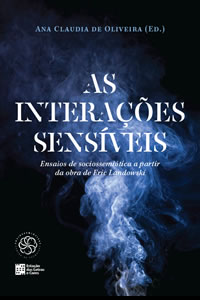
Interações Sensíveis
Ana Claudia de Oliveira
Livro Interações Sensíveis. É a reunião de sessenta e seis estudiosos das mais distintas especialidades, estágios profissionais, línguas e países diversos que refletem sobre a obra de Eric Landowski. O semioticista e cientista político é apreendido em sua trajetória no Groupe de recherches sémio-linguistiques, em suas atividades de publicação e de missões nos vários centros de estudo do mundo para participar dos grupos de investigação semiótica, assim como em suas postulações sobre o social, identidade, alteridade, presença, formas e estilos da vida. Esse amplo debate torna a obra coletiva "presenças de si", "presenças do outro", "paixão sem nome" e, por que não, "interações de risco". Neste jogo a partir dos títulos dos ensaios de sociossemiótica de Landowski é uma "semiótica refletida" que chega aos leitores, trazendo muitas interações sensíveis com o autor homenageado. Como eixo de seus estudos, "sentido" e "interação" promovem um denso encontro intelectual e a obra é uma panorâmica atualizada da teoria semiótica.
Veja o sumário do livro (PDF)
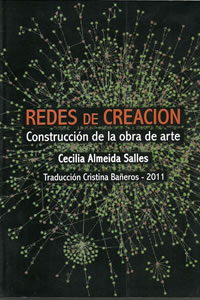
Tradução para o espanhol (Argentina) do livro Redes da Criação feita por Cristina Bañeros
Cecília de Almeida Salles
Tradução para o espanhol (Argentina) do livro Redes da Criação feita por Cristina Bañeros. O livro apresenta uma pesquisa sobre processos de criação na grande diversidade de manifestações midiáticas, que vem sendo desenvolvida a partir das diferentes formas de registros dos artistas (anotações, registros audiovisuais, esboços etc.). Dois eixos são destacados: a relação dos estudos das singularidades com que questões de natureza geral da criação e a relação dessa perspectiva crítica com as experimentações contemporâneas. A reflexão sobre aspectos gerais da criação, em diálogo com a semiótica de linha peirceana, o conceito de rede de Pierre Musso e pensadores da cultura como Edgar Morin e I. Lotman, tem oferecido um caminho para uma crítica dos processos de criação. A criação é assim discutida como um percurso contínuo de interconexões instáveis, gerando nós de interação, cuja variabilidade obedece a alguns princípios direcionadores. Essas interconexões envolvem a relação do artista (jornalista ou publicitário com seu espaço) e seu tempo, questões relativas à memória, à percepção, à escolha de recursos criativos, assim como aos diferentes modos como se organizam as tramas do pensamento em criação.

Glocal
Eugênio Trivinho
GLOCAL. O termo glocal tem circulado com insistente regularidade no cenário internacional, em diversos domínios de atuação humana. Mas o que é propriamente o fenômeno glocal: de onde vem e como chegou até o presente; qual a sua lógica de base e a quais tendências se liga; qual a múltipla significação social-histórica de seu processo derivado, a glocalização, e quais as suas consequências multilaterais? Situado entre o global e o local sem se reduzir a ambos, o glocal é, a um só tempo, mundo comunicacional plenamente realizado e prisma-chave de visão em relação a ele.
O enfoque mais acurado dessa temática permite apreender inúmeros fenômenos, processos e tendências emergentes na era da velocidade digital, como os contornos de uma violência invisível (tão heterodoxa quanto silenciosa) vinculada ao imperativo da comunicação em tempo real; a militarização imperceptível da vida social e a nova função do híbrido no processo de reprodução social-histórico e tecnocultural da civilização mediática. Nesta obra, Eugênio Trivinho oferece novas chaves epistemológicas que contribuem para compreender e tensionar esse regime vertiginoso em que estamos inseridos. A condição glocal e a visibilidade mediática, a existência em tempo real, o imaginário bunker e o bunker glocal, a violência transpolítica e a dromocracia cibercultural são, entre outras, ideias matriciais que permitem ao leitor reconhecer, em detalhes, a dinâmica complexa e típica dessa civilização em rede.
Ao final, a obra sistematiza, em seção especial, os principais conceitos trabalhados pelo autor – um extenso vocabulário da epistemologia crítica da civilização glocal.
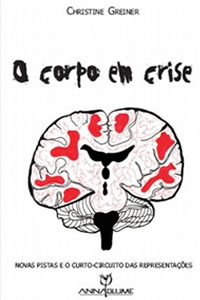
O Corpo em Crise
Christine Greiner
O CORPO EM CRISE. novas pistas e o curto-circuito das representações. A proposta deste livro é testar conexões entre o pensamento de alguns autores da filosofia política, da comunicação, das artes e das ciências cognitivas, para dar visibilidade a experiências radicais que questionam os limites do corpo como é o caso dos estados de exceção, dos nomadismos involuntários, das ações de inclusão para exclusão, dos canibalismos simbólicos e da banalização das maldades cotidianas.
Arte Agora
Christine Greiner
ARTE AGORA. Trata-se de uma coletânea de artigos organizada a partir de três seminários realizados em Lisboa no Centro em Movimento, sob a corrdenação de Christine Greiner e Sofia Neuparth
Hikikomori, a Clausura nas Redes
Christine Greiner
HIKIKOMORI, A CLAUSURA NAS REDES. Reune algumas comunicações do seminário que reuniu pesquisadores na Fnac Pinheiros para estudar o fenômeno hikikomori e as redes sociais. Hikikomori são pessoas que se conectam ao mundo todo nas redes, mas vivem enclausuradas em seus quartos. Esta publicação foi o resultado parcial do pós-doutorado de Cecilia Saito, realizado no COS-PUC sob supervisão de Christine Greiner.
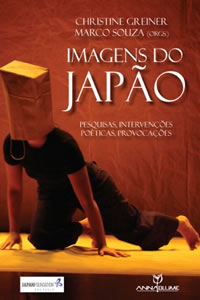
Imagens do Japão 1
Christine Greiner
IMAGENS D0 JAPÃO 1. Coletânea que apresenta pesquisas sobre o Japão contemporâneo, com foco no cinema japonês.

Imagens do Japão 2
Christine Greiner
IMAGENS D0 JAPÃO 2. Reune artigos escritos por pesquisadores da cultura japonea contemporânea com ênfase na cultura pop.
Traduções de Christine Greiner
Corpos da Memória, nas Narrativas da Guerra do Japão do Pós-Guerra
Christine Greiner
Corpos da memória, nas narrativas da guerra no Japão do pós-guerra,de Igarashi Yoshikuni, foi traduzido por dois pesquisadores do Centro de Estudos Orientais (Marco Souza e Marcela Canizo), discute o papel das representacões do corpo no Japão do pós-guerra, com ênfase em exemplos como o filme Godzila, a novela radiofônica Kimi no Nawa, entre muitos outras obras de áreas diversas, televisão, jornalismo, etc.

A Gênese de um Corpo Desconhecido
Christine Greiner
A Gênese de um Corpo Desconhecido,de Kuniichi Uno, livro traduzido por Christine Greiner com a colaboração de Ernesto Filho e Fernanda Raquel, reune 11 ensaios escritos pelo filosofo japonês, transitando por temas da filosofia, da dramaturgia, da dança, do teatro e do cinema.
Roland Barthes - Uma biografia intelectual.
Leda Tenório da Motta
2011: Roland Barthes - Uma biografia intelectual. São Paulo, Iluminuras, 2011.Com apoio à publicação da FAPESP, o livro foi finalista do Prêmio Jabuti 2011 na Categoria Biografia. Ele entra no quadro de produção atinente a Bolsa de Produtividade em Pesquisa para o período 2011-2013, em torno do projeto "Roland Barthes e o ´neutro`. Investigação em torno de um conceito barthesiano central". Tratando do conceito de "neutro", que é um desdobramento tardio do "grau zero", o livro debruça-se, entre outros, sobre as contribuições de Barthes para a crítica cultural e, neste âmbito, sobre a sua teoria para as imagens, a que devemos os conceitos, hoje clássicos, de "terceiro sentido" (para as imagens cinematográficas) e de "punctum"(para as imagens fotográficas).

2013: Godard em Barthes. Críticas suntuosas e imagens que machucam.
Leda Tenório da Motta

Vistas das musas no trópico. De volta à crítica.
São Paulo, Lumme Editor, 2016
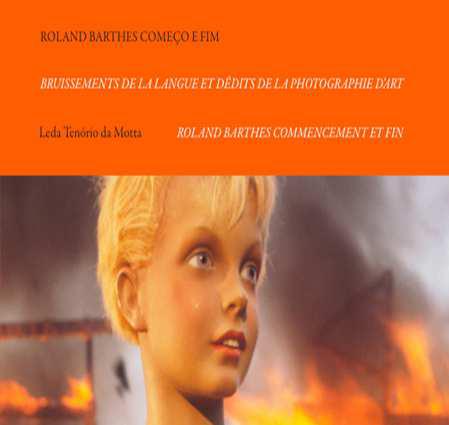
Rumores da língua e desditos da fotografia de arte. Roland Barthes começo e fim.
São Paulo, FAPESP & LUMME, 2019
Cem anos da semana de arte moderna. O gabinete paulista e a conjuração das vanguardas.
São Paulo, Editira Perspectiva, Col. Debates, 2022.
2013: Godard em Barthes. Críticas suntuosas e imagens que machucam. O livro investiga as relações, até aqui inexploradas, entre a semiologia da imagem de Barthes e a teoria crítica dos Cahiers du cinéma, notadamente no que respeita às contribuições de Godard. Pertence ao novo projeto de pesquisa "Godard em Barthes: antecipações godardianas do punctum ", apresentado ao CNPq para Bolsa de Produtividade em Pesquisa no período 2014-2016. É publicado com o apoio da FAPESP.
Percepção. Fenomenologia, Ecologia, Semiótica.
Lucia Santaella
Percepção. Fenomenologia, Ecologia, Semiótica. São Paulo: Cengage Learning, 2011.O interesse pela questão da percepção tem se intensificado desde o século XIX, com as alterações que o mundo moderno vem, cada vez mais, imprimindo sobre as faculdades perceptivas e cognitivas humanas. Coadjuvantes fundamentais dessas alterações são as mídias tecno-visuais, tecno-sonoras, corpo-técnicas, desde a fotografia e do gramofone até as complexas urdiduras dos fluxos das linguagens hipermidiáticas que povoam as redes digitais, fixas e móveis, de comunicação. Isso não escapou à atenção de filósofos, antropólogos, teóricos da cultura, psicólogos etc. As três teorias da percepção que compõem este livro – a teoria fenomenológica de Merleau-Ponty, a teoria ecológica de Gibson e a teoria semiótica de Peirce – quando vistas em conjunto, criam um bom equilíbrio entre uma teoria fortemente calcada em reflexões filosóficas, uma teoria baseada em pesquisas empíricas e uma teoria semiótica voltada para a análise dos movimentos lógicos da dinâmica perceptiva. Este livro defende que essas teorias são complementares. Cada uma delas explora uma das facetas da percepção: os interstícios do corpo com o mundo sob um prisma fenomenológico, a fundação de uma ecologia da percepção – o mundo lá fora, que se oferta à percepção, tem peculiaridades que precisam ser exploradas -, por fim, a fina urdidura dos processos sensórios e mentais constitui-se no terceiro membro do complexo tronco da percepção. Em suma, confrontam-se aqui três gigantes da reflexão sobre esse tema fascinante e absorvente – a percepção -, atraente justo porque nos coloca no coração que pulsa em nosso estar no mundo. - See more at: http://www.cengage.com.br/ls/percepcao-fenomenologia-ecologia-semiotica/#sthash.PYZO4zyh.dpuf

Leitura de Imagens
Lucia Santaella
Leitura de Imagens, São Paulo: Melhoramentos, 2012. A coleção Como Eu Ensino, organizada por Maria José Nóbrega e Ricardo Prado, busca aproximar do trabalho em sala de aula as pesquisas mais recentes sobre temas que interessam à educação básica. Os autores, especialistas na área, apresentam sugestões de como o assunto pode ser tratado, descrevendo as condições didáticas necessárias para uma aprendizagem significativa. Neste volume da coleção, Lucia Santaella oferece algumas ferramentas didáticas para docentes de qualquer área aprenderem conceitos fundamentais sobre a percepção e a interpretação dos signos visuais, das artes plásticas à publicidade, dos livros ilustrados à fotografia, com sugestões de encaminhamento didático para a sala de aula.
A eco e tecnociência na arte de Wagner Garcia
Lucia Santaella
Org. A eco e tecnociência na arte de Wagner Garcia, São Paulo: Ed. Jatobá. Reune algumas comunicações do seminário que reuniu pesquisadores na Fnac Pinheiros para estudar o fenômeno hikikomori e as redes sociais. Hikikomori são pessoas que se conectam ao mundo todo nas redes, mas vivem enclausuradas em seus quartos. Esta publicação foi o resultado parcial do pós-doutorado de Cecilia Saito, realizado no COS-PUC sob supervisão de Christine Greiner.
O explorador de abismos. Vilém Flusser e o pós-humanismo
Lucia Santaella
O explorador de abismos. Vilém Flusser e o pós-humanismo, São Paulo: Paulus, 2012.(Erick Felinto e Lucia Santaella). Segundo Flusser, pensador tcheco que viveu durante 32 anos no Brasil, a vida constitui uma interminável viagem em busca de diferentes alvos, mas cada alvo significa apenas uma estação intermediária, a partir da qual se partirá, depois, em busca de novas metas. Em sua totalidade, "a viagem é um método sem finalidade". Essa é apenas uma das ideias que inspiraram Erick Felinto, mestre em Comunicação e doutor em Literatura Comparada, e Lucia Santaella, professora titular no programa de pós-graduação em Comunicação e Semiótica e no programa de pós-graduação em Tecnologias da Inteligência e Design Digital, pela PUC-SP, a escreverem O explorador de abismos – Vilém Flusser e o pós-humanismo. Lançamento da PAULUS, a obra nasceu com o objetivo de aprofundar o "pós-humanismo". Segundo os autores, o assunto não vinha recebendo a merecida atenção no contexto acadêmico brasileiro e a maior parte das críticas a respeito vinha se dando na moldura de uma compreensão bastante limitada do conceito. Informações dos mais diferentes tipos podem, hoje, ser acessadas de múltiplos pontos no espaço. As mesmas mídias que nos fornecem o acesso são também mídias de comunicação. Diante dessa nova realidade, que tornou os equipamentos móveis, geolocalizados, em computadores miniaturizados que estão em toda a parte, e que nos conectam com pessoas em quaisquer partes do mundo, a professora e pesquisadora, Lucia Santaella, lança, pela PAULUS, Comunicação ubíqua – Repercussões na cultura e na educação.
Comunicação ubíqua. Repercussões na cultura e na Educação
Lucia Santaella
Comunicação ubíqua. Repercussões na cultura e na Educação. São Paulo: Paulus, 2013. O adjetivo ubíquo refere-se a algo que está ou existe ao mesmo tempo, em toda parte; onipresente. A autora chama essa nova realidade de hipermobilidade. À mobilidade física, a capacidade que temos de nos locomovermos, é acrescida a mobilidade informacional e comunicacional. Por isso mesmo, banda larga e redes sem fio são a tônica tecnológica do momento. A hipermobilidade cria espaços fluidos, múltiplos não apenas no interior das redes, como também nos deslocamentos espaço-temporais efetuados pelos indivíduos", explica Santaella. Comunicação ubíqua, não é um termo dissipado, porém, como explica a autora, muito presente no nosso dia a dia. "Ora, hipermobilidade conectada produz ubiquidade. Quando falamos com alguém ou acessamos informação de qualquer lugar para qualquer outro, em qualquer que seja o momento, estamos na realidade co-presentes: em presença tanto no lugar físico que ocupamos, quanto também naquele com o qual nos conectamos", diz. Esta nova obra que examina, sob variados ângulos, como, em função da hipermobilidade, tornamo-nos seres ubíquos, tem como objetivo fazer com que o leitor seja capaz de vislumbrar com menos opacidade os ambientes em que está vivendo.
Redação e Leitura. Guia para o ensino
Lucia Santaella
Redação e Leitura. Guia para o ensino, Ed. Cengage Learning, São Paulo.
Os Nomes da Comunicação.
Lucrécia D'Aléssio Ferrara
Os Nomes da Comunicação. São Paulo: Annablume, 2012. Os objetivos deste livro são, de um lado, estudar os conceitos que constituem paradigmas da comunicação e tornam inteligível seu contexto cognitivo e, de outro, colaborar para a definição de uma epistemologia que considere o objeto científico da comunicação. Analisam-se conceitos que, sendo próprios da área e construídos nas últimas décadas do século XX ou trazidos de outras ciências, são considerados matrizes cognitivas para a análise e interpretação daquele objeto. A obra se orienta pela seguinte pergunta: é possível traçar as linhas mestras da comunicação como área científica, tendo em vista características de uma epistemologia que, eliminando certezas, assume a dinâmica dos acontecimentos comunicativos que alteram suas bases conceituais e as apresentam em constante revisão? Os nomes da comunicação decorre de apoio CNPq para o desenvolvimento da pesquisa "A Arte de Nomear : Análise das Possibilidades e Limites de uma Epistemologia da Comunicação".
Comunicação Espaço Cultura.
Lucrécia D'Aléssio Ferrara
Comunicação Espaço Cultura. São Paulo: Annablume, 2008. Desenvolvido com o apoio do CNPq através de bolsa de produtividade científica, este trabalho tem como objeto de análise a unidade comunicação/espaço/cultura e estuda como são superadas as características do espaço enquanto simples suporte e como ele se transforma em espacialidades que caracterizam diversos processos interativos. Dessa forma, as espacialidades constituem vetor para a caracterização comunicativa de veículos gráficos, audiovisuais ou digitais e interferem na emergência de fluxos sociais e culturais que atingem antigas manifestações da cultura ocidental até as dinâmicas globais e locais que caracterizaram as últimas décadas do século XX, até nossos dias. Desse modo, o objetivo fundamental do trabalho é estudar, empírica e teóricamente, a tradução do espaço quando se transforma em espacialidades mediativas. Essa tradução nasce no Renascimento, se desenvolve nas dobras barrocas para atingir outros padrões na complexa realidade do espaço social urbano contemporâneo.
Convocações biopolíticas dos dispositivos comunicacionais
Jose Luiz Aidar Prado
Convocações biopolíticas dos dispositivos comunicacionais. Os dispositivos comunicacionais oferecem uma multiplicidade de convocações e de receitas para guiar os usuários no mundo do consumo, cujo combustível não é somente mercadoria em sua materialidade, mas a própria vida. Esses programas biopolíticos dos dispositivos comunicacionais tomam as potencias da vida como capital cultural para promoção dos eus que buscam gozo. Os agentes convocadores indicam para os consumidores modos para conseguir o a-mais rumo ao sucesso nesse mundo dito "flexível". Colocam-se como especialistas que sabem como cada um pode bombar a própria vida.
É em tal perspectiva que este livro nos propõe pensar uma política que enfrente a economia culturalista que provoca e convoca o sensível dos corpos, a partir da discussão dos contratos comunicacionais da mídia semanal, das revistas femininas, do cinema e de reality shows.
DVD em hipermídia. Regimes em visibilidade em revistas. PUC-SP/CNPq.
Jose Luiz Aidar Prado
DVD em hipermídia. Regimes em visibilidade em revistas. PUC-SP/CNPq..
DVD em hipermídia. A invenção do Mesmo e do Outro nas revistas semanais. PUC-SP/CNPq
Jose Luiz Aidar Prado
DVD em hipermídia. A invenção do Mesmo e do Outro nas revistas semanais. PUC-SP/CNPq. Esses dois DVDs constituem em bancos de dados multimídiaticos contendo vídeos com entrevistas sobre os modelos, contratos de comunicação e mapas cognitivos das revistas semanais e segmentadas. Além de entrevistas em vídeo, há inúmeros hipertextos, verbetes, imagens de capa e de reportagens das revistas e textos teóricos e analíticos.
Capítulos de livro:
- O objeto impossível do cinema. Christian Ingo Lenz Dunker e Ana Lucilia Rodrigues (org.) A criação do desejo [Coleção Cinema e psicanálise (v. 1)]
- Em co-autoria com Beatriz Becker: Das modalizações para consumidores à reterritorialização de cidadãos politizados. In: Gislene Silva, Dimas A. Künsch, Christa Berger e Afonso Albuquerque (orgs.). Jornalismo_contemporâneo: figurações, impasses e perspectivas. Livro da Compós 2012
- De navios a estrelas na construção biopolítica do eu capital. In: Freire Filho, J. e Pinto Coelho, M.G. A promoção do capital humano.
Reflections on practical otherness: Peirce and Applied Sciences
Ivo Ibri
Capítulo em coletânea estrangeira. Reflections on practical otherness: Peirce and Applied Sciences. In: M. Bergman, S. Paavola, A.-V. Pietarinen e H. Rydenfelt. Ideas in action: proceedings of the applying Peirce Conference [Nordic Studies in Pragmatism 1]
Peircean seeds for a philosophy of art
Ivo Ibri
Capítulo em coletânea estrangeira. Peircean seeds for a philosophy of art. In: Karen Haworth, Jason Hogue e Leonard G. Sbrocchi. Semiotics 2010: the semiotics of space [Proceedings of the 35th Annual Meeting of the Semiotic Society of America]
De poesia, amizade e o livro dos adynata
Jerusa Pires Ferreira
Capítulo de livro. De poesia, amizade e o livro dos adynata. In: Evelina Hoisel e Cássia Lopes (org.). Poesia e memória: a poética de Myriam Fraga.
O texto impresso: guadião da oralidade.
Jerusa Pires Ferreira
Capítulo de livro. O texto impresso: guadião da oralidade. In: Valéria Guimarães (org.) Transferências culturais: o exemplo da imprensa na França e no Brasil.
Corpos em movimento: memória de arte e vida.
Jerusa Pires Ferreira
Capítulo de livro. Corpos em movimento: memória de arte e vida. In: Inês Bogéa. Em cena: ensaios sobre a São Paulo Companhia de Dança.
A cavalaria no Sertão.
Jerusa Pires Ferreira
Capítulo de livro. A cavalaria no Sertão. In: Lênia Márcia Mongelli. De cavaleiros e cavalarias: por terras de Europa e Américas.
A serpente, a maçã e o holograma: esboços para uma Teoria da Mídia (livro)
Norval Baitello Junior
O pensamento sentado: sobre glúteos, cadeiras e imagens
Norval Baitello Junior
Dadá-Berlim: des/montagem
Norval Baitello Junior
A cavalaria no Sertão
Norval Baitello Junior
Capítulo. A cavalaria no Sertão. In: Lênia Márcia Mongelli. De cavaleiros e cavalarias: por terras de Europa e Américas.
De onde vem o poder das imagens que invadem nossas casas e nossos corpos?
Norval Baitello Junior
Capítulo. De onde vem o poder das imagens que invadem nossas casas e nossos corpos? In: Inês Sampaio (org.) Comunicação, cultura e cidadania.
A ciência dos vínculos.
Norval Baitello Junior
Capítulo. A ciência dos vínculos. In: Diogo Andrade Bornhausen, Jorge Miklos e Maurício Ribeiro da Silva. Comunicação, cultura e mídia | CISC 20 anos.
Corpo pede corpo na comunicação humana.
Norval Baitello Junior
Capítulo. Corpo pede corpo na comunicação humana. In: Cremilda Medina (org.) Símbolos itinerantes, estampas mestiças: o caminho da chita da Índia para a América.
Obra em coautoria. Lucia Isaltina Clemente Leão e Fernando Velázquez. Mindscapes.
Lucia Leão
Bolsas
-
INSCRIÇÃO PARA BOLSA CAPES - 1 A 16 DE MAIO DE 2023
-
INSCRIÇÃO PARA BOLSA ATÉ 31/03/2024 - PROJETO PROGRAMAS ENGAJADOS - CNPq
-
INSCRIÇÃO PARA BOLSA CAPES - DE 1 A 16 DE NOVEMBRO DE 2023
-
INSCRIÇÃO PARA BOLSA CAPES - DE 1 A 19 DE MAIO DE 2023
-
INSCRIÇÃO PARA BOLSA CAPES - DE 1 A 18 DE NOVEMBRO DE 2022
-
INSCRIÇÃO PARA BOLSA CNPq MESTRADO E DOUTORADO DE 8 À 11 DE AGOSTO DE 2022
-
INSCRIÇÃO BOLSA CAPES PARA DOUTORADO DE 23 A 26 DE JUNHO
- RESULTADO DO PROCESSO DE BOLSA - 2º SEMESTRE DE 2022
- Implementação: 1º de julho
- Edital
- Projeto
-
RESULTADO DO PROCESSO DE BOLSA - 2º SEMESTRE DE 2022
-
INSCRIÇÃO PARA BOLSA CAPES DE 02 À 20 DE MAIO DE 2022.
-
RESULTADO DO PROCESSO DE BOLSA - 1º SEMESTRE DE 2022
-
INSCRIÇÃO PARA BOLSA CAPES DE 01 À 20 DE NOVEMBRO DE 2021.
-
Novo Edital - Segunda Chamada para Mestrado de 30/08 a 01/09/2021.
-
INSCRIÇÃO PARA BOLSA CNPq - de 25/29 de agosto 2021.
-
INSCRIÇÃO PARA BOLSA 2º SEMESTRE DE 2021 – PARA ALUNOS MATRICULADOS NO 1º SEMESTRE DE 2021.
-
INSCRIÇÃO PARA BOLSA 1º SEMESTRE DE 2021 – PARA ALUNOS MATRICULADOS NO 2º SEMESTRE DE 2020.
-
DE 25 de MAIO A 19 DE JUNHO DE 2020 INSCRIÇÕES DE BOLSA PARA 2º SEMESTRE DE 2020.
-
DE 11 A 29 DE NOVEMBRO DE 2019 INSCRIÇÕES DE BOLSA PARA 1º SEMESTRE DE 2020.
-
RESULTADO DO PROCESSO DE BOLSA - 2º SEMESTRE DE 2019
-
Classificação da bolsa sanduíche para 2019
- Amanda Marques Pinto
- Beatriz Yumi Aoki
- Wagner Miranda Dias
- Nilthon Fernandes de Oliveira Junior
- Rodrigo dos Santos Monteiroa
- Rafael Iwamoto Tosi
Os critérios de avaliação encontra-se na secretaria do Programa do COS.
-
02 A 22 DE MAIO DE 2019 INSCRIÇÃO PARA BOLSA CAPES/CNPq – PARA O 2º SEMESTRE DE 2019
-
Inscrição de bolsas Sanduiche para Doutorado - 1º semestre de 2019
Entrega dos documentos e inscrição para o processo de Seleção interna do PEPG em Comunicação e Semiótica: Até 25 de fevereiro de 2019
Divulgação do resultado da seleção: 28 de fevereiro de 2019 -
01 A 23 DE NOVEMBRO DE 2018 INSCRIÇÃO PARA BOLSA CAPES/CNPq – PARA O 1º SEMESTRE DE 2019
-
RESULTADO DO PROCESSO DE BOLSA - 1º SEMESTRE DE 2019
-
RESULTADO DO PROCESSO DE BOLSA - 2º SEMESTRE DE 2018
-
INSCRIÇÃO PARA BOLSA CAPES/CNPq DE 2 A 21 DE MAIO DE 2018
-
INSCRIÇÃO DA BOLSA CAPES/CNPq 2º SEMESTRE 2017
-
INSCRIÇÃO DA BOLSA CAPES/CNPq - 1º SEMESTRE DE 2017
-
INSCRIÇÃO PARA BOLSA DO COS - 2º SEMESTRE 2016
-
INSCRIÇÃO PARA BOLSA DO COS - 1º SEMESTRE 2016
-
Processo de inscrição para bolsas CNPq e Capes - 2º semestre de 2015
- Veja aqui o resultado da bolsa de estudos 2º semestre de 2014
- Normas gerais para bolsas
- Edital para Inscrição
- Formulário para cadastramento em inscrição de bolsas
- Resultado de bolsas 1º/2014
- Incrições para Bolsa para 1º Semestre de 2015
- Resultado do Processo Seletivo das Bolsas 1º Semestre de 2015
- Resultado da Classificação de Bolsas 2º Semestre de 2015
-
Para bolsistas
Convênios
Convênios internacionais em Vigência
França - CNRS
Universitè de Limoges, CeRes
Itália - Università la Sapienza di Roma
Università di Cagliari
Università di Bologna
Espanha - Universidad Castilla de la Mancha (Madri)
Master em Práctica Escénica y Cultural Visual
Japão - Sophia University (Toquio)
A professora Ana Claudia Mei Alves de Oliveira é responsável por três convênios internacionais com o PPGCOS.
(a)Com a França, através de Eric Landowski (CNRS) e Jacques Fontanille (Universitè de Limoges: CeRes).
(b)Com a Itália, através de Isabella Pezzini e Pierluigi Cervelli (Università La Sapienza di Roma), de Francesco Sedda (Università di Cagliari)
(c)Também com a Itália, através de Francesco Marsciani (Università di Bologna: CUBE) e Patrizia Violi (Università di Bologna: TRAME)
O acordo de cooperação internacional concentrado no projeto "Smarty city" com a Università di Bologna, e coordenado por Patrizia Violi, conta ainda com vários participantes interdisciplinares integrados à equipe de pesquisadores italianos, em colaboração com o Centro de Estudos Nacional de Cibercultura (PUC-SP/ CENCIB), coordenado por Eugenio Rondini Trivinho e o Centro de Pesquisas Sociossemióticas (PUC-SP/ CPS).
O acordo de cooperação internacional com a Università di Roma La Sapienza, que já vinha sendo desenvolvido anteriormente, foi renovado com o projeto "Lugares da moda nas metrópoles: Roma e São Paulo", envolvendo uma rede de pesquisadores do PPGCOS.
O acordo de cooperação internacional com a Universitè de Limoges (Unilin) foi desenhado para pesquisas conjuntas sobre Estética e Estesia. A partir de um estágio sanduíche realizado por doutoranda do COS no Centre de Recherches Sémiotiques (CeReS), da Université de Limoges, França, no período de fevereiro a outubro de 2014, a Profa. Dra. Ana Claudia Mei Alves de Oliveira e o Prof. Dr. Jacques Fontanille iniciaram, no início de 2015, tratativas para selar um acordo de Doutorado em cotutela. Ambos planejam, nessa modalidade de supervisão bi-institucional, a formação de futuros candidatos ao Doutoramento no PEPGCOS/PUC-SP. O acordo previu, inicialmente, a titulação de três Mestres aptos a seguirem estudos doutorais nesse regime. A formação acadêmica desses futuros doutorandos está prevista para se realizar tanto no Programa, quanto no CeReS.
A professora Christine Greiner é responsável pelo convênio de intercâmbio com a Universidade Sophia de Tóquio, Japão, extensivo à graduação e outros programas de pós-graduação da PUC-SP, colaborando para a integração do PPGCOS com a graduação, através do incentivo ao desenvolvimento de projetos de iniciação científica e monografias. Alunos são convidados a participar do grupo de pesquisa do Centro de Estudos Orientais e dos seminários organizados na PUC-SP e na Universidade Sophia, respectivamente em 2014 e 2016. Este intercâmbio já gerou o livro coletânea Imagens do Japão 2, publicado em 2014 pela editora Annablume, com organização de Christine Greiner e Marco Souza; e projeta outras publicações para 2017, incluindo traduções.
A professora Greiner também é responsável pelo convênio de intercâmbio com a Universidade Castilla de la Mancha de Madri, Espanha. O professor José Sanchez, catedrático da referida instituição, ministrou conferência na PUC-SP e em 2016, a professora Greiner foi convidada pelos professores Victoria Royos e Diego Aguilló (da mesma instituição) para ministrar um seminário em Madri, no Centro Cultural Matadero e na Casa Encendida, ligada ao Museu Reina Sofia em parceria com o Master em Práctica Escénica y Cultural Visual da Universidade Castilla de la Mancha. O ensaio resultante destes seminários “Alteridad como estado de creatión”, foi publicado na coletânea Componer el Plural, editado pelos professores Victoria Royos e Diego Aguilló, em 2016.
Desde 2014 com defesa prevista para o final de 2017, está em andamento a co-tutela da tese de doutorado de Viviana Coletty, doutoranda na Universidade Paris VIII e co-orientada pela prof. Christine Greiner do PPGCOS.
Convênios em Preparação e possibilidades de intercâmbio
Convênio de Intercâmbio com o SenseLab da Universidade Concordia de Montreal, Canada.
O projeto Immediation, desenvolvido pelo SenseLab, lida com as noções de: ubiquidade das práticas midiáticas, eventos relacionais, teoria dos acontecimentos e filosofia das relações, focando nos modos como as práticas midiáticas e artísticas são criadas no mundo contemporâneo. Busca o que tem chamado de ecologia das experiências vivas, a partir de uma fundamentação teórica que envolve autores como Félix Guattari (1995, 2008), Isabelle Stengers (2010), Brian Massumi (2011), Erin Manning (2012), Anna Munster (2013), Andrew Murphie (2004a, 2004b) e Matthew Fuller (2007).
Além do intercâmbio com alunos, a proposta em andamento prevê publicações conjuntas, traduções de livros e seminários ministrados na PUC (IIEC) por Brian Massumi e Erin Manning.
Alunos do PPGCOS que estiveram no SenseLab com bolsa-sanduíche:
André Fogliano e Francisco Trento
Alunos do PPGCOS que irão para o SenseLab com bolsa-sanduiche (CAPES) em 2017: Vanessa Lopes e Daniela Picchiai.
Livros que estão sendo traduzidos com publicação prevista para 2018:
- Manning, Erin. The Minor Gesture, Duke University Press, 2016
- Massumi, Brian. What Animals teach as about Politics, Duke University Press, 2014
Dissertações e Teses defendidas
2023
Mestrado
-
Ailton José de Lima Junior
Data: 22/11/2023
Título da Dissertação: FRANCISCO MEDEIROS: UMA CHAMA PARA CONTINUAR A BRILHAR.
Banca de defesa: Helena Tania Katz (orientador(a)), Christine Greiner e Fernanda Raquel
-
Ana Lúcia Marcondes Faria de Oliveira
Data: 10/03/2023
Título da Dissertação: ENFRENTAMENTO DA VIOLÊNCIA DE GÊNERO NO PROCESSO LEGISLATIVO NOS DISCURSOS DURANTE A TRAMITAÇÃO DA LEI Nº 14.192/2021 E INTERDISCURSIVIDADE COM MOVIMENTOS SOCIAIS
Banca de defesa: José Luiz Aidar Prado (orientador(a)), Heloisa Prates Pereira e Maria Cecília Perez de Souza e Silva
-
Carlos Barmak
Data: 12/12/2023
Título da Dissertação: PROCESSOS COMUNICACIONAIS E EDUCACIONAIS EM ESPAÇOS MUSEOLÓGICOS E INSTITUIÇÕES CULTURAIS: EXPERIÊNCIAS DE CRIAÇÃO COLABORATIVA NA BIENAL DA CRIANÇA E NO MUSEU DE ARTE MODERNA DE SÃO PAULO.
Banca de defesa: Lúcia Isaltina Clemente Leão (orientador(a)), Adriana Friedmann Garkov, Norval Baitello Júnior, Ane Shyrlei de Araujo (suplente) e Vanessa Lopes (suplente)
-
Diogo Ribeiro Rodrigues
Data: 30/06/2023
Título da Dissertação: ACOSSADO, DE GODARD: DIÁLOGOS INTERTEXTUAIS
Banca de defesa: Leda Tenorio da Motta (orientador(a)), Elcio Silva Nunes Basilio, Marcos Kahtalian, Jardel Andreis (suplente) e Valdenise Lezier Martyniuk (suplente)
-
Gustavo Uliana Rodrigues
Data: 28/06/2023
Título da Dissertação: UMA COMUNICOLOGIA ENGAJADA APROXIMAÇÕES ENTRE VILÉM FLUSSER E PAULO FREIRE SOBRE PROCESSOS COMUNICATIVOS APLICADOS À EDUCAÇÃO
Banca de defesa: Norval Baitello Júnior (orientador(a)), Diogo Andrade Bornhausen, Lúcia Isaltina Clemente Leão, Giovanni Vella (suplente) e Ivo Assad Ibri (suplente)
-
Isabela Rodrigues Salomão
Data: 06/02/2023
Título da Dissertação: DISTOPIA NOS GAMES NARRATIVAS DIGITAIS E O PENSAMENTO CRÍTICO
Banca de defesa: Eugenio Rondini Trivinho (orientador(a)), Helena Tania Katz, Jorge Miklos, Christine Greiner (suplente) e Claudia Ribeiro (suplente)
-
José Nabor do Amaral Júnior
Data: 11/08/2023
Título da Dissertação: A PRESENÇA DA MULHER NEGRA, AS ESTRATÉGIAS DE VISIBILIDADE E O TEATRO EXPERIMENTAL DO NEGRO NAS PÁGINAS DO JORNAL QUILOMBO
Banca de defesa: José Amálio de Branco Pinheiro (orientador(a)), Amailton Magno Azevedo, Luiza Spínola Amaral, José Luiz Aidar Prado (suplente) e luciane da silva (suplente)
-
Juliana Gomide Arruda
Data: 23/11/2023
Título da Dissertação: PALAVRA-PAISAGEM: ECOLOGIA DA PALAVRA NO INSTAGRAM DE LILIA SCHWARCZ
Banca de defesa: Norval Baitello Júnior (orientador(a)), Fabio Cypriano, Luciano Guimarães, Lúcia Isaltina Clemente Leão (suplente) e Mauricio Ribeiro da Silva (suplente)
-
Juliana Medeiros Vasconcelos
Data: 12/12/2023
Título da Dissertação: SEMIOSES DA FOTOPERFORMANCE DE BERNA REALE EM PERSPECTIVA BARTHESIANA
Banca de defesa: Leda Tenorio da Motta (orientador(a)), Luciano Vinhosa Simão, Orlando Franco Maneschy, Ana Claudia Mei Alves de Oliveira (suplente) e Jose Rodrigo Paulino Fontanari (suplente)
-
Malka Celina Borenstein
Data: 22/06/2023
Título da Dissertação: RESIDÊNCIA-ARTE: VAI PASSAR COMO UMA PROPOSIÇÃO POÉTICA-ESTÉTICA-ÉTICA DE UMA ARTISTA
Banca de defesa: Christine Pires Nelson de Mello (orientador(a)), Ana Cristina Echevenguá Teixeira, Claudio Pereira Bueno, Cecilia Almeida Salles (suplente) e Livia Afonso de Aquino (suplente)
-
Maria Paula Santiago Hampshire
Data: 30/06/2023
Título da Dissertação: RETRATOS TRANSVIADOS: UMA LEITURA POLÍTICA DA CONSTRUÇÃO MIDIÁTICA DE CORPOS DISSIDENTES
Banca de defesa: Christine Greiner (orientador(a)), Helena Tania Katz, Maria Cristina Elias Meneghetti, Fernanda Raquel (suplente) e Rosa Maria Hercoles (suplente)
-
Mariana Henriques Duarte Carlin
Data: 25/08/2023
Título da Dissertação: O PROCESSO DE CONSTRUÇÃO DO SUJEITO-ARTISTA MAXWELL ALEXANDRE NO CONTEXTO COMPLEXO DA POLÍTICA CONTEMPORÂNEA
Banca de defesa: Cecilia Almeida Salles (orientador(a)), José Luiz Aidar Prado, Katia Salvany Felinto Alvares, Cesar Augusto Alves da Silva (suplente) e Lúcia Isaltina Clemente Leão (suplente)
-
Marisa Francisca da Silva
Data: 07/12/2023
Título da Dissertação: ADINKRA IMAGENS DA ANCESTRALIDADE AFRICANA NA CULTURA BRASILEIRA
Banca de defesa: Lúcia Isaltina Clemente Leão (orientador(a)), Norval Baitello Júnior, Robson Kumode Wodevotzky e Rogério da Costa Santos (suplente)
-
Maytê de Carvalho Soares
Data: 17/08/2023
Título da Dissertação: ÉTICA E PERSUASÃO NO CONTEXTO HUMANO-MÁQUINA UMA REFLEXÃO SOBRE A ALGORITMIZAÇÃO DAS RELAÇÕES SOCIAIS NA CIBERCULTURA
Banca de defesa: Eugenio Rondini Trivinho (orientador(a)), José Luiz Aidar Prado, Michelle Prazeres Cunha, Christine Pires Nelson de Mello (suplente) e Claudio Luiz Cecim Abraão Filho (suplente)
-
Michele Miyuki Yang
Data: 14/09/2023
Título da Dissertação: ESTUDO SEMIÓTICO DOS VÍNCULOS AFETIVOS NA CAMPANHA PRESIDENCIAL DE LULA NO INSTAGRAM EM SETEMBRO DE 2022
Banca de defesa: José Luiz Aidar Prado (orientador(a)), Valdenise Lezier Martyniuk, Vinícius Prates da Fonseca Bueno, Cecilia Almeida Salles (suplente) e Vander Casaqui (suplente)
-
Paola Rodrigues Pinheiro
Data: 20/10/2023
Título da Dissertação: PROCESSOS CRIATIVOS NO AMBIENTE HIPERMIDIÁTICO: UM CAMINHO PARA A CONSTRUÇÃO DO CONHECIMENTO EM REDE SOBRE PROCESSO DE CRIAÇÃO
Banca de defesa: Cecilia Almeida Salles (orientador(a)), Ana Patrícia de Queiroz Carneiro Dourado, Lúcia Isaltina Clemente Leão, Ana Flávia de Mello Mendes (suplente) e Christine Greiner (suplente)
-
Patricia Pimenta Medeiros
Data: 30/06/2023
Título da Dissertação: LEITURAS CRÍTICAS DAS NARRATIVAS HEGEMÔNICAS SOBRE DESIGN: GLISSANT E TEORIA CORPOMÍDIA NO ANÚNCIO DE DESIGNS POR-VIR
Banca de defesa: Helena Tania Katz (orientador(a)), Christine Greiner, Maria Cristina Elias Meneghetti, Jorge Miklos (suplente) e Rogério da Costa Santos (suplente)
-
Rafael Santos Burgos
Data: 10/10/2023
Título da Dissertação: BOLSONARISMO COMO REVOLTA INFAMILIAR A ESTÉTICA DO ESTRANHAMENTO EM MEMES NO TWITTER
Banca de defesa: José Luiz Aidar Prado (orientador(a)), Maria Cristina Franco Ferraz, Rogério da Costa Santos e Christine Greiner (suplente)
-
Rodrigo Blankenburg
Data: 24/08/2023
Título da Dissertação: ACESSIBILIDADE DIGITAL NO BRASIL: AVANÇOS E REGRESSOS NA INCLUSÃO SOCIAL DE PESSOAS COM DEFICIÊNCIA NA CIBERCULTURA
Banca de defesa: Eugenio Rondini Trivinho (orientador(a)), Christine Pires Nelson de Mello e Michelle Prazeres Cunha
-
Sergio Rocha Fernandes
Data: 06/10/2023
Título da Dissertação: SIMULACROS DE DIVERSIDADE RACIAL: PERMANÊNCIA DA IDEOLOGIA DO BRANQUEAMENTO NO BRASIL
Banca de defesa: Ana Claudia Mei Alves de Oliveira (orientador(a)), Marc Barreto Bogo, Yvana Carla Fechine de Brito, Eric Olivier Landislas Landowski (suplente) e Valdenise Lezier Martyniuk (suplente)
-
Thais da Conceição Oliveira
Data: 19/06/2023
Título da Dissertação: O PAPEL DAS PLATAFORMAS DE REDES SOCIAIS NA SUBVERSÃO DO CONCEITO DE COMUNIDADE VIRTUAL: ELEMENTOS PARA A COMPREENSÃO DA CONSTRUÇÃO DA SUBJETIVIDADE CONTEMPORÂNEA.
Banca de defesa: Rogério da Costa Santos (orientador(a)), Christine Greiner, Gisela Grangeiro da Silva Castro, Adriana de Araujo Guzzi (suplente) e Lúcia Isaltina Clemente Leão (suplente)
-
Valeska Amaral de Moura
Data: 29/08/2023
Título da Dissertação: REGIMES DE SENTIDO E INTERAÇÃO DO K-POP NA PROJEÇÃO DA COREIA DO SUL NO OCIDENTE
Banca de defesa: Ana Claudia Mei Alves de Oliveira (orientador(a)), Carlos Augusto Alfeld Rodrigues, Luciana Chen, Christine Greiner (suplente) e Marcelo Machado Martins (suplente)
-
Victor Henrique de Freitas Almeida Santos
Data: 14/12/2023
Título da Dissertação: O CONTRATO DE COMUNICAÇÃO CONTRA-HEGEMÔNICO DA REVISTA CIVILIZAÇÃO BRASILEIRA
Banca de defesa: José Luiz Aidar Prado (orientador(a)), José Amálio de Branco Pinheiro, Roseli Aparecida Figaro Paulino, João Almeida Santos (suplente) e Mauro Luiz Peron (suplente)
-
Vito Antonio Antico Wirgues
Data: 20/06/2023
Título da Dissertação: PARÓDIA E TRADUÇÃO COMO SIGNO VERTIGINOSO E FICCIONAL REBOLANÇANTE DAS LINGUAGENS LATINO-AMERICANAS
Banca de defesa: José Amálio de Branco Pinheiro (orientador(a)), Luis Fernando dos Reis Pereira, Urbano Nobre Nojosa e Cecilia Almeida Salles (suplente)
Doutorado
-
Rodrigo César Severino Neiva
Data:01/02/2023
Título da Dissertação:O GOSTO DO D.O.M.: A CONSTRUÇÃO DA EXPERIÊNCIA ESTÉTICA E ESTÉSICA NA GASTRONOMIA BRASILEIRA
Banca de defesa:Ana Claudia Mei Alves de Oliveira (orientador(a)), Alexandre Marcelo Bueno, Maria Aparecida Junqueira, Sandra de Camargo Rosa Mraz, Eric Olivier Landislas Landowski (suplente) e Maria Lucia Santaella Braga (suplente)
-
Ana Catarina Santilli Batistão
Data:22/11/2023
Título da Dissertação:OLHAR PARA O “FIM DO MUNDO” DIÁLOGO COM FAMÍLIAS ENGAJADAS SOBRE O IMPACTO DAS IMAGENS DA CRISE ECOLÓGICA
Banca de defesa:Norval Baitello Júnior (orientador(a)), Cristina Pontes Bonfiglioli, Jorge Miklos, Lúcia Isaltina Clemente Leão, Marijane Vieira Lisboa e Alex Florian Heilmair (suplente)
-
Carla Viana Dendasck
Data:11/08/2023
Título da Dissertação:JESUS DEMODÊ E A CONSTRUÇÃO DA “CIBERFÉ”: EVIDENCIAÇÃO DA TEOLOGIA LÍQUIDA NA APROPRIAÇÃO DA CABALA
Banca de defesa:Rogério da Costa Santos (orientador(a)), André Martins Vilar de Carvalho, Christine Greiner, Gerson Leite de Moraes, Lúcia Isaltina Clemente Leão e Helena Tania Katz (suplente)
-
Dionisio Moreno Ferres
Data:08/02/2023
Título da Dissertação:PROCESSOS COMUNICACIONAIS E SUSTENTABILIDADE: CONTRIBUIÇÕES PARA O ENFRENTAMENTO DA CRISE AMBIENTAL PLANETÁRIA
Banca de defesa:Lúcia Isaltina Clemente Leão (orientador(a)), Maria Lucia Santaella Braga, Ricardo Morishita Wada, Rogério da Costa Santos, Rogério De Almeida, Cecilia Almeida Salles (suplente) e Vanessa Lopes (suplente)
-
Erika Silva e Souza de Almeida
Data:19/05/2023
Título da Dissertação:BIG TECHS: A EXPERIÊNCIA HUMANA COMO MATÉRIA PRIMA DO PODER
Banca de defesa:Helena Tania Katz (orientador(a)), Ana Cristina Echevenguá Teixeira, Christine Greiner, Gisela Grangeiro da Silva Castro, Rogério da Costa Santos, Vanessa Lopes, Heloisa Prates Pereira (suplente) e José Luiz Aidar Prado (suplente)
-
Fabio Moreira de Oliveira
Data:02/02/2023
Título da Dissertação:DIFRAÇÃO NEGRA E DISSUASÃO RACIAL NA VISIBILIDADE MEDIÁTICA: UM ESTUDO DE TENSÕES RACIAIS EM CONTEXTOS GLOCAIS
Banca de defesa:Eugenio Rondini Trivinho (orientador(a)), Dennis de Oliveira, Lucineia Rosa dos Santos, Mônica de Melo, Rosane da Silva Borges, Maria Cristina Palhares (suplente) e Myrt Thania de Souza Cruz (suplente)
-
Fernando Moreira Araujo
Data:10/08/2023
Título da Dissertação:AVIATION SECURITY: O GLOCAL NOS AEROPORTOS
Banca de defesa:Eugenio Rondini Trivinho (orientador(a)), Eduardo Louis Jacob, Lygia Socorro Sousa Ferreira, Michelle Prazeres Cunha, Valdenise Lezier Martyniuk, Janaína Quintas Antunes (suplente) e Rogério da Costa (suplente)
-
Isabela Carletti
Data:28/06/2023
Título da Dissertação:O QUE A BASE NACIONAL COMUM CURRICULAR COMUNICA: PROCESSOS, SUJEITOS E O ENSINO DE ARTE NA EDUCAÇÃO BÁSICA
Banca de defesa:Helena Tania Katz (orientador(a)), Ana Cristina Echevenguá Teixeira, Edna Christine Silva, Laura Pronsato, Rosa Maria Hercoles, Christine Greiner (suplente) e Maria Helena Franco de Araujo Bastos (suplente)
-
José Erivaldo Dantas
Data:08/12/2023
Título da Dissertação:A COMUNICAÇÃO “(CON)DIVERGENTE” DA PROBLEMÁTICA ECOLÓGICA NA INTELIGIBILIDADE DISCURSIVA DO PAPA FRANCISCO
Banca de defesa:Rogério da Costa Santos (orientador(a)), Cilene Victor da Silva, João Décio Passos, Lucrecia D Alessio Ferrara, Moisés Sbardelotto, Christine Greiner (suplente) e Gisela Grangeiro da Silva Castro (suplente)
-
Josenilde Silva Souza
Data:14/02/2023
Título da Dissertação:GRAMÁTICA DA CONSULTORIA DE IMAGEM: ABORDAGEM SOCIOSSEMIÓTICA
Banca de defesa:Ana Claudia Mei Alves de Oliveira (orientador(a)), Christine Greiner, José Ronaldo Alonso Mathias, Kathia Castilho Cunha, Valdenise Lezier Martyniuk, Carlos Augusto Alfeld Rodrigues (suplente) e Marc Barreto Bogo (suplente)
-
Karina Alves de Sousa
Data:28/06/2023
Título da Dissertação:A FOTOGRAFIA DE FOLIA DE REIS DO DOCUMENTAL À EXPERIMENTAÇÃO
Banca de defesa:José Amálio de Branco Pinheiro (orientador(a)), Alexandre Romariz Sequeira, Lourdes Malerba Gabrielli, Mylene Goudet, Tatiana Pontes de Oliveira, Luís Fernando dos Reis Pereira (suplente) e Norval Baitello Júnior (suplente)
-
Larissa Cristina Sampaio Macêdo
Data:10/11/2023
Título da Dissertação:ENCRUZILHADAS PRÁTICAS ARTISTICAS E CURATORIAIS NAS REDES SOCIAIS
Banca de defesa: Christine Pires Nelson de Mello (orientador(a)), Giselle Beiguelman, Pollyana Ferrari Teixeira, Rosane da Silva Borges, Rosemary Segurado, Paula Alzugaray Van Steen (suplente) e Priscila Almeida Cunha Arantes (suplente)
-
Letícia Ferreira Frigo
Data:03/02/2023
Título da Dissertação:EDUCAÇÃO DIGITAL, EDUCAÇÃO DESIGUAL: A INFLUÊNCIA DO NEOLIBERALISMO NA GLOCALIZAÇÃO DA EDUCAÇÃO BRASILEIRA EM CONTEXTO PANDÊMICO
Banca de defesa: Eugenio Rondini Trivinho (orientador(a)), Christine Greiner, Helena Tania Katz, Hélida Balardini Lança Vicente, Jorge Miklos, José Luiz Aidar Prado (suplente) e Michele dos Santos (suplente)
-
Liliany Alves Samarão
Data:01/12/2023
Título da Dissertação:IA E ALGORITMO ENVIESADO: AS DIMENSÕES DO VIVER NA SOCIEDADE 5.0.
Banca de defesa: Helena Tania Katz (orientador(a)), Giancarlo Martins, Lúcia Isaltina Clemente Leão, Rogério da Costa Santos, Sheila Canevacci Ribeiro e Rosa Maria Hercoles (suplente)
-
Livia Sernache Rios
Data:21/11/2023
Título da Dissertação:BRINCALIDADE: ATIVANDO METAMORFOSES DE TRANSFORMAÇÃO VITAL NO TEMPO DA BESTEIRA
Banca de defesa: Helena Tania Katz (orientador(a)), Ausonia Bernardes Monteiro, Christine Greiner, Lenira Peral Rengel, Rosa Maria Hercoles, Ana Cristina Echevenguá Teixeira (suplente) e Igor Monteiro Silva (suplente)
-
Luizianne de Oliveira Lins
Data:11/09/2023
Título da Dissertação:AS NARRATIVAS DA LIBERDADE NO DISCURSO PUBLICITÁRIO DOS ANOS 70 NO BRASIL: UM OLHAR SOCIOSSEMIÓTICO SOBRE A PROPAGANDA DA CALÇA JEANS US TOP NAS PÁGINAS DA REVISTA GERAÇÃO POP (1972 - 1975)
Banca de defesa: Valdenise Lezier Martyniuk (orientador(a)), Leonardo Andre Elwing Goldberg, Lúcia Isaltina Clemente Leão, Rogério da Costa Santos e Christine Pires Nelson de Mello (suplente)
-
Maria Fernanda de Mello Lopes
Data:13/12/2023
Título da Dissertação:FESTAS, FEIRAS, GAMBIARRAS E O FIO DE ARAME: EXPANSÕES A PARTIR DO BARROCO LATINO-AMERICANO
Banca de defesa: José Amálio de Branco Pinheiro (orientador(a)), Luis Fernando dos Reis Pereira, Maria Lucia Santaella Braga, Mylene Goudet, Suely Belinha Rolnik, Luiz Augusto de Paula Souza (suplente) e Luiz de Camargo Pires Neto (suplente)
-
Micaela Altamirano
Data:05/12/2023
Título da Dissertação:SENTIDOS DA DIVERSIDADE EM SÃO PAULO E LISBOA: PATRIMÔNIOS E ALTERIDADES NOS CENTROS URBANOS
Banca de defesa: Ana Claudia Mei Alves de Oliveira (orientador(a)), Alexandre Marcelo Bueno, Maria Helena Martins da Costa Pires, Moisés Adão de Lemos Martins, Monica Muniz Pinto de Carvalho, Sandra de Camargo Rosa Mraz e Valdenise Lezier Martyniuk (suplente)
-
Miriam Kenia de Carvalho
Data:15/05/2023
Título da Dissertação:O ÚTERO BIOPOLÍTICO: A RESISTÊNCIA DAS VÍTIMAS DO ESSURE, DA BAYER
Banca de defesa: Helena Tania Katz (orientador(a)), José Luiz Aidar Prado, Christine Greiner, Junia Miranda Carvalho, Rogério da Costa Santos, Sheila Canevacci Ribeiro, Marlene Arcanjo (suplente) e Rosa Maria Hercoles (suplente)
-
Renê Eduardo Arruda
Data:11/12/2023
Título da Dissertação:DINÂMICAS COMUNICACIONAIS EM REDES SOCIAIS DIGITAIS: RADICALIZAÇÃO NOS GRUPOS DE MOBILIZAÇÃO POLÍTICA
Banca de defesa: Lúcia Isaltina Clemente Leão (orientador(a)), Alessandra de Castro Barros Marassi, Ivo Assad Ibri, Mirian Aparecida Meliani Nunes, Rogério da Costa Santos, Bernardo Queiroz de Siqueira Santos (suplente) e Christine Greiner (suplente)
-
Roberto Propheta Marques
Data:22/06/2023
Título da Dissertação:UMA FABULAÇÃO DO YOGA A DIMENSÃO POLÍTICA DO CORPO COMO ACONTECIMENTO ESTÉTICO
Banca de defesa: Christine Greiner (orientador(a)), Christian Ingo Lenz Dunker, Fábio Luís Ferreira Nóbrega Franco, Helena Tania Katz, Rosa Maria Hercoles e Maria Cristina Elias Meneghetti (suplente)
-
Rodolfo Faria da Silva
Data:18/12/2023
Título da Dissertação:RELIGIOSIDADE E PODER NA SOCIEDADE DO ESPETÁCULO: UM OLHAR SOBRE O PROGRAMA SHOW DA FÉ E SUAS FORMAS DE MEDIAÇÃO E CRIAÇÃO DE VÍNCULOS
Banca de defesa: José Amálio de Branco Pinheiro (orientador(a)), Helena Corazza, Lourdes Malerba Gabrielli, Luís Fernando dos Reis Pereira, Luiza Spínola Amaral, José Luiz Aidar Prado (suplente) e Valdir José de Castro (suplente)
-
Roseni Guimarães Correa de Moraes
Data:10/02/2023
Título da Dissertação:AGENTES CONVERSACIONAIS INTELIGENTES E A COMUNICAÇÃO MEDIADA POR ALGORITMOS: AS COMPLEXIDADES DAS INTERAÇÕES COM OS USUÁRIOS, NO COTIDIANO.
Banca de defesa: Lúcia Isaltina Clemente Leão (orientador(a)), Alessandra de Castro Barros Marassi, Cecilia Almeida Salles, Maria Lucia Santaella Braga, Mirian Aparecida Meliani Nunes, Carlos William Damasceno Tavernard (suplente) e Christine Greiner (suplente)
-
Silvana Almeida Santos
Data:30/06/2023
Título da Dissertação:A FALA PAUTADA PELOS NOVOS HÁBITOS COGNITIVOS
Banca de defesa: Helena Tania Katz (orientador(a)), Christine Greiner, Giancarlo Martins, Marilia Gabriela Gonçalves, Rosa Maria Hercoles, Ana Cristina Echevenguá Teixeira (suplente) e Shirlei Torres Perez (suplente)
-
Thiago Abel Martins da Silva
Data: 31/07/2023
Título da Dissertação: ARRIAR O BUTÔ EM 7 ENCRUZILHADAS: MICROPOLÍTICAS DO CORPO
Banca de defesa: Christine Greiner (orientador(a)), Éden Silva Peretta, Gilsamara Moura, Helena Tania Katz, Neide Neves, Ernesto Bezerra Cavalcanti Filho (suplente) e Samira de Souza Brandão (suplente)
-
Tiago da Mota e Silva
Data: 21/06/2023
Título da Dissertação: VILÉM FLUSSER E A DITADURA MILITAR: OS POSICIONAMENTOS DO AUTOR E A DIMENSÃO POLÍTICA DE SEU PENSAMENTO A PARTIR DA CORRESPONDÊNCIA COM JOSÉ BUENO NA DÉCADA DE 1970
Banca de defesa: Norval Baitello Júnior (orientador(a)), Alex Florian Heilmair, Cecilia Almeida Salles, Diogo Andrade Bornhausen, Fabio Cypriano, Ivo Assad Ibri (suplente) e Luis Mauro Sa Martino (suplente)
2022
Mestrado
-
Rafael Giovannini
Data: 02/02/2022
Título da Dissertação: ELEIÇÕES À FLOR DA PELE: ANÁLISE DISCURSIVA DOS VÍDEOS DO MOVIMENTO BRASIL LIVRE NAS ELEIÇÕES 2018
Banca de defesa: José Luiz Aidar Prado (orientador(a)), Vera Lucia Michalany Chaia, Vinicius Prates da Fonseca Bueno, Eugenio Rondini Trivinho (suplente) e Viktor Henrique Carneiro de Souza Chagas (suplente)
-
Maria Angelica Trombini
Data: 03/08/2022
Título da Dissertação: O USO DO LASER COMO INTERVENÇÃO ARTÍSTICA: A OBRA CIRCUNDANTE COMO ANÁLISE DE CASO
Banca de defesa: Rogério da Costa Santos (orientador(a)), Branca Coutinho de Oliveira, Christine Greiner, Gisela Cristina Borges (suplente) e Helena Tania Katz (suplente)
-
Carolina Vidal Ferreira
Data: 04/03/2022
Título da Dissertação: AS MULHERES NO SLAM: POESIA, FEMINISMOS E INSURGÊNCIA
Banca de defesa: José Amálio de Branco Pinheiro (orientador(a)), Carla Cristina Garcia, Rosana de Lima Soares, Christine Greiner (suplente) e Kelly Adriano de Oliveira (suplente)
-
Danielle Soares e Silva Bicudo Ferraro
Data: 09/08/2022
Título da Dissertação: EDUCAÇÃO VIGIADA: COMO O CAPITALISMO DE VIGILÂNCIA OPERA NA PLATAFORMA GOOGLE WORKSPACE FOR EDUCATION FUNDAMENTALS
Banca de defesa: Rogério da Costa Santos (orientador(a)), Adriana de Araujo Guzzi, Fernando José de Almeida, Gisela Grangeiro da Silva Castro (suplente) e Helena Tania Katz (suplente)
-
Renata Borges Cardetas
Data: 11/08/2022
Título da Dissertação: O TELEJORNALISMO EM SEUS REGIMES DE VISIBILIDADE: UMA ANÁLISE DISCURSIVA DAS REPORTAGENS TELEVISIVAS SOBRE AS MULHERES SÍRIAS EM SITUAÇÃO DE REFÚGIO
Banca de defesa: José Luiz Aidar Prado (orientador(a)), Christine Greiner, Mohammed Elhajji, Denise Maria Cecchini Rodrigues (suplente) e Helena Tania Katz (suplente)
-
Júlia Meireles de Lima
Data: 14/03/2022
Título da Dissertação: O ARTISTA NO INSTAGRAM: MODOS DE USO, PROCESSOS E ARQUIVOS DE CRIAÇÃO
Banca de defesa: Cecilia Almeida Salles (orientador(a)), Marcus Vinicius Fainer Bastos, Nina Velasco e Cruz, Lúcia Isaltina Clemente Leão (suplente) e Maria Carolina Duprat Ruggeri (suplente)
-
Leonardo Baumgartner Gomes
Data: 15/12/2022
Título da Dissertação: MAISON MARTIN MARGIELA: UMA ANÁLISE DOS TRAÇOS VANGUARDISTAS DE MARGIELA À LUZ DO MARCO CATEGORIAL TEÓRICO DE PETER BÜRGER
Banca de defesa: Leda Tenorio da Motta (orientador(a)), Carla Cristina Garcia, Maria Claudia Bonadio, Ana Claudia Mei Alves de Oliveira (suplente) e Maria Augusta da Silveira Mitre (suplente)
-
Alexandre Souza Cardoso
Data: 16/02/2022
Título da Dissertação: A SUBVERSÃO DO CINEMA CLÁSSICO PELO SURREALISMO: A REPRESENTAÇÃO DO INCONSCIENTE PSICANALÍTICO NO CINEMA DE INSPIRAÇÃO SURREAL
Banca de defesa: Leda Tenorio da Motta (orientador(a)), Andre de Martini, Rogerio Ferraraz, Durval Luiz de Faria (suplente) e Oscar Angel Cesarotto (suplente)
-
Julliana Barra Silva
Data: 16/12/2022
Título da Dissertação: POESIA EM FOTOGRAFIA: UMA LEITURA INTERSEMIÓTICA DE POEMAS DE MANOEL DE BARROS
Banca de defesa: Leda Tenorio da Motta (orientador(a)), Elizabeth da Penha Cardoso, Fernando José Reis De Oliveira, José Amálio de Branco Pinheiro (suplente) e Luís Fernando dos Reis Pereira (suplente)
-
Danielson de Oliveira Freire
Data: 18/03/2022
Título da Dissertação: A COMPLEXIDADE NO RÁDIO: CONTRIBUIÇÕES SOBRE O MEIO DE COMUNICAÇÃO NA CONTEMPORANEIDADE SOB A TEORIA DE EDGAR MORIN
Banca de defesa: Lúcia Isaltina Clemente Leão (orientador(a)), Cecilia Almeida Salles, Patrícia Assuf Nechar, Henrique Alckmin Prudente (suplente) e Rogério da Costa Santos (suplente)
-
Thany Sanches de Faria Lima
Data: 19/05/2022
Título da Dissertação: A REINVENÇÃO DOS CORPOS FEMININOS NAS PLATAFORMAS DE CAMMING: UMA APROXIMAÇÃO INDISCIPLINAR ENTRE PORNOGRAFIA, ARTE E OUTRAS IMPOSSIBILIDADES
Banca de defesa: Christine Greiner (orientador(a)), Helena Tania Katz, Maria Cristina Elias Meneghetti, Eliane Robert Moraes (suplente) e Rogério da Costa (suplente)
-
Paulo Maluza Braga
Data: 21/06/2022
Título da Dissertação: MR. ROBOT: CONSTRUÇÃO FOTOGRÁFICA E DESCONSTRUÇÃO SOCIAL
Banca de defesa: Leda Tenorio da Motta (orientador(a)), Lucilene Cury e Marlyvan Moraes de Alencar
-
Gisele Moreira de Souza
Data: 21/06/2022
Título da Dissertação: O PAPEL DA SEMIÓTICA NA MOTIVAÇÃO DE CONSUMO DO PERFUME POR MULHERES BRASILEIRAS
Banca de defesa: Rogério da Costa Santos (orientador(a)), Christine Greiner, Gisela Grangeiro da Silva Castro, Branca de Almeida e Silva (suplente) e Helena Tania Katz (suplente)
-
Michele Gomes Miranda
Data: 23/06/2022
Título da Dissertação: FUNK BRASILEIRO E OS EMBATES POLÍTICOS DE GÊNERO O PROTAGONISMO FEMININO EM QUESTÅO
Banca de defesa: Christine Greiner (orientador(a)), Fernanda Carlos Borges, Rogério da Costa Santos, Helena Tania Katz (suplente) e Simone Maria Andrade Pereira de Sá (suplente)
-
Amana Freitas Dultra
Data: 23/06/2022
Título da Dissertação: APOROFOBIA E BRANQUITUDE NA AVENIDA PAULISTA: CARTOGRAFIA AFETIVA DA CORPOMÍDIA URBANA
Banca de defesa: Christine Greiner (orientador(a)), Fernanda Carlos Borges, Helena Tania Katz, Maria Cristina Elias Meneghetti (suplente) e Rogério da Costa Santos (suplente)
-
Gabriel Alviano Santos
Data: 23/09/2022
Título da Dissertação: PARASITA DE BONG JOON-HO: DIÁLOGO ENTRE GÊNEROS NARRATIVOS
Banca de defesa: Cecilia Almeida Salles (orientador(a)), Elisabete Alfeld, Fernando José Biscalchin, Karina Bousso (suplente) e Lúcia Isaltina Clemente Leão (suplente)
-
Luiz Fernando de Biazi Seba
Data: 24/06/2022
Título da Dissertação: COMUNICAÇÃO E INFORMAÇÃO COMO DIFERENÇAS MIDIÁTICAS NA ARQUITETURA CONTEMPORÂNEA: DE LE CORBUSIER A FUJIMOTO
Banca de defesa: Lucrecia D Alessio Ferrara (orientador(a)), Christine Greiner, Myrna de Arruda Nascimento, Helena Tania Katz (suplente) e Michiko Okano Ishiki (suplente)
-
Paulo Tinoco Cabral Filho
Data: 28/06/2022
Título da Dissertação: CULTURA COMO POLÍTICA DE ESTADO NO BRASIL: A INICIATIVA OFICIAL E SUA BUSCA PELA CONSOLIDAÇÃO DA IDENTIDADE NACIONAL
Banca de defesa: José Amálio de Branco Pinheiro (orientador(a)), Luis Fernando dos Reis Pereira, Norval Baitello Júnior, Cecilia Almeida Salles (suplente) e Mylene Goudet (suplente)
-
Marina Pires Savioli
Data: 29/06/2022
Título da Dissertação: AUTOFOTOGRAFIA: UM ESTUDO DE FOTOS E ANÁLISE DE POSSÍVEIS MUDANÇAS NA AUTOIMAGEM DA MULHER
Banca de defesa: Norval Baitello Júnior (orientador(a)), Fabiana Bruno, Lúcia Isaltina Clemente Leão, Fernanda Coelho Liberali (suplente) e Nádia Maria Lebedev Martinez Moreira (suplente)
-
Alessandra Sciammarella Cejkinski
Data: 29/11/2022
Título da Dissertação: AS MICROEXPRESSÕES FACIAIS: UMA INVESTIGAÇÃO SEMIÓTICA DO PODER DE COMUNICAÇÃO DA FACE HUMANA
Banca de defesa: Rogério da Costa Santos (orientador(a)), Claudio Alberto Gellis de Mattos Dias, Maria Lucia Santaella Braga, Gisela Grangeiro da Silva Castro (suplente) e Helena Tania Katz (suplente)
-
Marcella de Oliveira
Data: 30/06/2022
Título da Dissertação: O PAPEL DO CORPO NA COMUNICAÇÃO DA REDUÇÃO DE DANOS
Banca de defesa: Helena Tania Katz (orientador(a)), Dulce Tamara da Rocha Lamego da Silva, Rogério da Costa Santos, Christine Greiner (suplente) e Maria Helena Franco de Araujo Bastos (suplente)
Doutorado
-
Laís Quintella Malta Lessa
Data: 30/03/2022
Título da Dissertação: HIBRIDISMOS NO CREPÚSCULO DO MODERNISMO: PUBLICIDADE E ARTES NO PÓS-GUERRA
Banca de defesa: Maria Lucia Santaella Braga (orientador(a)), Ana Maria Di Grado Hessel, Antonio Roberto Chiachiri Filho, Luciana Coutinho Pagliarini de Souza, Winfried Maximilian Noth, Alexandre Santaella Braga (suplente) e Juan Guillermo Diaz Droguett (suplente)
-
Duilio Maximiano Lanzoni
Data: 29/03/2022
Título da Dissertação: O HUMOR JUDAICO SECULARIZADO NA FILMOGRAFIA DE WOODY ALLEN - ANÁLISE DAS CATEGORIAS TEMÁTICAS DO AMOR, SEXO E DINHEIRO NO FILME CAFÉ SOCIETY
Banca de defesa: Leda Tenorio da Motta (orientador(a)), Joao Angelo Fantini, Juan Guillermo Diaz Droguett, Marcelo dos Santos Matos, Marcelo Vieira Prioste, Carlos William Ferreira de Lima (suplente) e Cecilia Almeida Salles (suplente)
-
Alan Faquinetti da Costa
Data: 28/06/2022
Título da Dissertação: MAMMON MACHINE A PUBLICIDADE DOS BANCOS: VALOR, IMUNIZAÇÃO, DIÁLOGO
Banca de defesa: Lucrecia D Alessio Ferrara (orientador(a)), Eduardo Louis Jacob, Gisela Grangeiro da Silva Castro, Maria da Conceicao da Costa Golobovante, Maria Immacolata Vassallo de Lopes, Ane Shyrlei de Araujo (suplente) e Regiane Miranda de Oliveira Nakagawa (suplente)
-
Marcos Kahtalian
Data: 28/04/2022
Título da Dissertação: A SALA DE CINEMA COMO ESPAÇO SIGNIFICANTE: O SENTIDO DO LUGAR
Banca de defesa: Leda Tenorio da Motta (orientador(a)), Alex Ferreira Damasceno, Elcio Silva Nunes Basilio, Rogério da Costa Santos, Talitha Gomes Ferraz, Jose Rodrigo Paulino Fontanari (suplente) e Willis Santiago Guerra Filho (suplente)
-
Eduardo Brandão Ornelas
Data: 27/06/2022
Título da Dissertação: A VISIBILIDADE MIDIÁTICA DA VALE S/A EM TEMPOS DE DESTRUIÇÃO SOCIOAMBIENTAL
Banca de defesa: Ana Claudia Mei Alves de Oliveira (orientador(a)), Alexandre Marcelo Bueno, Eugenio Rondini Trivinho, Rudimar Baldissera, Valdenise Lezier Martyniuk, Carlos Augusto Alfeld Rodrigues (suplente) e Conrado Moreira Mendes (suplente)
-
Rogério d' Avila Ortiz
Data: 24/06/2022
Título da Dissertação: FOTOGRAFIA E AUDIOVISUAL DE MODA – ESPAÇOS DE CONVÍVIO E ATIVAÇÕES DE CORPOSMÍDIA PARA ALÉM DAS MÍDIAS
Banca de defesa: Christine Greiner (orientador(a)), Helena Tania Katz, Neide Neves, Rosane Preciosa Sequeira, Sheila Canevacci Ribeiro, Ana Christina Dantas Araújo (suplente) e Maria Cristina Elias Meneghetti (suplente)
-
Rafael Augusto Montassier
Data: 23/11/2022
Título da Dissertação: O CORPO EM COMBATE NA ANIMAÇÃO DRAGON BALL: UM ESTUDO SOBRE PROCESSOS DE CRIAÇÃO E IMAGINÁRIO
Banca de defesa: Lúcia Isaltina Clemente Leão (orientador(a)), Ane Shyrlei de Araujo, Bernardo Queiroz de Siqueira Santos, Christine Greiner, Flávia Tavares Gasi, Rogério De Almeida (suplente) e Silvio Antonio Luiz Anaz (suplente)
-
Fábio da Silva Gomes
Data: 18/08/2022
Título da Dissertação: QUADRO REPUTACIONAL: ESCOLHAS ELEITORAIS EM UMA PERSPECTIVA PRAGMATISTA
Banca de defesa: José Luiz Aidar Prado (orientador(a)), Angela Cristina Salgueiro Marques, Cecilia Almeida Salles, Eugenio Rondini Trivinho, Paula Guimarães Simões, Vera Lucia Michalany Chaia (suplente) e Vinicius Prates da Fonseca Bueno (suplente)
-
Luma Santos de Oliveira
Data: 18/07/2022
Título da Dissertação: FOTOGRAFIA, COTIDIANO E EXPERIÊNCIA ESTÉTICA: UMA CURADORIA
Banca de defesa: Lúcia Isaltina Clemente Leão (orientador(a)), Eluiza Bortolotto Ghizzi, Ivo Assad Ibri, Leão Renato Pinto Serva Neto, Maria Lucia Santaella Braga, Alessandra de Castro Barros Marassi (suplente) e Ane Shyrlei de Araujo (suplente)
-
Luciano Koji Abe
Data: 18/07/2022
Título da Dissertação: DOCUMENTÁRIO DE PERCURSO ESPORTIVO: PROCESSOS DE CRIAÇÃO DA JORNADA
Banca de defesa: Cecilia Almeida Salles (orientador(a)), Fernando José Biscalchin, Julio Wainer, Lúcia Isaltina Clemente Leão, Luis Fernando dos Reis Pereira, Elisabete Alfeld (suplente) e Karina Bousso (suplente)
-
Davi Junqueira Marin
Data: 15/12/2022
Título da Dissertação: FAKE NEWS NA CULTURA DAS REDES: A NATUREZA DO MEIO É A VERDADE
Banca de defesa: Lúcia Isaltina Clemente Leão (orientador(a)), Alessandra de Castro Barros Marassi, José Luiz Aidar Prado, Maria Lucia Santaella Braga, Rogério De Almeida e Cecilia Almeida Salles (suplente)
-
Leticia Pedreira Diniz Gonçalves
Data: 14/12/2022
Título da Dissertação: DESIGN ESTRATÉGICO EDUCACIONAL, AS COMPETÊNCIAS PARA O FUTURO E AS ARTICULAÇÕES DOS REGIMES DE INTERAÇÃO, SENTIDO E RISCO: UMA EDUCAÇÃO PARA A TRABALHABILIDADE
Banca de defesa: Ana Claudia Mei Alves de Oliveira (orientador(a)), Eugenio Rondini Trivinho, João Batista Simon Ciaco, Moema Lúcia Martins Rebouças, Valdenise Lezier Martyniuk, Ângela Xavier De Souza Nolasco (suplente) e Eric Olivier Landislas Landowski (suplente)
-
Mariana Freitas Alvim
Data: 14/12/2022
Título da Dissertação: OS EVANGÉLICOS SEGUNDO A IMPRENSA: DISCURSOS E ENQUADRAMENTOS NA PRODUÇÃO DA FOLHA DE S. PAULO E O GLOBO DE 1985 A 2020
Banca de defesa: José Luiz Aidar Prado (orientador(a)), Anna Flavia Feldmann, Jose Salvador Faro, Magali do Nascimento Cunha, Marcia Benetti Machado, Christine Greiner (suplente) e Ítala Marielze Figueirôa Cruz (suplente)
-
Paula Maria Garulo Y Klein
Data: 12/12/2022
Título da Dissertação: FESTA DOS BÁRBAROS
Banca de defesa: José Amálio de Branco Pinheiro (orientador(a)), Fernanda Carla Machado de Oliveira, Flávio Augusto Desgranges De Carvalho, Geraldo Jose Pereira Filho, Lourdes Malerba Gabrielli, Cecilia Almeida Salles (suplente) e Verônica Gonçalves dos Santos (suplente)
-
Beatriz Yumi Aoki
Data: 10/06/2022
Título da Dissertação: ROBÔS AFETIVOS, BONECAS DO AMOR E PERSONAGENS IRRESISTÍVEIS: UM ESTUDO SOBRE AS PAIXÕES TRANSDIMENSIONAIS NO JAPÃO
Banca de defesa: Christine Greiner (orientador(a)), Cecilia Noriko Ito Saito, Helena Tania Katz, Marco André Vinhas De Souza, Rogério da Costa Santos, Cecilia Almeida Salles (suplente) e Célia Maki Tomimatsu (suplente)
-
Rodrigo dos Santos Monteiro
Data: 10/06/2022
Título da Dissertação: GESTÃO DE CULTURA COMO REENCANTAMENTO DA SABEDORIA: UMA PROPOSTA POLÍTICA DE CURADORIA EXPANDIDA
Banca de defesa: Christine Greiner (orientador(a)), Ana Cristina Echevenguá Teixeira, Gilsamara Moura, Helena Tania Katz, Sharine Machado Cabral Melo, Maria Helena Franco de Araujo Bastos (suplente) e Rosa Maria Hercoles (suplente)
-
Paula Telles de Menezes Faro
Data: 09/12/2022
Título da Dissertação: POR UMA EPISTEMOLOGIA DO SENSÍVEL - LEITURAS DA PRÁTICA CHINESA TÀIJÍ QUÁN EM CONTRAPOSIÇÃO AOS DISCURSOS ORIENTALISTAS DO TAICHI CHUAN
Banca de defesa: Christine Greiner (orientador(a)), Helena Tania Katz, Marco André Vinhas De Souza, Maria Cristina Elias Meneghetti, Rosa Maria Hercoles, Gil Vicente Arico Boccuto (suplente) e Neide Neves (suplente)
-
Ariane Alfonso Azambuja de Oliveira Salgado
Data: 09/12/2022
Título da Dissertação: ORALIDADE E VISUALIDADE NOS PLANEJAMENTOS DE EDUCADORES: UM ESTUDO SOBRE CRIAÇÃO A PARTIR DE ARQUIVOS DE PRÁTICAS EDUCATIVAS DE MUSEUS E CENTROS CULTURAIS DE ARTE
Banca de defesa: José Amálio de Branco Pinheiro (orientador(a)), André Baggio, Fernando José de Almeida, Maria Lucia Santaella Braga, Sonia Tramujas Vasconcellos, Luis Fernando Baggio Martinelli (suplente) e Norval Baitello Júnior (suplente)
-
Paula Martinelli de Araujo
Data: 09/09/2022
Título da Dissertação: IMAGEM: DO NÃO-SABER A UMA EPISTEMOLOGIA CRÍTICA
Banca de defesa: Cecilia Almeida Salles (orientador(a)), Adriana Barbosa Pereira, Maria Lucia Santaella Braga, Philippe Léon Marie Ghislain Willemart, Wilson Klain, Kenia Dias Dantas Novelino (suplente) e Marcus Vinicius Fainer Bastos (suplente)
-
Amanda Marques Pinto
Data: 08/12/2022
Título da Dissertação: MOVIMENTOS FEMINISTAS INSURGENTES: MICROATIVISMOS, PERFORMANCES URBANAS, VULNERABILIDADES EM RESISTÊNCIA
Banca de defesa: Christine Greiner (orientador(a)), Fernanda Raquel, Helena Tania Katz, Maria Cristina Elias Meneghetti, Rogério da Costa Santos, Luzia Margareth Rago (suplente) e Samira de Souza Brandão (suplente)
-
Roberta Dabdab
Data: 08/12/2022
Título da Dissertação: COMUNICAÇÃO PARA ALTERIDADE. EXPEDIÇÕES FOTOGRÁFICAS COMO EXERCÍCIO DA PEDAGOGIA DA INTERSUBJETIVIDADE.
Banca de defesa: Norval Baitello Júnior (orientador(a)), Jose Eugenio de Oliveira Menezes, Lúcia Isaltina Clemente Leão, Luciano Guimaraes, Marcus Vinicius Fainer Bastos, Cecilia Almeida Salles (suplente) e Icaro Ferraz Vidal Junior (suplente)
-
Gesner Duarte Pádua
Data: 08/12/2022
Título da Dissertação: JORNALISMO VALE DE LÁGRIMAS: A HIPERPRODUÇÃO SEMIÓTICA DA NEGATIVIDADE NO TELEJORNALISMO DA GLOBO
Banca de defesa: Norval Baitello Júnior (orientador(a)), Diogo de Hollanda Cavalcanti, Fabio Cypriano, Icaro Ferraz Vidal Junior, Leão Renato Pinto Serva Neto, Lúcia Isaltina Clemente Leão (suplente) e Luciano Guimaraes (suplente)
-
Gabriel Theodoro Soares
Data: 06/12/2022
Título da Dissertação: IMAGENS MITO-MIDIÁTICAS: POKÉMON E VIRTUAL YOUTUBERS COMO AMBIENTES DE MÍDIA TERCIÁRIA
Banca de defesa: Norval Baitello Júnior (orientador(a)), Ane Shyrlei de Araujo, Diogo Andrade Bornhausen, Icaro Ferraz Vidal Junior, Lucrecia D Alessio Ferrara, Lúcia Isaltina Clemente Leão (suplente) e Robson Alves (suplente)
-
Carlos Eduardo da Silva Nogueira
Data: 06/07/2022
Título da Dissertação: ANIMAÇÃO 3D NAS EXTREMIDADES – REALISMO TENSIONADO: HISTÓRIA, TEORIA E CRÍTICA DA ANIMAÇÃO DE SÍNTESE NO SÉCULO XXI
Banca de defesa: Christine Pires Nelson de Mello (orientador(a)), Cesar Augusto Baio Santos, Marcos Amarante de Almeida Magalhães, Marcus Vinicius Fainer Bastos, Sergio Roclaw Basbaum, Gilberto dos Santos (suplente) e Marcelo Vieira Prioste (suplente)
-
Maria Julia Barbieri Eichemberg
Data: 05/12/2022
Título da Dissertação: ESPAÇO-CORPO-GRAFIAS EXPERIÊNCIAS PARA UMA PEDAGOGIA DO CORPO NA ARQUITETURA
Banca de defesa: Christine Greiner (orientador(a)), Ana Amelia Corazza Genioli, Marcus Vinicius Fainer Bastos, Rodrigo Barbosa Mugnai Lopes, Samira de Souza Brandão, Danilo Patzdorf Casari De Oliveira (suplente) e Norval Baitello Júnior (suplente)
-
Wagner Miranda Dias
Data: 02/09/2022
Título da Dissertação: CRISE E CRIAÇÃO: INTERAÇÕES ENTRE AS ARTES DO CORPO E O AUDIOVISUAL NA EXPERIMENTAÇÃO CONTEMPORÂNEA.
Banca de defesa: Cecilia Almeida Salles (orientador(a)), Christine Greiner, Evaldo Sergio Vinagre Mocarzel, Kenia e Silva Dias, Lúcia Isaltina Clemente Leão, Antonio Rogério Toscano (suplente) e Fatima Wachowicz (suplente)
-
André de Freitas Simões
Data: 01/12/2022
Título da Dissertação: O EU FEMININO NA CANÇÃO BRASILEIRA: DESENVOLVIMENTO CULTURAL ENTRE 1901 E 1985
Banca de defesa: José Amálio de Branco Pinheiro (orientador(a)), Lourdes Malerba Gabrielli, Marlise Vaz Bridi, SERGIO AUGUSTO MOLINA, Urbano Nobre Nojosa, Alexandre Jeronimo da Silva (suplente) e Lúcia Isaltina Clemente Leão (suplente)
-
Talita Lima Chechin Camacho Arrebola
Data: 01/12/2022
Título da Dissertação: FUTEBOL, TELEJORNALISMO E PÚBLICO: A CRIAÇÃO DE VÍNCULOS
Banca de defesa: Leda Tenorio da Motta (orientador(a)), Alberto Carlos Augusto Klein, Andre Azevedo Fonseca, Jose Paulo Florenzano, Julio Wainer, José Amálio de Branco Pinheiro (suplente) e José Rodrigo Araujo (suplente)
2021
Mestrado
-
Paloma Fraga Carvalhedo
Data: 03/02/2021
Título da Dissertação: ERRÂNCIA DE GÊNERO: PERCURSOS PARA UMA RELAÇÃO DE DESEJO ENTRE NÓS
Banca de defesa: Christine Greiner (orientador(a)), Pablo Assumpção Barros Costa, Rogério da Costa Santos, Helena Tania Katz (suplente) e Veronica Goncalves Veloso (suplente)
-
Cinthia Aparecida Nardelli Guedes
Data: 03/02/2021
Título da Dissertação: IMAGENS DA SOCIEDADE DO DESEMPENHO: UM ESTUDO SOBRE AS NARRATIVAS DE FELICIDADE NO INSTAGRAM DE INFLUENCIADORAS DIGITAIS BRASILEIRAS
Banca de defesa: Lúcia Isaltina Clemente Leão (orientador(a)), Mirian Aparecida Meliani Nunes, Rogério da Costa Santos, Cecilia Almeida Salles (suplente) e Patrícia Assuf Nechar (suplente)
-
Ylen Braga Brito
Data: 03/02/2021
Título da Dissertação: CONVOCAÇÕES POLÍTICO-AFETIVAS DAS ILUSTRAÇÕES DO CORPO FEMININO NO INSTAGRAM – UMA ANÁLISE DAS IMAGENS DE HENN KIM E LAYSE ALMADA
Banca de defesa: Christine Greiner (orientador(a)), Helena Tania Katz, Virginia Lais de Souza, Cecilia Almeida Salles (suplente) e Cecilia Noriko Ito Saito (suplente)
-
Wagner Palazzi Perez
Data: 08/12/2021
Título da Dissertação: OS SENTIDOS DA ESCUTA – ENTRE A AUSCULTAÇÃO DE ESPECTROS DO PASSADO ÀS COMPLEXIDADES DAS SONORIDADES NA ERA DIGITAL
Banca de defesa: Christine Greiner (orientador(a)), Cecilia Almeida Salles, Simone Maria Andrade Pereira de Sá, Helena Tania Katz (suplente) e Kelly Adriano de Oliveira (suplente)
-
Leandro Caian Janizelli Ricetto
Data: 08/12/2021
Título da Dissertação: A SEGUIR, CENAS DO PRÓXIMO CAPÍTULO: A CONSTRUÇÃO AUDIOVISUAL DA TELENOVELA BRASILEIRA
Banca de defesa: Valdenise Lezier Martyniuk (orientador(a)), Ana Silvia Lopes Davi Medola, Christine Pires Nelson de Mello, Conrado Moreira Mendes (suplente) e Simone Bueno da Silva (suplente)
-
Elisa Camargo Silva Ohtake
Data: 09/12/2021
Título da Dissertação: EXPLODIR PARA COMUNICAR. EXISTIR É FAZER EXISTIR
Banca de defesa: Helena Tania Katz (orientador(a)), Christine Greiner, Ferdinando Crepalde Martins, Ana Cristina Echevenguá Teixeira (suplente) e Sheila Canevacci Ribeiro (suplente)
-
Deise Anne Rodrigues de Souza Sardas
Data: 10/09/2021
Título da Dissertação: POESIA DE AUTOAJUDA NAS REDES SOCIAIS: ANÁLISE DISCURSIVA E DA CIRCULAÇÃO DO SENTIDO NA PÁGINA TCD DO FACEBOOK EM TORNO DO FRACASSO AMOROSO
Banca de defesa: José Luiz Aidar Prado (orientador(a)), Camila Bezerra Furtado Barros, Christine Greiner, Leonilia Gabriela Bandeira de Souza (suplente) e Vera Lucia Bastazin (suplente)
-
Ana Carolina Sant'Anna de Almeida
Data: 26/02/2021
Título da Dissertação: MAURO RESTIFFE E A FOTOGRAFIA ANALÓGICA: ARQUIVO, PROCEDIMENTOS E EXPOSIÇÕES
Banca de defesa: Cecilia Almeida Salles (orientador(a)), Cassiano Cordeiro Mendes, Leda Tenorio da Motta, Ananda Carvalho (suplente) e José Amálio de Branco Pinheiro (suplente)
-
Ana Noronha Vieira
Data: 28/06/2021
Título da Dissertação: AUTOBIOGRAFIAS EM MOVIMENTO. UM ESTUDO DA COMUNICAÇÃO DOS AFETOS
Banca de defesa: Christine Greiner (orientador(a)), Marilia Gabriela Gonçalves, Rosa Maria Hercoles, Maria Cristina Elias Meneghetti (suplente) e Neide Neves (suplente)
-
Bruna Luiza de Camillo Allegretti
Data: 24/06/2021
Título da Dissertação: GÊNERO NA POLARIZAÇÃO: ANÁLISE DISCURSIVA SOBRE OS ANTAGONISMOS MIDIATIZADOS A PARTIR DE EMBATES NO TWITTER
Banca de defesa: José Luiz Aidar Prado (orientador(a)), Christine Greiner, Heloisa Prates Pereira, Eugenio Rondini Trivinho (suplente) e Rosana de Lima Soares (suplente)
-
Helena de Oliveira Dib
Data: 20/12/2021
Título da Dissertação: A FIGURATIVIDADE DO ARTISTA NA INDÚSTRIA FONOGRÁFICA:INOVAÇÕES NA MÚSICA E NA MODA
Banca de defesa: Ana Claudia Mei Alves de Oliveira (orientador(a)), Luciana Chen, Marcelo Machado Martins e Valdenise Lezier Martyniuk (suplente)
-
Henrique Caçador Ferraz do Prado
Data: 12/03/2021
Título da Dissertação: VIRTUALIDADES AMBIENTAIS - PERCEPÇÕES SENSÍVEIS EM INTERAÇÕES TECNOLÓGICAS
Banca de defesa: Lucrecia D Alessio Ferrara (orientador(a)), Christine Greiner, Michiko Okano Ishiki, Cecilia Noriko Ito Saito (suplente) e Norval Baitello Júnior (suplente)
-
Henrique Nogueira Neme
Data: 10/12/2021
Título da Dissertação: MISE EN SCÈNE E CORPO NO CINEMA CONTEMPORÂNEO NO SÉCULO XXI: REFLEXÕES CRÍTICAS A PARTIR DE APICHATPONG WEERASETHAKUL E HENRIQUE NOGUEIRA NEME
Banca de defesa: Christine Pires Nelson de Mello (orientador(a)), Ana Cristina Echevenguá Teixeira, Edilamar Galvão da Silva, Almir Antonio Rosa (suplente) e Marcelo Vieira Prioste (suplente)
-
Hess Takashima Grigorowitschs
Data: 20/12/2021
Título da Dissertação: GIG ECONOMY – A UBERIZAÇÃO DA ECONOMIA. RELAÇÕES DE PODER, CONTROLE E PRECARIZAÇÃO DO TRABALHO
Banca de defesa: Rogério da Costa Santos (orientador(a)), Christine Greiner, Paola Mazzilli, Gisela Grangeiro da Silva Castro (suplente) e Helena Tania Katz (suplente)
-
Ivan Carlos Cavassani Júnior
Data: 15/06/2021
Título da Dissertação: O NOVO LEAD: O CONSUMO DE INFORMAÇÃO E O DESENVOLVIMENTO DA INTERPRETAÇÃO CRÍTICA MEDIADOS PELA TECNOLOGIA
Banca de defesa: Rogério da Costa Santos (orientador(a)), Cecilia Almeida Salles, Marcos Sidnei Bassi, Christine Greiner (suplente) e Marcos Antonio Biffi (suplente)
-
Juliana Garcia Feldens
Data: 31/08/2021
Título da Dissertação: CASA LÍQUIDA - A CRIAÇÃO DE VALOR E DE OUTRAS ECONOMIAS NO EXERCÍCIO DA DESOBEDIÊNCIA
Banca de defesa: Christine Greiner (orientador(a)), Pedro Rabelo Erber, Peter Pal Pelbart, José Luiz Aidar Prado (suplente) e Pablo Assumpção Barros Costa (suplente)
-
Ligia Moreira Moreli
Data: 21/06/2021
Título da Dissertação: INSURREIÇÃO NA GARGANTA: A ESTÉTICA-POLÍTICA EM ELZA SOARES
Banca de defesa: Christine Pires Nelson de Mello (orientador(a)), Amailton Magno Azevedo, Kelly Adriano de Oliveira, Pollyana Ferrari Teixeira (suplente) e Rosa Aparecida do Couto Silva (suplente)
-
Lucas de Castro Pereira
Data: 25/06/2021
Título da Dissertação:
ROTAS #2 Banca de defesa: Christine Pires Nelson de Mello (orientador(a)), Livia Afonso de Aquino, Priscila Almeida Cunha Arantes, Ana Cristina Echevenguá Teixeira (suplente) e Galciani Maria Neves de Araujo (suplente)
-
Luciana Palmeira Dias Langer
Data: 28/04/2021
Título da Dissertação: UM RECORTE SOBRE AS RAÍZES DE IMAGENS ANTISSEMÍTICAS: ANÁLISE DA MÍDIA E DA CONSTRUÇÃO DE UM ESTEREÓTIPO SOBRE O POVO JUDEU A PARTIR DE TEORIAS DA COMUNICAÇÃO E DA CULTURA
Banca de defesa: Norval Baitello Júnior (orientador(a)), Diogo Andrade Bornhausen, Lúcia Isaltina Clemente Leão, Fabio Henrique Ciquini (suplente) e José Luiz Aidar Prado (suplente)
-
Luiz Armando de Moura
Data: 30/06/2021
Título da Dissertação: RECOMBINAÇÃO, INSPIRAÇÃO E FLUXO: A SÉRIE ANIMADA FLCL E UMA CARTOGRAFIA DAS IMAGENS
Banca de defesa: Norval Baitello Júnior (orientador(a)), Diogo Andrade Bornhausen, José Amálio de Branco Pinheiro, Ane Shyrlei de Araujo (suplente) e Fabio Henrique Ciquini (suplente)
-
Marilia Lefevre Caiuby
Data: 26/08/2021
Título da Dissertação: O ENVELHECIMENTO COMO PRINCÍPIO DIRECIONADOR NO PERCURSO DOS PERSONAGENS EM REFLEXÕES DE UM LIQUIDIFICADOR, DE ANDRÉ KLOTZEL
Banca de defesa: Cecilia Almeida Salles (orientador(a)), Fernando José Biscalchin, Leda Tenorio da Motta, Ananda Carvalho (suplente) e Lúcia Isaltina Clemente Leão (suplente)
-
Nathalia Brunet Cartaxo Braga
Data: 23/06/2021
Título da Dissertação: A SEMIÓTICA PSICANALÍTICA DOS CELIBATÁRIOS INVOLUNTARIOS
Banca de defesa: Maria Lucia Santaella Braga (orientador(a)), Carla Cristina Garcia, Marina Costin Fuser, Christine Greiner (suplente) e Fani Hisgail (suplente)
-
Nicole Mileib de Vasconcelos
Data: 30/06/2021
Título da Dissertação: ADÉLIA PRADO E SUA BAGAGEM: UM ESTUDO EM PROCESSO DE CRIAÇÃO DO FILME-ENSAIO COMO TRADUÇÃO
Banca de defesa: Lúcia Isaltina Clemente Leão (orientador(a)), Ane Shyrlei de Araujo, João Luis Anzanel Carrascoza, Cecilia Almeida Salles (suplente) e Fernanda Manzo Ceretta (suplente)
-
Pedro Agnelo Camargo Goes
Data: 22/06/2021
Título da Dissertação: CULTURA E SEMIÓTICA NA FORMAÇÃO ESCOLAR INFANTIL: COMO OS JOVENS APRENDIZES ESTÃO CONSTRUINDO SEU CAPITAL CULTURAL NA DEPENDÊNCIA DAS MÍDIAS
Banca de defesa: Rogério da Costa Santos (orientador(a)), Denise Cristine Paiero, Helena Tania Katz, Christine Greiner (suplente) e Eveline Goncalves Denardi (suplente)
-
Thiago Alixandre da Cunha
Data: 30/06/2021
Título da Dissertação: PORNOCRACIA NO BRASIL: UMA ECONOMIA POLÍTICA DA COMUNICAÇÃO OBSCENA E A PORNOGRAFIA DA MORTE
Banca de defesa: Helena Tania Katz (orientador(a)), Icaro Ferraz Vidal Junior, Norval Baitello Júnior, Ana Cristina Echevenguá Teixeira (suplente) e Andreia Vieira Abdelnur Camargo (suplente)
Doutorado
-
Ernesto Bezerra Cavalcanti Filho
Data: 02/02/2021
Título da Tese: AS NOVAS TECNOLOGIAS E A POTÊNCIA POLÍTICA DO CINEMA (CORPO)
Banca de defesa: Christine Greiner (orientador(a)), Cecilia Almeida Salles, Erin Claire Manning, Fernanda Raquel, Pablo Assumpção Barros Costa, Monica Toledo Silva (suplente) e Neide Neves (suplente)
-
Marc Barreto Bogo
Data: 03/02/2021
Título da Tese: INTERSEMIOTICIDADES DO OBJETO LITERÁRIO
Banca de defesa: Ana Claudia Mei Alves de Oliveira (orientador(a)), Cecile McLaughlin, Eric Olivier Landislas Landowski, Isabelle Klock-Fontanille, Luciana Chen, Maria Aparecida Junqueira, Jacques Fontanille (suplente) e Maria Jose Pereira Gordo Palo (suplente)
-
Ana Patricia de Queiroz Carneiro Dourado
Data: 04/03/2021
Título da Tese: DA CRIAÇÃO COMO EXPERIMENTAÇÃO CONTÍNUA: PRÁTICAS DE ROTEIRO NO CINEMA BRASILEIRO CONTEMPORÂNEO
Banca de defesa: Cecilia Almeida Salles (orientador(a)), Ana Isabel Candeia Dias Soares, Christine Greiner, Glaucia Eneida Davino, Lúcia Isaltina Clemente Leão, Bruno Miguel Dos Santos Mendes Da Silva (suplente) e José Amálio de Branco Pinheiro (suplente)
-
Ariane Alves dos Santos
Data: 04/08/2021
Título da Tese: NATUREZAS EMERGENTES: AÇÕES COMUNICATIVAS PARA REAFIRMAR A VIDA
Banca de defesa: Christine Greiner (orientador(a)), Ana Amelia Corazza Genioli, Helena Tania Katz, Maria Cristina Elias Meneghetti, Neide Neves, Cecilia Noriko Ito Saito (suplente) e Rogério da Costa Santos (suplente)
-
Carlos Augusto Alfeld Rodrigues
Data: 09/08/2021
Título da Tese: SOCIOSSEMIÓTICA DOS FILMES PUBLICITÁRIOS NA TV, YOUTUBE, FACEBOOK E INSTAGRAM
Banca de defesa: Ana Claudia Mei Alves de Oliveira (orientador(a)), Ana Maria Domingues Zilocchi, Ana Silvia Lopes Davi Medola, Joao Batista Simon Ciaco, Valdenise Lezier Martyniuk, Eric Olivier Landislas Landowski (suplente) e Lourdes Malerba Gabrielli (suplente)
-
Diogo Antonio Azoubel Oliveira
Data: 13/12/2021
Título da Tese: LÍNGUAS DE FOGO EM BERÇOS D'ÁGUA: A TRAGÉDIA DO NAVIO CARGUEIRO MARIA CELESTE EM DISPUTA
Banca de defesa: Rogério da Costa Santos (orientador(a)), Estefania Knotz Cangucu Fraga, Monica Martinez, Rita de Cassia Alves Oliveira, Wagner Souza e Silva, Christine Greiner (suplente) e Osmar Gonçalves dos Reis Filho (suplente)
-
Karina Bousso
Data: 15/06/2021
Título da Tese: ESPAÇOS DE EXPERIMENTAÇÃO NO AUDIOVISUAL: PROCESSOS DE PRODUÇÃO NO STREAMING
Banca de defesa: Cecilia Almeida Salles (orientador(a)), Lúcia Isaltina Clemente Leão, Luis Fernando dos Reis Pereira, Patricia Kiss Spineli, Roberto Lasalvia Schmidt, José Amálio de Branco Pinheiro (suplente) e Luciana Rodrigues Silva (suplente)
-
Lygia Maria Silva Rocha
Data: 16/12/2021
Título da Tese: SINAL DE FUMAÇA: O DISCURSO SOBRE A MACONHA NO JORNALISMO CIENTÍFICO BRASILEIRO E SUA RELAÇÃO COMA CAUSA ANTIPROIBICIONISTA
Banca de defesa: José Luiz Aidar Prado (orientador(a)), Rogério da Costa Santos, Valdenise Lezier Martyniuk, Vinicius Prates da Fonseca Bueno, Christine Greiner (suplente) e Vander Casaqui (suplente)
-
Mara Lafourcade Rayel
Data: 17/12/2021
Título da Tese: APROXIMAÇÕES ENTRE ESPINOSA E AMÁLIO PINHEIRO: MODOS DE CONHECIMENTO NA AMÉRICA LATINA
Banca de defesa: José Amálio de Branco Pinheiro (orientador(a)), Cecilia Almeida Salles, José Lima Junior, Mylene Goudet, Peter Pal Pelbart, Abreu Castelo Vieira dos Paxe (suplente) e Suely Belinha Rolnik (suplente)
-
Marcos Antonio Biffi
Data: 22/06/2021
Título da Tese: UM ESTUDO TEÓRICO-EMPÍRICO SOBRE A COMUNICAÇÃO INTERNA E EXTERNA DAS INSTITUIÇÕES DE ENSINO SUPERIOR PUC/SP, UNIFAE e USCS: RESPONSABILIDADE SOCIAL, PUBLICIDADE INSTITUCIONAL E PLANEJAMENTO ESTRATÉGICO DE COMUNICAÇÃO
Banca de defesa: Lucrecia D Alessio Ferrara (orientador(a)), Ana Maria Domingues Zilocchi, Angela Pintor dos Reis, Eugenio Rondini Trivinho, Roberto Bazanini, Carla Cristina Garcia (suplente) e Marcos Sidnei Bassi (suplente)
-
Maria Augusta da Silveira Mitre
Data: 26/02/2021
Título da Tese: DANDISMO: O GESTO RESSURGENTE
Banca de defesa: Leda Tenorio da Motta (orientador(a)), Beatriz Helena Fonseca Ferreira Pires, Maria Claudia Bonadio, Renata Pitombo Cidreira, Rodrigo Petronio Ribeiro, Ana Claudia Mei Alves de Oliveira (suplente) e Jose Rodrigo Paulino Fontanari (suplente)
-
Mauricio Pontes Esposito
Data: 29/06/2021
Título da Tese: CORRUPÇÃO, JUSTIÇA E HERÓI TRÁGICO NO IMAGINÁRIO BRASILEIRO: UM ESTUDO DOS PROCESSOS DE CRIAÇÃO DAS CAPAS DA REVISTA VEJA SOBRE O PERSONAGEM SERGIO MORO
Banca de defesa: Lúcia Isaltina Clemente Leão (orientador(a)), José Luiz Aidar Prado, Leão Renato Pinto Serva Neto, Mirian Aparecida Meliani Nunes, Rogério da Costa Santos, Alessandra de Castro Barros Marassi (suplente) e Ane Shyrlei de Araujo (suplente)
-
Nilthon Fernandes de Oliveira Junior
Data: 29/06/2021
Título da Tese: SOCIOSSEMIÓTICA DOS MODOS DE VIDA DA POPULAÇÃO QUE VIVE EM CONDIÇÕES DE RISCOS DE DESASTRES NO BOULEVARD DA PAZ, M’BOI MIRIM, SÃO PAULO
Banca de defesa: SOCIOSSEMIÓTICA DOS MODOS DE VIDA DA POPULAÇÃO QUE VIVE EM CONDIÇÕES DE RISCOS DE DESASTRES NO BOULEVARD DA PAZ, M’BOI MIRIM, SÃO PAULO
-
Robson Kumode Wodevotzky
Data: 30/06/2021
Título da Tese: A IMAGEM DO TEMPO SUSPENSO: ECO-LOGIA E ECOLOGIA NOS PROCESSOS DE CRIAÇÃO DE WEBVÍDEOS
Banca de defesa: Norval Baitello Júnior (orientador(a)), Eduardo Vicente, Fabio Cypriano, Jorge Miklos, Lúcia Isaltina Clemente Leão, Helena Maria Cecilia Navarrete (suplente) e Marcus Vinicius Fainer Bastos (suplente)
2020
Mestrado
-
Samir Saraiva Cheida
Data: 04/09/2020
Título da Dissertação: MONTAGEM AUDIOVISUAL TRANSMIDIÁTICA: É POSSÍVEL PENSAR EM RELAÇÕES DE IMAGENS E SONS DE DIFERENTES MÍDIAS?
Banca de defesa: Cecilia Almeida Salles (orientador(a)), Almir Antonio Rosa, Lúcia Isaltina Clemente Leão, Cassiano Cordeiro Mendes (suplente) e Leda Tenorio da Motta (suplente)
-
Michel Ferreira da Silva
Data: 04/12/2020
Título da Dissertação: BAIAS DE ATENDIMENTO A CLIENTES: PRODUTIVIDADE, NEGOCIAÇÃO E EXPERIÊNCIAS DOS CORPOS
Banca de defesa: Valdenise Lezier Martyniuk (orientador(a)), Elisabete Adami Pereira dos Santos, Luis Alexandre Grubits de Paula Pessoa, Mauro Maia Laruccia (suplente) e Simone Bueno da Silva (suplente)
-
Fernanda Bevilacqua de Aguiar
Data: 04/12/2020
Título da Dissertação: OBESIDADE EM DISCURSO: O CORPO GORDO NO FACEBOOK
Banca de defesa: José Luiz Aidar Prado (orientador(a)), Christine Greiner, Tania Marcia Cezar Hoff, Paola Mazzilli (suplente) e Rogério da Costa Santos (suplente)
-
Raul Prospero Marques Caldeira
Data: 05/03/2020
Título da Dissertação: POLARIZAÇÃO NAS ELEIÇÕES DE 2018: ANÁLISE DISCURSIVA DOS PORTAIS DE NOTÍCIA BRASIL 247 E O ANTAGONISTA
Banca de defesa: José Luiz Aidar Prado (orientador(a)), Eugenio Rondini Trivinho, Vinicius Prates da Fonseca Bueno, Rogério da Costa Santos (suplente) e Vander Casaqui (suplente)
-
Lais Mendonça Santos
Data: 05/06/2020
Título da Dissertação: A CONVIVÊNCIA ENTRE HUMANOS E MÁQUINAS: UMA ANÁLISE SOBRE TECNOLOGIA E INTERFERÊNCIAS NA SUBJETIVAÇÃO
Banca de defesa: Rogério da Costa Santos (orientador(a)), Adriana de Araujo Guzzi, Helena Tania Katz, Cicero Inacio da Silva (suplente) e Lucrecia D Alessio Ferrara (suplente)
-
Patrícia Montenegro Matos Albuquerque
Data: 06/03/2020
Título da Dissertação: ESCRITA-CORPO E AS FABULAÇÕES DE GÊNERO EM AMBIENTES DIGITAIS.
Banca de defesa: Christine Greiner (orientador(a)), Helena Tania Katz, Karla Adriana Martins Bessa, José Luiz Aidar Prado (suplente) e Rosane Preciosa Sequeira (suplente)
-
Laura Mariane Cecilio
Data: 06/03/2020
Título da Dissertação: A PRESENÇA DE ARTISTAS E ATIVISTAS MULHERES EM JORNAIS IMPRESSOS PAULISTANOS - UM ESTUDO SOBRE A CONSTRUÇÃO MIDIÁTICA DE ESTEREÓTIPOS E RELAÇÕES DE PODER
Banca de defesa: Christine Greiner (orientador(a)), Fernanda Raquel, Helena Tania Katz, Cecilia Noriko Ito Saito (suplente) e Rogério da Costa Santos (suplente)
-
Arthur Acosta Baldin
Data: 06/08/2020
Título da Dissertação: A DEFICIÊNCIA, O CORPO E A MÍDIA: COM UMA COMUNICAÇÃO COM A PESSOA E NÃO SUA DEFICIÊNCIA
Banca de defesa: Helena Tania Katz (orientador(a)), Ana Laura Schliemann, Magda Amabile Biazus Carpeggiani Bellini, Christine Greiner (suplente) e Maria Helena Franco de Araujo Bastos (suplente)
-
Pedro Leme Consorte
Data: 07/08/2020
Título da Dissertação: "COMO VOCÊ ESTÁ? ' PRINCÍPIOS DA COMUNICAÇÃO NÃO-VIOLENTA PERMEABILIZANDO RELAÇÕES"
Banca de defesa: Helena Tania Katz (orientador(a)), Christine Greiner, Juliana Maria Polloni Barros dos Santos, Maria Helena Franco de Araujo Bastos (suplente) e Rosa Maria Hercoles (suplente)
-
Francisco Etruri Parente
Data: 08/07/2020
Título da Dissertação: COMO VOCÊ ESTÁ? ' PRINCÍPIOS DA COMUNICAÇÃO NÃO-VIOLENTA PERMEABILIZANDO RELAÇÕES
Banca de defesa: Helena Tania Katz (orientador(a)), Christine Greiner, Juliana Maria Polloni Barros dos Santos, Maria Helena Franco de Araujo Bastos (suplente) e Rosa Maria Hercoles (suplente)
-
Mirela Silva Perez
Data: 08/07/2020
Título da Dissertação:
Banca de defesa: Maria Lucia Santaella Braga (orientador(a)), Bruno Pompeu Marques Filho, Maria Clotilde Perez Rodrigues, Vitoria Daniela Bousso (suplente) e Winfried Maximilian Noth (suplente)
-
Maristela Pereira de Andrade Costa
Data: 09/12/2020
Título da Dissertação: #JUNTASARRASAMOS: PRODUÇÃO DE SENTIDO DA COMUNICAÇÃO NA SEGMENTAÇÃO DAS LINHAS DE SEDA
Banca de defesa: Valdenise Lezier Martyniuk (orientador(a)), Ana Maria Domingues Zilocchi, Joao Batista Simon Ciaco, Alexandre Luzzi Las Casas (suplente) e Flávia Mayer dos Santos Souza (suplente)
-
Dânica Vasques Fagundes Machado
Data: 09/12/2020
Título da Dissertação: ARTES MANUAIS TÊXTEIS, POLÍTICA E CULTURA DAS REDES: UM ESTUDO SOBRE OS PROCESSOS DE CRIAÇÃO DE ALEXANDRE HEBERTE E KAREN DOLOREZ
Banca de defesa: Lúcia Isaltina Clemente Leão (orientador(a)), Ane Shyrlei de Araujo, Vanessa Lopes, Cecilia Almeida Salles (suplente) e Patrícia Assuf Nechar (suplente)
-
Maria Luísa Acioli Falcão de Alencar
Data: A ILUSTRAÇÃO NO DESIGN EDITORIAL: VISUALIDADE DAS CAPAS DE LIVROS NO MERCADO INDEPENDENTE BRASILEIRO
Título da Dissertação: A ILUSTRAÇÃO NO DESIGN EDITORIAL: VISUALIDADE DAS CAPAS DE LIVROS NO MERCADO INDEPENDENTE BRASILEIRO
Banca de defesa: Lucrecia D Alessio Ferrara (orientador(a)), Debora Cristine Rocha, Gabriel Pedrosa Pedro, Ana Cecília Aragão Gomes (suplente) e Ane Shyrlei de Araujo (suplente)
-
Tulio Girelli Rimi
Data: 10/12/2020
Título da Dissertação: A EXPOSIÇÃO DE TEMÁTICAS ÉTICO-MORAIS NOS VIDEOGAMES: UMA ANÁLISE SOBRE O PROCESSO DE TOMADA DE DECISÃO E SUA IMPLEMENTAÇÃO EM UNDERTALE
Banca de defesa: Rogério da Costa Santos (orientador(a)), Christine Greiner, Vicente Martin Mastrocola, Helena Tania Katz (suplente) e Rosilene Moraes Alves Marcelino (suplente)
-
Thiago Brito Rebouças
Data: 11/02/2020
Título da Dissertação: A EXPOSIÇÃO DE TEMÁTICAS ÉTICO-MORAIS NOS VIDEOGAMES: UMA ANÁLISE SOBRE O PROCESSO DE TOMADA DE DECISÃO E SUA IMPLEMENTAÇÃO EM UNDERTALE
Banca de defesa: Rogério da Costa Santos (orientador(a)), Christine Greiner, Vicente Martin Mastrocola, Helena Tania Katz (suplente) e Rosilene Moraes Alves Marcelino (suplente)
-
Lucas Bandos Lourenço
Data: 12/08/2020
Título da Dissertação: DA NARRAÇÃO À MONTAGEM: A LINGUAGEM CINEMATOGRÁFICA EM QUESTÃO
Banca de defesa: Lucrecia D Alessio Ferrara (orientador(a)), Ane Shyrlei de Araujo, Laura Fernanda Cimino, Eduardo Louis Jacob (suplente) e Maria Cecília Conte Carboni (suplente)
-
Victor de Souza Castro
Data: 13/05/2020
Título da Dissertação: LIDERANÇAS POLÍTICAS E VIDEOGAMES: UM ESTUDO DO IMAGINÁRIO NO JOGO CIVILIZATION V
Banca de defesa: Lúcia Isaltina Clemente Leão (orientador(a)), Rogério da Costa Santos, Rogerio de Almeida, Ane Shyrlei de Araujo (suplente) e Fernanda Manzo Ceretta (suplente)
-
Catherine de Souza Medeiros Alves
Data: 13/08/2020
Título da Dissertação: CORPOS EM TRÂNSITO - O ENSINO DE SEGUNDA LÍNGUA A PARTIR DOS PROCESSOS ENCARNADO DE MICROCOMUNICAÇÃO
Banca de defesa: Christine Greiner (orientador(a)), Helena Tania Katz, Virginia Lais de Souza, Cecilia Noriko Ito Saito (suplente) e Rogério da Costa Santos (suplente)
-
Juliana Bertani
Data: 14/05/2020
Título da Dissertação: A BUSCA DE UMA VIDA SAUDÁVEL: DA BOA FORMA AO CORPO NUMÉRICO
Banca de defesa: Rogério da Costa Santos (orientador(a)), Gisela Grangeiro da Silva Castro, Helena Tania Katz, Christine Greiner (suplente) e Cicero Inacio da Silva (suplente)
-
Pedro Simon Camarão Telles Ribeiro
Data: 14/05/2020
Título da Dissertação: O IMPEACHMENT DE 2016 NO JORNAL NACIONAL - ANÁLISE DOS DISCURSOS ANTAGONISTAS NA POLARIZAÇÃO POLÍTICA
Banca de defesa: José Luiz Aidar Prado (orientador(a)), Jose Salvador Faro, Laurindo Leal Filho, Eugenio Rondini Trivinho (suplente) e Luis Mauro Sa Martino (suplente)
-
Paulo Aurisol Sabino de Souza
Data: 14/08/2020
Título da Dissertação: DESLOCAMENTO DISCURSIVO DE GETÚLIO VARGAS EM SEU SEGUNDO GOVERNO
Banca de defesa: José Luiz Aidar Prado (orientador(a)), Lucrecia D Alessio Ferrara, Vinicius Prates da Fonseca Bueno, Jose Salvador Faro (suplente) e Luis Mauro Sa Martino (suplente)
-
Lucas Rocha Silva
Data: 17/08/2020
Título da Dissertação: INSTAGRAM E COPA DO MUNDO DE FUTEBOL: UM JOGO NAS EXTREMIDADES ENTRE DRIBLE-PULSÃO E TÁTICA-PADRÃO
Banca de defesa: Christine Pires Nelson de Mello (orientador(a)), Cleber Vanderlei Rohrer, José Amálio de Branco Pinheiro, Ana Claudia Mei Alves de Oliveira (suplente) e Tales Augusto Queiroz Tomaz (suplente)
-
Christiane Barbara Odoki Melo
Data:
Título da Dissertação: DISCURSO DE SUSTENTABILIDADE DA APPLE E DA SAMSUNG: CONSTRUÇÃO DAS MARCAS E DOS VALORES
Banca de defesa: José Luiz Aidar Prado (orientador(a)), João Luis Anzanel Carrascoza, Maria da Conceicao da Costa Golobovante, Cecilia Almeida Salles (suplente) e Vinicius Prates da Fonseca Bueno (suplente)
-
Vitor Henrique de Souza Cruz
Data: 19/08/2020
Título da Dissertação: PABLLO VITTAR NO INSTAGRAM : COMUNIDADE LGBTQI+ E PERFOMATIVIDADE DRAG QUEEN.
Banca de defesa: Norval Baitello Júnior (orientador(a)), Diogo Andrade Bornhausen, Lúcia Isaltina Clemente Leão, Ane Shyrlei de Araujo (suplente) e Fabio Henrique Ciquini (suplente)
-
Gabriel Cipriano Bezerra
Data: 19/10/2020
Título da Dissertação: ARQUEOLOGIA ICÔNICA NA AMINAÇÃO - A "PÓS-VIDA" DO CONTO DE OSIRIS NA LITERATURA, NO CINEMA E NA WEB
Banca de defesa: Norval Baitello Júnior (orientador(a)), Diogo Andrade Bornhausen, Lúcia Isaltina Clemente Leão, Ane Shyrlei de Araujo (suplente) e Fabio Henrique Ciquini (suplente)
-
Geovana Cleni Pagel
Data: 20/08/2020
Título da Dissertação: REDES FEMINISTAS: MOVIMENTOS DE MULHERES NO SÉCULO XXI A PARTIR DE SUAS INSURGÊNCIAS NAS REDES SOCIAIS
Banca de defesa: Christine Pires Nelson de Mello (orientador(a)), Pollyana Ferrari Teixeira, Tarcisio Torres Silva, Cecilia Almeida Salles (suplente) e Soraya Maria Ferreira Vieira (suplente)
-
Isabel Rebelo Roque
Data: 24/06/2020
Título da Dissertação: CORPO E AFETO EM 'ALEMANHA ANO ZERO', DE ROBERTO ROSSELLINI: RENDILHANDO CARTOGRAFIAS
Banca de defesa: José Amálio de Branco Pinheiro (orientador(a)), Cecilia Almeida Salles, Mylene Goudet, Lúcia Isaltina Clemente Leão (suplente) e MICHELINY VERUNSCHK PINTO MACHADO (suplente)
-
Munir Dargham
Data: 24/07/2020
Título da Dissertação: A MITIFICAÇÃO DO JOGADOR DE FUTEBOL: O PAPEL DAS MÍDIAS
Banca de defesa: Leda Tenorio da Motta (orientador(a)), Jose Paulo Florenzano, Juliana Portenoy Schlesinger, Jose Rodrigo Paulino Fontanari (suplente) e Oscar Angel Cesarotto (suplente)
-
Fernanda Ramos de Albuquerque Lima
Data: 25/06/2020
Título da Dissertação: CONSTRUÇÃO DO SENTIDO DE FEMININO NA PUBLICIDADE DE MARCAS DE BELEZA
Banca de defesa: Ana Claudia Mei Alves de Oliveira (orientador(a)), Joao Batista Simon Ciaco, Simone Bueno da Silva, Adriana Tulio Baggio (suplente) e Valdenise Lezier Martyniuk (suplente)
-
Paula Perim Negrão Multari
Data: 25/06/2020
Título da Dissertação: A EDUCAÇÃO DOS FILHOS NA PALMA DAS MÃOS: ANÁLISE DOS DISCURSOS SOBRE A LEI DA PALMADA NO FACEBOOK
Banca de defesa: José Luiz Aidar Prado (orientador(a)), Beatriz de Oliveira Abuchaim, Rogério da Costa Santos, Cecilia Almeida Salles (suplente) e Rosana de Lima Soares (suplente)
-
Katrin Riato Silva
Data: 26/08/2020
Título da Dissertação: PERFORMATIVIDADE E CINEMA CONTEMPORÂNEO: PROCEDIMENTOS NAS EXTREMIDADES EM GABRIEL MASCARO
Banca de defesa: Christine Pires Nelson de Mello (orientador(a)), Ana Goldenstein Carvalhaes, Marcus Vinicius Fainer Bastos, Lucas Bambozzi da Silveira (suplente) e Luiz Augusto de Paula Souza (suplente)
-
Giuliana Dias Angelini
Data: 28/05/2020
Título da Dissertação: AS TRANSFORMAÇÕES DO RAP PAULISTANO: DOS RECORTES DE RACIONAIS MC'S A PRODUÇÃO SOLAR DE EMICIDA
Banca de defesa: José Amálio de Branco Pinheiro (orientador(a)), Cecilia Almeida Salles, Joao Osvaldo Schiavon Matta, Lúcia Isaltina Clemente Leão (suplente) e Rosilene Moraes Alves Marcelino (suplente)
-
Daniela Jaime Smith
Data: 28/08/2020
Título da Dissertação: AS NARRATIVAS DO DESEJO: PROCEDIMENTOS CRIATIVOS E COMUNICATIVOS DE PEDRO ALMODÓVAR
Banca de defesa: Cecilia Almeida Salles (orientador(a)), Fernando José Biscalchin, José Amálio de Branco Pinheiro, Cassiano Cordeiro Mendes (suplente) e Lúcia Isaltina Clemente Leão (suplent
-
Tamara Mekhitarian
Data: 30/06/2020
Título da Dissertação: CULTURA NO CENTRO DE SÃO PAULO: UM ESTUDO DAS IMAGENS DE TRÊS ESPAÇOS RESSIGNIFICADOS
Banca de defesa: Norval Baitello Júnior (orientador(a)), Diogo Andrade Bornhausen, Lúcia Isaltina Clemente Leão, Ane Shyrlei de Araujo (suplente) e Mauricio Ribeiro da Silva (suplen
-
Jailma Ribeiro Jorge
Data: 30/07/2020
Título da Dissertação: A CONSTRUÇÃO DOS EFEITOS DE SENTIDO NAS FOTOGRAFIAS DE RETRATO
Banca de defesa: Ana Claudia Mei Alves de Oliveira (orientador(a)), Cristiano Franco Burmester, Luciana Chen, Alexandre Costa (suplente) e Christine Pires Nelson de Mello (suplente)
-
Vinícius de Oliveira Gonçalves
Data: 31/08/2020
Título da Dissertação: PROJETO ARTÍSTICO EM CONSTRUÇÃO: FORMAS, TEMAS E PROCEDIMENTOS DE ANNA MARIA MAIOLINO
Banca de defesa: Cecilia Almeida Salles (orientador(a)), Ananda Carvalho, Maria Lucia Santaella Braga, Cassiano Cordeiro Mendes (suplente) e Leda Tenorio da Motta (suplente)
Doutorado
-
Ana Cecília Aragão Gomes
Data: 02/03/2020
Título da Tese: ENTRE COMUNICOLOGIAS
Banca de defesa: Lucrecia D Alessio Ferrara (orientador(a)), Ivo Assad Ibri, Norval Baitello Júnior, Rodrigo Petronio Ribeiro, Thiago Machado Balbi, Diogo Andrade Bornhausen (suplente) e Willis Santiago Guerra Filho (suplente)
-
Mariana Braga Clemente
Data: 03/12/2020
Título da Tese: DESFILES DO COTIDIANO EM RUAS DE SÃO PAULO E MILÃO: A MODA E OS JOGOS DE APARÊNCIAS NA CONSTRUÇÃO IDENTITÁRIA
Banca de defesa: Ana Claudia Mei Alves de Oliveira (orientador(a)), Bianca Terracciano, Kathia Castilho Cunha, Maria Pia Pozzato, Valdenise Lezier Martyniuk, José Luiz Aidar Prado (suplente) e Marcelo Machado Martins (suplente)
-
Fernanda Araujo Perniciotti
Data: 05/03/2020
Título da Tese: A CRISE (?) DA CRÍTICA NO TEMPO DOS FUNDAMENTALISMOS
Banca de defesa: Helena Tania Katz (orientador(a)), Christine Greiner, Dulce Tamara da Rocha Lamego da Silva, Giancarlo Martins, Rosa Maria Hercoles, Ana Cristina Echevenguá Teixeira (suplente) e Maria Helena Franco de Araujo Bastos (suplente)
-
Pedro Roberto Rodrigues
Data: 05/10/2020
Título da Tese: PAISAGENS E IMAGENS EM TRÂNSITO: OS BOLIVIANOS NO EXÍLIO PAULISTANO
Banca de defesa: Norval Baitello Júnior (orientador(a)), Helena Maria Cecilia Navarrete, Jose Eugenio de Oliveira Menezes, Jose Salvador Faro, Lúcia Isaltina Clemente Leão, Leonardo Moretti Sakamoto (suplente) e Rodrigo Daniel Sanches (suplente)
-
Roberta Marques do Nascimento
Data: 07/02/2020
Título da Tese: VOCIGRAFIAS
Banca de defesa: José Amálio de Branco Pinheiro (orientador(a)), Christine Greiner, Joana Zatz Mussi, Jose Fernando Peixoto de Azevedo, Maria do Socorro Brito Araújo, Eugenio Rondini Trivinho (suplente) e Lucienne Guedes Fahrer (suplente)
-
Patrícia Assuf Nechar
Data: 07/08/2020
Título da Tese: O CORPO GORDO: UMA CARTOGRAFIA DO IMAGINÁRIO SOCIAL
Banca de defesa: Lúcia Isaltina Clemente Leão (orientador(a)), Ane Shyrlei de Araujo, José Amálio de Branco Pinheiro, Rogerio de Almeida, Vanessa Lopes, Daniel Amadei Goncalves Barbiellini (suplente) e Rogério da Costa Santos (suplente)
-
Antonio Donizeti de Carvalho
Data: 08/05/2020
Título da Tese: MIDIALIVRISMO E NARRATIVAS HEGEMÔMICAS UMA CARTOGRAFIA DE CONTRANARRATIVAS
Banca de defesa: Rogério da Costa Santos (orientador(a)), Christine Greiner, Gisela Grangeiro da Silva Castro, José Luiz Aidar Prado, Samuel Ponsoni, Helena Tania Katz (suplente) e Sergio Bairon Blanco Sant Anna (suplente)
-
Camila Geracelly Xavier Rodrigues dos Santos
Data: 09/03/2020
Título da Tese: CARTOGRAFIA DO AFETO: AS IMAGENS/SÍMBOLOS NO CENTRO DE SÃO PAULO
Banca de defesa: Lucrecia D Alessio Ferrara (orientador(a)), Ane Shyrlei de Araujo, Gabriel Pedrosa Pedro, Maria Cecília Conte Carboni, Myrna de Arruda Nascimento, Christine Greiner (suplente) e Paulo Matias de Figueiredo Junior (suplente)
-
Maria Neusa dos Santos
Data: 10/08/2020
Título da Tese: NARRATIVAS DIGITAIS NAS REDES SOCIAIS - A CONSTRUÇÃO DO IMAGINÁRIO RELIGIOSO NA VISIBILIDADE MEDIÁTICA
Banca de defesa: Eugenio Rondini Trivinho (orientador(a)), Helena Tania Katz, Lúcia Isaltina Clemente Leão, Luis Mauro Sa Martino, Luiz Peres Neto, Christine Pires Nelson de Mello (suplente) e Monica Martinez (suplente)
-
Marcela Belchior Gomes de Matos
Data: 12/03/2020
Título da Tese: PROCESSOS DE COMUNICAÇÃO NAS ROTAS DE VIAJANTES: UMA POÉTICA DA MOBILIDADE NA AMÉRICA DO SUL
Banca de defesa: José Amálio de Branco Pinheiro (orientador(a)), Cecilia Almeida Salles, John Cowart Dawsey, Luis Fernando dos Reis Pereira, Urbano Nobre Nojosa, Lúcia Isaltina Clemente Leão (suplente) e Mylene Goudet (suplente)
-
Maria Neusa dos Santos
Data: 10/08/2020
Título da Tese: NARRATIVAS DIGITAIS NAS REDES SOCIAIS - A CONSTRUÇÃO DO IMAGINÁRIO RELIGIOSO NA VISIBILIDADE MEDIÁTICA
Banca de defesa: Eugenio Rondini Trivinho (orientador(a)), Helena Tania Katz, Lúcia Isaltina Clemente Leão, Luis Mauro Sa Martino, Luiz Peres Neto, Christine Pires Nelson de Mello (suplente) e Monica Martinez (suplente)
-
Ana Elisa Antunes Viviani
Data: 13/02/2020
Título da Tese: IMAGEM ANCESTRAL BRASILEIRA: ANÁLISE DAS IMAGENS RUPESTRES MINEIRAS DA TRADIÇÃO PLANALTO À LUZ DE UMA TEORIA DA IMAGEM (10.000 - 3.000 ANOS A.P.)
Banca de defesa: Norval Baitello Júnior (orientador(a)), Fabio Cypriano, Lúcia Isaltina Clemente Leão, Mauricio Ribeiro da Silva, Ricardo Nascimento Fabbrini, Cristina Pontes Bonfiglioli (suplente) e Maria Antonieta Martines Antonacci (suplente)
-
Marcos Beck Bohn
Data: 14/04/2020
Título da Tese: O HÁBITO AUDIOVISUAL - O ABANDONO DA POSSIBILIDADE DE AÇÃO IMEDIATA COMO MODO DE CONDUTA
Banca de defesa: Rogério da Costa Santos (orientador(a)), Fernando José de Almeida, Ivo Assad Ibri, Lucia Ferraz Nogueira de Souza Dantas, Maria Elisabete Antonioli, Antonio Iraildo Alves de Brito (suplente) e Lucrecia D Alessio Ferrara (suplente)
-
Camila Leite Oliver
Data: 15/12/2020
Título da Tese: A VOZ EM DISPUTA: ANTAGONISMOS E HEGEMONIA NO JORNAL VOZ DA UNIDADE
Banca de defesa: José Luiz Aidar Prado (orientador(a)), Antonio Carlos Mazzeo, Jose Milton Pinheiro de Souza, Lidiane Santos de Lima Pinheiro, Vera Lucia Michalany Chaia, Ana Cecília Aragão Gomes (suplente) e Valdenise Lezier Martyniuk (suplente)
-
Alexandra Gabriela Onofre de Abreu Ribeiro Gonçalves
Data: 19/06/2020
Título da Tese: A IMAGEM PLASMÓDICA: CONSTRUÇÃO IMAGÉTICA DE MUNDOS
Banca de defesa: Norval Baitello Júnior (orientador(a)), Adriana Vaz Ferreira Ramos, Lucrecia D Alessio Ferrara, Mauricio Ribeiro da Silva, Willis Santiago Guerra Filho, Juliano Garcia Pessanha (suplente) e Rogério da Costa Santos (suplente)
-
Tamires Henrique Lacerda Camerlingo
Data: 20/08/2020
Título da Tese: O PROJETO POÉTICO DE ÂNGELA LAGO: REDES DA CRIAÇÃO
Banca de defesa: Cecilia Almeida Salles (orientador(a)), Diana Navas, Eliane Aparecida Galvão Ribeiro Ferreira, José Amálio de Branco Pinheiro, Luis Fernando dos Reis Pereira, Juliana Silva Loyola (suplente) e Lúcia Isaltina Clemente Leão (suplente)
-
Conrado Valle de Queiroz Padilha
Data: 21/08/2020
Título da Tese: IDEOLOGIA MEDICAMENTOSA: DISCURSO PUBLICITÁRIO E NORMALIZAÇÃO DO BEM-ESTAR NA CULTURA
Banca de defesa: Rogério da Costa Santos (orientador(a)), Joao Angelo Fantini, José Luiz Aidar Prado, Leda Tenorio da Motta, Oscar Angel Cesarotto, Christine Greiner (suplente) e Jorge Miklos (suplente)
-
Kenia e Silva Dias
Data: 22/05/2020
Título da Tese: OBRAS EM PROCESSO NAS ARTES CÊNICAS: ESTUDOS DOS DIÁRIOS DE MONTAGEM DA PEÇA NÓS DO GRUPO GALPÃO/MG E PRÁTICA AISTHESIS/DF
Banca de defesa: Cecilia Almeida Salles (orientador(a)), Christine Greiner, Elisabeth Silva Lopes, Marcus Vinicius Fainer Bastos, Rita de Cassia de Almeida Castro, Maria Gabriela Carneiro Teixeira Pinto (suplente) e Vinicius Torres Machado (suplente)
-
Rafael Iwamoto Tosi
Data: 22/12/2020
Título da Tese: IMAGENS TRANSGERACIONAIS ALPHA: ESTUDO DAS CONEXÕES SOCIAIS NA CULTURA AUDIOVISUAL
Banca de defesa: Eugenio Rondini Trivinho (orientador(a)), José Luiz Aidar Prado, Juan Guillermo Diaz Droguett, Lucrecia D Alessio Ferrara, Nadia Aparecida Bossa, Leda Tenorio da Motta (suplente) e Michelle Prazeres Cunha (suplente)
-
Marcelo dos Santos Matos
Data: 23/04/2020
Título da Tese: A CRUELDADE E O EROTISMO SACROPROFANOS NA TRILOGIA DA DEPRESSÃO DE LARS VON TRIER
Banca de defesa: Leda Tenorio da Motta (orientador(a)), Alexandre Costa, Enio Jose da Costa Brito, Juan Guillermo Diaz Droguett, Luciano Victor Barros Maluly, Alberto Carlos Augusto Klein (suplente) e Rogério da Costa Santos (suplente
-
Victor Otávio Carvalho Marques
Data: 26/08/2020
Título da Tese: MARGENS EM CONSTRUÇÃO: UM PANORAMA DOS UNDERGROUNDS E DO FAÇA-VOCÊ-MESMO NO BRASIL (2016-2018)
Banca de defesa: José Amálio de Branco Pinheiro (orientador(a)), Cecilia Almeida Salles, Christine Greiner, Herom Vargas Silva, MICHELINY VERUNSCHK PINTO MACHADO, Lúcia Isaltina Clemente Leão (suplente) e Mylene Goudet (suplente)
-
Alexandre Provin Sbabo
Data: 31/07/2020
Título da Tese: UM PERCURSO DIACRÔNICO SOBRE AS ARTICULAÇÕES ENTRE ÉTICA E ESTÉTICA NA SEMIÓTICA DE A. J. GREIMAS
Banca de defesa: Ana Claudia Mei Alves de Oliveira (orientador(a)), Alexandre Marcelo Bueno, Anne Beyaert-Geslin, Eric Olivier Landislas Landowski, Luciana Chen e Valdenise Lezier Martyniuk (suplente)
2019
Mestrado
-
Adriana Teixeira
Data: 26/02/2019
Título da Dissertação: FAKE NEWS CONTRA A VIDA: DESINFORMAÇÃO AMEAÇA VACINAÇÃO DE COMBATE Á FEBRE AMARELA
Banca de defesa: Rogério da Costa Santos (orientador(a)), Jorge Miklos, Lucrecia D Alessio Ferrara, Helena Tania Katz (suplente) e Vander Casaqui (suplente)
-
Aldo Patricio Flores Quiroga
Data: 02/12/2019
Título da Dissertação: RODAS DE CONVERSA VLADIMIR HERZOG: UM ESTUDO DAS ESTRATÉGIAS PARA A COBERTURA JORNALÍSTICA DE DIREITOS HUMANOS NO BRASIL
Banca de defesa: Ana Claudia Mei Alves de Oliveira (orientador(a)), Ana Luisa Zaniboni Gomes, Julio Wainer, Diogo de Hollanda Cavalcanti (suplente) e Yvana Carla Fechine de Brito (suplente)
-
Alfredo Toshiyuki Ogawa
Data: 23/05/2019
Título da Dissertação: MÍDIA E ÓDIO - COMO A AGRESSIVIDADE DA AUDIÊNCIA NO AMBIENTE DIGITAL IMPACTA A RELAÇÃO LEITOR - JORNAL
Banca de defesa: Norval Baitello Júnior (orientador(a)), Fabio Cypriano, Leão Renato Pinto Serva Neto, Jorge Miklos (suplente) e Silvio Roberto Mieli (suplente)
-
André Nogueira Gropo
Data: 17/06/2019
Título da Dissertação: CONTAMINAÇÕES NA NARRATIVA CÔMICA: ESTUDOS A PARTIR DA SÉRIE TELEVISIVA "COMMUNITY"
Banca de defesa: Christine Pires Nelson de Mello (orientador(a)), Carlos Eduardo Sandano Santos, Valdenise Lezier Martyniuk, Lúcia Isaltina Clemente Leão (suplente) e Paulo Celso da Silva (suplente)
-
Augusto Salles Schmitt
Data: 02/10/2019
Título da Dissertação: VINCULAÇÃO E CULTURA EMERGENTE EM JOGOS ELETRÔNICOS, ANÁLISE MIDIÁTICA DO AMBIENTE DA COMUNIDADE COMPETITIVA DE SUPER SMASH BROS, MELEE
Banca de defesa: Norval Baitello Júnior (orientador(a)), Diogo Andrade Bornhausen, Lúcia Isaltina Clemente Leão, Ane Shyrlei de Araujo (suplente) e Gustavo Racy (suplente)
-
Camila Boarini Pereira
Data: 17/06/2019
Título da Dissertação: SUBMIT YOUR AGONY - UMA LEITURA BIOPOLÍTICA DE PLATAFORMA DIGITAL BEATIFUL AGONY
Banca de defesa: Helena Tania Katz (orientador(a)), Paola Mazzilli, Rogério da Costa Santos, Christine Greiner (suplente) e Sheila Canevacci Ribeiro (suplente)
-
Cintia Lie Matuzawa
Data: 19/06/2019
Título da Dissertação: TRANSFORMAÇÃO DIGITAL NO VAREJO DE MODA: CONSTRUÇÃO DE SENTIDO DO CONSUMO CONTEMPORÂNEO
Banca de defesa: Valdenise Lezier Martyniuk (orientador(a)), Carmen Lidia Ramuski, Kathia Castilho Cunha, Eugenio Rondini Trivinho (suplente) e Sylvia Demetrescu (suplente)
-
Daniela Dini
Data: 28/06/2019
Título da Dissertação: BADERNEIROS, ARTISTAS E SONHADORES - CONTAMINAÇÕES DA CULTURA EM CORPOSMÍDIA QUE DANÇAM
Banca de defesa: Christine Greiner (orientador(a)), Adriana de Faria Gehres, Helena Tania Katz, Maria Helena Franco de Araujo Bastos (suplente) e Rosa Maria Hercoles (suplente)
-
Elisa Touchon Fingermann
Data: 18/06/2019
Título da Dissertação: ESPAÇOS DE CULTURA ENQUANTO CONVOCADORES BIOPOLÍTICOS: A CULTURA SE COMUNICA COMO AÇÃO E NÃO COMO ADJETIVO
Banca de defesa: Helena Tania Katz (orientador(a)), Christine Greiner, Sheila Canevacci Ribeiro, Ana Cristina Echevenguá Teixeira (suplente) e Diogenes Jose Pasqualini (suplente)
-
Flávia Blanco Lira
Data: 16/12/2019
Título da Dissertação: LESBIANDADES: O RUÍDO DAS MÍDIAS CONSTRÓI DESINFORMAÇÃO
Banca de defesa: Helena Tania Katz (orientador(a)), Carla Cristina Garcia, Rosane da Silva Borges, Christine Greiner (suplente) e Maria Helena Franco de Araujo Bastos (suplente)
-
Flavio Eduardo Magalhães Taam
Data: 19/06/2019
Título da Dissertação: LUCHINO VISCONTI E OS SIGNOS PROUSTIANOS - A TRIOLOGIA ALEMÃ À LUZ DE EM BUSCA DO TEMPO PERDIDO
Banca de defesa: Leda Tenorio da Motta (orientador(a)), Annita Costa Malufe, Neide Jallageas de Lima, Olgaria Chain Feres Matos (suplente) e Rogério da Costa Santos (suplente)
-
Isabela Carletti
Data: 19/06/2019
Título da Dissertação: CORPOMÍDIA E GÊNERO: COMUNICAÇÃO NA PRÁTICA INSTÁVEL DA EXISTÊNCIA
Banca de defesa: Helena Tania Katz (orientador(a)), Christine Greiner, Lenira Peral Rengel, Maria Helena Franco de Araujo Bastos (suplente) e Rosa Maria Hercoles (suplente)
-
Izabelly Santos
Data: 28/06/2019
Título da Dissertação: RÁDIO UNIVERSITÁRIA NA AMAZÔNIA PARAENSE - UM ESTUDO DAS RÁDIOS UNAMA FM E RÁDIO WEB UFPA
Banca de defesa: José Amálio de Branco Pinheiro (orientador(a)), MICHELINY VERUNSCHK PINTO MACHADO, Oscar Angel Cesarotto, Isabel Victoria Galleguillos Jungk (suplente) e Luis Fernando dos Reis Pereira (suplente)
-
Joana Imparato
Data: 13/12/2019
Título da Dissertação: CORPOSMÍDIA EM TRAJE DE CENA: DESAFIOS PARA CRIAR/PENSAR/MOVER FIGURINOS E FIGURINISTAS NO CINEMA
Banca de defesa: Christine Greiner (orientador(a)), Fausto Roberto Poco Viana, Helena Tania Katz, Rogério da Costa Santos (suplente) e Rosane Preciosa Sequeira (suplente)
-
Larissa Cristina Sampaio Macêdo
Data: 17/06/2019
Título da Dissertação: POÉTICAS DO ENFÊMERO: NOVAS TEMPORALIDADES EM REDE A PARTIR DO INSTAGRAM STORIES
Banca de defesa: Christine Pires Nelson de Mello (orientador(a)), Giselle Beiguelman, Helena Tania Katz, Gilberto dos Santos Prado (suplente) e Lúcia Isaltina Clemente Leão (suplente)
-
Leila Kelly Gualandi Oliveira
Data: 19/06/2019
Título da Dissertação: DÉCADA DOURADA: MAPEAMENTO E ANÁLISE DOS CARTAZES CUBANOS PARA O CINEMA ESTRANGEIRO (1960-1969)
Banca de defesa: Norval Baitello Júnior (orientador(a)), Ana Maria Domingues Zilocchi, Diogo Andrade Bornhausen, Maria da Conceicao da Costa Golobovante (suplente) e Miriam Cristina Carlos Silva (suplente)
-
Maria Fernanda de Mello Lopes
Data: 18/12/2019
Título da Dissertação: GAMBIARRA COMO PROCESSO: UMA ANTROPOFAGIA LATINO-AMERICANA
Banca de defesa: José Amálio de Branco Pinheiro (orientador(a)), Lúcia Isaltina Clemente Leão, Mylene Goudet, Cecilia Almeida Salles (suplente) e Luis Fernando dos Reis Pereira (suplente)
-
Maria Regina Gorzillo
Data: 01/07/2019
Título da Dissertação: PROCESSOS DE CRIAÇÃO EM PERFORMANCE E AS PRÁTICAS COMUNICATIVAS
Banca de defesa: Cecilia Almeida Salles (orientador(a)), FLÁVIO AUGUSTO DESGRANGES DE CARVALHO, Patricia Kiss Spineli, Ananda Carvalho (suplente) e José Amálio de Branco Pinheiro (suplente)
-
Maria Zélia Bacellar Monteiro
Data: 13/12/2019
Título da Dissertação: O MOVIMENTO COMO FUNDAMENTO DA COMUNICAÇÃO: EXPERIMENTOS DE IMPROVISAÇÃO EM DANÇA
Banca de defesa: Christine Greiner (orientador(a)), Helena Tania Katz, Maria Lucia Moreira Merlino, Cleide Fernandes Martins (suplente) e Rosa Maria Hercoles (suplente)
-
Milton José Cardoso Filho
Data: 24/06/2019
Título da Dissertação: OS ENCONTROS DE EDGAR ALLAN POE E PEDRO MORELLI EM CONTOS DE EDGAR: UMA ANÁLISE TRADUTÓRIA
Banca de defesa: José Amálio de Branco Pinheiro (orientador(a)), Cecilia Almeida Salles, Luis Fernando dos Reis Pereira, Matheus Barbosa Emerito (suplente) e Norval Baitello Júnior (suplente)
-
Raquel Vitorelo Iizuka
Data: 25/06/2019
Título da Dissertação: A RESISTÊNCIA POLÍTICA NOS QUADRINHOS EXPERIMENTAIS
Banca de defesa: Lucrecia D Alessio Ferrara (orientador(a)), Christine Greiner, Marília Santana Borges, Ane Shyrlei de Araujo (suplente) e Maria Cecília Conte Carboni (suplente)
-
Renê Eduardo Arruda
Data: 04/07/2019
Título da Dissertação: O DISPOSITIVO DA WEB - UM ESTUDO SOBRE A LÓGICA DO FILTRO DE BUSCA DO GOOGLE
Banca de defesa: Lúcia Isaltina Clemente Leão (orientador(a)), David de Oliveira Lemes, Silvana Drumond Monteiro, Ane Shyrlei de Araujo (suplente) e Mirian Aparecida Meliani Nunes (suplente)
-
Ricardo da Silva Mello
Data: 24/06/2019
Título da Dissertação: MARCA SIGNIFICA? - LEITURA SEMIÓTICA E PRAGMÁTICA DO CONCEITO DE MARCA COMERCIAL E PRINCÍPIOS DA TEORIA DO BRANDING CONTEMPORÂNEO.
Banca de defesa: Lucrecia D Alessio Ferrara (orientador(a)), Ivo Assad Ibri, Thiago Machado Balbi, Cecilia Almeida Salles (suplente) e Gustavo Augusto Tavares Cavalheiro (suplente)
-
Rogerio Armenac Makssoudian
Data: 17/06/2019
Título da Dissertação: LINGUAGEM FOTOGRÁFICA NAS IMAGENS PUBLICITÁRIAS DA HOPE LINGERIE: SEDUÇÃO, ESTESIA E PROGRAMAÇÃO NAS PLATAFORMAS DIGITAIS
Banca de defesa: Valdenise Lezier Martyniuk (orientador(a)), Ana Claudia Mei Alves de Oliveira, Luciana Chen, Alexandre Marcelo Bueno (suplente) e Christine Pires Nelson de Mello (suplente)
-
Rosemeire Alcantara Prado
Data: 16/12/2019
Título da Dissertação: A COMUNICAÇÃO NOS FLUXOS CRIATIVOS COMO AGIR DE SOBREVIVÊNCIA, NO CENTRO LIVRE DE ARTES CÊNICAS (CLAC)
Banca de defesa: Helena Tania Katz (orientador(a)), Fernanda Carlos Borges, Neide Neves, Ana Cristina Echevenguá Teixeira (suplente) e Lenira Peral Rengel (suplente)
Doutorado
-
Alex Florian Heilmair
Data: 19/06/2019
Título da Dissertação: IMAGEM E IMAGINAÇÃO - APROXIMAÇÕES ENTRE A CIÊNCIA DA IMAGEM DE HANS BELTING, A ANTROPOLOGIA HISTÓRICA DE DIETMAR KAMPER E A FILOSOFIA BUDISTA VAJRAYANA
Banca de defesa: Norval Baitello Júnior (orientador(a)), Ana Paula Martins Gouveia, Fabio Henrique Ciquini, Lúcia Isaltina Clemente Leão, Willis Santiago Guerra Filho, Danielle Naves de Oliveira (suplente) e Eugenio Rondini Trivinho (suplente)
-
Amanda da Silva Pinto
Data: 19/06/2019
Título da Dissertação: COMUNICAR, MOVER E APRENDER: O MOVIMENTO COMO EIXO DA LINGUAGEM E DA APRENDIZAGEM
Banca de defesa: Helena Tania Katz (orientador(a)), Alipio Márcio Dias Casali, Christine Greiner, Isabel Maria Meirelles de Azevedo Marques, Lenira Peral Rengel, Maria Helena Franco de Araujo Bastos (suplente) e Rosa Maria Hercoles (suplente)
-
Angela Patricia Felipe Gama
Data: 27/06/2019
Título da Dissertação: COMUNICAÇÃO, ARTE E CULTURA: CARTOGRAFIAS DA AMÉRICA LATINA NOS METRÔS DE SÃO PAULO (BRASIL) E SANTIAGO (CHILE)
Banca de defesa: José Amálio de Branco Pinheiro (orientador(a)), Cecilia Almeida Salles, Lourdes Malerba Gabrielli, Luis Fernando dos Reis Pereira, MICHELINY VERUNSCHK PINTO MACHADO, Cibele Simões Ferreira Kerr Jorge (suplente) e Lúcia Isaltina Clemente Leão (suplente)
-
Antonio Rogério Toscano
Data: 26/08/2019
Título da Dissertação: CARTAS DE GEORG BÜCHNER - PROCESSOS DE CRIAÇÃO EM DRAMATURGIA
Banca de defesa: Cecilia Almeida Salles (orientador(a)), Ana Cristina Echevenguá Teixeira, Luís Fernando dos Reis Pereira, Marcos Antonio de Moraes, Evaldo Sergio Vinagre Mocarzel (suplente) e José Amálio de Branco Pinheiro (suplente)
-
Carlos William Ferreira de Lima
Data: 19/02/2019
Título da Dissertação: HOLODRONE, O BRINQUEDO DO OLHAR: A MÁQUINA DISRUPTIVA E O NOVO OLHAR NA PAISAGEM
Banca de defesa: Maria Lucia Santaella Braga (orientador(a)), Andreia Perroni Escudero, Caroline Paschoal Sotilo, David de Oliveira Lemes, Lawrence Chung Koo, Italo Santiago Vega (suplente) e Juan Guillermo Diaz Droguett (suplente)
-
Claudio Luiz Cecim Abraão Filho
Data: 25/02/2019
Título da Dissertação: O AVESSO DA COMUNICAÇÃO - ESTÉTICA E POLÍTICA DO RUÍDO NA CULTURA DIGITAL
Banca de defesa: Eugenio Rondini Trivinho (orientador(a)), Alexandre Rocha da Silva, José Luiz Aidar Prado, Lucrecia D Alessio Ferrara, Sergio Amadeu da Silveira, Angela Pintor dos Reis (suplente) e Helena Tania Katz (suplente)
-
Daniela de Queiroz Picchiai
Data: 09/08/2019
Título da Dissertação: DITOS SOBRE E DITOS POR: O RASGO AFETIVO DAS MULHERES TRANS NOS DISCURSOS MIDIÁTICOS
Banca de defesa: Rogério da Costa Santos (orientador(a)), Christine Greiner, Denise Bernuzzi de Sant Anna, Rosane da Silva Borges, Rosane Preciosa Sequeira, José Luiz Aidar Prado (suplente) e Walmeri Kellen Ribeiro (suplente)
-
Daniela Nórcia Gonçalves
Data: 20/12/2019
Título da Dissertação: COMUNICAÇÃO ORGANIZACIONAL: NO MERCADO FINANCEIRO CONTEMPORÂNEO: ESTRATÉGIAS MEDIÁTICAS DE GRANDES COMPANHIAS NA ERA DIGITAL
Banca de defesa: Eugenio Rondini Trivinho (orientador(a)), Eleni Mitropoulou, Fabien Jean Baptiste Bonnet, Helena Tania Katz, Valdenise Lezier Martyniuk, Daniel dos Santos Galindo (suplente) e José Luiz Aidar Prado (suplente)
-
Eliane Aparecida Dorico Washington
Data: 17/06/2019
Título da Dissertação: A INTERPRETAÇÃO NO DIREITO TRIBUTÁRIO SOB O VIÉS DA SEMIÓTICA COMUNICACIONAL - (ESTUDO DO CASO LEI COMPLEMENTAR 70/91)
Banca de defesa: Maria Lucia Santaella Braga (orientador(a)), Charles William Mcnaughton, Ivo Assad Ibri, Luis Rodolfo Ararigboia de Souza Dantas, Winfried Maximilian Noth, Miguel Horvath Junior (suplente) e Roberta Soares da Silva (suplente)
-
Francisco D' Orto Neto
Data: 07/02/2019
Título da Dissertação: A DÍVIDA PÚBLICA ILEGÍTIMA E SUAS IMPLICAÇÕES NOS MODOS DE VIDA: O CASO BRASILEIRO
Banca de defesa: Rogério da Costa Santos (orientador(a)), Cecilia Noriko Ito Saito, Helena Tania Katz, Lucy Aparecida de Sousa, Valerio Vitor Bonelli, Gisela Grangeiro da Silva Castro (suplente) e José Amálio de Branco Pinheiro (suplente)
-
João Lucas Vieira Nogueira
Data: 16/12/2019
Título da Dissertação: FORTALEZA MESTIÇA: AQUÉM DOS IDEAIS, ALÉM DAS SAUDADES
Banca de defesa: José Amálio de Branco Pinheiro (orientador(a)), Cecilia Almeida Salles, Daniel Ribeiro Cardoso, Lourdes Malerba Gabrielli, Mylene Goudet, Claudia Sales de Alcântara (suplente) e Jurema Mascarenhas Paes (suplente)
-
Lye Renata Prando
Data: 30/07/2019
Título da Dissertação: O CONSUMO DO SENTINDO: PRÁTICAS DE VIDA DE DOWNTON ABBEY COMO DISCURSO PUBLICITÁRIO
Banca de defesa: Ana Claudia Mei Alves de Oliveira (orientador(a)), Alexandre Marcelo Bueno, Ana Maria Domingues Zilocchi, Luciana Chen, Valdenise Lezier Martyniuk, Sandra de Camargo Rosa Mraz (suplente) e Tania Marcia Cezar Hoff (suplente)
-
Lygia Socorro Sousa Ferreira
Data: 07/02/2019
Título da Dissertação: IMAGINÁRIO, CIBERCULTURA E CIDADANIA - A INTERFERÊNCIA DO FENÔMENO GLOCAL INTERATIVO NA RESSIGNIFICAÇÃO DA CIDADANIA NA COMTEMPORANEIDADE
Banca de defesa: Eugenio Rondini Trivinho (orientador(a)), Angela Pintor dos Reis, Helena Tania Katz, Jorge Miklos, Rogério da Costa Santos, Lucrecia D Alessio Ferrara (suplente) e Michelle Prazeres Cunha (suplente)
-
Marcello Zanluchi Surano Simon
Data: 24/04/2019
Título da Dissertação: PAPA FRANCISCO: UMA ENCÍCLICA VIVA DE GESTOS E IMAGENS
Banca de defesa: Norval Baitello Júnior (orientador(a)), Diogo Andrade Bornhausen, Enio Jose da Costa Brito, João Décio Passos, Jorge Miklos, Antonio Iraildo Alves de Brito (suplente) e Lúcia Isaltina Clemente Leão (suplente)
-
Patricia Laundry Mollo Vieira
Data: 17/06/2019
Título da Dissertação: DA TOTALIDADE À FORÇA DO LUGAR: O PENSAMENTO DE MILTON SANTOS, À LUZ DA SEMIÓTICA DE PEIRCE
Banca de defesa: Maria Lucia Santaella Braga (orientador(a)), Dante Flavio da Costa Reis Junior, Ivo Assad Ibri, Jose Claudio Rocha, Winfried Maximilian Noth, Denise Abigail Britto Freitas Rocha (suplente) e Rogério da Costa Santos (suplente)
-
Rodrigo Nathaniel Arco e Flexa
Data: 29/08/2019
Título da Dissertação: MIKE DEODATO JR E A INVASÃO BRASILEIRA NA TERRA DOS SUPER-HERÓIS (1989-2019)
Banca de defesa: José Amálio de Branco Pinheiro (orientador(a)), Dulcilia Helena Schroeder Buitoni, Lourdes Malerba Gabrielli, Luis Fernando dos Reis Pereira, Waldomiro de Castro Santos Vergueiro, Lucrecia D Alessio Ferrara (suplente) e Nobuyoshi Chinen (suplente)
-
Romulo Fernando Lemos Gomes
Data: 02/08/2019
Título da Dissertação: DEMOCRACIA DIGITAL POPULAR: ARTICULAÇÕES DISCURSIVAS NOS DISPOSITIVOS DE PARTICIPAÇÃO CIDADÃ PARTICIPA.BR E DECIDE MADRID
Banca de defesa: José Luiz Aidar Prado (orientador(a)), Christine Greiner, Daniel de Mendonça, Eugenio Rondini Trivinho, Heloiza Helena Matos e Nobre, Rogério da Costa Santos (suplente) e Vinicius Prates da Fonseca Bueno (suplente)
-
Thiago Tadeu Ribeiro da Silva
Data: 28/06/2019
Título da Dissertação: COMUNICAÇÃO E COMPLEXIDADE NA CULTURA DOS VIDEOGAMES. O IMAGINÁRIO EM PROCESSO DE CRIAÇÃO DE LEAGUE OF LEGENDS.
Banca de defesa: Lúcia Isaltina Clemente Leão (orientador(a)), Ane Shyrlei de Araujo, Cecilia Almeida Salles, Katia Rubio, Rogerio de Almeida, Paula Carolei (suplente) e Rogério da Costa Santos (suplente)
-
Vanessa Lopes
Data: 04/02/2019
Título da Dissertação: O DESAFIO DAS NOVAS MATERIALIDADES: PARADOXOS ÉTICOS E COMUNICACIONAIS NA CADEIA PRODUTIVA DA ARTE
Banca de defesa: Christine Greiner (orientador(a)), Helena Tania Katz, Lúcia Isaltina Clemente Leão, Regina Melim Cunha, Walmeri Kellen Ribeiro, Giselle Beiguelman (suplente) e Rogério da Costa Santos (suplente)
-
Yara dos Santos Costa Passos
Data: 04/02/2019
Título da Dissertação: CORPOS DA FLORESTA: EXPERIÊNCIAS PARA RESISTIR
Banca de defesa: Christine Greiner (orientador(a)), Helena Tania Katz, Maria Helena Franco de Araujo Bastos, Neide Neves, Rita de Cassia de Almeida Castro, Cleide Fernandes Martins (suplente) e Rosa Maria Hercoles (suplente)
2018
Mestrado
-
Alessandra Cristina Bonilha Morau
Data: 21/06/2018
Título da Dissertação: ANÁLISE SOCIOSSEMIÓTICA DA LOJA FARM: INTERAÇÕES E SENTIDOS DAS PRÁTICAS DE VIDA E CONSUMO DA RUA HARMONIA
Banca de defesa: Valdenise Lezier Martyniuk (orientador(a)), Kathia Castilho Cunha, Mauro Maia Laruccia, Alexandre Marcelo Bueno (suplente) e Christine Pires Nelson de Mello (suplente)
-
Amanda Marques Pinto
Data: 26/04/2018
Título da Dissertação: CORPO EM RUÍNAS, UMA ANÁLISE DAS AÇÕES PERFORMATIVAS DE PAULA GARCIA
Banca de defesa: Christine Greiner (orientador(a)), Cecilia Almeida Salles, Magda Amabile Biazus Carpeggiani Bellini, Annita Costa Malufe (suplente) e Cleide Fernandes Martins (suplente)
-
Ana Catarina Santilli
Data: 13/06/2018
Título da Dissertação: CRIANÇA, NARRATIVA E AMOR: OS VÍNCULOS AFETIVOS EM SAKURA CARD CAPTORS
Banca de defesa: Jerusa de Carvalho Chnaiderman (orientador(a)), Celso Martins Rosa, Norval Baitello Júnior, Ane Shyrlei de Araujo (suplente) e Luciano Guimaraes (suplente)
-
Ana Paula Martins Passarelli
Data: 28/06/2018
Título da Dissertação: O GÊNERO NA PROPAGANDA DE MODA BRASILEIRA ANALISADA A PARTIR DOS ELEMENTOS DE DESIGN DO VESTUÁRIO
Banca de defesa: Oscar Angel Cesarotto (orientador(a)), Isabel Victoria Galleguillos Jungk, Pedro Luiz Ribeiro de Santi, Elisa Maria de Ulhoa Cintra (suplente) e Maria Collier de Mendonca (suplente)
-
Ana Paula Soares Mesquita
Data: 06/08/2018
Título da Dissertação: A CONSTRUÇÃO DO SUCESSO E OS CONTRATOS COMUNICACIONAIS PRESENTES NOS PORTAIS FOLHA DE S. PAULO E ESTADÃO
Banca de defesa: José Luiz Aidar Prado (orientador(a)), Christine Pires Nelson de Mello, Vinicius Prates da Fonseca Bueno, Helena Tania Katz (suplente) e Vander Casaqui (suplente)
-
Ana Paula Teixeira Guimarães Jardim
Data: 29/06/2018
Título da Dissertação: REDES TRANSMIDIÁTICAS, DIÁLOGOS E NARRATIVAS DE ESPERANÇA: UMA CARTOGRAFIA DO IMAGINÁRIO DE UM PROGRAMA DE TV RELIGIOSO
Banca de defesa: Lúcia Isaltina Clemente Leão (orientador(a)), Denise Gimenez Ramos, Jorge Miklos, Bernardo Queiroz de Siqueira Santos (suplente) e Cecilia Almeida Salles (suplente)
-
Aurélio Homobono Gouvêa
Data: 11/12/2018
Título da Dissertação: O DESIGN GRÁFICO COMO LINGUAGEM EM FLUXO - UM ESTUDO DE CASO
Banca de defesa: Lucrecia D Alessio Ferrara (orientador(a)), Eduardo Louis Jacob, Thiago Machado Balbi, Ane Shyrlei de Araujo (suplente) e Gabriel Pedrosa Pedro (suplente)
-
Beatriz Yumi Aoki
Data: 26/04/2018
Título da Dissertação: HATSUNE MIKU: ESTUDO SOBRE A CONSTITUIÇÃO DO ÍDOLO VIRTUAL NO CENÁRIO POP JAPONÊS
Banca de defesa: Christine Greiner (orientador(a)), Cecilia Almeida Salles, Marco Andre Vinhas de Souza, Cleide Fernandes Martins (suplente) e Helena Tania Katz (suplente)
-
Bruno Ayres Razera
Data: 26/06/2018
Título da Dissertação: INTERAÇÕES ESTRATÉGICAS EM GAMES MASSIVOS ONLINE: VISIBILIDADE DE SIMULACROS IDENTITÁRIOS E A AXIOLOGIA DO TRANSMOG EM WORLD OF WARCRAFT
Banca de defesa: Valdenise Lezier Martyniuk (orientador(a)), Alexandre Marcelo Bueno, David de Oliveira Lemes, Lúcia Isaltina Clemente Leão (suplente) e Lúcia Márcia Carvalho Lemos (suplente)
-
Caio Menezes Graça de Carvalho
Data: 26/06/2018
Título da Dissertação: UMA RETÓRICA A SERVIÇO DA MORTE E DA VIDA: ESTUDO DE UM IDIOLETO DE BACKGROUND METAFÓRICO E METONÍMICO NO CINEMA DE STANLEY KUBRICK
Banca de defesa: Leda Tenorio da Motta (orientador(a)), Juan Guillermo Diaz Droguett, Mauro Luiz Peron, Jose Rodrigo Paulino Fontanari (suplente) e Rogério da Costa Santos (suplente)
-
Cecilia Cordeiro Negrão
Data: 20/06/2018
Título da Dissertação: PROCESSOS DE COMUNICAÇÃO E CULTURA: ORALIDADE CONDUTORA DO AXÉ NO TERREIRO AXÉ ILÊ OBÁ
Banca de defesa: Jerusa de Carvalho Chnaiderman (orientador(a)), Claudio Santana Pimentel, Enio Jose da Costa Brito, José Amálio de Branco Pinheiro (suplente) e Ursulina Maria Silva Santana (suplente)
-
Davi Junqueira Marin
Data: 02/10/2018
Título da Dissertação: A GALÁXIA DE ZUCKERBERG E A FORMAÇÃO DO NARRADOR ELETRÔNICO
Banca de defesa: Lucrecia D Alessio Ferrara (orientador(a)), Debora Cristine Rocha, Eugenio Rondini Trivinho, Adriana Vaz Ferreira Ramos (suplente) e Ana Claudia Mei Alves de Oliveira (suplente)
-
Erika Silva e Souza de Almeida
Data: 13/12/2018
Título da Dissertação: REALITY SHOWS MUSICAIS: DO CORPO-CANDIDATO AO CORPO-COMMODITY
Banca de defesa: Helena Tania Katz (orientador(a)), Joubert de Albuquerque Arrais, Rogério da Costa Santos, Maria Helena Franco de Araujo Bastos (suplente) e Rosa Maria Hercoles (suplente)
-
Gabriela Zimberg
Data: 18/12/2018
Título da Dissertação: O ANTIFEMINISMO: MAPEAMENTO DOS DISCURSOS ANTAGONISTAS DO MOVIMENTO FEMINISTA NA INTERNET
Banca de defesa: José Luiz Aidar Prado (orientador(a)), Christine Pires Nelson de Mello, Elizabeth Nicolau Saad Corrêa, Rogério da Costa Santos (suplente) e Vinicius Prates da Fonseca Bueno (suplente)
-
Heron Ledon Pereira
Data: 28/06/2018
Título da Dissertação: JORNALISMO RÁ-TIM-BUM: UMA PROPOSTA DE VÍNCULOS ENTRE IMPRENSA, ESCOLA E CRIANÇA
Banca de defesa: Lúcia Isaltina Clemente Leão (orientador(a)), Norval Baitello Júnior, Silvio Henrique Vieira Barbosa, Cecilia Almeida Salles (suplente) e Juliana Doretto (suplente)
-
Jéssica Oliveira Pereira
Data: 15/06/2018
Título da Dissertação: "MEU CORPO, MINHAS REGRAS"? - FEMINISMOS E OS SENTIDOS DO CORPO EM REDE DIGITAL
Banca de defesa: Rogério da Costa Santos (orientador(a)), Christine Greiner, Luzia Margareth Rago, Gisela Grangeiro da Silva Castro (suplente) e Suely Belinha Rolnik (suplente)
-
João de Lira Cavalcante Neto
Data: 09/03/2018
Título da Dissertação: DA RODA AO AUDITÓRIO: UMA TRANSFORMAÇÃO DO SAMBA PELA RÁDIO NACIONAL
Banca de defesa: Jerusa de Carvalho Chnaiderman (orientador(a)), Francisco Gilmar Cavalcante de Carvalho, José Amálio de Branco Pinheiro, Norval Baitello Júnior (suplente) e Paulo Teixeira Iumatti (suplente)
-
João Victor Barbosa
Data: 25/06/2018
Título da Dissertação: DEUSES DO ROCK: A CONSTRUÇÃO DO MITO NO AUDIOVISUAL
Banca de defesa: José Amálio de Branco Pinheiro (orientador(a)), Cecilia Almeida Salles, Silvio Antonio Luiz Anaz, Bernardo Queiroz de Siqueira Santos (suplente) e Lúcia Isaltina Clemente Leão (suplente)
-
Livia Sernache Rios
Data: 14/12/2018
Título da Dissertação: O CONVÍVIO DA DIFERENÇA: PRÁTICAS BIOPOLÍTICAS NO JOGO DE DENTRO E NO JOGO DE FORA
Banca de defesa: Helena Tania Katz (orientador(a)), Igor Monteiro Silva, Rosa Maria Hercoles, Christine Greiner (suplente) e Maria Helena Franco de Araujo Bastos (suplente)
-
Luísa Souto Maior Monteiro
Data: 19/12/2018
Título da Dissertação: O QUE BELO MONTE NÃO CONTEVE: ANÁLISE DOS DISCURSOS INSURGENTES NAS REDES
Banca de defesa: José Luiz Aidar Prado (orientador(a)), Helena Tania Katz, Rodrigo Esteves de Lima Lopes, Alexandre Marcelo Bueno (suplente) e Valdenise Lezier Martyniuk (suplente)
-
Manuella Vieira Reale
Data: 21/06/2018
Título da Dissertação: O SABOR DO SABER: DIVULGAÇÃO CIENTÍFICA EM INTERAÇÃO NO YOUTUBE
Banca de defesa: Valdenise Lezier Martyniuk (orientador(a)), Lawrence Chung Koo, Simone Bueno da Silva, Alexandre Marcelo Bueno (suplente) e Jose Luiz Goldfarb (suplente)
-
Maria Eunice Azambuja de Araujo
Data: 18/06/2018
Título da Dissertação: TRAMAS DA CRIAÇÃO PARTICIPATIVA: A EXPERIÊNCIA COMUNICATIVA NAS OBRAS DE ELIDA TESSLER E BETH MOYSÉS
Banca de defesa: Cecilia Almeida Salles (orientador(a)), Ananda Carvalho, Christine Greiner, Lúcia Isaltina Clemente Leão (suplente) e Lucy Maria Brito de Figueiredo (suplente)
-
Marília Abrão Rezende
Data: 29/06/2018
Título da Dissertação: O MISTÉRIO NO CINEMA: QUESTÕES DE GÊNERO, HIBRIDAÇÃO E ESCRITA DE ROTEIROS
Banca de defesa: Leda Tenorio da Motta (orientador(a)), Lúcia Isaltina Clemente Leão, Pedro Maciel Guimaraes Junior, Jose Rodrigo Paulino Fontanari (suplente) e Oscar Angel Cesarotto (suplente)
-
Melina Adissi Sternberg
Data: 06/08/2018
Título da Dissertação: MÍDIA E EDUCAÇÃO NA CIBERCULTURA - UMA PESQUISA SOBRE A ESCOLA E O DESENVOLVIMENTO DE COMPETÊNCIAS MIDIÁTICAS
Banca de defesa: Eugenio Rondini Trivinho (orientador(a)), Helena Tania Katz, Michelle Prazeres Cunha, Daniela Osvald Ramos (suplente) e Lúcia Isaltina Clemente Leão (suplente)
-
Micaela Altamirano
Data: 26/06/2018
Título da Dissertação: A PIXAÇÃO NA PAISAGEM DE SÃO PAULO: O RISCO COMO CONSTRUÇÃO DO SENTIDO DA VIDA URBANA
Banca de defesa: Ana Claudia Mei Alves de Oliveira (orientador(a)), Alexandre Marcelo Bueno, Maria Aparecida Junqueira, Monica Muniz Pinto de Carvalho (suplente) e Paolo Demuru (suplente)
-
Monica Pinheiro Allan
Data: 07/08/2018
Título da Dissertação: O RISO: TEORIAS E PRÁTICAS CRIATIVAS
Banca de defesa: Maria Lucia Santaella Braga (orientador(a)), Daniele Fernandes da Silva, Winfried Maximilian Noth, Isabel Victoria Galleguillos Jungk (suplente) e José Amálio de Branco Pinheiro (suplente)
-
Natália Keiko de Carvalho Suguiyama
Data: 24/08/2018
Título da Dissertação: O TESTEMUNHO NO CINEMA DOCUMENTAL: PROCEDIMENTOS CRIATIVOS NO CAMPO DA EXPERIÊNCIA TRAUMÁTICA COM ÊNFASE EM SHOAH DE CLAUDE LANZMANN E HISTOIRE(S) DU CINÉMA DE GODARD
Banca de defesa: Leda Tenorio da Motta (orientador(a)), Lucia Ramos Monteiro, Roney Cytrynowicz, Jose Rodrigo Paulino Fontanari (suplente) e Oscar Angel Cesarotto (suplente)
-
Nathália Cristina Brunini
Data: 13/08/2018
Título da Dissertação: FAST FASHION E AS ARMADILHAS DO DISCURSO DEMOCRÁTICO: ANÁLISE DA REDE VAREJO RIACHUELO
Banca de defesa: Christine Greiner (orientador(a)), Cecilia Noriko Ito Saito, Helena Tania Katz, Cleide Fernandes Martins (suplente) e Rogério da Costa Santos (suplente)
-
Nathalia Silveira Rech
Data: 18/06/2018
Título da Dissertação: O BIOPOEMA GÊNESIS (1999) DE EDUARDO KAC: POÉTICA DO DESVIO COMO POTÊNCIA DE VITALIDADE
Banca de defesa: Christine Pires Nelson de Mello (orientador(a)), Marcus Vinicius Fainer Bastos, Rachel Zuanon Dias, Gilberto dos Santos Prado (suplente) e Priscila Almeida Cunha Arantes (suplente)
-
Osmar Guerra Júnior
Data: 26/06/2018
Título da Dissertação: PROCESSOS DE CRIAÇÃO DO PERSONAGEM WALTER WHITE EM BREAKING BAD: ENTENDENDO O PERIGO
Banca de defesa: Cecilia Almeida Salles (orientador(a)), Clarice Lage Gualberto de Abreu, Lúcia Isaltina Clemente Leão, Christine Greiner (suplente) e Luis Fernando dos Reis Pereira (suplente)
-
Paula Martinelli de Araujo
Data: 18/06/2018
Título da Dissertação: EUSTÁQUIO NEVES: SUJEITO FOTOGRÁFICO MEMÓRIA E IMAGEM
Banca de defesa: Cecilia Almeida Salles (orientador(a)), Maria Lucia Santaella Braga, Renata de Alencar Teixeira, Ananda Carvalho (suplente) e José Amálio de Branco Pinheiro (suplente)
-
Pedro Henrique de Oliveira Vieira
Data: 22/02/2018
Título da Dissertação: O COMBATE DE CHRONOS: O IMAGINÁRIO DOS MITOS DE APOCALIPSE NO AMBIENTE DOS VIDEOGAMES
Banca de defesa: Norval Baitello Júnior (orientador(a)), Ane Shyrlei de Araujo, Gilson Liberato Schwartz, Jorge Miklos (suplente) e Zuleica Antonia de Camargo (suplente)
-
Pedro Luiz Magalhães Taam
Data: 02/07/2018
Título da Dissertação: DMITRI SHOSTAKOVICH E A SÉTIMA SINFONIA - "LENINGRADO": MICROPOLÍTICA E MÁQUINA DE GUERRA
Banca de defesa: Rogério da Costa Santos (orientador(a)), Neide Jallageas de Lima, Vera Lucia Ferreira Mendes, Leda Tenorio da Motta (suplente) e Patrícia Melisa Silva Fonseca Fanaya (suplente)
-
Rafael Alberto Alves dos Santos
Data: 25/06/2018
Título da Dissertação: HABEMUS PAPAM - ELEIÇÃO PAPAL NAS COBERTURAS MIDIÁTICAS DE JORNAIS PAULISTAS: DE LEÃO XIII (1878) A FRANCISCO (2013)
Banca de defesa: Ana Claudia Mei Alves de Oliveira (orientador(a)), Maria Paula Piotto da Silveira Guimaraes, Norma Discini de Campos, Alexandre Marcelo Bueno (suplente) e Valdenise Lezier Martyniuk (suplente)
-
Rogério d' Avila Ortiz
Data: 28/06/2018
Título da Dissertação: A FOTOGRAFIA DE MODA E A POSSIBILIDADE DE TRANSFORMAR O CORPO DA MODA EM CORPO NA MODA
Banca de defesa: Helena Tania Katz (orientador(a)), Christine Greiner, Kathia Castilho Cunha, Rosa Maria Hercoles (suplente) e Sheila Canevacci Ribeiro (suplente)
-
Talita Lima Chechin Camacho Arrebola
Data: 28/09/2018
Título da Dissertação: NADA SERÁ COMO ANTES? AS TRANSFORMAÇÕES NO JORNAL NACIONAL
Banca de defesa: Christine Pires Nelson de Mello (orientador(a)), Julio Wainer, Soraya Maria Ferreira Vieira, Norval Baitello Júnior (suplente) e Sergio Nesteriuk Gallo (suplente)
-
Victor Sancassani
Data: 28/11/2018
Título da Dissertação: OS RUMOS DO CONCEITO DE MITO E A FENOMENOLOGIA PEIRCIANA
Banca de defesa: Maria Lucia Santaella Braga (orientador(a)), Fernando Aaron Torres Andacht, Winfried Maximilian Noth, Mariza Martins Furquim Werneck (suplente) e Silvio Antonio Luiz Anaz (suplente)
-
Wladyr Nader
Data: 14/09/2018
Título da Dissertação: "ANTES QUE EU PERCA A CABEÇA"
Banca de defesa: Jerusa de Carvalho Chnaiderman (orientador(a)), Cecilia Almeida Salles, José Amálio de Branco Pinheiro, Luis Fernando dos Reis Pereira, Maria Teresa Teixeira Ribeiro Baumstein (suplente) e Silvio Roberto Mieli (suplente)
-
Yasmine Moraes Alves de Lacerda
Data: 04/12/2018
Título da Dissertação: FOTOGRAFIA E MEMÓRIAS NO CORPO DIVINO ORIXÁ ENCARNADO
Banca de defesa: Jerusa de Carvalho Chnaiderman (orientador(a)), José Amálio de Branco Pinheiro, Caroline Paschoal Sotilo, Cecilia Almeida Salles, Enio Jose da Costa Brito (suplente) e Ridalvo Felix de Araujo (suplente)
Doutorado
-
Alessandra de Castro Barros Marassi
Data: 13/12/2018
Título da Dissertação: OS SERVIÇOS COLABORATIVOS DA ECONOMIA COMPARTILHADA E AS TRANSFORMAÇÕES NA NOÇÃO DE CONFIANÇA NAS INTERAÇÕES E PRÁTICAS DE CONSUMO NAS REDES SOCIAIS DIGITAIS: UMA CARTOGRAFIA DOS PROCESSOS DE CRIAÇÃO NA CULTURA
Banca de defesa: Lúcia Isaltina Clemente Leão (orientador(a)), Ane Shyrlei de Araujo, Elizabeth Nicolau Saad Corrêa, Gisela Grangeiro da Silva Castro, Hermes Renato Hildebrand, Bernardo Queiroz de Siqueira Santos (suplente) e Zuleica Antonia de Camargo (suplente)
-
Ana Claudia da Cruz Melo
Data: 14/12/2018
Título da Dissertação: TELENOVELA BRASILEIRA, CENSURA E SEXUALIDADE: UMA HISTÓRIA DE AMOR E ÓDIO
Banca de defesa: Rogério da Costa Santos (orientador(a)), Alessandra Meleiro, Gisela Grangeiro da Silva Castro, José Luiz Aidar Prado, Lúcia Isaltina Clemente Leão, Carmen Lucia Souza da Silva (suplente) e Christine Greiner (suplente)
-
Aniuska Mansuêta Carvalho Barros
Data: 01/02/2018
Título da Dissertação: DO PERTENCIMENTO AO VÍNCULO: BREAKFAST AT TIFFANY´S O LUXO RECRIADO PELO IMAGINÁRIO MIDIÁTICO
Banca de defesa: Norval Baitello Júnior (orientador(a)), Ana Maria Domingues Zilocchi, Fabio Henrique Ciquini, José Luiz Aidar Prado, Júlia Lucia de Oliveira Albano da Silva, Cristina Pontes Bonfiglioli (suplente) e Elisabete Alfeld (suplente)
-
Antonio Iraildo Alves de Brito
Data: 29/06/2018
Título da Dissertação: UMA VOZ QUE AMPLIFICA A ALDEIA: AS IMAGENS DO SERTÃO NA OBRA DE PATATIVA DO ASSARÉ DO CORPO ÀS NOVAS MÍDIAS
Banca de defesa: José Amálio de Branco Pinheiro (orientador(a)), Enio Jose da Costa Brito, Isabel Orestes Silveira, Jurema Mascarenhas Paes, Luis Fernando dos Reis Pereira, Lilian Crepaldi de Oliveira Ayala (suplente) e Norval Baitello Júnior (suplente)
-
Cassiano Cordeiro Mendes
Data: 12/12/2018
Título da Dissertação: PRÁTICAS FOTOGRÁFICAS CONTEMPORÂNEAS: ARQUIVOS DE CRIAÇÃO
Banca de defesa: Cecilia Almeida Salles (orientador(a)), Ananda Carvalho, Georgia de Andrade Quintas, Lúcia Isaltina Clemente Leão, Patricia Kiss Spineli, José Amálio de Branco Pinheiro (suplente) e Tatiana Lunardelli (suplente)
-
Cyntia Gomes Calhado
Data: 17/12/2018
Título da Dissertação: INTENSIDADES DA IMAGEM: EXPERIÊNCIA ESTÉTICA NO CINEMA - ANÁLISE A PARTIR DE WALTER SALLES
Banca de defesa: Christine Pires Nelson de Mello (orientador(a)), Caue Alves, Edilamar Galvao da Silva, Lucia Ramos Monteiro, Sergio Roclaw Basbaum, Nelson Brissac Peixoto (suplente) e Renato Luiz Pucci Junior (suplente)
-
Dáleth dos Santos Maia Lucas
Data: 20/12/2018
Título da Dissertação: ÉGUA PAID'ÉGUA, COM INFINITAS LÉGUAS DE TRÉGUAS - UM ESTUDO DOS PORTAIS ORM NEWS E DIÁRIO ONLINE
Banca de defesa: Oscar Angel Cesarotto (orientador(a)), Isabel Victoria Galleguillos Jungk, Joao Angelo Fantini, Patricia do Prado Ferreira, Raul Albino Pacheco Filho, Leda Tenorio da Motta (suplente) e Roseli Gimenes (suplente)
-
Daniel Melo Ribeiro
Data: 24/09/2018
Título da Dissertação: LIMIARES DA CARTOGRAFIA: DEAMBULAÇÃO, ARQUEOLOGIA E MONTAGEM NO MAPEAMENTO DE LUGARES
Banca de defesa: Maria Lucia Santaella Braga (orientador(a)), Juliana de Oliveira Rocha Franco, Nelson Brissac Peixoto, Ricardo Nascimento Fabbrini, Winfried Maximilian Noth, Lúcia Isaltina Clemente Leão (suplente) e Silvia Regina Ferreira de Laurentiz (suplente)
-
Edna Christine Silva
Data: 29/06/2018
Título da Dissertação: DANÇA NA EDUCAÇÃO BÁSICA - UMA ANÁLISE DA PRODUÇÃO DE CONHECIMENTO À LUZ DA TEORIA CORPOMÍDIA
Banca de defesa: Christine Greiner (orientador(a)), Adriana de Faria Gehres, Ana Maria Rodriguez Costas, Helena Tania Katz, Rosa Maria Hercoles, Ana Cristina Echevenguá Teixeira (suplente) e Cleide Fernandes Martins (suplente)
-
Fernanda Manzo Ceretta
Data: 25/06/2018
Título da Dissertação: O DESIGN DE SOM DE MONSTROS DO CINEMA: UMA CARTOGRAFIA DOS PROCESSOS DE CRIAÇÃO DE IDENTIDADE SONORAS NA CONSTRUÇÃO DE PERSONAGENS
Banca de defesa: Lúcia Isaltina Clemente Leão (orientador(a)), Cecilia Almeida Salles, Christine Greiner, Eduardo Vicente, Rogerio de Almeida, Ane Shyrlei de Araujo (suplente) e Bernardo Queiroz de Siqueira Santos (suplente)
-
Filipi César Rodrigues Cardoso da Silva
Data: 15/02/2018
Título da Dissertação: CINEMA DE ANIMAÇÃO: UM ESTUDO NARRATOLÓGICO DOS EFEITOS NONSENSE EM FILMES DE TIM BURTON
Banca de defesa: Leda Tenorio da Motta (orientador(a)), Elizabeth da Penha Cardoso, Marcello Giovanni Tassara, Oscar Angel Cesarotto, Vicente Gosciola, Christine Pires Nelson de Mello (suplente) e Laura Loguercio Canepa (suplente)
-
Heitor Pinheiro de Rezende
Data: 26/11/2018
Título da Dissertação: COMUNICAÇÃO, VIOLÊNCIA E REPRESENTAÇÃO EM DISPUTAS ELEITORAIS VIRTUAIS: UMA PESQUISA SOBRE OS ATAQUES SIMBÓLICOS A POLÍTICOS BRASILEIROS NA INTERNET
Banca de defesa: Eugenio Rondini Trivinho (orientador(a)), Benedita de Fátima Delbono, Christine Pires Nelson de Mello, Helena Tania Katz, Luiz Alberto Beserra de Farias, Erick Andre Roza (suplente) e José Luiz Aidar Prado (suplente)
-
Kassia Nobre dos Santos
Data: 10/12/2018
Título da Dissertação: EM BUSCA DA CREDIBILIDADE PERDIDA: A REDE DE INVESTIGAÇÃO JORNALÍSTICA NA ERA DAS FAKE NEWS
Banca de defesa: Cecilia Almeida Salles (orientador(a)), Ana Elisa Machado Cysne, Andre Cioli Taborda Santoro, Carla Miranda Barroso de Freitas, José Amálio de Branco Pinheiro, Lúcia Isaltina Clemente Leão (suplente) e Luis Fernando dos Reis Pereira (suplente)
-
Luiza Maria Almeida Rosa
Data: 14/12/2018
Título da Dissertação: REDEMUNHOS DO AMOR: A COMUNICAÇÃO BARROCA EM MARCIA MILHAZES
Banca de defesa: José Amálio de Branco Pinheiro (orientador(a)), Ana Cristina Echevenguá Teixeira, Helena Tania Katz, Luiza Maria Interlenghi, Cecilia Almeida Salles (suplente) e MICHELINY VERUNSCHK PINTO MACHADO (suplente)
-
Marcelo José Oliveira de Farias
Data: 19/06/2018
Título da Dissertação: CONEXÕES E INTERAÇÕES DO PROCESSO DE CRIAÇÃO NO ENSINO DE DESIGN DO PRODUTO: MODOS DE DESENVOLVIMENTO DO PENSAMENTO
Banca de defesa: Cecilia Almeida Salles (orientador(a)), Engracia Maria Loureiro da Costa Llaberia, Lúcia Isaltina Clemente Leão, Lucrecia D Alessio Ferrara, Regina Lara Silveira Mello, Andre Cioli Taborda Santoro (suplente) e Patricia Kiss Spineli (suplente)
-
Marco Aurélio Ferreira
Data: 02/07/2018
Título da Dissertação: COMUNICAÇÃO EM REDE E ALTERNATIVAS DEMOCRÁTICAS: UM ESTUDO SOBRE JUNHO DE 2013 E NOVAS FORMAS DE ATUAÇÃO POLÍTICA
Banca de defesa: Eugenio Rondini Trivinho (orientador(a)), Angela Pintor dos Reis, Christine Pires Nelson de Mello, Helena Tania Katz, Luciel Henrique de Oliveira, José Luiz Aidar Prado (suplente) e Michelle Prazeres Cunha (suplente)
-
Maria Cecília Conte Carboni
Data: 30/11/2018
Título da Dissertação: FOTOGRAFAR, FABULAR - A FOTOGRAFIA QUE ACONTECIMENTALIZA A REVOLTA DE 1924
Banca de defesa: Lucrecia D Alessio Ferrara (orientador(a)), Carla Reis Longhi, Marcia Barbosa Mansor D Alessio, Rogério da Costa Santos, Rubens Fernandes Junior, Helena Tania Katz (suplente) e Tatiana Pontes de Oliveira (suplente)
-
Mario Finotti Silva
Data: 08/08/2018
Título da Dissertação: INFOVIGILÂNCIA E CONTROLE: VIOLÊNCIA INVISÍVEL NA CIBERCULTURA
Banca de defesa: Eugenio Rondini Trivinho (orientador(a)), Angela Pintor dos Reis, Christine Pires Nelson de Mello, Jorge Miklos, Lúcia Isaltina Clemente Leão, José Luiz Aidar Prado (suplente) e Sergio Amadeu da Silveira (suplente)
-
Mirian Aparecida Meliani Nunes
Data: 10/12/2018
Título da Dissertação: RELATOS DA INFORMAÇÃO NAS REDES SOCIAIS DIGITAIS: CAMINHOS ALTERNATIVOS DA PRODUÇÃO E DISTRIBUIÇÃO DE NOTÍCIAS
Banca de defesa: Lúcia Isaltina Clemente Leão (orientador(a)), Ane Shyrlei de Araujo, Elizabeth Nicolau Saad Corrêa, Luis Mauro Sa Martino, Maria da Conceicao da Costa Golobovante, José Luiz Aidar Prado (suplente) e Silvio Antonio Luiz Anaz (suplente)
-
Paula Apolinário Zagui
Data: 11/12/2018
Título da Dissertação: ESPAÇO URBANO E COMUNICAÇÃO
Banca de defesa: Lucrecia D Alessio Ferrara (orientador(a)), Ane Shyrlei de Araujo, Gabriel Pedrosa Pedro, Marlyvan Moraes de Alencar, Thiago Machado Balbi, Helena Tania Katz (suplente) e Tatiana Pontes de Oliveira (suplente)
-
Rosilene Moraes Alves Marcelino
Data: 14/12/2018
Título da Dissertação: COMUNICAÇÃO E CULTURA EM FILIGRANAS: NARRATIVAS E PRODUÇÃO DE SENTIDO SOBRE A PRAÇA ROOSEVELT
Banca de defesa: José Amálio de Branco Pinheiro (orientador(a)), Cecilia Almeida Salles, Joao Osvaldo Schiavon Matta, Paulo Cezar Barbosa Mello, Silvio Koiti Sato, Christine Greiner (suplente) e Maria Aparecida Baccega (suplente)
-
Solange Alboreda
Data: 26/02/2018
Título da Dissertação: OS RESTOS DE UM CINEMA CHAMADO AMBIENTAL: UM ESTUDO SOBRE FILMES BRASILEIROS QUE ABORDAM O MEIO AMBIENTE DESDE A DÉCADA DE 1970
Banca de defesa: Rogério da Costa Santos (orientador(a)), Adilson Inácio Mendes, Christine Greiner, Edison Delmiro Silva, José Amálio de Branco Pinheiro, Lucrecia D Alessio Ferrara (suplente) e Marco Romiti (suplente)
-
Therence Santiago Alves Feitosa
Data: 12/06/2018
Título da Dissertação: O POP ROCK BRASILEIRO NOS ANOS DE 1980: MÍDIA, PRODUÇÃO DE SENTIDOS E A REPRESENTAÇÃO DE UMA GERAÇÃO
Banca de defesa: José Amálio de Branco Pinheiro (orientador(a)), Cecilia Almeida Salles, Lúcia Isaltina Clemente Leão, Luis Fernando dos Reis Pereira, Ubiratan Silva Alves, Helena Tania Katz (suplente) e Mylene Goudet (suplente)
-
Valéria Cristiane Aprobato
Data: 28/06/2018
Título da Dissertação: CULTURAS DO CORPO E DA JUVENTUDE NAS REDES SOCIAIS DIGITAIS: UMA CARTOGRAFIA DOS IMAGINÁRIOS MIDIÁTICOS E DO CULTO DE CELEBRIDADES NO INSTAGRAM
Banca de defesa: Lúcia Isaltina Clemente Leão (orientador(a)), Daniel Amadei Goncalves Barbiellini, Helena Tania Katz, Marcos Ferreira Santos, Rogério da Costa Santos, Bernardo Queiroz de Siqueira Santos (suplente) e Hermes Renato Hildebrand (suplente)
-
Verusk Arruda Mimura
Data: 15/06/2018
Título da Dissertação: A COMUNICAÇÃO DO PACIENTE EM COMA: ESTUDO DAS MAFINESTAÇÕES FISIOLÓGICAS DOS PACIENTES EM COMA NA UNIDADE DE TERAPIA INTENSIVA E SUAS POSSÍVEIS RESPOSTAS COMUNICATIVAS
Banca de defesa: Norval Baitello Júnior (orientador(a)), Cleide Riva Campelo, Jose Eugenio de Oliveira Menezes, Lucrecia D Alessio Ferrara, Sandro Blasi Esposito, Gabriela Rodrigues Zinn (suplente) e Paulo Diniz da Gama (suplente)
2017
Mestrado
-
Dionisio Moreno Ferres
Data: 27/10/2017
Título da Dissertação: O IMAGINÁRIO MIDIÁTICO DA SAÚDE DE CELEBRIDADES E SUAS RESSONÂNCIAS SOCIOCULTURAIS: UM ESTUDO DAS COMUNICAÇÕES
Banca de defesa: Lúcia Isaltina Clemente Leão (orientador(a)), Ane Shyrlei de Araujo, Silvio Antonio Luiz Anaz, Rogério da Costa Santos (suplente) e Rogerio de Almeida (suplente)
-
Wilson Renato Negrão
Data: 11/08/2017
Título da Dissertação: RODRIGO BRAGA: UM ESTUDO DE ARQUIVOS DE PROCESSOS E MONTAGEM DE EXPOSIÇÃO
Banca de defesa: Cecilia Almeida Salles (orientador(a)), Ananda Carvalho, José Amálio de Branco Pinheiro, Camila Lopes Garcia (suplente) e Lúcia Isaltina Clemente Leão (suplente)
-
Ana Catarina dos Santos Holtz
Data: 23/05/2017
Título da Dissertação: MEDICANDO ÓRFÃOS: ANÁLISE DISCURSIVA SOBRE AS DOENÇAS RARAS E OS PACIENTES A PARTIR DO LABORATÓRIO FARMACÊUTICO NOVARTIS
Banca de defesa: Rogério da Costa Santos (orientador(a)), Christine Greiner, Paulo Roberto Gibaldi Vaz, Helena Tania Katz (suplente) e Tania Marcia Cezar Hoff (suplente)
-
Hélida de Lima
Data: 05/05/2017
Título da Dissertação: LENORA DE BARROS: POESIA EXPANDIDA
Banca de defesa: Maria Lucia Santaella Braga (orientador(a)), Omar Khouri, Priscila Almeida Cunha Arantes, Elaine da Graca de Paula Caramella (suplente) e Lucio Jose de Sa Leitao Agra (suplente)
-
Letícia Ferreira Frigo
Data: 09/06/2017
Título da Dissertação: TECNOLOGIAS DIGITAIS E DEMOCRACIA NA EDUCAÇÃO: A PROMOÇÃO DA INTERATIVIDADE EM SALA DE AULA
Banca de defesa: Eugenio Rondini Trivinho (orientador(a)), Jorge Miklos, Lúcia Isaltina Clemente Leão, Angela Pintor dos Reis (suplente) e Lucrecia D Alessio Ferrara (suplente)
-
Érico de Paula Silva
Data: 13/09/2017
Título da Dissertação: CAPITALISMO MEDIÁTICO E MARKETING UMA ANÁLISE CRÍTICA SOBRE O USO DAS REDES SOCIAIS NAS AÇÕES E PRÁTICAS DE MARKETING
Banca de defesa: Eugenio Rondini Trivinho (orientador(a)), Angela Pintor dos Reis, Christine Pires Nelson de Mello, Jorge Miklos (suplente) e Lúcia Isaltina Clemente Leão (suplente)
-
Quiona Norberto Santos
Data: 06/07/2017
Título da Dissertação: CONSUMO CULTURAL E INTERAÇÕES EM REDES - UM ESTUDO SOBRE O CONSUMO GLOBAL DE CULTURAS LOCAIS POR NATIVOS DIGITAIS BRASILEIROS
Banca de defesa: Eugenio Rondini Trivinho (orientador(a)), Christine Greiner, Fernando de Jesus G. Salinas, Cecilia Almeida Salles (suplente) e Jorge Miklos (suplente)
-
Wagner Miranda Dias
Data: 18/04/2018
Título da Dissertação: O CORPO EM TRÂNSITO EM MEIO ÀS PRÁTICAS COMUNICATIVAS: PROCESSOS DE CRIAÇÃO DE ROBERTO ALENCAR
Banca de defesa: Cecilia Almeida Salles (orientador(a)), Christine Greiner, Fatima Wachowicz, Ananda Carvalho (suplente) e José Amálio de Branco Pinheiro (suplente)
-
Rogério Murback Caielli
Data: 18/04/2018
Título da Dissertação: AS IMAGENS DE JR: SEUS REGIMES ESTÉTICOS E POLÍTICOS.
Banca de defesa: Leda Tenorio da Motta (orientador(a)), Jose Rodrigo Paulino Fontanari, Rodrigo Villalba Caniza, Maria Lucia Santaella Braga (suplente) e Oscar Angel Cesarotto (suplente)
-
Lucas Carlini Lespier
Data: 18/04/2018
Título da Dissertação: POÉTICAS DO ENCONTRO NOS COLETIVOS AUDIOVISUAIS EM SÃO PAULO: ESTUDOS A PARTIR DO DOCUMENTÁRIO O MURO DA VERGINHA (2014)
Banca de defesa: Christine Pires Nelson de Mello (orientador(a)), Almir Antonio Rosa, Cecilia Almeida Salles, Reinaldo Cardenuto Filho (suplente) e Silvio Roberto Mieli (suplente)
-
Silvana Almeida Santos
Data: 13/11/2017
Título da Dissertação: DISPOSITIVOS TECNOLÓGICOS, PROGRAMAÇÃO CULTURAL, COMUNICAÇÃO CRÍTICA
Banca de defesa: Helena Tania Katz (orientador(a)), Kelly Adriano de Oliveira, Rosa Maria Hercoles, Ana Cristina Echevenguá Teixeira (suplente) e Marilia Gabriela Gonçalves (suplente)
-
Estefânia Portomeo Cançado Lemos
Data: 30/06/2017
Título da Dissertação: O CORPO "ANTES E DEPOIS": UMA ANÁLISE DOS PROCESSOS DE SUBJETIVAÇÃO ATRAVÉS DAS NARRATIVAS TESTEMUNHAIS NAS REDES DE COMUNICAÇÃO DIGITAL
Banca de defesa: Rogério da Costa Santos (orientador(a)), Rogério da Costa, Lúcia Isaltina Clemente Leão, Paula Carolei, Jaqueline Lemos Martins (suplente) e José Luiz Aidar Prado (suplente)
-
João Batista Carvalho de Brito Cruz
Data: 06/12/2017
Título da Dissertação: A MÚSICA EXPERIMENTAL DE GILBERTO MENDES: CONTEXTO E ANÁLISES
Banca de defesa: Maria Lucia Santaella Braga (orientador(a)), Silvio Ferraz Mello Filho, Winfried Maximilian Noth, Cecilia Almeida Salles (suplente) e Heloisa de Araujo Duarte Valente (suplente)
-
Aline Antunes de Souza
Data: 14/06/2017
Título da Dissertação: OS GAMES ENQUANTO JORNADAS FENOMENO LÓGICAS: A EXPERIÊNCIA ESTÉTICA SEMIÓTICA NOS JOGOS DIGITAIS
Banca de defesa: Maria Lucia Santaella Braga (orientador(a)), Silvia Regina Ferreira de Laurentiz, Winfried Maximilian Noth, Ivo Assad Ibri (suplente) e Sergio Nesteriuk Gallo (suplente)
-
Rafael Augusto Montassier
Data: 18/04/2018
Título da Dissertação: OS PROCESSOS COMUNICACIONAIS DAS IMAGENS DE COMPLEXIDADE - UMA LEITURA DA ESPADA EM ANIMAÇÕES JAPONESAS
Banca de defesa: Lúcia Isaltina Clemente Leão (orientador(a)), Jerusa de Carvalho Chnaiderman, Katia Rubio, Cecilia Almeida Salles (suplente) e Daniel Amadei Goncalves Barbiellini (suplente)
-
Diane Sousa da Silva Lima
Data: 29/11/2017
Título da Dissertação: FAZER SENTIDO PARA FAZER SENTIR: RESSIGNIFICAÇÕES DE UM CORPO NEGRO NAS PRÁTICAS ARTÍSTICAS CONTEMPORÂNEAS AFRO-BRASILEIRAS
Banca de defesa: Ana Claudia Mei Alves de Oliveira (orientador(a)), Maria Aparecida Junqueira, Rosana Paulino, Alexandre Marcelo Bueno (suplente) e Sandra de Camargo Rosa Mraz (suplente)
-
Vanessa Rozan da Silveira
Data: 19/06/2017
Título da Dissertação: CORPO E BELEZA NO INSTAGRAM: ESTETIZAÇÃO EM BUSCA DE LIKES
Banca de defesa: Ana Claudia Mei Alves de Oliveira (orientador(a)), Christine Greiner, Kathia Castilho Cunha, Eugenio Rondini Trivinho (suplente) e Tania Marcia Cezar Hoff (suplente)
-
Juliana Cristina da Silva Ferreira
Data: 19/06/2017
Título da Dissertação: EM BUSCA DA AUTONOMIA DA MULHER: ANÁLISE DO CONTRATO DE COMUNICAÇÃO DA MARCHA DAS VADIAS
Banca de defesa: José Luiz Aidar Prado (orientador(a)), Carla Reis Longhi, Vinicius Prates da Fonseca Bueno, Christine Greiner (suplente) e Heloisa Prates Pereira (suplente)
-
Jaqueline Cavalcanti Zarpellon
Data: 12/01/2017
Título da Dissertação: INTERAÇÕES, SENTIDOS E RISCOS NO ATACADO DE MODA DO BOM RETIRO, SÃO PAULO: A DIFERENÇA DA RUA AIMORÉS
Banca de defesa: Ana Claudia Mei Alves de Oliveira (orientador(a)), Kathia Castilho Cunha, Valdenise Lezier Martyniuk, José Luiz Aidar Prado (suplente) e Sylvia Demetrescu (suplente)
-
Andrea Lombardi Barbosa
Data: 24/05/2017
Título da Dissertação: NARRATIVAS DO DESENCONTRO: O MAM E AS NOVAS MÍDIAS
Banca de defesa: Christine Pires Nelson de Mello (orientador(a)), Marcos Jose S de Moraes, Priscila Almeida Cunha Arantes, Alessandra Lucia Bochio (suplente) e Christine Greiner (suplente)
-
Lize Antunes de Oliveira
Data: 05/04/2017
Título da Dissertação: DOS ALTO-FALANTES PARA A PERPETUAÇÃO DA MEMÓRIA - O ROCK IN RIO E A NOVA EXPERIÊNCIA DO ENTRETENIMENTO
Banca de defesa: Valdenise Lezier Martyniuk (orientador(a)), Ana Maria Domingues Zilocchi, Cintia Sanmartin Fernandes, Alexandre Marcelo Bueno (suplente) e Christine Pires Nelson de Mello (suplente)
-
Juliana Garzillo Cavalcanti
Data: 27/04/2017
Título da Dissertação: 77 MILLÍON PAINTINGS: FRONTEIRAS ENTRE MUNDOS EM BRIAN ENO
Banca de defesa: Christine Pires Nelson de Mello (orientador(a)), Marcus Vinicius Fainer Bastos, Patricia Moran Fernandes e Sergio Roclaw Basbaum (suplente)
-
Alan Faquinetti da Costa
Data: 14/09/2017
Título da Dissertação: COLÍRIO MNEMÔNICO ASSINATURAS VISUAIS E O PAPEL DA LINGUAGEM PUBLICITÁRIA NA CONSTRUÇÃO DE SEUS SIGNIFICADOS
Banca de defesa: Lucrecia D Alessio Ferrara (orientador(a)), Gisela Grangeiro da Silva Castro, Maria da Conceicao da Costa Golobovante, Helena Tania Katz (suplente) e Regiane Miranda de Oliveira Nakagawa (suplente)
-
Valdália Alves de Andrade
Data: 19/04/2017
Título da Dissertação: CAPUCHINHOS LOMBARDOS NO MARANHÃO: SUAS PRÁTICAS COMUNICATIVAS NA CIDADE DE IMPERATRIZ (1922-1979)
Banca de defesa: Jerusa de Carvalho Chnaiderman (orientador(a)), Caroline Paschoal Sotilo, Enio Jose da Costa Brito, Maria Helena Villas Boas Concone (suplente) e Monica Rebecca Ferrari Nunes (suplente)
-
Leticia Gois Vilela
Data: 06/01/2017
Título da Dissertação: LITERATURA JUVENIL E O PÚBLICO JOVEM: UM ESTUDO SOBRE A FORMAÇÃO DE VÍNCULOS
Banca de defesa: Lucrecia D Alessio Ferrara (orientador(a)), Ana Maria Domingues Zilocchi, Debora Cristine Rocha, Ane Shyrlei de Araujo (suplente) e Eduardo Fernandes Araujo (suplente)
-
Claudia Lopes Ramires Cueva
Data: 25/05/2017
Título da Dissertação: INTERAÇÕES E SENTIDO NOS PARQUES DE CARAPICUÍBA: PRÁTICAS DE VIDA DE UMA CIDADE PERIFÉRICA
Banca de defesa: Ana Claudia Mei Alves de Oliveira (orientador(a)), Alexandre Marcelo Bueno, Karin Vecchiatti Tharall, Monica Muniz Pinto de Carvalho (suplente) e Paolo Demuru (suplente)
-
Luciana Moura Barreto
Data: 05/12/2017
Título da Dissertação: BRECHT E O CINEMA: UMA ANÁLISE METODOLÓGICA EM CONTEXTO FÍLMICO
Banca de defesa: Leda Tenorio da Motta (orientador(a)), Juliana Porto Chacon Humphreys, Marcus Santos Mota, Jose Rodrigo Paulino Fontanari (suplente) e Oscar Angel Cesarotto (suplente)
-
Jandrei Brandão
Data: 30/05/2017
Título da Dissertação: A CULTURA DO FUTEBOL NA TV: O JOGADOR PAUTA A NOTÍCIA AO VIVO
Banca de defesa: José Amálio de Branco Pinheiro (orientador(a)), Anderson Gurgel Campos, Cecilia Almeida Salles, Lúcia Isaltina Clemente Leão (suplente) e Luís Fernando dos Reis Pereira (suplente)
-
Bruno Sampaio Antunes
Data: 18/04/2018
Título da Dissertação: A PUBLICIDADE DE ALIMENTOS DA NATUREZA À SEDUÇÃO
Banca de defesa: Lucrecia D Alessio Ferrara (orientador(a)), Sandra de Camargo Rosa Mraz, Tania Marcia Cezar Hoff, Ana Maria Domingues Zilocchi (suplente) e Debora Cristine Rocha (suplente)
-
José Bernardo de Azevedo Junior
Data: 23/05/2017
Título da Dissertação: ANÁLISE SEMIÓTICA DAS PROPOSTAS DE REDAÇÃO DO ENEM (2009 - 2015)
Banca de defesa: Ana Claudia Mei Alves de Oliveira (orientador(a)), Ana Maria Domingues Zilocchi, Simone Bueno da Silva, Alexandre Marcelo Bueno (suplente) e Valdenise Lezier Martyniuk (suplente)
-
Hiram Pereira Baroli
Data: 29/11/2017
Título da Dissertação: FOLHA DE S. PAULO: DO IMPRESSO AO TRANSMIDIÁTICO MARCAS DA EXPANSÃO NA EDIÇÃO COMEMORATIVA DE 95 ANOS
Banca de defesa: Valdenise Lezier Martyniuk (orientador(a)), Joao Batista Simon Ciaco, Rogério da Costa Santos, Maria Paula Piotto da Silveira Guimaraes (suplente) e Mauro Maia Laruccia (suplente)
-
Darlan Santos
Data: 12/01/2016
Título da Dissertação: UM JEITO DE SER BANCO NO BRASIL: O ESPÍRITO PÚBLICO COMO ESTRATÉGIA DE CONTENT MARKETING NO FACEBOOK
Banca de defesa: Rogério da Costa Santos (orientador(a)), Rogério da Costa, Andre Rosa de Oliveira, Maria Clotilde Perez Rodrigues, Sheila Canevacci Ribeiro (suplente) e Valdenise Lezier Martyniuk (suplente)
-
Nathália Guimarães Boanova
Data: 30/06/2017
Título da Dissertação: PERMANÊNCIA E MUTAÇÃO NO DISCURSO DO AUTOMÓVEL EM SÃO PAULO: UMA ANÁLISE SOCIOSSEMIÓTICA
Banca de defesa: Ana Claudia Mei Alves de Oliveira (orientador(a)), Lucia Maria Machado Bogus, Rafael Giardini Lenzi, Cintia Sanmartin Fernandes (suplente) e Monica Muniz Pinto de Carvalho (suplente)
-
Gesialdo Silva do Nascimento
Data: 06/05/2017
Título da Dissertação: O MOVIMENTO OPEN ACCESS EM UNIVERSIDADES PÚBLICAS BRASILEIRAS - UMA REFLEXÃO CRÍTICA SOBRE AS ESTRATÉGIAS DE RECONSTRUÇÃO DA COMUNICAÇÃO ORGANIZACIONAL E CIENTÍFICA NA CIBERCULTURA
Banca de defesa: Eugenio Rondini Trivinho (orientador(a)), Christine Pires Nelson de Mello, Jorge Miklos, Norval Baitello Júnior (suplente) e Sueli Mara Soares Pinto Ferreira (suplente)
-
Fabricio Marques Franco
Data: 30/06/2017
Título da Dissertação: O FAMOSO INFAME: UM ESTUDO SOBRE A PERSISTÊNCIA DO VILÃO CORINGA NAS MÍDIAS E SUA RELEVÂNCIA NA CULTURA MIDIÁTICA
Banca de defesa: Oscar Angel Cesarotto (orientador(a)), Claudio Cesar Montoto, Isabel Victoria Galleguillos Jungk, Joao Angelo Fantini (suplente) e Leda Tenorio da Motta (suplente)
-
Isabel Vieira Lopes
Data: 10/06/2017
Título da Dissertação: TRABALHO PUBLICITÁRIO: DO CAPITAL DE SUCESSO AO SOFRIMENTO TAMPONADO
Banca de defesa: José Luiz Aidar Prado (orientador(a)), Lucrecia D Alessio Ferrara, Vander Casaqui, Eugenio Rondini Trivinho (suplente) e Vinicius Prates da Fonseca Bueno (suplente)
Doutorado
-
Alessandro Antonio da Silva
Data: 26/06/2017
Título da Dissertação: POLÍTICA CULTURAL NO BRASIL: DO PLANO NACIONAL DE CULTURA ÀS (MICRO) AÇÕES DESCENTRALIZADAS
Banca de defesa: Christine Greiner (orientador(a)), Rogério da Costa Santos, Beatriz Helena Ramsthaler Figueiredo, Doralice Soares Leao, Helena Tania Katz, Rosa Maria Hercoles, José Luiz Aidar Prado (suplente) e Maria Helena Franco de Araujo Bastos (suplente)
-
Alexandre Manduca
Data: 04/12/2017
Título da Dissertação: A MÁQUINA NO BIOLÓGICO: A CONSTRUÇÃO BIOPOLÍTICA DO PRÓXIMO HUMANO
Banca de defesa: Rogério da Costa Santos (orientador(a)), Cicero Inacio da Silva, Gisela Grangeiro da Silva Castro, Leda Tenorio da Motta, Wilton Garcia Sobrinho, José Luiz Aidar Prado (suplente) e Sergio Bairon Blanco Sant Anna (suplente)
-
Ana Cecília dos Santos
Data: 28/06/2017
Título da Dissertação: CARTOGRAFIA MUSICAL NO CINEMA: UM ESTUDO SOBRE A CRÍTICA CULTURAL DOS PROCESSOS CRIATIVOS EM SOCIEDADES MESTIÇAS
Banca de defesa: José Amálio de Branco Pinheiro (orientador(a)), Jurema Mascarenhas Paes, Lourdes Malerba Gabrielli, Luis Fernando dos Reis Pereira, Teresinha Rodrigues Prada Soares, Jerusa de Carvalho Chnaiderman (suplente) e Mylene Goudet (suplente)
-
André Arias Fogliano de Souza Cunha
Data: 07/12/2017
Título da Dissertação: AS REVOLTAS DE JUNHO DE 2013: UMA CARTOGRAFIA AFETIVA DOS ENUNCIADOS E DAS IMAGENS DO LEVANTE BRASILEIRO
Banca de defesa: Christine Greiner (orientador(a)), Erin Claire Manning, Jean Francois Germain Tible, José Luiz Aidar Prado, Rogério da Costa Santos, Eugenio Rondini Trivinho (suplente) e Vinicius Prates da Fonseca Bueno (suplente)
-
André Luis Reis Santos
Data: 12/12/2017
Título da Dissertação: MNEMOSINE DO DESIGN UM ESTUDO DOS PROCESSOS FUNCIONAIS DO DESIGN A FIM DE PROPOR UMA POSSÍVEL TEORIA PARA O DESIGN NA ERA DIGITAL
Banca de defesa: Lucrecia D Alessio Ferrara (orientador(a)), Ane Shyrlei de Araujo, Eduardo Louis Jacob, Giorgio Giorgi Junior, Myrna de Arruda Nascimento, Gabriel Pedrosa Pedro (suplente) e Hermes Renato Hildebrand (suplente)
-
André Noro dos Santos
Data: 27/11/2017
Título da Dissertação: A CULTURA OTAKU NO BRASIL: DA OBSESSÃO À CRIAÇÃO DE UM JAPÃO IMAGINADO
Banca de defesa: Christine Greiner (orientador(a)), Cecilia Almeida Salles, Cecilia Noriko Ito Saito, Helena Tania Katz, Marco Andre Vinhas de Souza, Cleide Fernandes Martins (suplente) e José Amálio de Branco Pinheiro (suplente)
-
Bernardo Queiroz de Siqueira Santos
Data: 05/12/2017
Título da Dissertação: CINEMA RELOADED: UM ESTUDO DA COMPLEXIDADE NOS PROCESSOS COMUNICACIONAIS DO CINEMA NO INÍCIO DO SÉCULO XXI
Banca de defesa: Lúcia Isaltina Clemente Leão (orientador(a)), Ane Shyrlei de Araujo, Pablo Souza de Villavicencio, Rogerio Ferraraz, Sergio Roclaw Basbaum, Jose Augusto Mendes Lobato (suplente) e Rogério da Costa Santos (suplente)
-
Bruno Rogerio Tavares
Data: 18/08/2017
Título da Dissertação: MAPAS DOS PROCESSOS DE CRIAÇÃO DE FORMATOS DE PROGRAMAS TELEVISIVOS: UMA PROPOSTA METODOLÓGICA
Banca de defesa: Lúcia Isaltina Clemente Leão (orientador(a)), Ane Shyrlei de Araujo, Daniel Amadei Goncalves Barbiellini, Rogério da Costa Santos, Silvio Antonio Luiz Anaz, Cecilia Almeida Salles (suplente) e Paula Carolei (suplente)
-
Bruno Teixeira Chiarioni
Data: 22/09/2017
Título da Dissertação: A ESCRITURA DA PRESENÇA NA CRÔNICA TELEVISUAL DE FERNANDO GABEIRA
Banca de defesa: Leda Tenorio da Motta (orientador(a)), Cristiano Franco Burmester, Dulcilia Helena Schroeder Buitoni, Elias Thome Saliba, Rosemary Segurado, Jaqueline Lemos Martins (suplente) e Oscar Angel Cesarotto (suplente)
-
Carla Miranda Barroso de Freitas
Data: 07/04/2017
Título da Dissertação: A COLABORAÇÃO NO JORNALISMO: DO ARIZONA PROJECT AOS PANAMA PAPERS
Banca de defesa: Cecilia Almeida Salles (orientador(a)), Ana Maria Domingues Zilocchi, Andre Cioli Taborda Santoro, Moacir Aparecido Amancio, Silvio Roberto Mieli, Glaucia Crema Noguera (suplente) e José Amálio de Branco Pinheiro (suplente)
-
Célia Maki Tomimatsu
Data: 07/12/2017
Título da Dissertação: O CINEMA QUE CONVOCA OS SENTIDOS DA VIDA UMA ANÁLISE DO CONCEITO DE IKIGAI (RAZÃO DE VIVER) NA FILMOGRAFIA DE HIROKAZU KOREEDA
Banca de defesa: Christine Greiner (orientador(a)), Cecilia Almeida Salles, Cleide Fernandes Martins, Denise Bernuzzi de Sant Anna, Marco Andre Vinhas de Souza, Cecilia Noriko Ito Saito (suplente) e Rogério da Costa Santos (suplente)
-
Deusiney Robson de Araujo Farias
Data: 27/06/2017
Título da Dissertação: CIBERATIVISMO E CAMPO POLÍTICO BRASILEIRO - UMA REFLEXÃO CRÍTICA SOBRE AS VICISSITUDES DAS LUTAS POLÍTICAS NA ERA DO CIBERESPAÇO
Banca de defesa: Eugenio Rondini Trivinho (orientador(a)), Jorge Miklos, Lucrecia D Alessio Ferrara, Sergio Amadeu da Silveira, Silvia Helena Simoes Borelli, Edilson Cazeloto (suplente) e Lúcia Isaltina Clemente Leão (suplente)
-
Diogo Oswaldo Francelin
Data: 22/05/2017
Título da Dissertação: O PROFESSOR JORGE DE ALBUQUERQUE VIEIRA E SUAS CONVERSAÇÕES.
Banca de defesa: Helena Tania Katz (orientador(a)), Christine Greiner, Jorge de Albuquerque Vieira, Renata Correia Lima Ferreira Gomes, Rosa Maria Hercoles, Dorival Campos Rossi (suplente) e Maria Gabriela Carneiro Teixeira Pinto (suplente)
-
Eliane Vasconcelos Diógenes
Data: 19/09/2017
Título da Dissertação: NARRATIVAS (AUTO) BIOGRÁFICAS NO DOCUMENTÁRIO BRASILEIRO: DO PRIVADO AO PÚBLICO
Banca de defesa: Oscar Angel Cesarotto (orientador(a)), Cristiano Franco Burmester, Joao Angelo Fantini, José Amálio de Branco Pinheiro, Juliana Sangion, Marcelo Vieira Prioste (suplente) e Tamara Vivian Katzenstein (suplente)
-
Fernanda Raquel
Data: 28/06/2017
Título da Dissertação: EMERGÊNCIAS DO CORPO NA CENA TEATRAL CONTEMPORÂNEA - A POTÊNCIA DAS FALHAS DESATIVAÇÕES E IMPOSSIBILIDADES
Banca de defesa: Christine Greiner (orientador(a)), Cassiano Sydow Quilici, Cecilia Almeida Salles, Rosa Maria Hercoles, Vinicius Torres Machado, Andreia Vieira Abdelnur Camargo (suplente) e Helena Tania Katz (suplente)
-
Francisco Beltrame Trento
Data: 06/12/2017
Título da Dissertação: ESPELHOS NEGROS: MUTAÇÕES DO DESEJO E DA CRÍTICA NA COMUNICAÇÃO
Banca de defesa: Rogério da Costa Santos (orientador(a)), Christine Greiner, Erin Claire Manning, José Luiz Aidar Prado, Laura Loguercio Canepa, Lucrecia D Alessio Ferrara (suplente) e Vinicius Prates da Fonseca Bueno (suplente)
-
Graziela Fernanda Rodrigues
Data: 20/12/2017
Título da Dissertação: BAIRRO DE PINHEIROS: RESSIGNIFICAÇÃO E REESCRITURA DAS PRÁTICAS URBANAS NA RUA PAIS LEME, LARGO DA BATATA E RUA DOS PINHEIROS
Banca de defesa: Ana Claudia Mei Alves de Oliveira (orientador(a)), Alexandre Marcelo Bueno, Francesco Marsciani, Monica Muniz Pinto de Carvalho, Valdenise Lezier Martyniuk, Eugenio Rondini Trivinho (suplente) e Paolo Demuru (suplente)
-
Guilherme Espindula da Rocha
Data: 18/12/2017
Título da Dissertação: COMUNICAÇÃO E PROCESSO DE CRIAÇÃO EM CÓDIGO ABERTO: UM ESTUDO SOBRE SISTEMAS DE VISUALIZAÇÃO DE DADOS
Banca de defesa: Lúcia Isaltina Clemente Leão (orientador(a)), Ane Shyrlei de Araujo, Hermes Renato Hildebrand, Paula Carolei, Wagner Souza e Silva, Cecilia Almeida Salles (suplente) e Rogerio de Almeida (suplente)
-
Helena Maria Cecilia Navarrete
Data: 29/06/2017
Título da Dissertação: LAPTOPS E TABLETS NA ESCOLA? PLANO CEIBAL E OS VÍNCULOS DE PROXIMIDADES
Banca de defesa: Norval Baitello Júnior (orientador(a)), Fernanda Coelho Liberali, Jose Eugenio de Oliveira Menezes, Maria da Conceicao Xavier de Almeida, Silvio Roberto Mieli, Jorge Miklos (suplente) e José Amálio de Branco Pinheiro (suplente)
-
Iury Carlos Bueno
Data: 09/06/2017
Título da Dissertação: BARTHES, FOTOGRAFIA, HAIKAI - A ISENÇÃO DO SENTIDO
Banca de defesa: Leda Tenorio da Motta (orientador(a)), Andre de Martini, Elizabeth da Penha Cardoso, Jose Rodrigo Paulino Fontanari, Maria Lucia Santaella Braga, Olgaria Chain Feres Matos (suplente) e Oscar Angel Cesarotto (suplente)
-
Ivana Soares Paim
Data: 11/12/2017
Título da Dissertação: A IMAGEM DO DIABO NA IGREJA UNIVERSAL DO REINO DE DEUS COMO INSTRUMENTO DE MARKETING E DO MEDO: UM ESTUDO A PARTIR DE POSTAGENS DE EXORCISMO ENCONTRADAS NO YOUTUBE
Banca de defesa: Leda Tenorio da Motta (orientador(a)), Frank Usarski, Gabriela Pavanato Sardinha, Marcos Marcelo Soler, Oscar Angel Cesarotto, Jose Rodrigo Paulino Fontanari (suplente) e Maria Lucia Santaella Braga (suplente)
-
Janaína Quintas Antunes
Data: 07/07/2017
Título da Dissertação: COMUNICAÇÃO E CULTURA NOBROW: A INTERNACIONALIZAÇÃO DO INCLASSIFICÁVEL PELO CIBERESPAÇO
Banca de defesa: Eugenio Rondini Trivinho (orientador(a)), Christine Pires Nelson de Mello, Jorge Miklos, Lúcia Isaltina Clemente Leão, Paulo Roberto Monteiro de Araujo, Cecilia Almeida Salles (suplente) e Marcos Rizolli (suplente)
-
Janaína Sarah Pedrotti
Data: 13/02/2017
Título da Dissertação: JORNALISMO EM PROCESSO: DINÂMICAS DA COBERTURA SOCIOAMBIENTAL NA IMPRENSA BRASILEIRA
Banca de defesa: Cecilia Almeida Salles (orientador(a)), Andre Cioli Taborda Santoro, José Luiz Aidar Prado, Lúcia Isaltina Clemente Leão, Luis Fernando dos Reis Pereira, José Amálio de Branco Pinheiro (suplente) e Mariangela Solla Lopez (suplente)
-
Juliana Caetano Nêto
Data: 29/06/2017
Título da Dissertação: PROCESSOS COMUNICACIONAIS COLABORATIVOS EM REDE UM ESTUDO A RESPEITO DA ECOLOGIA DE SABERES EM META-PLATAFORMAS OPEN SOURCE
Banca de defesa: Lúcia Isaltina Clemente Leão (orientador(a)), Ane Shyrlei de Araujo, Hermes Renato Hildebrand, Monica Baptista Sampaio Tavares, Silvia Regina Ferreira de Laurentiz, Miguel Wady Chaia (suplente) e Rogerio de Almeida (suplente)
-
Juliano Cappi
Data: 23/11/2017
Título da Dissertação: INTERNET, BIG DATA E DISCURSO DE ÓDIO: REFLEXÕES SOBRE AS DINÂMICAS DE INTERAÇÃO NO TWITTER E OS NOVOS AMBIENTES DE DEBATE POLÍTICO
Banca de defesa: Norval Baitello Júnior (orientador(a)), Ane Shyrlei de Araujo, Fernanda Gloria Bruno, Rogério da Costa Santos, Sergio Amadeu da Silveira, Eugenio Rondini Trivinho (suplente) e Rodrigo Nejm (suplente)
-
Leão Renato Pinto Serva Neto
Data: 17/11/2017
Título da Dissertação: A "FÓRMULA DA EMOÇÃO" NA FOTOGRAFIA DE GUERRA: COMO AS IMAGENS DE CONFLITOS SE RELACIONAM COM A TRADIÇÃO ICONOGRÁFICA EXPLORADA POR ABY WARBURG
Banca de defesa: Norval Baitello Júnior (orientador(a)), Jorge Sidney Coli Junior, Malena Segura Contrera, Maria Amalia Pie Abib Andery, Silvio Roberto Mieli, José Luiz Aidar Prado (suplente) e Mauricio Ribeiro da Silva (suplente)
-
Marcos Martinez Munhoz
Data: 25/09/2017
Título da Dissertação: O GRAFITE DE ALEXAMENOS: O COTIDIANO NA IMAGEM DO GRAFITE E A MAGIA DA IMAGEM
Banca de defesa: Jerusa de Carvalho Chnaiderman (orientador(a)), Cecilia Almeida Salles, Enio Jose da Costa Brito, Mauricio Ribeiro da Silva, Regina Rossetti, Norval Baitello Júnior (suplente) e Paulo Augusto de Souza Nogueira (suplente)
-
Marcus Túlio Borowiski Lavarda
Data: 07/12/2017
Título da Dissertação: DESMONTANDO O "FORMIGUEIRO HUMANO": UMA LEITURA BARTHESIANA DAS FOTOGRAFIAS DE SERRA PELADA POR SEBASTIÃO SALGADO
Banca de defesa: Leda Tenorio da Motta (orientador(a)), Jose Rodrigo Paulino Fontanari, Maria Lucia Santaella Braga, Rubens Fernandes Junior, Sonia Campaner Miguel Ferrari, Márcia do Carmo Felismino Fusaro (suplente) e Oscar Angel Cesarotto (suplente)
-
Maria de Fátima de Oliveira Lima
Data: 11/12/2017
Título da Dissertação: A IMAGEM DO ESTADO DO PIAUÍ NA PERSPECTIVA DO MARKETING DE LUGAR
Banca de defesa: Valdenise Lezier Martyniuk (orientador(a)), Antonio Fonseca dos Santos Neto, Jose Palandi Junior, Luis Alexandre Grubits de Paula Pessoa, Rogério da Costa Santos, Alessandra de Sa Mello da Costa (suplente) e Christine Greiner (suplente)
-
Marina Gabriela Agustoni
Data: 28/06/2017
Título da Dissertação: OS CIBORGUES NA MÍDIA: APONTAMENTOS SOBRE A RELAÇAO CORPO-TECNOLOGIA
Banca de defesa: Christine Greiner (orientador(a)), Cecilia Almeida Salles, Cecilia Noriko Ito Saito, Cleide Fernandes Martins, Helena Tania Katz, Marco Andre Vinhas de Souza (suplente) e Rogério da Costa Santos (suplente)
-
Orlando Garcia
Data: 04/12/2017
Título da Dissertação: A IMAGEM DO ÍNDIO NA CÂMERA DO VÍDEO: O EFÊMERO E O MOSAICO NO CRUZAMENTO DO ÍNDIO COM O NÃO ÍNDIO, DURANTE A PRODUÇÃO DOCUMENTÁRIA "XINGU" EM 1984 E 2006, NO PARQUE NACIONAL DO XINGU.
Banca de defesa: José Amálio de Branco Pinheiro (orientador(a)), Christine Greiner, Jurema Mascarenhas Paes, Luis Fernando dos Reis Pereira, Mylene Goudet, Cecilia Almeida Salles (suplente) e Cibele Simões Ferreira Kerr Jorge (suplente)
-
Otavio do Nascimento
Data: 21/06/2017
Título da Dissertação: O PROCESSO DE CRIAÇÃO NAS EXPEDIÇÕES EXPERIMENTAIS MULTIMÍDIA
Banca de defesa: Lúcia Isaltina Clemente Leão (orientador(a)), Artur Matuck, Norval Baitello Júnior, Peter Pal Pelbart, Rogerio de Almeida, Almir Antonio Rosa (suplente) e Cecilia Almeida Salles (suplente)
-
Paola Mazzilli
Data: 13/12/2017
Título da Dissertação: VIDA ESTERILIZADA
Banca de defesa: Rogério da Costa Santos (orientador(a)), Helena Tania Katz, José Luiz Aidar Prado, Maria Paula Sibilia, Ricardo Rodrigues Teixeira, Christine Greiner (suplente) e Mario Ernesto Rene Schweriner (suplente)
-
Regina Helena Giannotti
Data: 12/12/2017
Título da Dissertação: A INSTAURAÇÃO DO DISCURSO DA ECONOMIA CRIATIVA NO AUDIOVISUAL: UM DIÁLOGO SOBRE A PRODUÇÃO CINEMATOGRÁFICA BRASILEIRA E ARGENTINA
Banca de defesa: José Amálio de Branco Pinheiro (orientador(a)), Cecilia Almeida Salles, Jurema Mascarenhas Paes, Lúcia Isaltina Clemente Leão, Luís Fernando dos Reis Pereira, José Luiz Aidar Prado (suplente) e Mylene Goudet (suplente)
-
Roberto Lasalvia Schmidt
Data: 24/08/2017
Título da Dissertação: REFLEXÕES SOBRE GAMIFICAÇÃO DO CONSUMO NO BRASIL: JOGOS COMO PROCESSO DE CRIAÇÃO DE AÇÕES MIDIÁTICAS E MERCADOLÓGICAS
Banca de defesa: Cecilia Almeida Salles (orientador(a)), Ana Elisa Machado Cysne, Bruno Pompeu Marques Filho, Rogério da Costa Santos, Silvio Koiti Sato, José Amálio de Branco Pinheiro (suplente) e Luís Fernando dos Reis Pereira (suplente)
-
Roseli Conceição de Moraes Rojas Demercian
Data: 14/12/2017
Título da Dissertação: PROCESSOS COMUNICACIONAIS EM CURADORIA E PRODUÇÃO DO CONHECIMENTO: A TRAJETÓRIA DE CRIAÇÃO DO PROJETO GENOCÍDIO ARMÊNIO NOS DOMÍNIOS DA ARTE CONTEMPORÂNEA E DA MEMÓRIA
Banca de defesa: Lúcia Isaltina Clemente Leão (orientador(a)), Carmen Sylvia Guimaraes Aranha, José Amálio de Branco Pinheiro, Rogério da Costa Santos, Sílvia Miranda Meira, Cecilia Almeida Salles (suplente) e Pablo Souza de Villavicencio (suplente)
-
Sueli Chaves Andrade
Data: 17/02/2017
Título da Dissertação: CHRIS CUNNINGHAM: CORPO E DEJETO NO VÍDEO CONTEMPORÂNEO
Banca de defesa: Maria Lucia Santaella Braga (orientador(a)), Maria Josefina Sota Fuentes, Oscar Angel Cesarotto, Peter Pal Pelbart, Sergio Augusto Chagas de Laia, Ilana Mountian (suplente) e Leda Tenorio da Motta (suplente)
-
Tatiana Lunardelli
Data: 08/12/2017
Título da Dissertação: REDES COMUNICACIONAIS NA GASTRONOMIA: OS PROCESSOS CRIATIVOS DOS CHEFS DE COZINHA
Banca de defesa: Cecilia Almeida Salles (orientador(a)), Carlos Alberto Doria, José Amálio de Branco Pinheiro, Lúcia Isaltina Clemente Leão, Sandra Regina Ramalho de Oliveira, Ananda Carvalho (suplente) e Christine Greiner (suplente)
-
Tatiana Pontes de Oliveira
Data: 27/06/2017
Título da Dissertação: CAMINHAR, FOTOGRAFAR, FABULAR - ENTRE CIDADE E A FOTOGRAFIA
Banca de defesa: Lucrecia D Alessio Ferrara (orientador(a)), Christine Greiner, Marlyvan Moraes de Alencar, Myrna de Arruda Nascimento, Rubens Fernandes Junior, Cesar a Zamberlan (suplente) e Norval Baitello Júnior (suplente)
-
Thiago Machado Balbi
Data: 06/12/2017
Título da Dissertação: A VIDA, A MORTE E AQUILO QUE SOBRA: OS ESPAÇOS RESIDUAIS COMO ELEMENTOS DE UMA ECOLOGIA COMUNICACIONAL DOS LUGARES DA CIDADE
Banca de defesa: Lucrecia D Alessio Ferrara (orientador(a)), Christine Greiner, Maria Adélia Aparecida de Souza, Maria Angela Faggin Pereira Leite, Rogério da Costa Santos, Gabriel Pedrosa Pedro (suplente) e José Luiz Aidar Prado (suplente)
-
Thiara Ribeiro Santos
Data: 28/08/2017
Título da Dissertação: O FASCÍNIO DO SERIAL KILLER: PROTAGONISMO E NATURALIZAÇÃO DA ANORMALIDADE EM DEXTER
Banca de defesa: José Luiz Aidar Prado (orientador(a)), Christine Pires Nelson de Mello, Elisabete Alfeld, Laura Loguercio Canepa, Luiza Cristina Lusvarghi, Leda Tenorio da Motta (suplente) e Tania Marcia Cezar Hoff (suplente)
-
Urbano Nobre Nojosa
Data: 13/12/2017
Título da Dissertação: CAPITALISMO EDITORIAL: DO PAPEL À NUVEM
Banca de defesa: José Amálio de Branco Pinheiro (orientador(a)), Flamínia Manzano Moreira Lodovici, Jose Vieira Camelo Filho, Manoel Fernandes de Sousa Neto, Marcelo Vieira Prioste, Francisco das Chagas Camelo (suplente) e Marco Antônio Bin (suplente)
-
Vera Lucia da Silva Azeredo Pereira Barretto
Data: 28/06/2017
Título da Dissertação: MODOS DE VIDA ENUNCIADOS NAS LOJAS DE MODA ESPORTIVA NA OSCAR FREIRE: REGIMES DE SENTIDO E DE INTERAÇÃO NAS PRÁTICAS DE VIDA DE SÃO PAULO
Banca de defesa: Ana Claudia Mei Alves de Oliveira (orientador(a)), Francisco Antonio Serralvo, Maria Paula Piotto da Silveira Guimaraes, Sylvia Demetrescu, Valdenise Lezier Martyniuk, Belmiro do Nascimento Joao (suplente) e Kathia Castilho Cunha (suplente)
-
Virginia Lais de Souza
Data: 27/11/2017
Título da Dissertação: QUANDO O MONSTRO CONVOCA A RESISTÊNCIA BIOPOLÍTICA-ESTRATÉGIAS COMUNICATIVA NA ARTE E NA VIDA
Banca de defesa: Christine Greiner (orientador(a)), Helena Tania Katz, Magda Amabile Biazus Carpeggiani Bellini, Maria Helena Franco de Araujo Bastos, Neide Neves, Jussara Correa Miller (suplente) e Rosa Maria Hercoles (suplente)
-
Vitor Curvelo Fontes Belém
Data: 30/06/2017
Título da Dissertação: TELEJORNALISMO EM TRANSIÇÃO: RECONFIGURAÇÕES DA INFORMAÇÃO E APELO POPULAR NA NOTÍCIA
Banca de defesa: José Amálio de Branco Pinheiro (orientador(a)), Cecilia Almeida Salles, Edna de Mello Silva, Iluska Maria da Silva Coutinho, Julio Wainer, Norval Baitello Júnior (suplente) e Paulo Eduardo Silva Lins Cajazeira (suplente)
-
Viviana de Souza Coletty
Data: 12/12/2017
Título da Dissertação: TERRITÓRIO ESTÉTICO E TERRITÓRIO POLÍTICO, CORPO E INSURREIÇÃO ATRAVÉS DA ARTE, UM ESTUDO A PARTIR DA OBRA DE TATSUMI HIJIKATA
Banca de defesa: Christine Greiner (orientador(a)), Jean-Marc Lachaud, Olivier Neveux, Peter Pal Pelbart, Philippe Tancelin, Rogério da Costa Santos, Claire Aimeé Bazin Fischer (suplente) e Helena Tania Katz (suplente)
-
Willis Santiago Guerra Filho
Data: 09/06/2017
Título da Dissertação: QUANTUM CRITIC: CONHECIMENTO E COMUNICAÇÃO EM TRANSMUTAÇÃO FÍSICO-MATEMÁTICA
Banca de defesa: Leda Tenorio da Motta (orientador(a)), Jorge de Albuquerque Vieira, Jose Raymundo Novaes Chiappin, Maria Lucia Santaella Braga, Winfried Maximilian Noth e Rogério da Costa (suplente)
2016
Mestrado
-
Agatha Arianne de Assis Justino
Data: 12/12/2016
Título da Dissertação: MÍDIA E MASCULINIDADE: O PROGRAMA DE TELEVISÃO MANHATTAN CONNECTION
Banca de defesa: Leda Tenorio da Motta (orientador(a)), Cristiano Franco Burmester, Wilson Pereira Dourado, Thiago Soares (suplente) e Willis Santiago Guerra Filho (suplente)
-
Alexandra Vera Rodrigues Varassin
Data: 05/12/2016
Título da Dissertação: PROCESSOS TRANSMIDIÁTICOS DE CRIAÇÃO: OBRA EM PROGRESSO, DE CAETANO VELOSO
Banca de defesa: Cecilia Almeida Salles (orientador(a)), José Amálio de Branco Pinheiro, Vitor Kisil Miskalo, Lúcia Isaltina Clemente Leão (suplente) e Luís Fernando dos Reis Pereira (suplente)
-
Aline Perrotti
Data: 06/07/2016
Título da Dissertação: DOCUMENTÁRIOS SOBRE AS JORNADAS DE JUNHO DE 2013: A POLIFONIA DOS PROTESTOS EXPRESSAS EM VÍDEO
Banca de defesa: Ana Claudia Mei Alves de Oliveira (orientador(a)), Alexandre Marcelo Bueno, Valdenise Lezier Martyniuk, José Luiz Aidar Prado (suplente) e Yvana Carla Fechine de Brito (suplente)
-
Ana Luiza de Oliveira Bringuente
Data: 11/08/2016
Título da Dissertação: A RELAÇÃO ENTRE ARTE EDUCAÇÃO E OS AGENTES COMUNICATIVOS DA ARTE CONTEMPORÂNEA
Banca de defesa: Cecilia Almeida Salles (orientador(a)), Christine Greiner, Lucy Maria Brito de Figueiredo, Georgia de Andrade Quintas (suplente) e Lúcia Isaltina Clemente Leão (suplente)
-
André Luís Ribeiro Borges
Data: 28/11/2016
Título da Dissertação: DESIGN E EXPERIÊNCIA: ESTUDOS A PARTIR DA EDIÇÃO DE COLECIONADOR E DAS REDES DE COMPARTILHAMENTO
Banca de defesa: Christine Pires Nelson de Mello (orientador(a)), Gisela Belluzzo Campos, Valdenise Lezier Martyniuk, Cecilia Almeida Salles (suplente) e Silmar Leila dos Santos (suplente)
-
Andréia Ramalho
Data: 27/06/2016
Título da Dissertação: A DISTRIBUIÇÃO DO FILME BRASILEIRO EM SALAS DE CINEMA
Banca de defesa: Leda Tenorio da Motta (orientador(a)), Miguel Wady Chaia, Telmo Antonio Dinelli Estevinho, Jose Rodrigo Paulino Fontanari (suplente) e Oscar Angel Cesarotto (suplente)
-
Carolina Fabian Sato Gavino
Data: 11/08/2016
Título da Dissertação: A MODA COMO IMAGEM ONÍRICA: UMA ANÁLISE BENJAMINIANA DA REVISTA HARPER´S BAZAAR
Banca de defesa: Oscar Angel Cesarotto (orientador(a)), Carolina Boari Caraciola, Sonia Campaner Miguel Ferrari, Joao Angelo Fantini (suplente) e Leda Tenorio da Motta (suplente)
-
Carolina Santos Garcia
Data: 12/12/2016
Título da Dissertação: LOJAS MARISA: MODA E CONSUMO POPULAR
Banca de defesa: Ana Claudia Mei Alves de Oliveira (orientador(a)), Simone Bueno da Silva, Sylvia Demetrescu, Maria Paula Piotto da Silveira Guimaraes (suplente) e Valdenise Lezier Martyniuk (suplente)
-
Cínthia Klumpp Martinez Magalhães Sousa
Data: 08/09/2016
Título da Dissertação: MARINA, DILMA E AÉCIO NO FACEBOOK: CONTROVÉRSIAS E ESTRATÉGIAS DISCURSIVAS NAS ELEIÇÕES DE 2014
Banca de defesa: José Luiz Aidar Prado (orientador(a)), Luis Mauro Sa Martino, Rogério da Costa Santos, Eugenio Rondini Trivinho (suplente) e Ilana Strozenberg (suplente)
-
Edwin Perez
Data: 30/06/2016
Título da Dissertação: PROCEDIMENTOS AUTORAIS NO DOCUMENTÁRIO BRASILEIRO NO SÉCULO XXI. TRÊS ESTUDOS DE CASOS
Banca de defesa: Leda Tenorio da Motta (orientador(a)), Edmilson Felipe da Silva, Rafael Luis Pompeia Gioielli, Fraya Frehse (suplente) e Maria Lucia Santaella Braga (suplente)
-
Ernesto Bezerra Cavalcanti Filho
Data: 20/10/2016
Título da Dissertação: O CORPOMÍDIA COMO IGNIÇÃO PARA ENSAIOS FÍLMICOS
Banca de defesa: Christine Greiner (orientador(a)), Cecilia Almeida Salles, Monica Toledo Silva, Cleide Fernandes Martins (suplente) e Helena Tania Katz (suplente)
-
Felipe Ferreira Neves
Data: 21/06/2016
Título da Dissertação: O DISPOSITIVO NO DOCUMENTÁRIO BRASILEIRO DO INÍCIODO SÉCULO XXI
Banca de defesa: José Luiz Aidar Prado (orientador(a)), Alessandra Lucia Bochio, Christine Pires Nelson de Mello, Christine Greiner (suplente) e Vinicius Prates da Fonseca Bueno (suplente)
-
Flavia Suzue de Mesquita Ikeda
Data: 30/06/2016
Título da Dissertação: "CLASSE C" NA TV: IMAGENS DE UMA MITOLOGIA BRASILEIRA
Banca de defesa: Oscar Angel Cesarotto (orientador(a)), Leda Tenorio da Motta, Maria Cristina Palma Mungioli, Christine Pires Nelson de Mello (suplente) e Joao Angelo Fantini (suplente)
-
Igor Maximiliano de Jesus
Data: 19/12/2016
Título da Dissertação: O MUNDO SEM TELAS: CORPO, TECNOLOGIAS DIGITAIS E A BIOPOLÍTICA DO TOCAR
Banca de defesa: Helena Tania Katz (orientador(a)), Christine Greiner, Sheila Canevacci Ribeiro, Maria Helena Franco de Araujo Bastos (suplente) e Rogério da Costa Santos (suplente)
-
Ioná Pizzi Dourado
Data: 30/06/2016
Título da Dissertação: O HOMEM NA PUBLICIDADE SOB OLHAR DA SEMIÓTICA
Banca de defesa: Rogério da Costa Santos (orientador(a)), Ana Claudia Mei Alves de Oliveira, Gisela Grangeiro da Silva Castro, Sergio Bairon Blanco Sant Anna (suplente) e Valdenise Lezier Martyniuk (suplente)
-
Ivandra Salete Previdi Mesquita Barroso
Data: 24/10/2016
Título da Dissertação: A TELEVISÃO E AS VÍTIMAS: A REDE DE SILÊNCIO QUE ACOBERTOU CRIMES SEXUAIS
Banca de defesa: José Amálio de Branco Pinheiro (orientador(a)), Denise Parana Sanches, Helena Tania Katz, Norval Baitello Júnior (suplente) e Valeria Paz de Almeida (suplente)
-
Janaína Gomes Loureiro de Oliveira
Data: 28/11/2016
Título da Dissertação: PROCESSOS NA COMUNICAÇÃO MÉDICO-PACIENTE: PERSPECTIVAS PARA A CONSTRUÇÃO DE DIÁLOGOS EFETIVOS
Banca de defesa: Lúcia Isaltina Clemente Leão (orientador(a)), Rogério da Costa Santos, Silvio Antonio Luiz Anaz, Daniel Amadei Goncalves Barbiellini (suplente) e Hermes Renato Hildebrand (suplente)
-
Jose Marcos Viegas Rocha
Data: 19/10/2016
Título da Dissertação: PROVERBIALISMOS: AS MENSAGENS DE SABEDORIA EM TEMPOS DE REDES SOCIAIS
Banca de defesa: Jerusa de Carvalho Chnaiderman (orientador(a)), Cecilia Almeida Salles, Maria do Carmo Guedes, Monica Rebecca Ferrari Nunes, Ane Shyrlei de Araujo (suplente) e Gutemberg Araujo de Medeiros (suplente)
-
Karina Bousso
Data: 27/06/2016
Título da Dissertação: OS CONTOS DE FADAS NA TELEVISÃO: PROCEDIMENTOS DE CRIAÇÃO DE "ONCE UPON A TIME"
Banca de defesa: Cecilia Almeida Salles (orientador(a)), Christine Greiner, Sandra Regina Chaves Nunes, Lúcia Isaltina Clemente Leão (suplente) e Rubens Fernandes Junior (suplente)
-
Larissa Zuim Mataresio
Data: 30/06/2016
Título da Dissertação: COMUNICAÇÃO PARA A CIDADANIA: MINISTÉRIO PÚBLICO DE RONDÔNIA COMO VIGILANTE E INTÉRPRETE
Banca de defesa: José Luiz Aidar Prado (orientador(a)), Carmen Sylvia de Alvarenga Junqueira, Ilana Strozenberg, Eugenio Rondini Trivinho (suplente) e Vinicius Prates da Fonseca Bueno (suplente)
-
Liana Costa do Carmo
Data: 06/12/2016
Título da Dissertação: REVISTA ELLE BRASIL: DA MÍDIA IMPRESSA À TRANSMIDIAÇÃO
Banca de defesa: Ana Claudia Mei Alves de Oliveira (orientador(a)), Ana Silvia Lopes Davi Medola, Maria Paula Piotto da Silveira Guimaraes, José Luiz Aidar Prado (suplente) e Yvana Carla Fechine de Brito (suplente)
-
Luciano Koji Abe
Data: 28/06/2016
Título da Dissertação: O PROCESSO DE CRIAÇÃO DO TELEJ0RNAL FANTÁSTICO NAS MATÉRIAS COM ENFOQUE EM PERSONAGENS
Banca de defesa: Cecilia Almeida Salles (orientador(a)), Luis Fernando dos Reis Pereira, Silvio Roberto Mieli, Andre Cioli Taborda Santoro (suplente) e Renato Levi Pahim (suplente)
-
Mara Lafourcade Rayel
Data: 29/11/2016
Título da Dissertação: A POTÊNCIA DOS AFETOS DIANTE DAS URGÊNCIAS TECNOCOMUNICACIONAIS DO CAPITALISMO E A INVENÇÃO DE OUTROS POSSÍVEIS
Banca de defesa: José Amálio de Branco Pinheiro (orientador(a)), Luis Fernando dos Reis Pereira, Suely Belinha Rolnik, Jerusa de Carvalho Chnaiderman (suplente) e Mylene Goudet (suplente)
-
Marco Antonio Camargo Nascimento
Data: 30/11/2016
Título da Dissertação: A NOTÍCIA NA ERA DA DEVORAÇÃO DA IMAGEM
Banca de defesa: Norval Baitello Júnior (orientador(a)), Christine Greiner, Jose Eugenio de Oliveira Menezes, Alberto Carlos Augusto Klein (suplente) e Silvio Roberto Mieli (suplente)
-
Maria Aparecida Cordeiro Katsurayama
Data: 27/06/2016
Título da Dissertação: A RECONSTRUÇÃO MIDIÁTICA DA IMAGEM FEMININA NO JAPÃO MODERNO
Banca de defesa: Christine Greiner (orientador(a)), Cecilia Almeida Salles, Michiko Okano Ishiki, Cecilia Noriko Ito Saito (suplente) e Helena Tania Katz (suplente)
-
Maria Augusta da Silveira Mitre
Data: 30/06/2016
Título da Dissertação: A ACELERAÇÃO DOS CICLOS DA MODA
Banca de defesa: Leda Tenorio da Motta (orientador(a)), Bernardete Oliveira Marantes, Maria Clotilde Perez Rodrigues, Bruno Pompeu Marques Filho (suplente) e Oscar Angel Cesarotto (suplente)
-
Maria Cecília Ferreira de Nichile
Data: 05/07/2016
Título da Dissertação: SÃO PAULO NO CINEMA: TRADUÇÕES INTERSEMIÓTICAS DAS PRÁTICAS DE VIDA NA CIDADE
Banca de defesa: Ana Claudia Mei Alves de Oliveira (orientador(a)), Ana Silvia Lopes Davi Medola, Elisabete Alfeld, Christine Pires Nelson de Mello (suplente) e Sandra Elisabeth Fischer (suplente)
-
Mariana Outeiro da Silveira
Data: 30/11/2016
Título da Dissertação: IMAGEM RETÓRICA E IMAGEM PLÁSTICA: REVELAÇÕES VERBOVISUAIS NA OBRA PARANOIA DE ROBERTO PIVA
Banca de defesa: Leda Tenorio da Motta (orientador(a)), Andre de Martini, Claudio Jorge Willer, Jose Rodrigo Paulino Fontanari (suplente) e Maria Lucia Santaella Braga (suplente)
-
Marques Edilberth Casara
Data: 19/04/2016
Título da Dissertação: O SIMULADO ECOLÓGICO - FALÁCIA DO PODER E HEGEMONIA NO DISCURSO DO DESENVOLVIMENTO SUSTENTÁVEL
Banca de defesa: Eugenio Rondini Trivinho (orientador(a)), Lucrecia d Alessio Ferrara, Mauro Wilton de Sousa, Jorge Miklos (suplente) e José Amálio de Branco Pinheiro (suplente)
-
Micheline Penafort Pinheiro
Data: 27/06/2016
Título da Dissertação: A MAQUIAGEM COMO MÍDIA E O PROCESSO DE CONSTRUÇÃO DE PERSONAGENS MA OBRA AUDIOVISUAL
Banca de defesa: Lúcia Isaltina Clemente Leão (orientador(a)), Daniel Amadei Goncalves Barbiellini, Jerusa de Carvalho Chnaiderman, Ane Shyrlei de Araujo (suplente) e Pablo Souza de Villavicencio (suplente)
-
Miriam Kenia de Carvalho Scarcello
Data: 28/06/2016
Título da Dissertação: O NASCIMENTO BIOPOLÍTICO: CONVOCAÇÕES DOS DISPOSITIVOS DE MÍDIA EM PROL DA CESARIANA E DO MEDO DO PARTO
Banca de defesa: Rogério da Costa Santos (orientador(a)), Gisela Grangeiro da Silva Castro, Helena Tania Katz, José Luiz Aidar Prado (suplente) e Sergio Bairon Blanco Sant Anna (suplente)
-
Nayana Franklin Odorico
Data: 12/12/2016
Título da Dissertação: TV ABERTA E MÍDIAS SOCIAIS: O ENGAJAMENTO DA AUDIÊNCIA INTERATIVA NA CONSTRUÇÃO DE CONTEÚDOS TELEVISIVOS
Banca de defesa: Eugenio Rondini Trivinho (orientador(a)), Cecilia Almeida Salles, Fernando de Jesus G. Salinas, Jorge Miklos (suplente) e Rogério da Costa Santos (suplente)
-
Nilthon Fernandes de Oliveira Junior
Data: 01/12/2016
Título da Dissertação: ANÁLISE SEMIÓTICA DAS PEÇAS DE COMUNICAÇÃO PARA PREVENÇÃO DE RISCOS DE DESASTRES DAS DEFESAS CIVIS DE SÃO PAULO E DE SANTA CATARINA
Banca de defesa: José Luiz Aidar Prado (orientador(a)), Alexandre Marcelo Bueno, Katia Canil, Christine Greiner (suplente) e Eduardo Soares de Macedo (suplente)
-
Pedro Veríssimo Fernandes
Data: 23/06/2016
Título da Dissertação: ARAUTOS DA CRISE: A COBERTURA DA OPERAÇÃO LAVA-JATO EM VEJA E CARTA CAPITAL
Banca de defesa: José Luiz Aidar Prado (orientador(a)), Fernando Antonio Farias de Azevedo, Jose Salvador Faro, Christine Greiner (suplente) e Genira Chagas Correia (suplente)
-
Renata Cabral Cuch
Data: 13/06/2016
Título da Dissertação: AS FEMINILIDADES: SIGNOS DE CONSUMO E A IDENTIFICAÇÃO DAS MULHERES COM A CAPA DA REVISTA ELLE BRASIL
Banca de defesa: Oscar Angel Cesarotto (orientador(a)), Lúcia Isaltina Clemente Leão, Patricia Margarida Farias Coelho, Clovis Pereira dos Santos (suplente) e Eugenio Rondini Trivinho (suplente)
-
Ricardo Meiches Reichhardt
Data: 22/06/2016
Título da Dissertação: EXPERIMENTAÇÕES DA FOTOGRAFIA CONTEMPORÂNEA NAS REDES DE CRIAÇÃO DE RODRIGO BRAGA, NINO CAIS E BERNA REALE
Banca de defesa: Cecilia Almeida Salles (orientador(a)), Georgia de Andrade Quintas, Lúcia Isaltina Clemente Leão, José Amálio de Branco Pinheiro (suplente) e Rubens Fernandes Junior (suplente)
-
Sarah Caramaschi Degelo
Data: 27/06/2016
Título da Dissertação: CURADORIA MUSICAL: CONTEXTOS, PROBLEMAS E REGULAÇÕES
Banca de defesa: Christine Greiner (orientador(a)), Helena Tania Katz, Wania Mara Agostini Storolli, Cecilia Almeida Salles (suplente) e Cleide Martins (suplente)
-
Suzana Suguimori Santos
Data: 24/06/2016
Título da Dissertação: O DESIGN ATITUDINAL COMO ACIONADOR DA COMUNICAÇÃO CORPORAL
Banca de defesa: Christine Greiner (orientador(a)), Agda Regina de Carvalho, Cecilia Almeida Salles, Cecilia Noriko Ito Saito (suplente) e Lucrecia d Alessio Ferrara (suplente)
-
Thaís Silva Fonseca
Data: 19/12/2016
Título da Dissertação: MULHER-GATO: POLÍTICAS DA MULHER, MODOS DE PRESENÇA E NARRATIVA TRANSMÍDIA
Banca de defesa: Christine Pires Nelson de Mello (orientador(a)), Ana Claudia Mei Alves de Oliveira, Waldomiro de Castro Santos Vergueiro, Alessandra Lucia Bochio (suplente) e Valdenise Lezier Martyniuk (suplente)
-
Tiago da Mota e Silva
Data: 18/05/2016
Título da Dissertação: TABLET, O BRINQUEDO: UM ESTUDO DA APROPRIAÇÃO LÚDICA DA TECNOLOGIA POR CRIANÇAS DO PRIMEIRO ANO DO ENSINO FUNDAMENTAL
Banca de defesa: Norval Baitello Júnior (orientador(a)), Fernanda Coelho Liberali, Mauricio Ribeiro da Silva, Eugenio Rondini Trivinho (suplente) e Jose Eugenio de Oliveira Menezes (suplente)
-
Willian Lopes Dimas
Data: 01/12/2016
Título da Dissertação: COMUNICAÇÃO E CIRCULARIDADES: UMA PEQUENA VIAGEM EM TORNO DO CORPO E SEU MOVIMENTO
Banca de defesa: Norval Baitello Júnior (orientador(a)), Fabio Cypriano, Jorge Miklos, Maria da Conceicao Xavier de Almeida (suplente) e Maria Gabriela Carneiro Teixeira Pinto (suplente)
-
Willy Nielsen Patané
Data: 25/02/2016
Título da Dissertação: ESCOLHAS CRIATIVAS E HUMOR: ESTUDO DE CASO DA SITCOM TELEVISIVA INGLESA THE OFFICE
Banca de defesa: Oscar Angel Cesarotto (orientador(a)), Christine Pires Nelson de Mello, Roberto Franco Moreira, Joao Angelo Fantini (suplente) e Leda Tenorio da Motta (suplente)
Doutorado
-
Abreu Castelo Vieira dos Paxe
Data: 12/12/2016
Título da Dissertação: A MIGRAÇÃO FRACTAL DO PROVÉRBIO: PRÁTICAS, SUJEITOS E NARRATIVAS ENTRELAÇADAS
Banca de defesa: José Amálio de Branco Pinheiro (orientador(a)), Francisco Manuel Antunes Soares, Jurema Mascarenhas Paes, Luis Fernando dos Reis Pereira, Maria do Carmo Guedes, Jerusa de Carvalho Chnaiderman (suplente) e Mylene Goudet (suplente)
-
Alaor Ignacio dos Santos Júnior
Data: 07/12/2016
Título da Dissertação: DO FADO DE PADARIA AO RAP DO CARRO ZERO: EVOLUÇÃO E INDEFINIÇÃO DA MÚSICA NOS JINGLES PUBLICITÁRIOS
Banca de defesa: Jerusa de Carvalho Chnaiderman (orientador(a)), Miguel Wady Chaia, Gutemberg Araujo de Medeiros, Helena Tania Katz, Herom Vargas Silva, Waldenyr Caldas e Rodrigo Daniel Levoti Portari (suplente)
-
Alexandre Alvarenga Ribeiro
Data: 05/12/2016
Título da Dissertação: EMERGÊNCIA DE SISTEMAS EM REDES SOCIAIS NA INTERNET
Banca de defesa: Rogério da Costa Santos (orientador(a)), Gerson Tenorio dos Santos, Jorge de Albuquerque Vieira, Lúcia Isaltina Clemente Leão, Maria Lucia Santaella Braga, Helena Tania Katz (suplente) e Mylene Goudet (suplente)
-
Antonio Nolberto de Oliveira Xavier
Data: 24/06/2016
Título da Dissertação: EM CASA, FORA DE CASA: ESTRATÉGIAS COMUNICACIONAIS NA CONSTRUÇÃO DO SENTIDO DE PERTENÇA
Banca de defesa: Jerusa de Carvalho Chnaiderman (orientador(a)), Conceicao Aparecida Cabrini, José Amálio de Branco Pinheiro, Maria Helena Villas Boas Concone, Rosane Rosa, Maria Antonieta Martines Antonacci (suplente) e Maria Ines Amarante (suplente)
-
Arthur Marques de Almeida Neto
Data: 29/08/2016
Título da Dissertação: COMUNICAÇÃO SEM OBJETO: DANÇA CONTEMPORÂNEA
Banca de defesa: Helena Tania Katz (orientador(a)), Ana Cristina Echevenguá Teixeira, Andreia Vieira Abdelnur Camargo, Marcia Virginia Mignac da Silva, Rosa Maria Hercoles, Christine Greiner (suplente) e Maria Helena Franco de Araujo Bastos (suplente)
-
Ayrson Heráclito Novato Ferreira
Data: 22/06/2016
Título da Dissertação: ALÉM DOS BAIHUNOS: TENSÕES NAS ARTES BAIANAS E POÉTICAS VISUAIS À MARGEM
Banca de defesa: José Amálio de Branco Pinheiro (orientador(a)), Christine Pires Nelson de Mello, Jerusa de Carvalho Chnaiderman, Lucio Jose de Sa Leitao Agra, Priscila Almeida Cunha Arantes, Christine Greiner (suplente) e Roseli Amado da Silva Garcia (suplente)
-
Camila Lopes Garcia
Data: 01/12/2016
Título da Dissertação: NARRADOR ESCAFANDRISTA. UM ESTUDO SOBRE FOTOGRAFIA E REMEMORAÇÃO NA CULTURA DAS REDES
Banca de defesa: Norval Baitello Júnior (orientador(a)), Cecilia Almeida Salles, Dimas Antonio Kunsch, Lucrecia D Alessio Ferrara, Malena Segura Contrera, Ana Cláudia do Amaral Leão (suplente) e Christine Pires Nelson de Mello (suplente)
-
Camila Mangueira Soares
Data: 09/08/2016
Título da Dissertação: O PENSAMENTO FOTOGRÁFICO
Banca de defesa: Cecilia Almeida Salles (orientador(a)), Antonio Wellington de Oliveira Junior, Jorge de Albuquerque Vieira, Maria Lucia Santaella Braga, Ronaldo Entler, Georgia de Andrade Quintas (suplente) e José Amálio de Branco Pinheiro (suplente)
-
Cleber Vanderlei Rohrer
Data: 13/12/2016
Título da Dissertação: O FUTEBOL: CULTURA E CONVERGÊNCIA DAS MÍDIAS
Banca de defesa: José Amálio de Branco Pinheiro (orientador(a)), Christine Pires Nelson de Mello, Lúcia Isaltina Clemente Leão, Mauricio Reinaldo Goncalves, Renato Bueno da Cruz, Cecilia Almeida Salles (suplente) e Gabriela Borges Martins Caravela (suplente)
-
Diogo Andrade Bornhausen
Data: 05/12/2016
Título da Dissertação: A MIDIATIZAÇÃO DA MEMÓRIA: PROJEÇÕES REGULAÇÕES E SUJEIÇÕES NO AMBIENTE DIGITAL
Banca de defesa: Norval Baitello Júnior (orientador(a)), Lucrecia D Alessio Ferrara, Malena Segura Contrera, Maria da Conceicao Xavier de Almeida, Silvio Roberto Mieli, Eugenio Rondini Trivinho (suplente) e Jorge Miklos (suplente)
-
Eduardo Fernandes Araujo
Data: 27/06/2016
Título da Dissertação: NO RASTRO DAS PRESENÇAS IMAGINÁRIAS
Banca de defesa: Lucrecia D Alessio Ferrara (orientador(a)), Helena Tania Katz, Ivo Assad Ibri, Jairo Ferreira, Luis Mauro Sa Martino, Norval Baitello Júnior (suplente) e Regiane Miranda de Oliveira Nakagawa (suplente)
-
Elke Siedler
Data: 24/06/2016
Título da Dissertação: REDESENHOS POLÍTICOS DO CORPO: UMA ANÁLISE DE MODOS DE CIRCULAÇÃO E CONCEPÇÃO DA DANÇA ON E OFF-LINE
Banca de defesa: Christine Greiner (orientador(a)), Adriana Bittencourt Machado, Cleide Fernandes Martins, Helena Tania Katz, Rosa Maria Hercoles, Ana Cristina Echevenguá Teixeira (suplente) e Odailso Sinvaldo Berte (suplente)
-
Fabio Henrique Ciquini
Data: 02/12/2016
Título da Dissertação: ENTRE RASTROS E RESTOS: A IMAGINAÇÃO COMO ARQUEOLOGIA DA IMAGEM
Banca de defesa: Norval Baitello Júnior (orientador(a)), Alberto Carlos Augusto Klein, Christine Pires Nelson de Mello, Lúcia Isaltina Clemente Leão, Mauricio Ribeiro da Silva, Eugenio Rondini Trivinho (suplente) e Miguel Luiz Contani (suplente)
-
Fabricio Mario Maia Fava
Data: 15/08/2016
Título da Dissertação: FLUKE: REPENSANDO A GAMIFICAÇÃO PARA A APRENDIZAGEM CRIATIVA
Banca de defesa: Maria Lucia Santaella Braga (orientador(a)), Cecilia Almeida Salles, Marcelo Moreira Santos, Sergio Nesteriuk Gallo, Winfried Maximilian Noth, Joao Augusto Mattar Neto (suplente) e Sonia Maria de Macedo Allegretti (suplente)
-
Flavia Tavares Gasi
Data: 08/12/2016
Título da Dissertação: MAPAS DO IMAGINÁRIO COMPARTILHADO NA EXPERIÊNCIA DO JOGAR: O VIDEOGAME COMO AGENCIADOR DE DEVANEIOS POÉTICOS
Banca de defesa: Lúcia Isaltina Clemente Leão (orientador(a)), David de Oliveira Lemes, Luis Carlos Petry, Rogerio de Almeida, Rogerio Junior Correia Tavares, Arlete dos Santos Petry (suplente) e Fabio Fernandes da Silva (suplente)
-
Gabriela Sandes Borges de Almeida
Data: 30/06/2016
Título da Dissertação: O PROCESSO DE CRIAÇÃO DA DRAMATURGIA NO CINEMA INDUSTRIAL MESTIÇO - O CASO DE JUAN JOSÉ CAMPANELLA
Banca de defesa: Cecilia Almeida Salles (orientador(a)), Lúcia Isaltina Clemente Leão, Luis Fernando dos Reis Pereira, Roberto Franco Moreira, Rubens Arnaldo Rewald, ANTONIO FERREIRA DE SOUZA FILHO (suplente) e José Amálio de Branco Pinheiro (suplente)
-
Iara Cerqueira Linhares de Albuquerque
Data: 20/12/2016
Título da Dissertação: DESLOCAR PARA PERMANECER: IMPLICAÇÕES POLÍTICAS DAS REDES DIGITAIS NOS PROCESSOS CRIATIVOS COLABORATIVOS
Banca de defesa: Helena Tania Katz (orientador(a)), Ana Cristina Echevenguá Teixeira, Maria Helena Franco de Araujo Bastos, Rosa Maria Hercoles, Sheila Canevacci Ribeiro, Andreia Vieira Abdelnur Camargo (suplente) e Christine Greiner (suplente)
-
Jakson Ferreira de Alencar
Data: 02/06/2016
Título da Dissertação: COMUNICAÇÃO, CORPO E TERRITORIALIDADES: O DECLÍNIO DAS NARRATIVAS GLOBALISTAS
Banca de defesa: Helena Tania Katz (orientador(a)), Christine Greiner, Cilene Victor da Silva, José Amálio de Branco Pinheiro, Malena Segura Contrera, Clara Maria Pugnaloni (suplente) e José Luiz Aidar Prado (suplente)
-
José Almir Valente Costa Filho
Data: 19/12/2016
Título da Dissertação: DA PROSA DOS OBJETOS COTIDIANOS À POÉTICA DOS OBJETOS ARTÍSTICOS: POR UMA ESTÉTICA DO COTIDIANO
Banca de defesa: Ana Claudia Mei Alves de Oliveira (orientador(a)), Gisela Belluzzo Campos, Maria Paula Piotto da Silveira Guimaraes, Sandra de Camargo Rosa Mraz, Valdenise Lezier Martyniuk, Christine Pires Nelson de Mello (suplente) e Lincoln Guimaraes Dias (suplente)
-
Jussara Farias de Mattos Salazar
Data: 05/09/2016
Título da Dissertação: FIGURAÇÃO E GESTO: SIGNOS DE MAGIA POPULAR NA CONTEMPORANEIDADE
Banca de defesa: Jerusa de Carvalho Chnaiderman (orientador(a)), Lúcia Isaltina Clemente Leão, Maria Ester Maciel de Oliveira Borges, Moacir Aparecido Amancio, Norval Baitello Júnior, Jorge Hoffmann Wolff (suplente) e José Amálio de Branco Pinheiro (suplente)
-
Laís Santoyo Lopes
Data: 21/11/2016
Título da Dissertação: MONTAGEM BARROCA EM PÓS-FOTOGRAFIA: UMA ESTÉTICA POLÍTICA DO FEMININO
Banca de defesa: José Amálio de Branco Pinheiro (orientador(a)), Helena Tania Katz, Lucrecia D Alessio Ferrara, Luis Fernando dos Reis Pereira, Silvia Regina de Jesus Guimaraes, Cecilia Almeida Salles (suplente) e Mylene Goudet (suplente)
-
Leticia Xavier de Lemos Capanema
Data: 11/03/2016
Título da Dissertação: AUTORREFERÊNCIA NARRATIVA: ESTRATÉGIAS DE COMPLEXIFICAÇÃO NA FICÇÃO TELEVISUAL
Banca de defesa: Maria Lucia Santaella Braga (orientador(a)), Adalberto Muller Junior, Erick Felinto de Oliveira, Marcus Vinicius Fainer Bastos, Winfried Maximilian Noth, Christine Pires Nelson de Mello (suplente) e Vicente Gosciola (suplente)
-
Luciana Chen
Data: 06/12/2016
Título da Dissertação: MARINA ABRAMOVIC: MODOS DE PRESENÇA E SEUS SENTIDOS
Banca de defesa: Ana Claudia Mei Alves de Oliveira (orientador(a)), Eugenio Rondini Trivinho, Lucimar Bello Pereira Frange, Maria Aparecida Junqueira, Paolo Demuru, Beatriz Helena Fonseca Ferreira Pires (suplente) e Marcus Vinicius Fainer Bastos (suplente)
-
Luisa Marques Barreto
Data: 28/11/2016
Título da Dissertação: O AVESSO DA CIDADE CRIATIVA E A EMERGÊNCIA DE AÇÕES COORDENADAS COMO NOVOS MODOS DE COMUNICAÇÃO URBANA
Banca de defesa: Christine Greiner (orientador(a)), Edson Passetti, Jose Luis Toivola da Camara Leme, Monica Toledo Silva, Rogério da Costa Santos, José Luiz Aidar Prado (suplente) e Marcelo Claudio Tramontano (suplente)
-
Luiza Spínola Amaral
Data: 02/12/2016
Título da Dissertação: AUTO-IMAGEM: ESTUDO DA COMUNICAÇÃO AUDITIVA SEGUNDO JOACHIM-ERNST BERENDT
Banca de defesa: Norval Baitello Júnior (orientador(a)), Irineu Guerrini Junior, Jerusa de Carvalho Chnaiderman, José Amálio de Branco Pinheiro, Jose Eugenio de Oliveira Menezes, Gustavo de Castro e Silva (suplente) e Rogério da Costa Santos (suplente)
-
Maria Alice Lucena de Gouveia
Data: 23/09/2016
Título da Dissertação: A CONSTRUÇÃO DA ATUAÇÃO NO CINEMA: UM ESTUDO A PARTIR DAS EXPERIÊNCIAS DOS ATORES IRANDHIR SANTOS E HERMILA GUEDES
Banca de defesa: Cecilia Almeida Salles (orientador(a)), Andre Piero Gatti, Christine Greiner, Lúcia Isaltina Clemente Leão, Paulo Carneiro da Cunha Filho, José Amálio de Branco Pinheiro (suplente) e Yvana Carla Fechine de Brito (suplente)
-
Maria Auxiliadora Leite Costa
Data: 02/12/2016
Título da Dissertação: O CONCEITO BENJAMINIANO DE AURA NO CONTEXTO DA ALTA - COSTURA E DA FOTOGRAFIA DE MODA
Banca de defesa: Leda Tenorio da Motta (orientador(a)), Agda Regina de Carvalho, Maria Lucia Santaella Braga, Sonia Campaner Miguel Ferrari, Suzana Helena de Avelar Gomes, Jose Rodrigo Paulino Fontanari (suplente) e Oscar Angel Cesarotto (suplente)
-
Marilia Gabriela Gonçalves
Data: 19/12/2016
Título da Dissertação: COMUNICAÇÃO E PRODUÇÃO DE CULTURA NO BRASIL - UM ESTUDO SOBRE OS OPERADORES DO DESAMPARO E AÇÕES BIOPOLÍTICAS
Banca de defesa: Christine Greiner (orientador(a)), Gilsamara Moura, Helena Tania Katz, Maria Helena Franco de Araujo Bastos, Rosa Maria Hercoles, Giancarlo Martins (suplente) e Maria Gabriela Carneiro Teixeira Pinto (suplente)
-
Valdir José de Castro
Data: 10/08/2016
Título da Dissertação: A IDENTIDADE DO SACERDOTE MIDIÁTICO NO CIBERESPAÇO
Banca de defesa: Maria Lucia Santaella Braga (orientador(a)), Jorge Miklos, Massimo Di Felice, Norval Baitello Júnior, Rogério da Costa Santos, Eugenio Rondini Trivinho (suplente) e Tarcisio de Sa Cardoso (suplente)
-
Valéria Yida
Data: 08/12/2016
Título da Dissertação: FIGURAÇÕES DA CRUELDADE DO CORINGA NOS QUADRINHOS DE BATMAN: A PIADA MORTAL
Banca de defesa: José Luiz Aidar Prado (orientador(a)), Claudio Cesar Montoto, Miriam Debieux Rosa, Nobuyoshi Chinen, Waldomiro de Castro Santos Vergueiro, Gazy Andraus (suplente) e Regina Fabbrini (suplente)
-
Wagner Barge Belmonte
Data: 22/09/2016
Título da Dissertação: A CONSTRUÇÃO DA RELAÇÃO BRASIL-ESTADOS UNIDOS NA REVISTA VEJA
Banca de defesa: José Luiz Aidar Prado (orientador(a)), Dimas Antonio Kunsch, Jose Salvador Faro, Laurindo Leal Filho, Rosemary Segurado, Gustavo Rick Amaral (suplente) e José Amálio de Branco Pinheiro (suplente)
Eventos
Evento de lançamento plataforma eXtremidades
Programa de Comunicação e Semiótica da PUCSP sedia o Encontro Compós 2021
No ano em que comemora meio século de sua fundação, o PPGCOS recebe de forma remota, dentro dos protocolos de prevenção da Covid-19, pesquisadores de todo o Brasil e reafirma sua história de compromisso com a reflexão científica, o fazer artístico e a dimensão cultural da comunicação. As inscrições já estão abertas.
O Programa de Pós-Graduação em Comunicação e Semiótica da Pontifícia Universidade Católica (PPGCOS-PUCSP) sediará, de 27 a 30 de julho, o 30º Encontro Anual da Associação Nacional dos Programas de Pós-Graduação em Comunicação (COMPÓS).
Da mesma forma que em 2020, o Encontro será realizado de forma remota, cumprindo os protocolos de segurança estabelecidos pelas autoridades sanitárias do país e pela Organização Mundial da Saúde (OMS).
Marcado por comemorações ancoradas na memória desse que é um dos mais antigos programas em Comunicação do Brasil, o site do evento disponibiliza aos congressistas conteúdos diretamente ligados à programação geral, aos grupos de trabalho e aos lançamentos de livros.
Simultaneamente, pretende oferecer experiências poéticas baseadas na constelação de afetos desenhada ao longo de 50 anos do PPGCOS e de todos aqueles que se juntaram aos estudos em profundidade da comunicação, nos mais variados programas espalhados pelo Brasil. O encontro reúne a produção de pesquisadores de diversos pontos do país, distribuídos em 20 Grupos de Trabalho (GTs).
A solenidade de abertura será no dia 27 de julho, às 14 horas, com a presença da Profa. Dra. Maria Amalia Andery, Reitora da PUC-SP; Prof. Dr. Maurício Ribeiro da Silva, Presidente da Associação Nacional dos Programas de Pós-Graduação em Comunicação (COMPÓS); Prof. Dra. Angela Brambilla Cavenaghi Themudo Lessa, Diretora da Faculdade de Filosofia, Comunicação, Letras e Artes da PUC-SP; e Profa. Dra. Lucia Leão, Coordenadora do Programa de Estudos Pós-Graduados em Comunicação e Semiótica da PUC-SP.
Em seguida, acontece a cerimônia do Prêmio Compós de Teses e Dissertações Eduardo Peñuela 2020. A Conferência de Abertura traz como convidado o Prof. Dr. Antonio Lafuente, do Centro de Ciencias Humanas y Sociales de Madrid, que vai falar sobre a comunicação da ciência e a construção de um novo pacto social, com início às 14h40. A programação completa já está disponível no site do evento.
A concepção gráfica e os conteúdos da página oficial do Encontro estão sob responsabilidade do Interlab 21 - Grupo de Pesquisa em Comunicação e Criação nas Mídias (CCM/CNPq) da PUC-SP. Criada sob a inspiração do conceito de Constelação, a identidade visual do 30º Encontro Anual da Compós revisita as construções visuais da poesia concreta.
Um dos pontos altos da programação é a homenagem aos 90 anos do poeta Augusto de Campos. Ela percorre, ainda, a trajetória do PPGCOS que inicia com a professora
Lucrécia Ferrara, fundadora do Programa, ao lado de nomes como Haroldo de Campos, Décio Pignatari, Leyla Perrone-Moisés e Willi Bolle, logo na virada dos anos de 1970.
Para Saber Mais Sobre constelações e observatórios
As constelações e os observatórios são as duas imagens utilizadas na celebração do aniversário de 30 anos do Encontro da COMPÓS - Associação Nacional dos Programas de Pós-Graduação em Comunicação. O tema é uma homenagem ao rico legado que os irmãos Haroldo e Augusto de Campos, juntamente com Décio Pignatari, deixaram para as pesquisas no campo da comunicação. Para os fundadores da poesia concreta, constelação é uma palavra visionária que deu origem a uma era de explosão das mídias e que reflete o espírito da comunicação como construção de pontes e vínculos entre mundos, pessoas e ambientes.
Pensar em constelações estimula um exercício simultaneamente imaginativo e reflexivo sobre o olhar, a percepção e as infinitas possibilidades combinatórias que aguardam uma mente inquieta para serem desvendadas. Pensar em constelações é também evocar um tipo de abordagem sistêmica, uma cosmovisão que privilegia relações, proximidades e distanciamentos. Cada pesquisa é feita de escolhas que se conjugam formando constelações de autores, ideias, teorias e imagens. Nas configurações construídas, territórios de afetos e combinações singulares constituem o fundamento que modula e ao mesmo tempo possibilita diferentes entendimentos. Nesse sentido, quando pensamos nas complexidades da pesquisa científica no campo da comunicação, seu caráter transversal afirma-se como qualidade. Não por acaso, nos encontros da COMPÓS, nosso campo se organiza em Grupos de trabalhos – GTs que se constituem a partir de constelações singulares e transdisciplinares.
Em seu sentido comum, observatórios são lugares para se observar os céus. Como imagens carregadas de sentidos, os observatórios se transformam em dispositivos agenciadores de trocas e diálogos e são também espaços de produção de conhecimento, laboratórios que agregam cientistas que compartilham equipamentos, discussões e, muitas vezes, trabalham em um mesmo grande projeto. Assim, ao escolhermos a imagem dos observatórios para o diálogo com a imagem das constelações estamos procurando evocar o sentido criativo e produtor de significados que acompanha toda e qualquer investigação científica. São nos observatórios que os ideogramas que compõem a ação constelar são acionados. Esperamos que nosso 30o Encontro seja um espaço constelado e “constelante” de novas e “transconstrutoras” configurações e entendimentos.
Programação Completa
27 de julho de 2021 (terça-feira)
Local: Plataforma digital do 30º Encontro Anual da COMPÓS.
14h - ABERTURA OFICIAL
Solenidade de abertura:
● Profa. Dra. Maria Amalia Andery, Reitora da PUC-SP;
● Prof. Dr. Maurício Ribeiro da Silva, Presidente da Associação Nacional dos Programas de Pós-Graduação em Comunicação (COMPÓS);
- Espaço de fala institucional aberto para FAPESP;
- Prof. Dra. Angela Brambilla Cavenaghi Themudo Lessa, Diretora da Faculdade de Filosofia, Comunicação, Letras e Artes da PUC-SP;
- Profa. Dra. Lucia Leão, Coordenadora do Programa de Estudos Pós-Graduados em Comunicação e Semiótica da PUC-SP.
Prêmio Compós de Teses e Dissertações Eduardo Peñuela 2021.
14h40 - CONFERÊNCIA DE ABERTURA
- Prof. Dr. Antonio Lafuente, Centro de Ciencias Humanas y Sociales (CCHS), Madrid. Palestra: "La comunicación de la ciencia y la construcción de un nuevo pacto social" / "A comunicação da ciência e a construção de um novo pacto social ”
28 de julho de 2021 (quarta-feira)
9h às 12h / 14h às 17h - REUNIÃO DOS GRUPOS DE TRABALHO
Local: Plataforma digital do 30º Encontro Anual da COMPÓS.
Sala virtual 1: Comunicação e Cibercultura
Coordenação: Profa. Dra. Raquel Recuero (UFPEL)
Sala virtual 2: Comunicação e Cidadania
Coordenação: Profa. Dra. Sofia Zanforlin (UFPE)
Sala virtual 3: Comunicação e Cultura
Coordenação: Prof. Dr. José Eugenio de Oliveira Menezes (FCL)
Sala virtual 4: Comunicação e Experiência Estética
Coordenação: Prof. Dr. Maurício Lissovsky (UFRJ), Profa. Dra. Irene de Araújo Machado (USP)
Sala virtual 5: Comunicação e Política
Coordenação: Profa. Dra. Kelly Cristina de Souza Prudencio (UFPR)
Sala virtual 6: Comunicação e Sociabilidade
Coordenação: Profa. Dra. Cristina Teixeira Vieira de Melo (UFPE)
Sala virtual 7: Comunicação, Arte e Tecnologias da Imagem
Coordenação: Prof. Dr. Antonio Fatorelli (UFRJ)
Sala virtual 8: Comunicação, Gêneros e Sexualidades
Coordenação: Profa. Dra. Rosamaria Luiza de Melo (ESPM)
Sala virtual 9: Consumos e Processos de Comunicação
Coordenação: Prof. Dr. Rogério Luiz Covaleski (UFPE)
Sala virtual 10: Cultura das Mídias
Coordenação: Prof. Dr. Felipe de Castro Muanis (UFC)
Sala virtual 11: Epistemologia da Comunicação
Coordenação: Prof. Dr. Luiz Signates (UFG)
Sala virtual 12: Estudos de Cinema, Fotografia e Audiovisual
Coordenação: Prof. Dr. Gustavo Souza (UNIP)
Sala virtual 13: Estudos Comunicação Organizacional
Coordenação: Prof. Dr. Rudimar Baldissera (UFRGS)
Sala virtual 14: Estudos de Jornalismo
Coordenação: Prof. Dr. Frederico Tavares (UFOP)
Sala virtual 15: Estudos de Som e Música
Coordenação: Prof. Dr. Thiago Soares (UFPE)
Sala virtual 16: Estudos de Televisão
Coordenação: Prof. Dr. João Damasceno Martins Ladeira (UFPR)
Sala virtual 17: Imagens e Imaginários Midiáticos
Coordenação: Profa. Dra. Ana Taís Martins Portanova Barros (UFRGS)
Sala virtual 18: Memória das Mídias
Coordenação: Profa. Dra. Ana Paula Goulart Ribeiro (UFRJ)
Sala virtual 19: Práticas Interacionais, Linguagens e Produção de Sentido na ComunicaçãoCoordenação: Profa. Dra. Ana Claudia Mei Alves de Oliveira (PUC-SP)
Sala virtual 20: Recepção, Circulação e Usos Sociais das Mídias
Coordenação: Prof. Dr. Rafael do Nascimento Grohmann (UNISINOS)
29 de julho de 2021 (quinta-feira)
9h às 12h / 14h às 17h - REUNIÃO DOS GRUPOS DE TRABALHO
Local: Plataforma digital do 30º Encontro Anual da COMPÓS.
Sala virtual 1: Comunicação e Cibercultura
Coordenação: Profa. Dra. Raquel Recuero (UFPEL)
Sala virtual 2: Comunicação e Cidadania
Coordenação: Profa. Dra. Sofia Zanforlin (UFPE)
Sala virtual 3: Comunicação e Cultura
Coordenação: Prof. Dr. José Eugenio de Oliveira Menezes (FCL)
Sala virtual 4: Comunicação e Experiência Estética
Coordenação: Prof. Dr. Maurício Lissovsky (UFRJ), Profa. Dra. Irene de Araújo Machado (USP)
Sala virtual 5: Comunicação e Política
Coordenação: Profa. Dra. Kelly Cristina de Souza Prudencio (UFPR)
Sala virtual 6: Comunicação e Sociabilidade
Coordenação: Profa. Dra. Cristina Teixeira Vieira de Melo (UFPE)
Sala virtual 7: Comunicação, Arte e Tecnologias da Imagem
Coordenação: Prof. Dr. Antonio Fatorelli (UFRJ)
Sala virtual 8: Comunicação, Gêneros e Sexualidades
Coordenação: Profa. Dra. Rosamaria Luiza de Melo (ESPM)
Sala virtual 9: Consumos e Processos de Comunicação
Coordenação: Prof. Dr. Rogério Luiz Covaleski (UFPE)
Sala virtual 10: Cultura das Mídias
Coordenação: Prof. Dr. Felipe de Castro Muanis (UFC)
Sala virtual 11: Epistemologia da Comunicação
Coordenação: Prof. Dr. Luiz Signates (UFG)
Sala virtual 12: Estudos de Cinema, Fotografia e Audiovisual
Coordenação: Prof. Dr. Gustavo Souza (UNIP)
Sala virtual 13: Estudos Comunicação Organizacional
Coordenação: Prof. Dr. Rudimar Baldissera (UFRGS)
Sala virtual 14: Estudos de Jornalismo
Coordenação: Prof. Dr. Frederico Tavares (UFOP)
Sala virtual 15: Estudos de Som e Música
Coordenação: Prof. Dr. Thiago Soares (UFPE)
Sala virtual 16: Estudos de Televisão
Coordenação: Prof. Dr. João Damasceno Martins Ladeira (UFPR)
Sala virtual 17: Imagens e Imaginários Midiáticos
Coordenação: Profa. Dra. Ana Taís Martins Portanova Barros (UFRGS)
Sala virtual 18: Memória das Mídias
Coordenação: Profa. Dra. Ana Paula Goulart Ribeiro (UFRJ)
Sala virtual 19: Práticas Interacionais, Linguagens e Produção de Sentido na Comunicação
Coordenação: Profa. Dra. Ana Claudia Mei Alves de Oliveira (PUC-SP)
Sala virtual 20: Recepção, Circulação e Usos Sociais das Mídias
Coordenação: Prof. Dr. Rafael do Nascimento Grohmann (UNISINOS)
30 de julho de 2021 (sexta-feira)
Reunião dos Coordenadores de Grupos de Trabalhos da COMPÓS
Horário: 9h às 12h
Local: Plataforma Teams - COS | PUC-SP
Reunião do Conselho da COMPÓS
Horário: 14h às 17h30
Local: Plataforma Teams - COS | PUC-SP
Outros serviços
Programação completa: acesse aqui Inscrições: acesse aqui
GTs: acesse aqui
Site 30º Compós: acesse aqui
Profa. Dra. Mirian Meliani Nunes
Comissão de Organização Local – 30º Compós PEPGCoS/PUCSP
Interlab 21 - CCM/CNPq/PUC-SP
Mais informações: email
Evento de lançamento plataforma eXtremidades
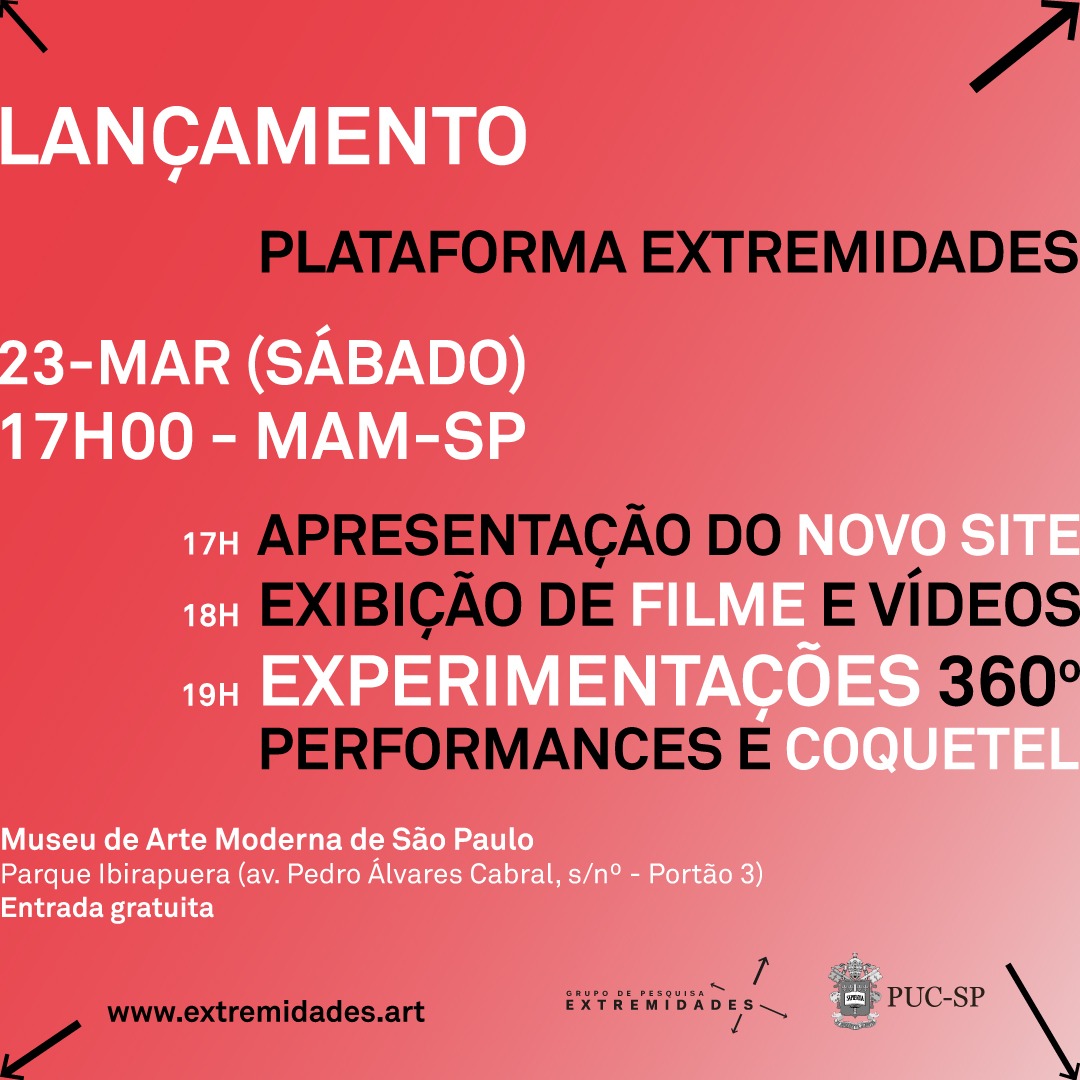
O Grupo de Pesquisa Extremidades: redes audiovisuais, cinema, performance e arte contemporânea, coordenado por Christine Mello, e integrante da Linha de Pesquisa Regimes de Sentido nos Processos Comunicacionais do Programa de Estudos Pós-Graduados em Comunicação e Semiótica da PUC-SP realiza o lançamento de sua plataforma digital, www.extremidades.art. O evento, realizado em parceria com o MAM - Museu de Arte Moderna de São Paulo, acontece no sábado, 23 de março a partir das 17h, com entrada gratuita.
Com arquitetura do site e linguagem visual de João Simões, programação de Andrei Thomaz, produção de Fernanda Oliveira e Paula Squaiella, a plataforma digital foi planejada em conjunto com pesquisadores, curadores e artistas. O evento pretende lançar o site eXtremidades, bem como os processos para seu desenvolvimento e execução. A plataforma traz uma série de experimentos críticos das redes audiovisuais, do cinema, da performance e da arte contemporânea, que buscam falar de práticas em crise, atravessadas por procedimentos de desconstrução, contaminação e compartilhamento.
Na ocasião, além do lançamento do site, estão previstas a exibição do filme BR_RIP de Carlos Eduardo Nogueira e de vídeos do coletivo Quarta Pessoa do Singular, performances de Dudu Tsuda, Lucas Lespier e Juliana Garzillo, assim como experimentos em 360º de Felipe Neves. Está prevista também a divulgação da primeira edição da Coleção Extremidades: experimentos críticos, publicada pela Editora Estação das Letras e Cores (Kátia Castilho) e organizada por Christine Mello, que reúne uma série de ensaios que evidenciam as linguagens limítrofes e em transformação no campo das artes e práticas midiáticas.
Programação:
17h: Abertura e debate
18h: Exibição de filme e vídeos seguida de performance sonora
19h: Experimentos em 360º, performances e coquetel
Sobre o Grupo de Pesquisa Extremidades: redes audiovisuais, cinema, performance e arte contemporânea: Coordenado por Christine Mello, o Grupo de Pesquisa Extremidades faz parte da Linha de Pesquisa Regimes de Sentido nos Processos Comunicacionais do Programa de Estudos Pós-Graduados em Comunicação e Semiótica da PUC-SP. O grupo desenvolve reuniões quinzenais de pesquisa relacionados às novas estéticas, práticas sociais e modelos de produção artísticos e multimídia, revertidas em produção acadêmica, curatorial e artística. Os membros do grupo têm participado de congressos e residências no Brasil e no exterior e publicado os resultados de seus estudos, sob a forma de livros, capítulos de livros e artigos.
Sobre o Programa de Estudos Pós-Graduados em Comunicação e Semiótica da PUC-SP: Criado em 1970 o Programa de Estudos Pós-Graduados em Comunicação e Semiótica da Pontifícia Universidade Católica de São Paulo (PEPGCOS/PUC-SP) é um dos mais antigos na área de Comunicação no Brasil. Em sua longa trajetória de 45 anos, o programa tem registrado repercussões na sociedade civil, em termos de impacto intelectual, cultural e artístico. Seu objeto de estudo são os processos comunicativos que se realizam através de mediações codificadas, tecnológicas ou não, estabelecendo dinâmicas culturais e interativas individuais, coletivas ou massivas. Nesses processos, a Comunicação encontra na Se miótica um indispensável arcabouço teórico e metodológico de interpretação científica.
Serviço: Lançamento plataforma eXtremidades / www.extremidades.art
Data: 23/03/2019
Local: Museu de Arte Moderna de São Paulo
Endereço: Parque Ibirapuera (av. Pedro Álvares Cabral, s/nº - Portão 3)
Horário: A partir das 17h
Ingresso: Entrada gratuita
Estacionamento no local (Zona Azul: R$ 5,00 por 2h)
Acesso para pessoas com deficiência
Colóquio em Comunicação e Semiótica
Gênero, conflitos e visibilidade
O Colóquio em Comunicação e Semiótica traz, na sua quarta edição, a realizar-se em 2018, temas que tem perpassado o cotidiano social, bem como sido alvo de muitas pesquisas no âmbito da comunicação e das teorias semióticas, além de alcançar outras áreas de conhecimento. Por esse motivo, a proposta do evento será reunir nas mesas de debates os alunos e professores do Programa de Pós-graduação em Comunicação e Semiótica com docentes de outros Programas de Pós-graduação da Pontifícia Universidade Católica de São Paulo, tendo em vista o enriquecimento das discussões e intermediações. Assim, os temas gênero, conflitos e visibilidade serão contemplados por várias vertentes de olhares. Estão convidados a acompanhar os trabalhos os estudantes de mestrado e doutorado do Programa de Comunicação e Semiótica, bem como dos cursos que se relacionam com ele e ainda os estudantes de graduação que vislumbrem a continuidade dos seus estudos em nível de pós-graduação, além de membros externos à universidade que intentem se candidatar ao programa.
Data e local: 25 a 26 de abril de 2018, no auditório 117-A, do Edifício Reitor Bandeira de Mello.
Inscrições: no link https://coloquiocomunicacaosemiotica.typeform.com/to/JfM91N
Será emitido certificado de participação e apresentação para os envolvidos.
Divulgação dos livros dos docentes do PPGCOS no local!
Organização:
Profa. Dra. Valdenise Leziér Martyniuk (PPGCOS e FEA)
Profa. Dra. Christine Mello (PPGCOS e Multimeios)
Cintia Lie Matuzawa (mestranda PPGCOS)
Larissa Macedo (mestranda PPGCOS)
Rogério Armenac Makssoudian (mestrando PPGCOS)
Katrin Riatro (mestranda PPGCOS)
Jô Souza (doutoranda PPGCOS)
25 de abril – quarta-feira
9h00 – Abertura dos trabalhosProf. Dr. Rogério da Costa – Coordenador do PPGCOS
Profa. Dra. Ângela B. C. T. Lessa – Dir. FAFICLA
9h30 – Apresentações de pesquisas de discentes do PPGCOS: Rogério Armenac Makssoudian: Linguagem fotográfica no e-commerce da loja Hope Lingerie: produção de sentidos e interações.
Diogo Azoubel: A imagem fotográfica em periódicos impressos: breve abordagem sobre o fenômeno Maria Celeste
Lygia Maria Silva Rocha: O discurso sobre a maconha nas revistas Superinteressante e Veja: regimes de visibilidade e antagonismos.
10h30 – Coffee break
11h00 – Debate: Gênero, conflitos, visibilidade e as questões da imagem.
Prof. Dr. Norval Baitello – PPGCOS
Prof. Dr. Marcus Bastos – TIDD
Mediação: Prof. Dr. Rogério da Costa – PPGCOS
12h30 – Almoço
14h00 - Apresentações de pesquisas de discentes do PPGCOS:
Jessica Oliveira: Meu corpo, minhas regras? Feminino e os sentidos do corpo em rede digital
Ana Claudia Melo: Censura à diversidade de gênero na telenovela brasileira durante o regime militar
Larissa Macedo: Instagram Stories: Construindo Poéticas do Efêmero
15h30 – Coffee break
16h00 - Debate: Gênero, conflitos, visibilidade e as questões do corpo.
Profa. Dra. Christine Mello – PPGCOS, Artes do Corpo e Multimeios
Profa. Dra. Suely Rolnik – PPG Psicologia Clínica
Mediação: Prof. Dr. Oscar Cesarotto – PPGCOS
17h30 – Encerramento
26 de abril – quinta-feira
9h00 – Abertura dos trabalhosProfa. Dra. Valdenise Leziér Martyniuk – PPGCOS e FEA
Profa. Dra. Christine Mello – PPGCOS, Artes do Corpo e Multimeios
9h30 – Apresentações de pesquisas de discentes do PPGCOS:
Daniela Picchiai: Trans: A produção de subjetividade no campo midiático.
Micaela Altamirano: A pixação como discurso de alteridade no espaço público de São Paulo
Rafael Alberto Alves dos Santos: HABEMUS PAPAM: Eleição papal nas coberturas mediáticas de jornais paulistas - de Leão XIII (1878) a Francisco (2013)
10h30 – Coffee break
11h00 – Debate: Gênero, conflitos, visibilidade e as questões de gestão
Profa. Dra. Ana Claudia de Oliveira – PPGCOS
Prof. Dra. Valdenise Leziér Martyinuk – PPG COS e FEA
Mediação: Profa. Dra. Christine Mello – PPGCOS, Artes do Corpo e Multimeios
12h30 – Almoço
14h00 – Apresentações de pesquisas de discentes do PPGCOS:
Manuella Reale Vieira: Ciência em interação: práticas de divulgação científica em audiovisual.
Rômulo Gomes: Participação popular em tempos de redes: articulação de demandas em dispositivos digitais propostos pelo Estado
Ângela Patrícia Felipe Gomes: Canal transdiário: gênero e visibilidade nas redes audiovisuais.
Laís Mendonça: Indiferença e circulação nas redes audiovisuais: estudos a partir de cultura da conexão
15h40 – Coffee break
16h00 –Debate: Gênero, conflitos, visibilidade e as questões das redes.
Prof. Dr. Eugênio Trivinho – PPGCOS
Profa. Dra. Rosemary Segurado – PPG Ciências Sociais
Mediação: Profa. Dra. Lucia Leão – PPGCOS
17h30 – Encerramento
Formulários e Documentos
Formulário de Inscrição para exame de Línguas Estrangeiras, para alunos matriculados 1º semestre de 2023
Período de inscrição: de 03 a 24 de abril de 2023.
Preencher o formulário (abaixo) e enviar para o e-mail do Programa, cos@pucsp.br até o dia 24/04.
A lista de inscritos estará fixada no mural da Secretaria do COS indicando a sala para o exame.
Formulário de Cadastro Autônomo para Qualificação
Formulário de acompanhamento de bolsista
Comissão Especial de Assessoramento para avaliação Institucional de Resumos de teses e dissertações (CEA - Resumos)
Instruções para elaborar seu resumo
Formulário Certificado de presença de Banca de Defesa
Formulários para o Relatório CAPES
Utilize estes formulários para informar ao COS o que foi produzido durante o ano, estas informações serão utilizadas no preenchimento do Coleta de Dados CAPES.
Produção Artística
Produção Bibliográfica
- Artigo em jornal ou revista (revista circulação)
- Artigo em periódico (revista científica)
- Livro
- Partitura musical
- Trabalho em anais
- Tradução (capítulo, coletânea, texto integral, verbete e outra)
- Outro
Produção Técnica
- Apresentação de trabalho
- Cartas, mapas e similares
- Curso de curta duração
- Desenvolvimento de aplicativo
- Desenvolvimento de material didático e instrucional
- Desenvolvimento de produto
- Desenvolvimento de técnica
- Editoria
- Manutenção de obra
- Maquete
- Organização de evento
- Patente
- Programa de rádio e TV
- Relatório de pesquisa
- Serviços técnicos
- Outro
Procedimento em relação a professores (as) externos à PUC-SP
Baixe e preencha o formulário de cadastro de autônomos
Comissões de assessoramento
Regimento do Setor de Pós-Graduação
Veja o Regimento do Setor de Pós-Graduação aprovado em sessão ordinária do Conselho Universitário, realizada em 28 de fevereiro de 2007.
Intercâmbios
Nos últimos triênios, o Programa de Comunicação e Semiótica intensificou sua política de internacionalização em inúmeras direções. Os intercâmbios internacionais continuam a ser nucleados por iniciativa individual de professores/pesquisadores, em vários casos lastreados na tradição ativa dos Grupos e Centros de Pesquisa, que, deste modo, são constantemente estimulados a planejar e ampliar as suas atividades. Considerando a constância desse desempenho, observa-se, no cotidiano do Programa, uma atmosfera de trocas entre pesquisadores que, conferencistas ou visitantes para maior estada, garantem um movimento de atualização de ideias e informações e de planos de cooperação, através de pesquisas interinstitucionais, participação de docentes e pós-graduandos em eventos científicos (com apresentação de trabalhos) e estágios de pesquisa no exterior.
Os Grupos de Pesquisa constituem a principal força intelectual do Programa: desenvolvem intensa atividade científica anual, engajando boa parte dos pós-graduandos, professores e alunos de vários cursos de Graduação da PUCSP e também de outros Programas e IES, e articulando representantes docentes e discentes de Centros de Pesquisas de outros países, seja através dos respectivos “sites” (dos Centros do COS), seja em participações presenciais na agenda de atividades prevista.
Parcela significativa do Colegiado do PEPGCOS mantém agenda anual de atividades institucionais e/ou acadêmicas internacionais, seja em Universidades estrangeiras, seja no Brasil. Nos últimos anos, professores mantiveram relações com instituições da Alemanha, da Áustria, da Argentina, do Canadá, da Colômbia, de Cuba, da Espanha, dos Estados Unidos, da França, do Japão, da Holanda, da Itália, do México, do Peru, da Polônia, da Rússia e de Portugal, ministrando conferências e cursos, participando de seminários de pesquisas, integrando projetos de pesquisa, co-orientando Teses, publicando trabalhos, entre outras atividades.
Links
- Compós: www.compos.org.br
- Portal dos periódicos da Capes: www.periodicos.capes.gov.br
- CNPq: www.cnpq.br
- Fapesp: www.fapesp.br
- Associação Brasileira de Pesquisadores em Cibercultura: abciber.org.br
- Sociedade Brasileira de Estudos de Cinema e Audiovisual: socine. org.br
- Associação Brasileira de Pesquisadores em Jornalismo: sbpjor.org.br
- Para conhecer a classificação dos periódicos avaliados pela Capes na área de comunicação entre em: http://compos.org.br/periodicos.php
Processo Seletivo
Acesse a Secretaria Acadêmica para maiores informações.
Modelo de Projeto Para Processo de Seleção
Resultado - Exame de línguas estrangeiras – Novos alunos 1º 2024
Classificação para Bolsa Sanduiche - 1º semestre 2024
Resolução da Pró-Reitoria da Pós-Graduação - PDSE 2024 Edital CAPES nº30/2023
Resultado - Prova do exame de Línguas estrangeira de 17 de novembro de 2023.
Resultado - Prova de Línguas de Maio / 2023
Resultado - Exame de línguas estrangeiras – Veteranos
Resultado - Exame de línguas estrangeiras – Novos alunos 1º 2023
Revistas
Revista Galáxia (Qualis A-2)
O perfil histórico e atuante do PEPGCOS/PUC-SP se desdobra na publicação da Revista Galáxia (ISSN 1519-311X), periódico mantido pelo PEPGCOS/PUC-SP desde o primeiro semestre de 2001. A partir de 2005, a Galáxia passou a ser editada pelo Prof. Dr. José Luiz Aidar Prado. De periodicidade quadrimestral e hoje em formato exclusivamente digital (http://revistas.pucsp.br/galaxia), o periódico tem cumprido, rigorosamente, os critérios do sistema de avaliação Qualis/CAPES. Com foco na área de Comunicação, em interface com as demais áreas das Ciências Humanas e Sociais e, prioritariamente, com as diversas correntes da Semiótica, a proposta editorial do periódico abriga confluências e conexões disciplinares com o objetivo de (1) compreender o trânsito, a transformação e a fluidez dos signos comunicacionais; (2) demonstrar o quanto os discursos, as práticas sociais e as condições de interação, tecnológicas ou não, são passíveis de abordagem semiótica; e, (3) a partir do diálogo e do confronto de diferentes pontos de vista, firmar soluções metodológicas num campo do saber cujas bases teóricas e epistemológicas encontram-se igualmente em trânsito.
Em 2012, o periódico foi catalogado no patamar A-2 pela Comissão Qualis/CAPES da área de Ciências Sociais Aplicadas-1. No mesmo ano, foi aceito pela SciElo - Scientific Electronic Library Online para integrar a sua coleção, sob condições a serem atendidas em 2013, para entrada no sistema. A SciElo é uma das mais prestigiosas e seletivas bibliotecas eletrônicas de periódicos científicos, mantida no país pela FAPESP, em parceria com a BIREME - Centro Latino-Americano e do Caribe de Informação em Ciências da Saúde e com apoio do CNPq.
Em sintonia com a preocupação majoritária do Programa para os próximos anos, a meta da Revista Galáxia é o aprofundamento de sua internacionalização, em todos os quesitos editoriais.
Revista Nexi
A Revista Nexi (ISSN 2237-8383) destina-se a alunos de Pós-Graduação em Comunicação e Semiótica no Brasil e no exterior. O periódico se propõe a:
(a) ser um locus de encontro e debate a partir de objetos de pesquisa e métodos plurais da área da comunicação; (b) incentivar o diálogo entre temas e linhas de pesquisa, no âmbito nacional e internacional; (c) adensar as relações de conhecimento entre comunicação, mídia e cultura.
Link da revista: http://revistas.pucsp.br/nexi
- Nível: Mestrado, Doutorado
- Avaliação da Capes: M/D 2017-2020: conceito 4
- Duração:
Mestrado: 18 meses (mín) até 30 meses (máx)
Doutorado: 36 meses (mín) até 48 meses (máx) - Mensalidade:
Valor ingressantes (2024)
Mestrado: R$ 4.168,00
Doutorado: R$ 4.984,00
-
Campus
Perdizes

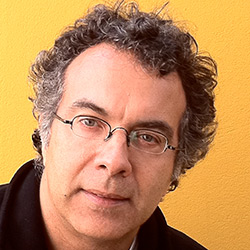
Assistente de Coordenação: Cida Bueno
E-mail: cos@pucsp.br
Tel: (11) 3670-8146
Endereço: Rua Ministro Godoy, 969, 4º. andar - Sala 4A-08
CEP 05015-901 Perdizes, São Paulo/SP